amberica west

Expensive Amber


$550
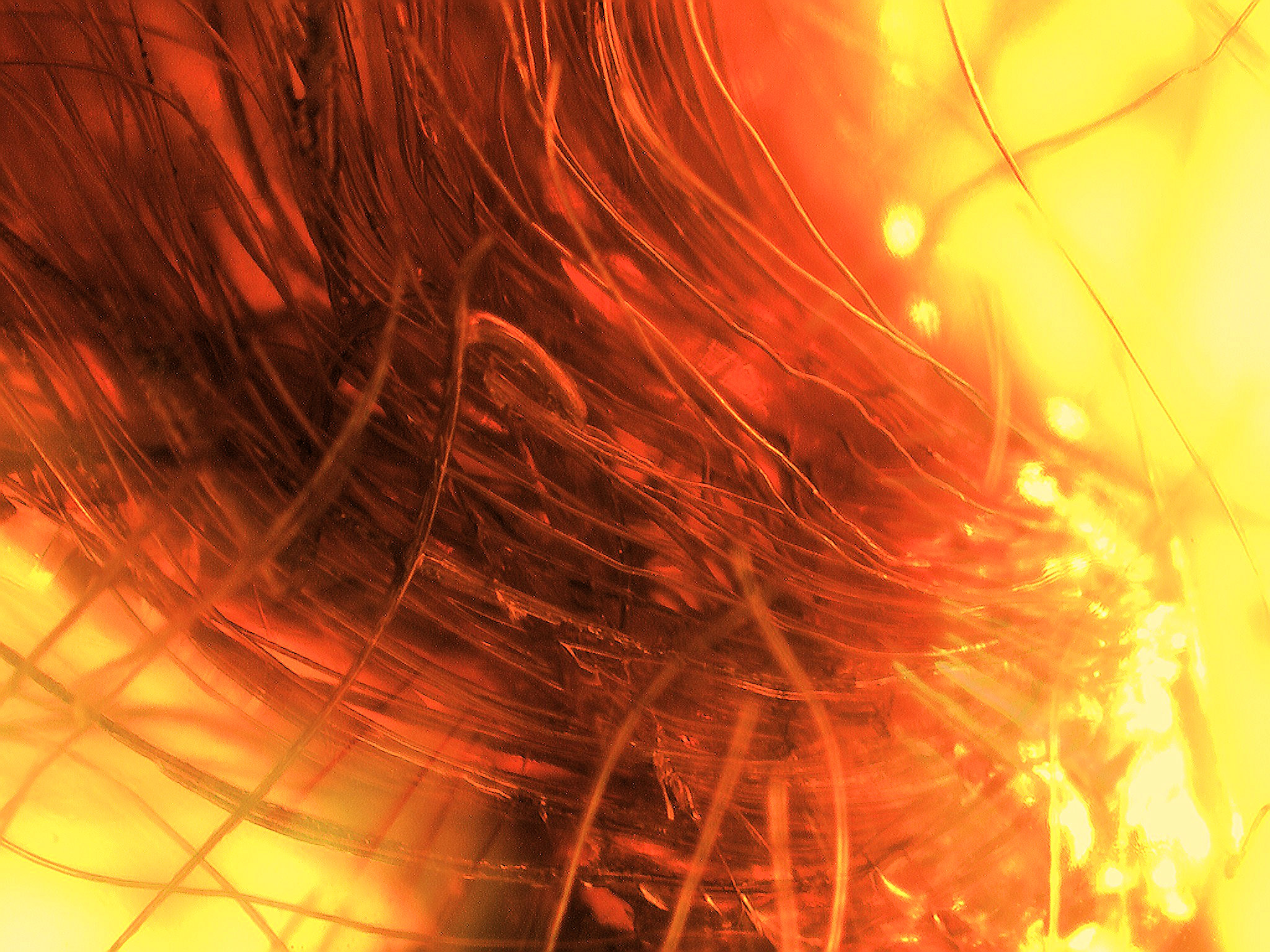
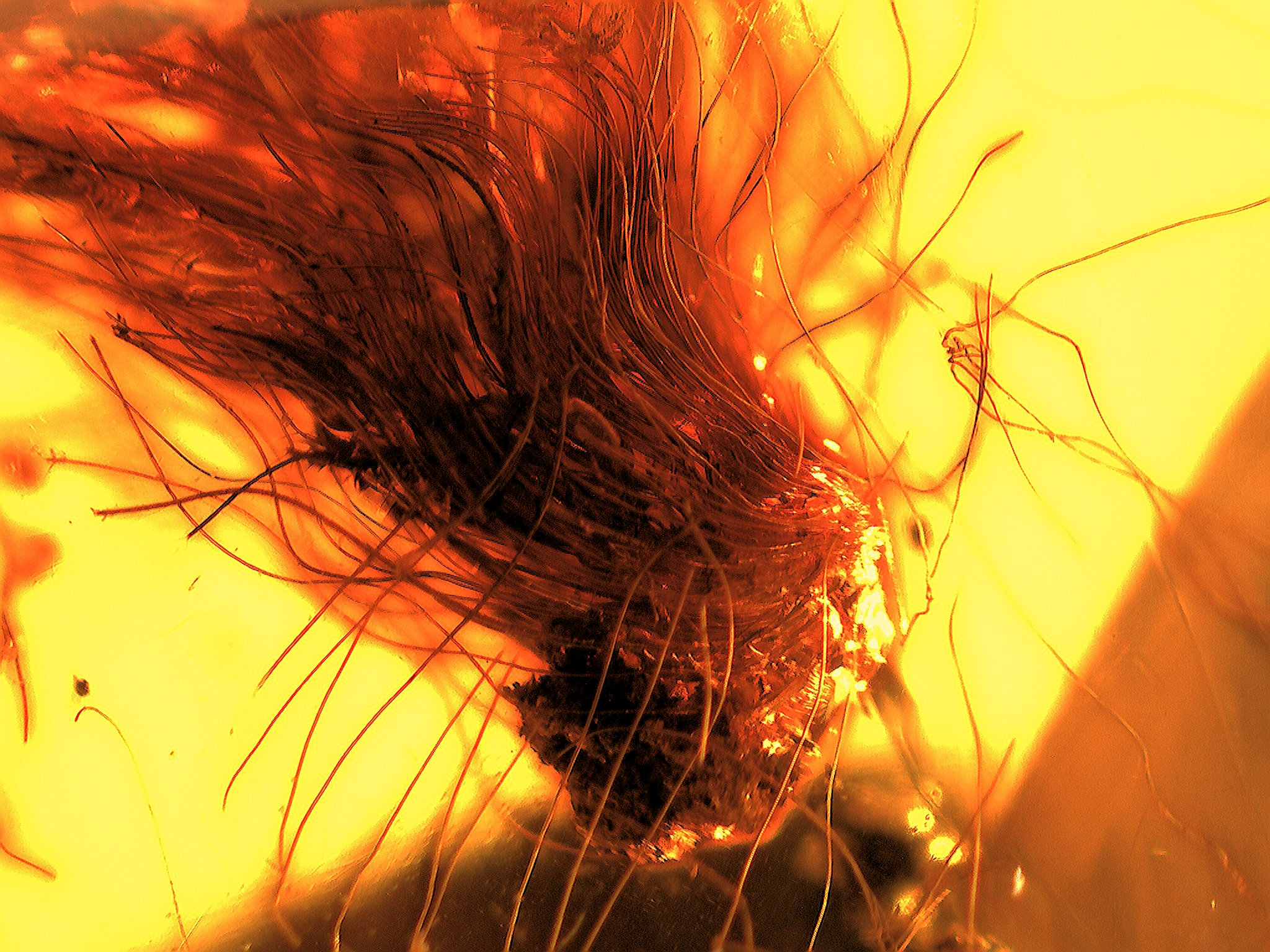
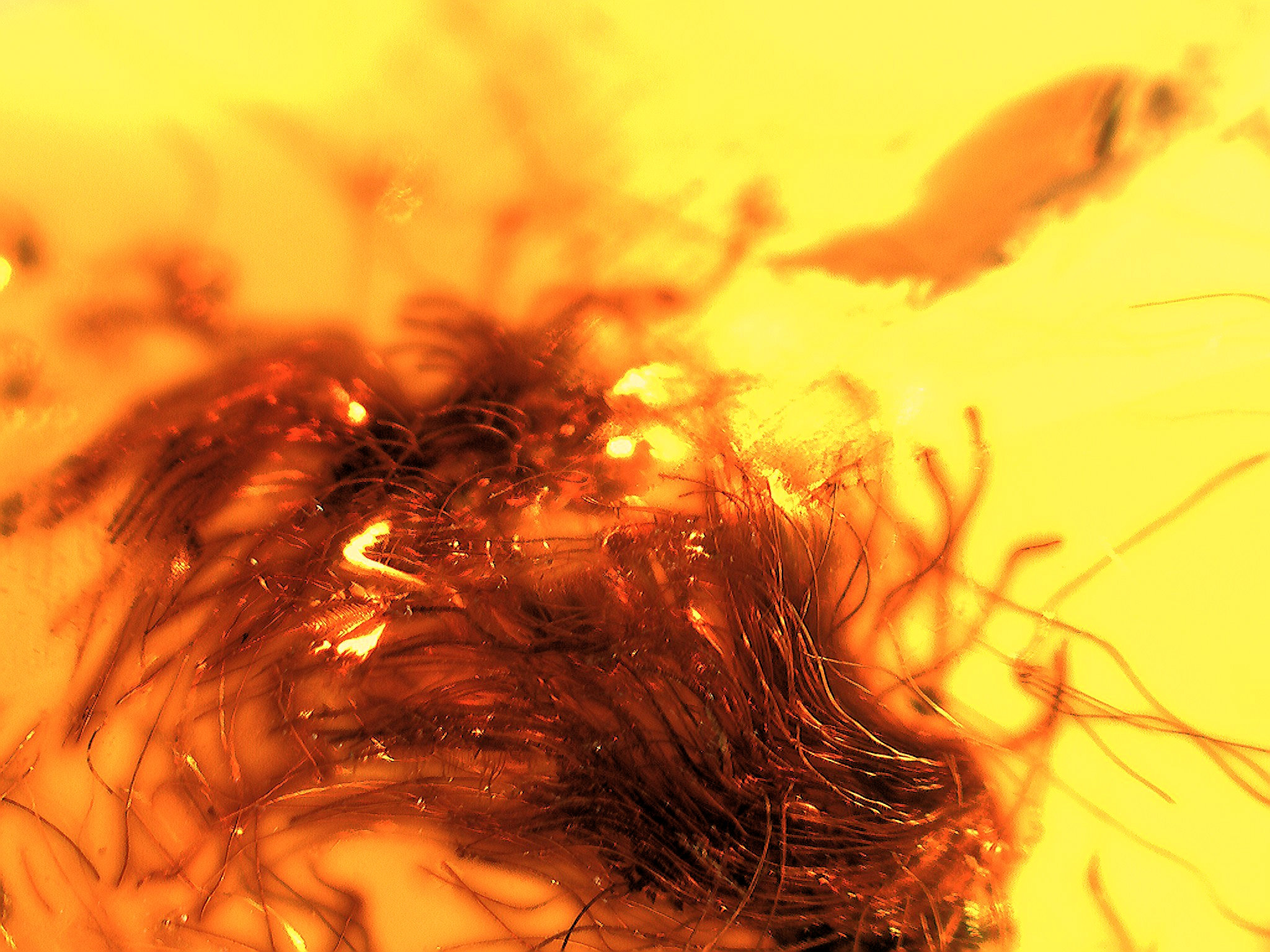
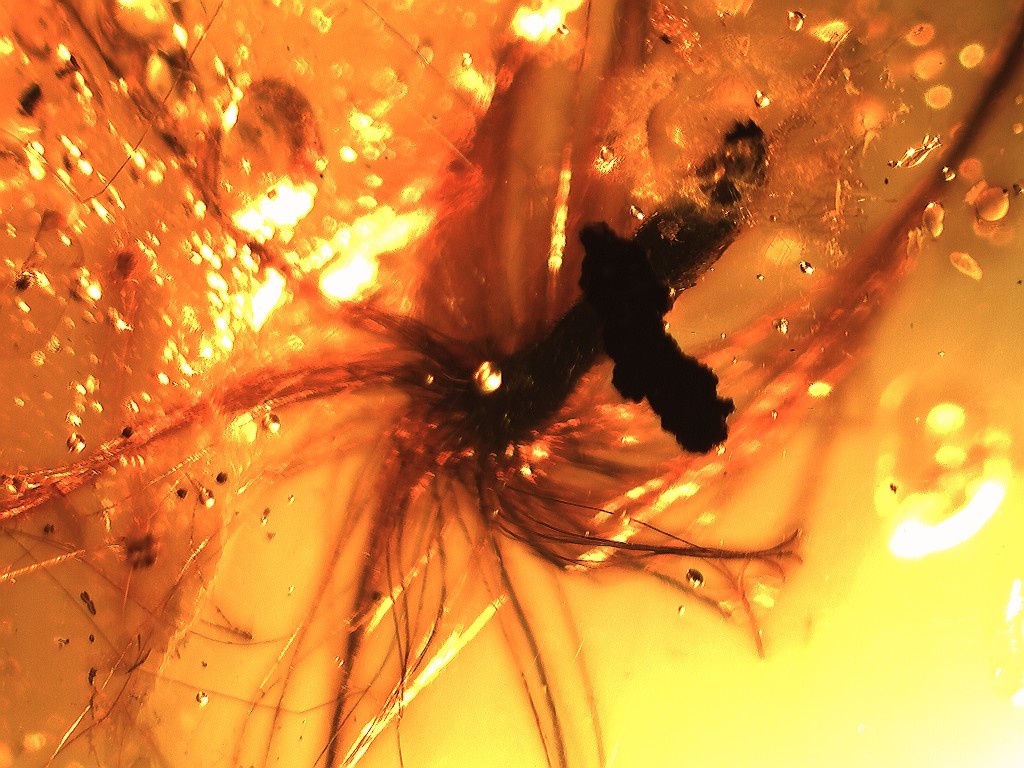
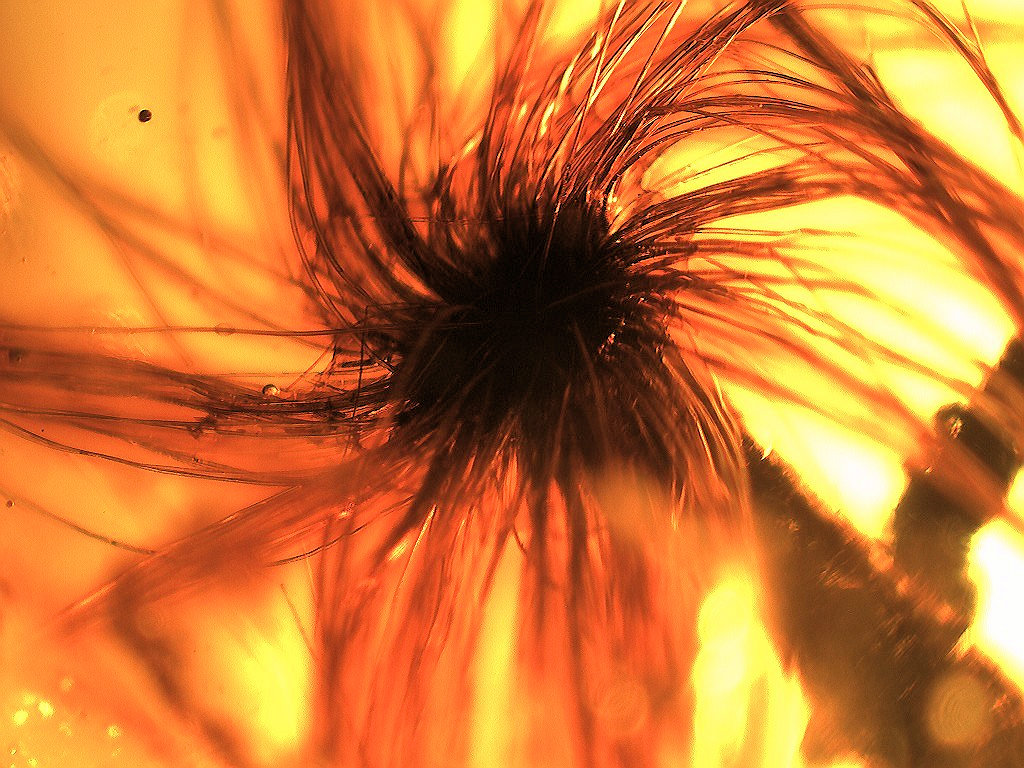
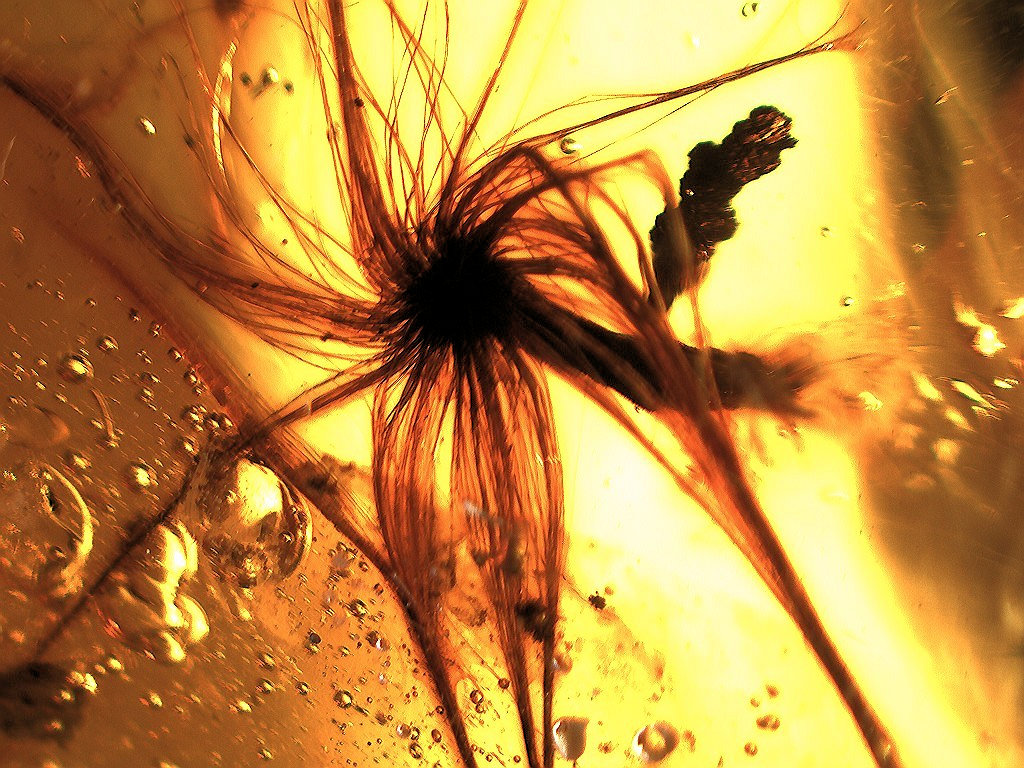
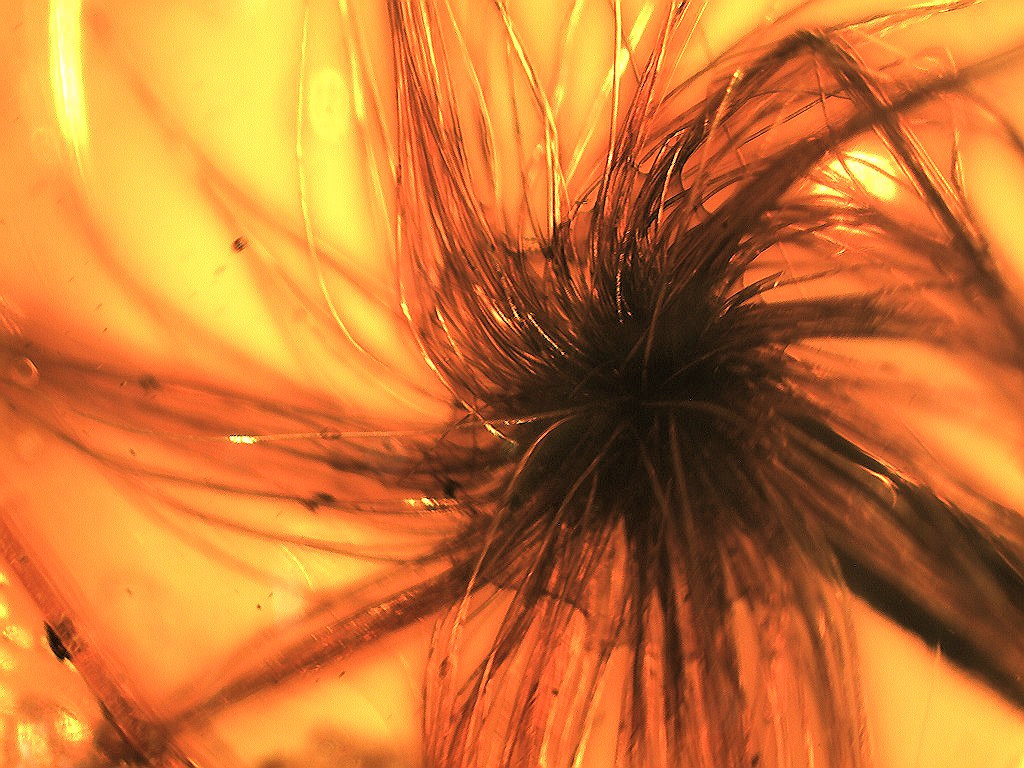
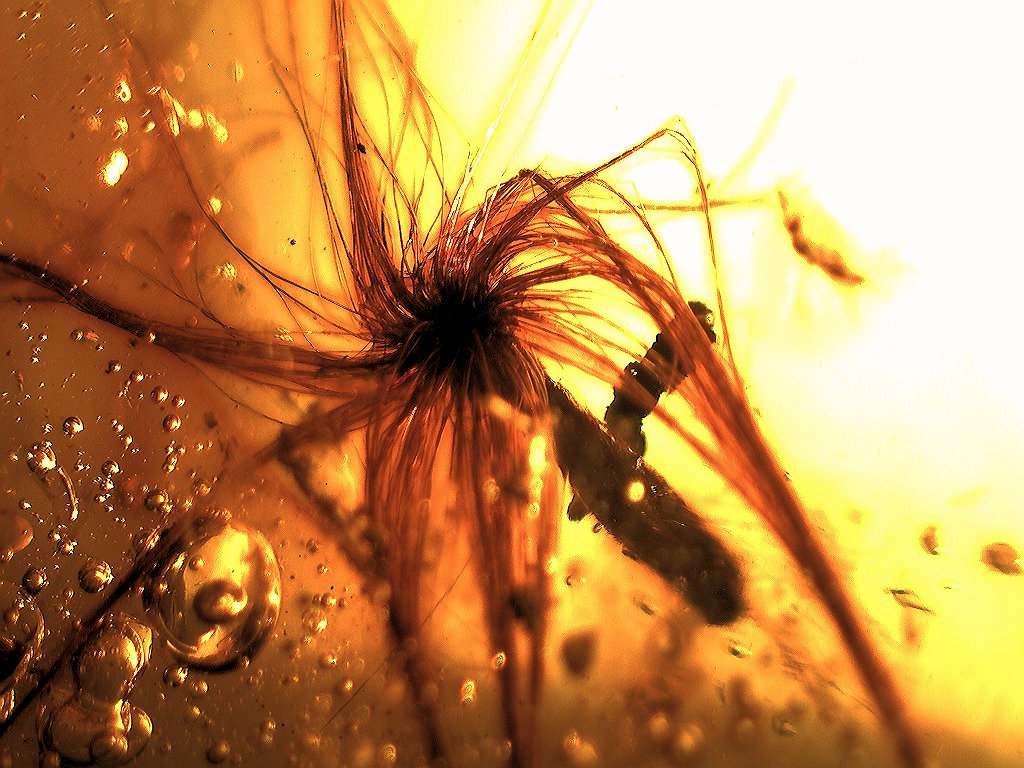
1. This is a velvet mite. Everything about this specimen is great. The amber is a very clear yellow, and there is even an ant thrown in to boot! The mite is in the order Acarina, family Trombidiklae. The surface of the mite is covered with very fine hairs. An easy way to identify this animal are the heavy antennae which are distinctive. Newly hatched young have only 3 pairs of legs and acquire the 4th pair after the first molt. This is the largest velvet mite that I have ever seen, it must be about 2 mm in size (that is BIG!) This piece does have its own web page.
Scanned Image!
$1,510
SOLD
2. Here is a twisted wing, Strepsiptera, in Baltic amber. They are rare in both Baltic and Dominican amber. The number of specimens from Baltic amber can be counted on one's hands and toes! They are rare and found mostly in museums (if at all). This particular specimen is in perfect shape. The Twisted Wing almost looks like he posed for us when he died. It is a remarkable piece of amber. You can see all the important characteristics of the animal There is a jumping spider off to the side, Araneida, Salticidae. Reminds me of the spider and the fly. This piece is circular and is reminiscent of a thick coin. This has it's own web page.
Scanned Image!
$1,239

3. One of the most impressive planthoppers we have ever seen. The amber is large, just over 2 inches in length and very clear. The planthopper is a bit over .25 inches and it has it's wings spread. Actually there are a number of other planthoppers in this piece, but they pall in comparison. This animals in the order Homoptera, Superfamily Fulgoroidea, Family Achilidae That is as far as I can go with any certainty. This is just one of those pieces that is just so impressive when you hold it in your hand and look at the animals. If you know your planthoppers, then this will knock you for a loop.

Scanned Image!

$895
4. Everyone once in a while you look at a piece under the microscope that takes your breath away. This is it. If you have ever seen pictures of the honey pot ants - the ones with the bloated abdomens, that will catch your eye. We have one. I have never seen one before (amber or life...) I saw this under the microscope, but when I did, it was obvious. This is the type that you can write a paper from. It was found a few years back at the La Toca mines - impressive. It does have a nice bristletail (Archaeognatha) - which is rare by itself. Also some female ants, Hymenoptera, what looks like a root (probably not though) and even a mite, Acarina, family Bdellidae. All in all one of the rarer pieces I have ever seen.
Scanned Image!

$70,000
SOLD
5. Large Lizard For this one, you must go to the web page. It is a large lizard which is VERY expensive. Before you go to the web page, you should know that the price of this beauty is $70,000! On top of that, we have a completely separate page for the description of this reptile. Go to the separate page
$2900
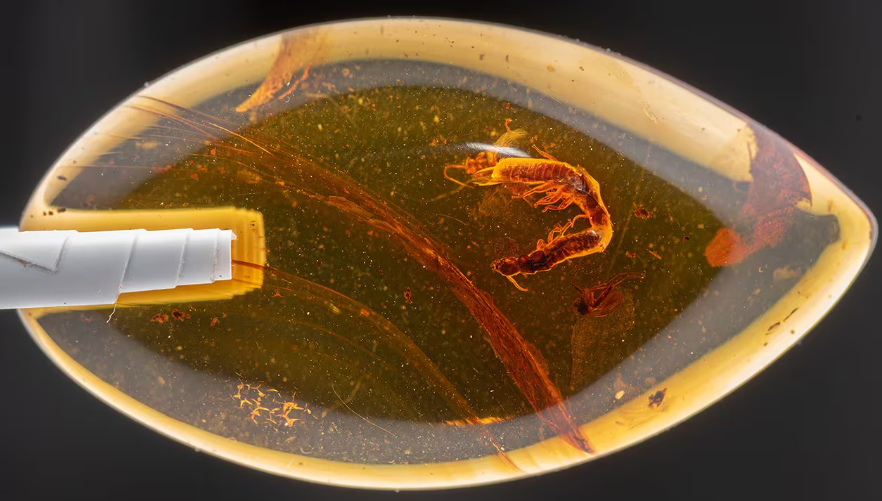
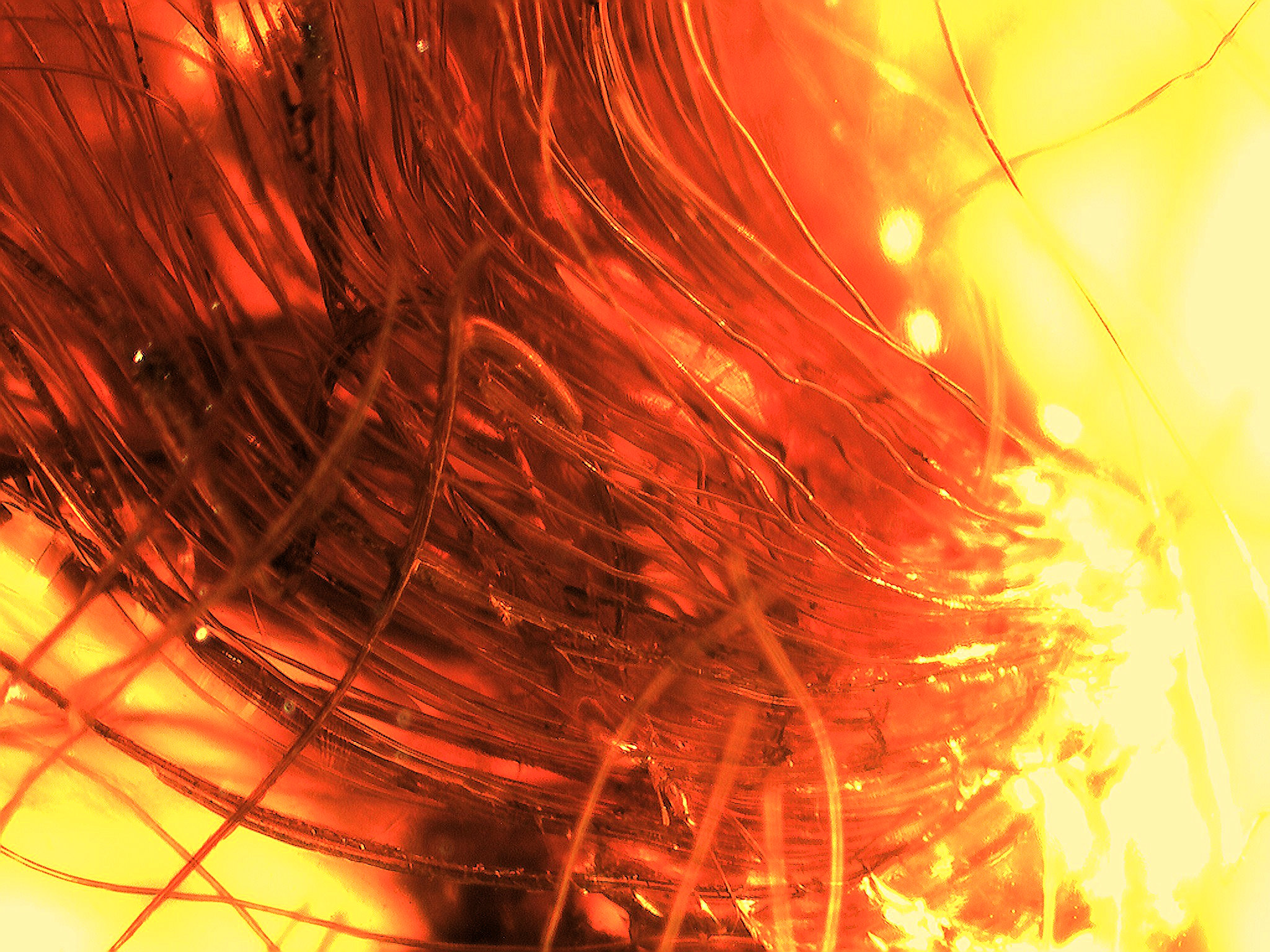
6. You might feel that this is impossible, but here it is..........a very large millipede, Class Diplopoda. This is the finest example I have ever seen in amber, and probably ever will. The millipede is so large, I estimate its size to be about 1 inch in length! Here is a close up of its legs. The piece is filled with other stuff also. There appears to be a decayed branch next to the animal. There is a nice fungus gnat, many gnats and a few flies, there is even a rare predaceous mite (I do not think this is a tick) - Acarina, suborder Cryptostigmata, Family Bdellidae. This mite, in and unto itself is rare and expensive! (I am not an expert in mites and ticks so I insert a disclaimer here about the family - it may not be Bdellidae) You just do not find millipedes like this, just unbelievable! Scanned Image!
$1920


7. Lace bugs are one of the aesthetic peculiarities among Baltic amber inclusions. They are flattened bugs characterized by areolate reticulations of the pronotum and hemelytra. A variety of attractive species is reflected by this dense network of longitudinal veins and cross veins. This particular Tingidae is a member of the true bugs: Heteroptera and is of the genus species, Sinalda baltica, Drake 1950.
This has it's own page - you need to see this one.
Scanned Image!

$378

8. This is one chunk of amber. It weighs about 00 grams and is about 2.75 x 3 x .75 inch in size. It is a very clear piece of amber with a large object that looks like a root (I do not think it is a root.) There are some nice fossils in it, a lovely fly, Diptera, Brachycera, what might be a crane fly and a small beetle or two. It even has part of a spiders web in it. Really nice piece, a show stopper if I have ever seen one.
Scanned Image 1 and
Scanned Image 2

$3,195

9. Some mayflies, Ephemeroptera, have 2 or 3 long hair-like tails and strong forewings. Hind wings are small and rounded or very reduced. Mayfly adults enjoy a life span of no more than two days. On transition from nymph to adult stage, they fly from the surface of the water for mating, but do not feed. They complete the mating process and die after one or two days. Mayfly eggs are laid in water, and are hatched within one or two weeks. Fossils of mayflies are very rarely found in amber. This specimen with 3 cerei is very rare. Mayflies have the shortest life span of any animal. They may spend two to three years as nymphs at the bottom of lakes and streams, and then live for as little as one hour as winged adults.

Scanned Image!

$389
10. Pseudoscorpion, an ant and a leaf. Pseudoscorpions are in the order Pseudoscorpionida that have fang-like chelicerae and short pedipalps. In scorpions, the pedipalps have been modified into pincers. Typically pseudo scorpions are very small. This pseudoscorpion is full with both pinchers raised as in battle. Included in the specimen is also a curled leaf and a worker ant, Hymenoptera. This is a good piece at a great price.
Scanned Image!
$535
11. Sometimes you run into something that looks like it should. This cockroach looks just like 'he' was checking the air before he crouched down to run away. Just a sharp looking roach, Blatteridae. Not only that but there is an immature cricket - in real good shape. This is a large piece, clear and weighs about 21.5 grams. A very nice specimen of anyone's collection. There is an immature planthopper also.
Scanned Image!
$820

12. Stoneflies are rare in amber. The larvae form of a stonefly are even harder to find. Here is the larval form of a stonefly, Plecoptera. A lovely piece of Baltic amber, this ne is polished on only one side and show the stonefly very well. Even so, this is not a large animal.
This one has its own page.
Scanned Image!
$490

13. This is a planthopper nymph - a perfect one in perfect amber, Homoptera, Fulgoroidea. Besides the perfect nature of this piece, look closely at the posterior end. This nymph has a brush tail. It is thought that these waxy filaments serve as an escape device - similar to how tarantulas rub the hairs off their backs to allow the fine hairs to get into the skin or eyes of a predator. You do not see these filaments on planthopper's very often.
Scanned Image!

$225

14. If you like plants, you'll love this piece. There are 2 very nice leaves from an Hymenea tree - the ones that made the resin that turned into amber. The piece is good sized, about 1.5 x 15. x .25 inches. This is a piece that someone will pick up and say "wow". Yes, there are a number of other insects in this amber, even a small bryophyte - but the 2 leaves, wow.
Scanned Image!

$910


15. I just love it when a piece of amber tells a story. This one tells the story of a very hungry animal. The animal that the pseudoscorpion has is the larvae of coleopteran (Scirtidae). This is a very unusual situation to find unfolding inside Baltic amber. Pseudoscorpions are not very common in amber, much less when they are actually doing something. This has it's own web page.
Scanned Image!

$9,300
16. Seldom will anyone ever see a lizard in amber. They are so rare that a miner or collector would have to be very lucky to see a real lizard in amber. This is a real lizard. This is a lizard that died 25 million years ago. You can see skin, part of the vertebrae, the hip assembly and the bones of the legs including the phalanxes. This is a small lizard, probably a baby not to far out of its shell. You can even count the toes on the foot! In some places the skin is gone and there is just an impression in the resin (amber). But in some places the skin looks so fresh and strong that you wonder if this guy will start moving.
Scanned Image!
$1425
17. Sometimes planthoppers can have very strange heads. Here is one that is called an "alligator-head" or "dragon" insect. This is because their snout resembles the head of an alligator. Naturalists have noted that modern types of such planthoppers often sit with their snouts up in the air, similar to the stance of a true reptile. This is the first time we have come across this type of planthopper (Homoptera:Fulgoroidea). They are so rare that you normally see the same picture over and over - well here is a new one, and just as rare. This is a perfect specimen. You will never see another one of these for sale, anywhere.
Scanned Image!
$1325
18. When you find the impossible piece, you should always look further. First, and what led me to this piece are a pair of mating (in copuli) midges. These midges have been 'coupled' for 24 million years. Think about that. It is rather rare to find such a pair - much less a perfect pair. This is a wonderful cab, clear with great color. Upon further inspection, this has one other animal - a female webspinner, Embioptera....Unbelievable. Webspinners themselves are rare in amber. Either specimen is rare, together they form the impossible piece. The primary feature of webspinners is their snake-like heads, with the forelegs which are short and stout. Webspinners have glands on their front legs that emit silk to line their homes. Most webspinners found in amber are male, females are even rarer (of course this is a female.) I cannot impress to you how nice a piece this is. I can see this as a beautiful pendant, what a story to tell.
Scanned Image!
$399

19. Mosquito's in amber are rather unusual. Since the smell of resin does not attract the insect, there is little to entice the animal to it. So to find one in amber is really a special day. This is a rather large female mosquito. Who knows where her last meal was from - Jurassic Park revisited? This is a guaranteed female mosquito in a nice sized cab of Dominican amber.
Scanned Image!

$99,900

20. We have saved the best for "almost" last. Here is a queen ant - not only that but she is mating with a drone. This isn't even seen nowadays, much less caught in the act 24 million years ago in amber and discovered! This has its own page for the story behind this one.
Scanned Image!

$16,000

21. This is one of the animals that you will sometimes find in books. Often it is the same picture that is used from book to book or article to article. They are so rare in Dominican amber that you will just not see that many pictures of them. The whip scorpion is one of the rarest of all finds. Tail-less whip scorpions or amblypigids are very efficient predators. They remain hidden under leaves, bark and other debris for most of the day. They come out at night to feed. Their chelicerae are modified into strong, spine-armored grasping organs that the hapless arthropods would find nearly inescapable. Their front pair of legs, in contrast, are long and slender, obviously modified for sensory functions. Lacking any type of tail appendage, these formidable creatures are not frequently encountered. The females carry their eggs in a sac attached to the undersurface of the abdomen by a few silken threads.

Amblypygi..........Genus Phrynus species resinae............... Schawaller 1979
The size is about 1 inch x .5 inches x .5 inches


Scanned Image!

$699
22. A large chunk of amber with a few dozen platypodid beetles (ambrosia beetles), Coleoptera, Platypodidae. Along with the beetles there area few ants, Hymenoptera, Formicidae and a couple of gnats - even some other animals. This is about 4 x 1.25 x 3 inches and 151 grams in weight. So you can see that this would serve as a nice weight on one's desk.
Scanned Image!
$442
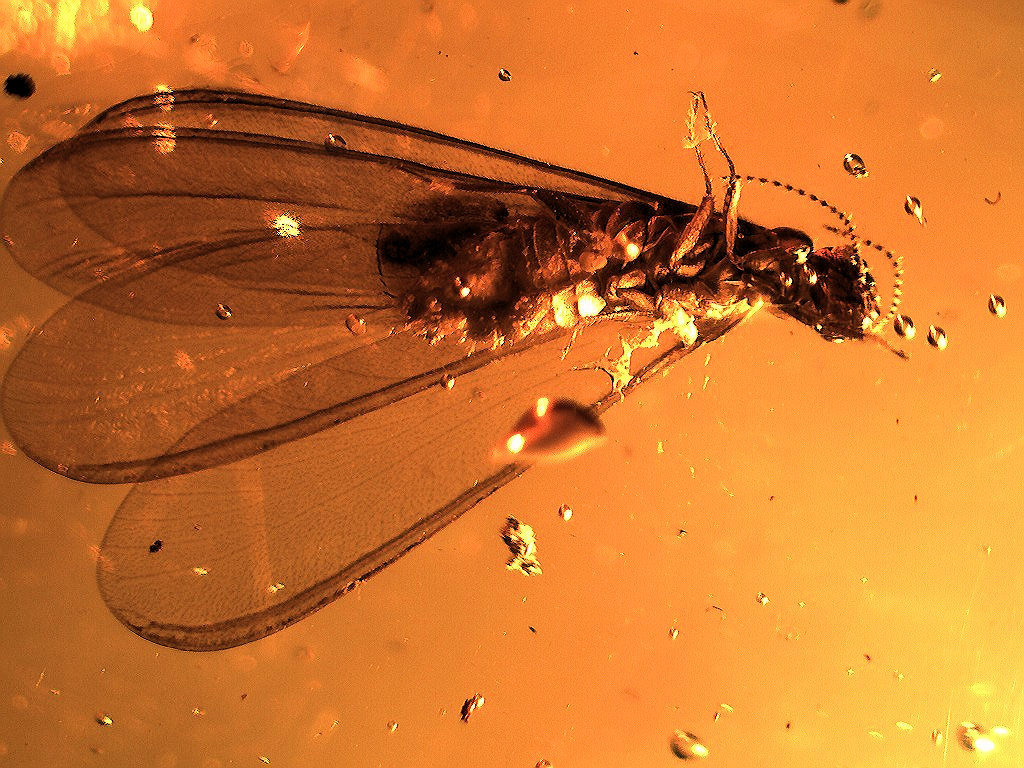
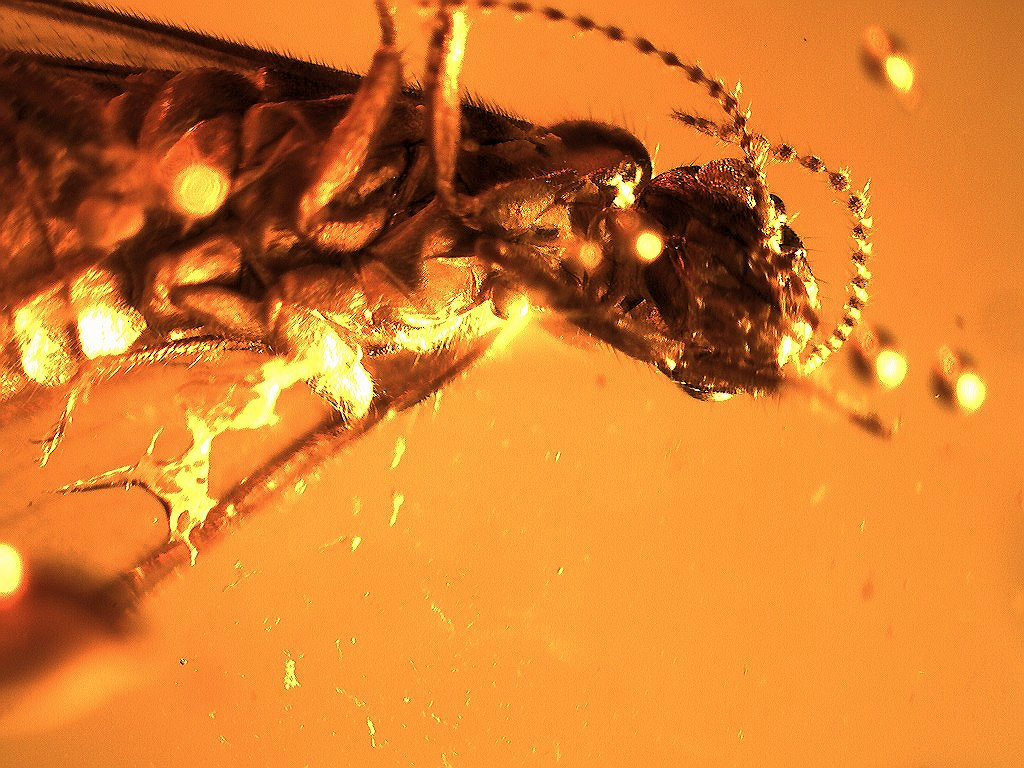
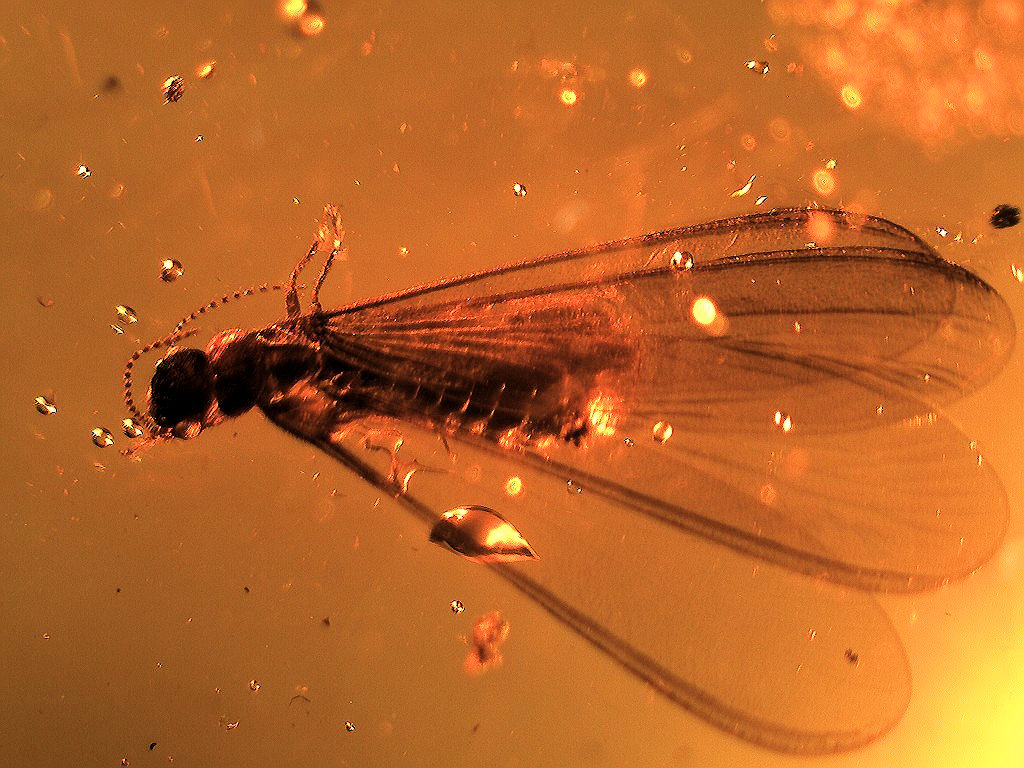
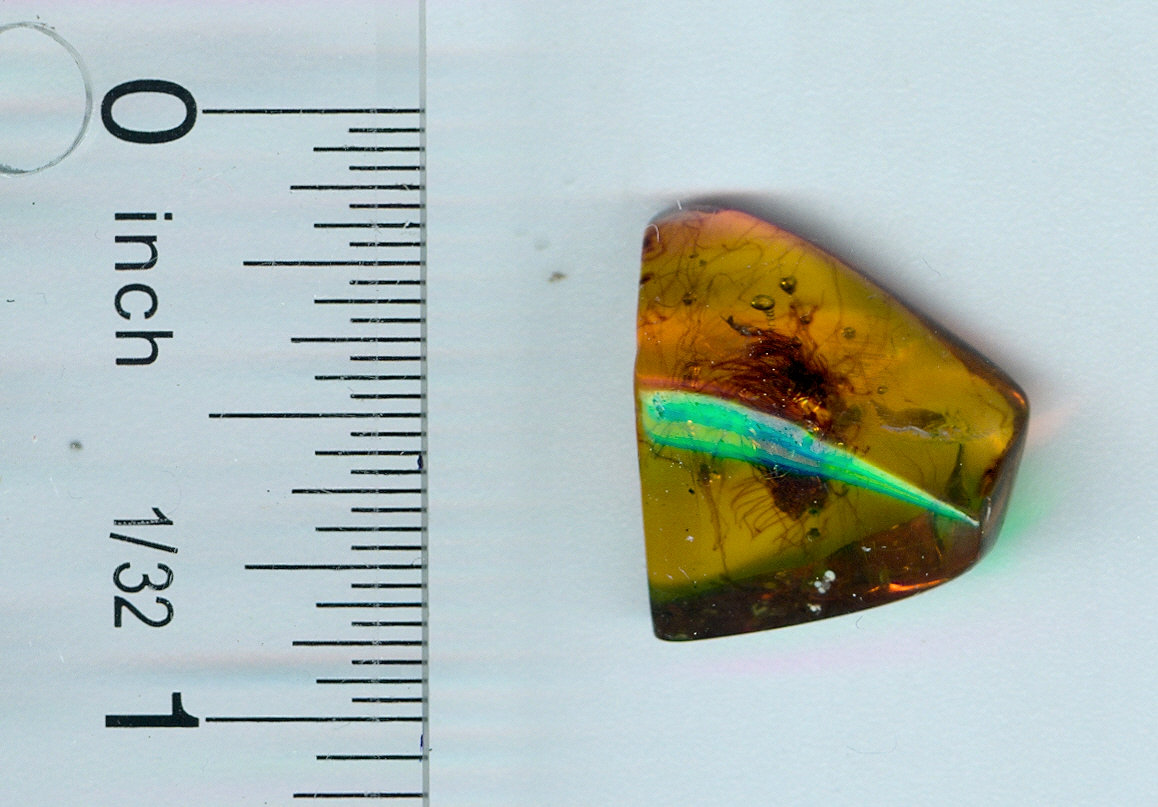
female mosquitois located near one side. This piece is large, being 15.4 grams in weight. Rather more like a show piece since it is very clear and just plain impressive. You do not see mosquito's very often in amber. We are lucky enough to have two for sale (a rare day.......). There are 2 nice fungus gnats, Diptera, Mycetophilidae - on one you can actually see the wing pattern. Very unusual condition.
Scanned Image!
$675
24. You will probably never see a dusty wing fly for sale again, Neuroptera. Here is one. The wings are covered with a fine whitish powder. The bases (coxae) of each pair of legs is fused beneath the abdomen. These are fragile and seldom found animals. While this does have a few other animals inside, it is really the dusty wing that makes this so special.
Scanned Image!
$3,629
25.
At first I thought these were ants, but close inspection indicates that they are wasps. To my best knowledge, there is only one other pair of mating wasps found in Dominican amber. This is the second. When you look closely you will see that one of the pair is wingless. In one family of wasps (Bethylidae) the female is wingless. This is so good, it has a web page all to itself.
Scanned Image!
$1,150
26. It seems like all the great stuff is at the bottom of this page! This is a very large adult planthopper Order Homoptera, Superfamily, Fulgoroidea. The wing structure is great, you can see the individual hairs! The details on this animal are particularly good. While the planthopper is large, so is the hunk of amber. The planthopper is about .25 inches x .25 inches (one wing is spread). The entire piece of amber is almost 2 inches x 1.5 x .5 inches. Of course there are the miscellaneous flies and gnats scattered around. There is a special plant in this one. It appears that this is a germinating Bryophyte! Very unusual to find this. The entire specimen is a plus for any serious amber collector. > Scanned Image!
$1980
27. Parts are parts. Here ar various parts from a lizard in Colombian copal. Discovered last year this lizard left much of it's remains in the sticky resin a long time ago. My guess from looking at the feet, this was a small gecko lizard. One side has a very well preserved tail. the other side various parts of the lizard such as skin, a few parts of the feet, part of the skull of the animal and more. It is a rather cool piece at a great price. There also spiders, caddis flies ( a dozen to 2 dozen), a beetle and a lot of sharp looking debris including part of a leaf and petiole. This is an exceptionally fine specimen. You will have a great time studying it - it is just plain good fun.
Scanned Image!
$398

28. I am not sure how to describe this one to you. There are possibly 300 to 400 larvae - beetle or ant, scattered throughout the piece of Dominican amber. Very unusual and this would make a nice pendant with a great story. You will enjoy looking at the pictures.
Scanned Image!

$2,950
29. We have to put this on the first page. This is the finest lacewing we have ever seen. Impressive, magnificent, out of this world are some of the descriptors. In fact there are 2 lacewings, one of which is beyond museum quality. This is one heck of a piece. You will not find wings like this on any other lacewing (Order Neuroptera.) You will have a fun time looking at the images and then the scanned image.
Scanned Image

$450
30. If you like ticks and mites, then this tick is for you. It is really one of the best mites I have ever seen in amber. Large, easy to see and in good shape. In the family Caeculidae and in the genus Caeculus! These are called the Rake legged mites due to the spines on the front legs. I rather like these mites as they have good image character. Scanned Image!
$4840
31. Centipedes in Dominican amber are very rare. This is a perfect centipede, Class Chilopdoa order Geophilomorpha. It is almost as if the centipede was laid down to look it's be. Not only do you not find centipedes, but to find a perfect one is so rare that it just does not happen. trees and leaves. This centipede is well over an inch long.
Scanned Image!
$2,145


32. This is a rather rare one. It comes from a parasitic larval form that only lives in spiders. Not only rare - but this is a perfect piece. And - it may be a new species (although I will not guarantee that since Acroceridae are not my specialty.) All known species are internal parasites of spiders. Adults of living forms can be found in vegetated or forested areas with females usually in search of a spider host or feeding on the nectar of flowers. The life span of adults is very short (usually only 1 week). Larvae include a planidial first instar that actively searches out a host immediately after hatching from the egg. Larvae pass through 4 instars before emerging from the host and pupating. If you have not guessed, this is a very rare animal in Dominican amber (also Baltic).

Scanned Image!
$9,289
33. Here is almost what I would consider an impossible situation. We have 2 whip scorpions (this one and the one above). Both came fromthe La Toca mines and both are out of this world. This one is a bit smaller - the amber is a little bit smaller and the whip scorpion is a little bit smaller. But oh, is this perfect. There is also a small spider and even an unknown mite. This will take your breath away when you see it. The details are outstanding. There is a lot of general information in the box above, please take a look at that. This is a museum piece.
Scanned Image!

Amber poster for sale!
1 1b 2 3 4 5 6 7 8 9 10
Blue Amber | Green Amber | Feather | Millipedes | Spiders | Books | Loupes
Expensive Amber | Unique Amber | Pseudoscorpions | Botanicals in Amber
Candy Amber | Amber Cam | Baltic Amber | Black Lights | Amber Chunks
Amber Medicine | Chiapas Amber | Malaysian Amber | Kauri Gum | Specials
Mounted Bugs | Jewelry | Fake Amber | Bug Specials | Newsletter | FAQs | Copal
Free Screen Saver | Gift Certificate | Field Guide | Unpolished Kauri | Weather
Testimonials | General Info | Amber Poster | Rough Amber

Please feel free to visit out sister store that specializes in DNA products. From neckties to jewelry, to DNA models and DNA stuffed toys! The DNA Store has things you only dreamed about. You will enjoy your visit - it is a very unique store.

Also there is a unique site for exclusive and specialized Dominican amber at the Amber Mine.

Postage for amber will usually cost $5.35 (USD Priority Mail in the USA) or 1st class mail anywhere in the world. There may be exceptions to this. We will get your sample to you as soon as possible (usually mailed the same day or at worst, the next day). U.S. orders go out by Priority Mail, overseas as Air Mail. Books are normally mailed "Media Mail", unless they are light, in which case they are mailed first class. Overseas books are air mail unless the weight is prohibitive, in which case you will have the option of surface (ship) or paying a bit extra for air mail. All prices are in U.S. dollars. If you are overseas and want something other than normal air mail - contact us when you make the purchase. For any questions, please contact us at sales@ambericawest.com.

Our emails are sent immediately, so if you don't receive it, it is likely caught in a spam filter. You will receive another email when your order ships which will contain the shipping information.

You can pay 3 ways, either by credit card (located on each page as the 'buy now' button), a personal check, or purchase order.

Finally, if you feel more comfortable, feel free to call us at 719-488-2654 (this is in the United States). This number works as a fax if you would like to fax your request or purchase order.


Interested in a gift certificate for your daughter or son or that special person? Why not try our gift certificates?

sales@ambericawest.com


Amber Specimens


amber of The Month Club

Amber Jewelry

Weekly Specials

Newsletter

Affilates

Pikes Peak Cam

Postage

Postage

Drop us a Line!

Search This Site