TIME Magazine

February 12, 1996 Volume 147, No. 7


Return to the amber page.

SCIENCE/FOSSILS

FOREVER AMBER

Art, Science And Historic Lore Intersect Exquisitely In Gems Of Ancient Resin

MICHAEL D. LEMONICK

The Etruscans prized it as highly as gold. The Greeks mythologized it as the tears of Apollo's daughters, solidified when they cried for their dead brother Phaeton. The Romans considered a single piece worth more than a slave. Cultures stretching from Central America to the Far East, from the Mediterranean to Scandinavia, have used it both as a powerful medicine and as a medium for exquisite jewelry and works of fine art.

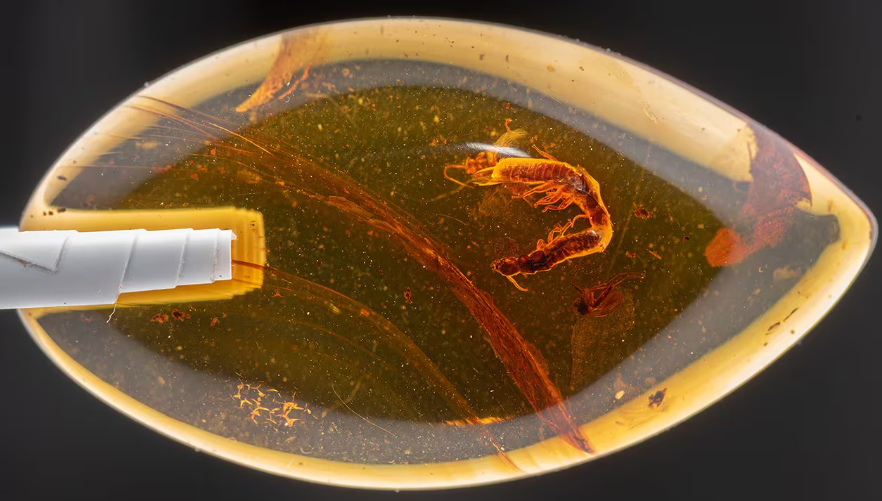
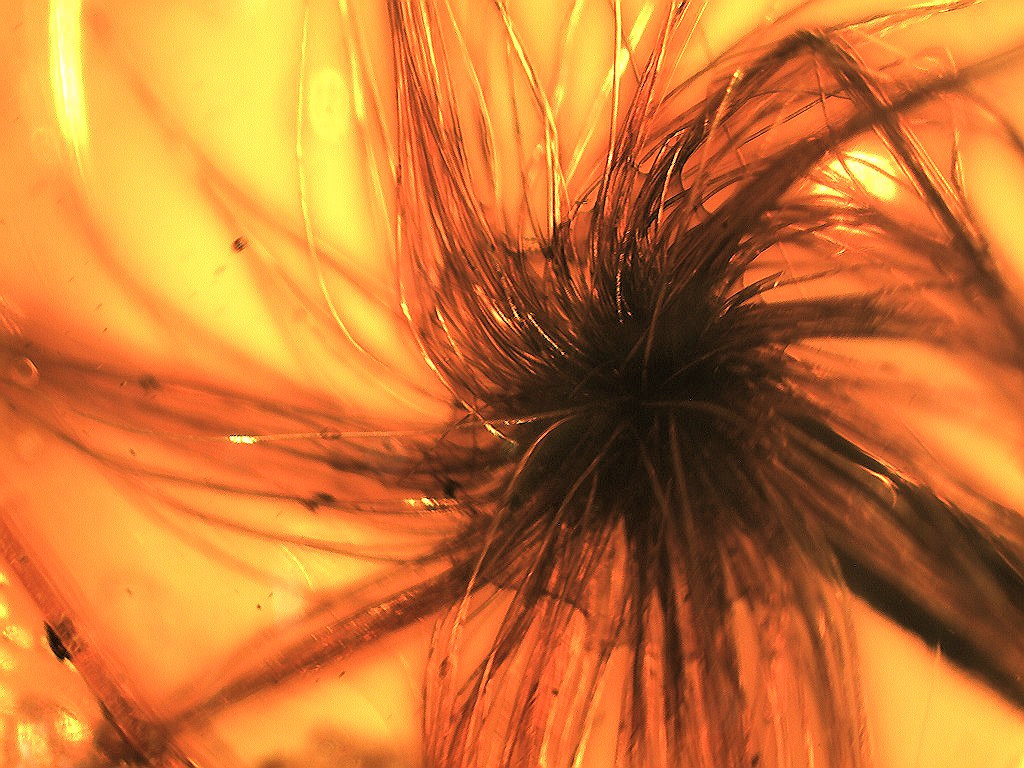
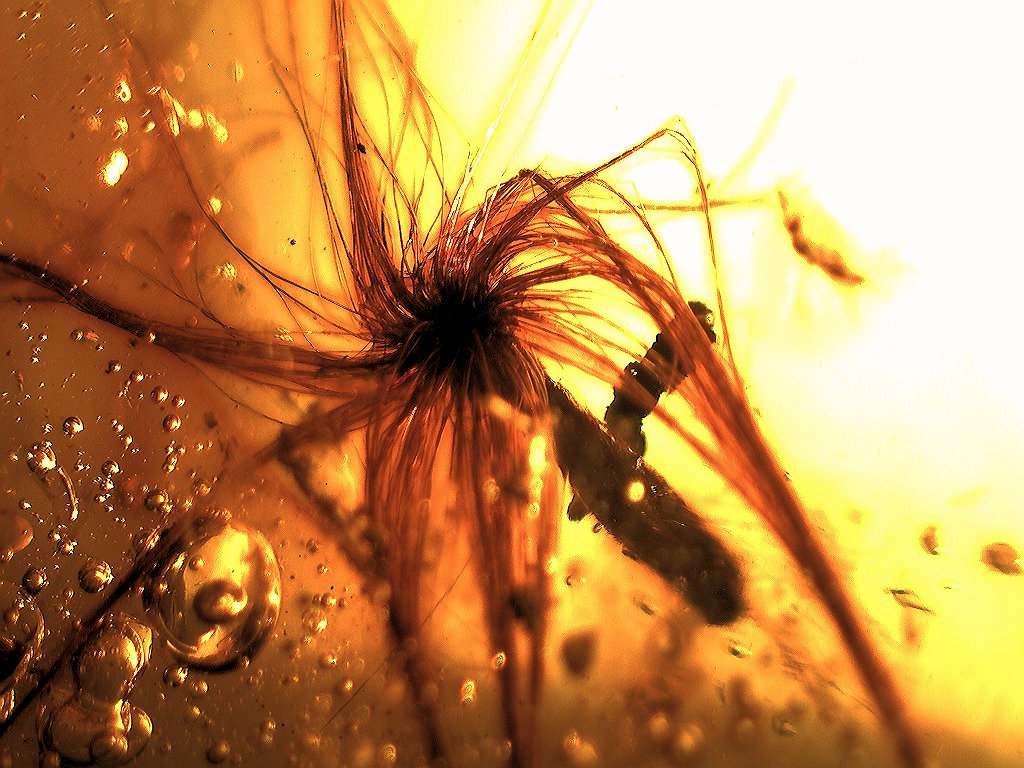
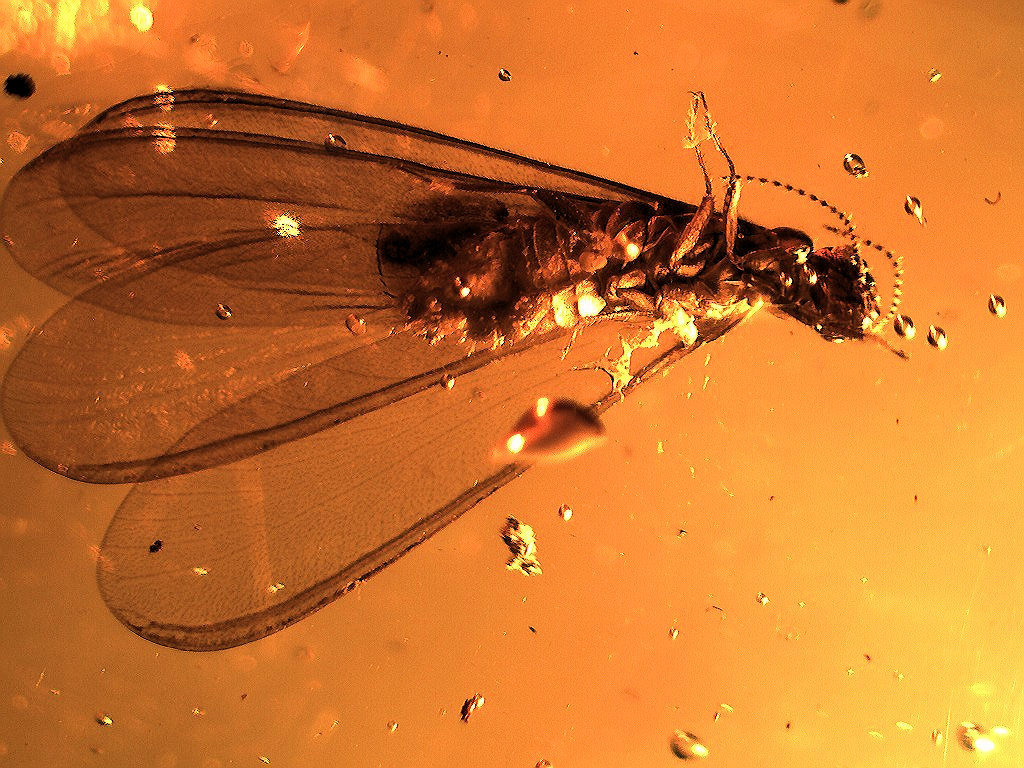
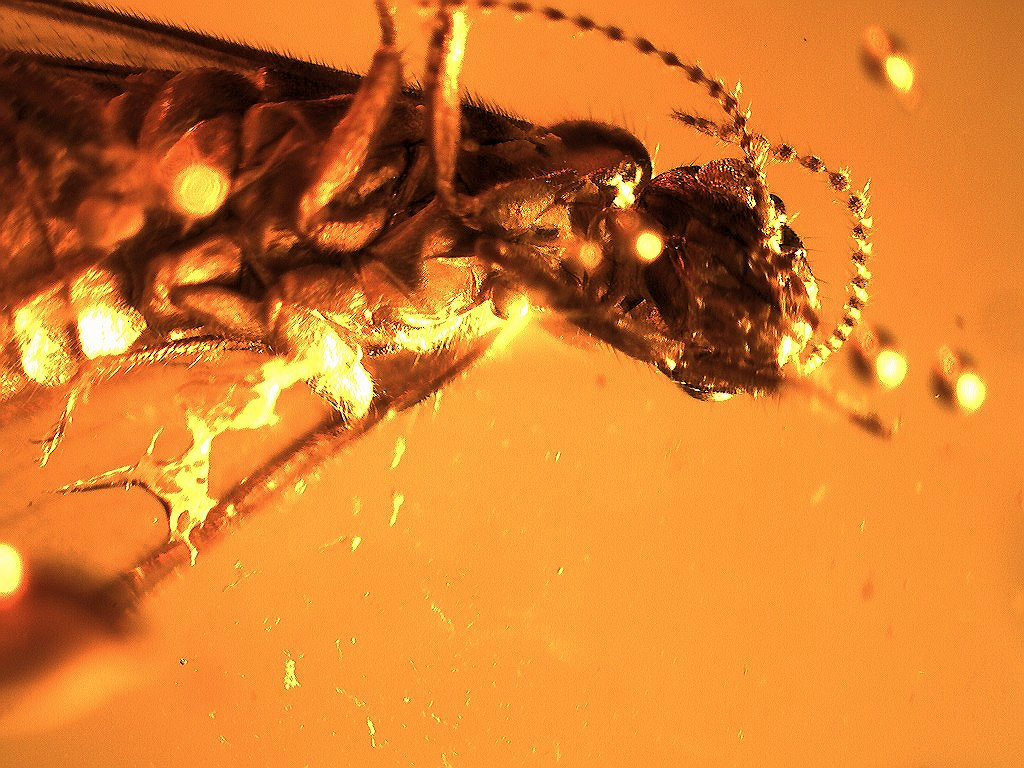
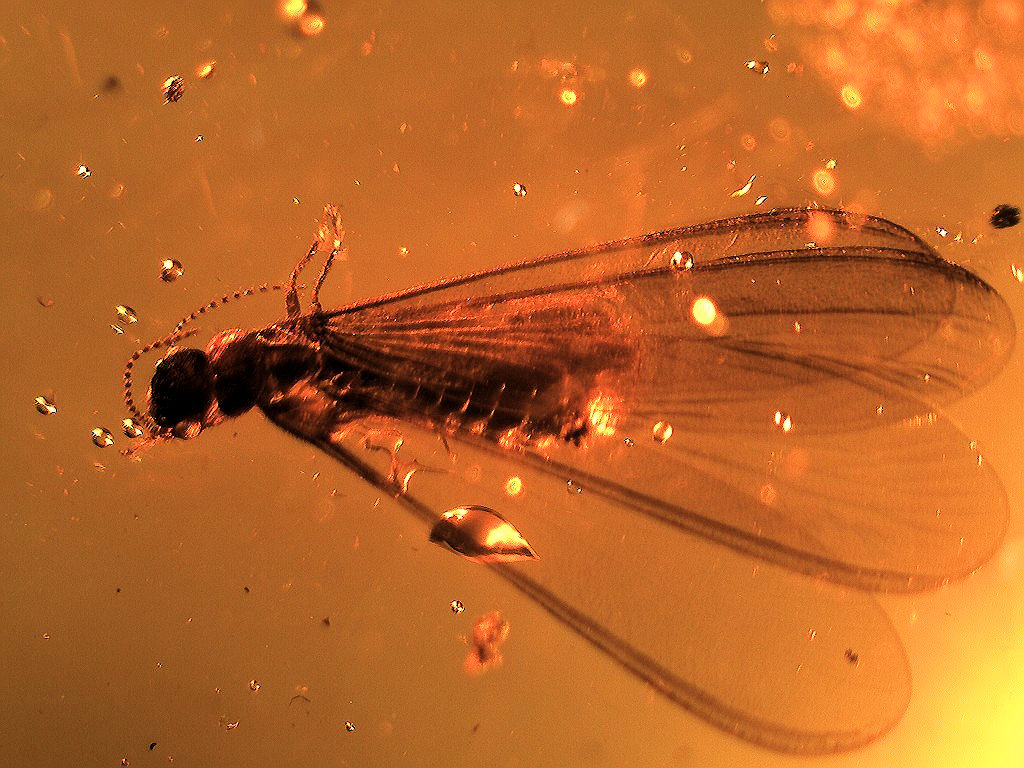
Scientists, too, value amber. Trapped within the translucent, usually gold-colored substance are some of the most ancient examples of certain species known to science. The oldest ants, moths, stingless bees, caterpillars, termites, mushrooms and pollen grains, some of them dating back tens of millions of years, have been found in amber. And unlike ordinary fossils, which are relatively crude rock molds of prehistoric life forms, these specimens are often perfectly preserved, with the most delicate features intact.

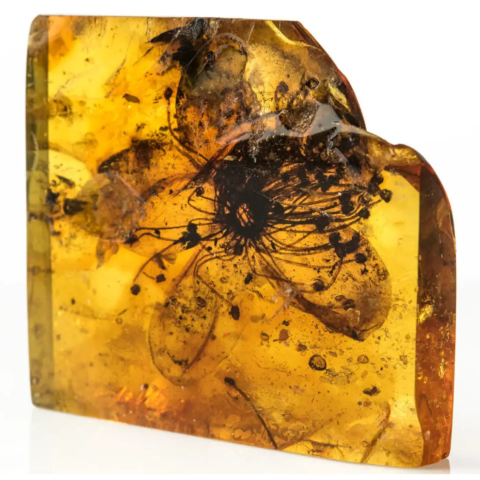
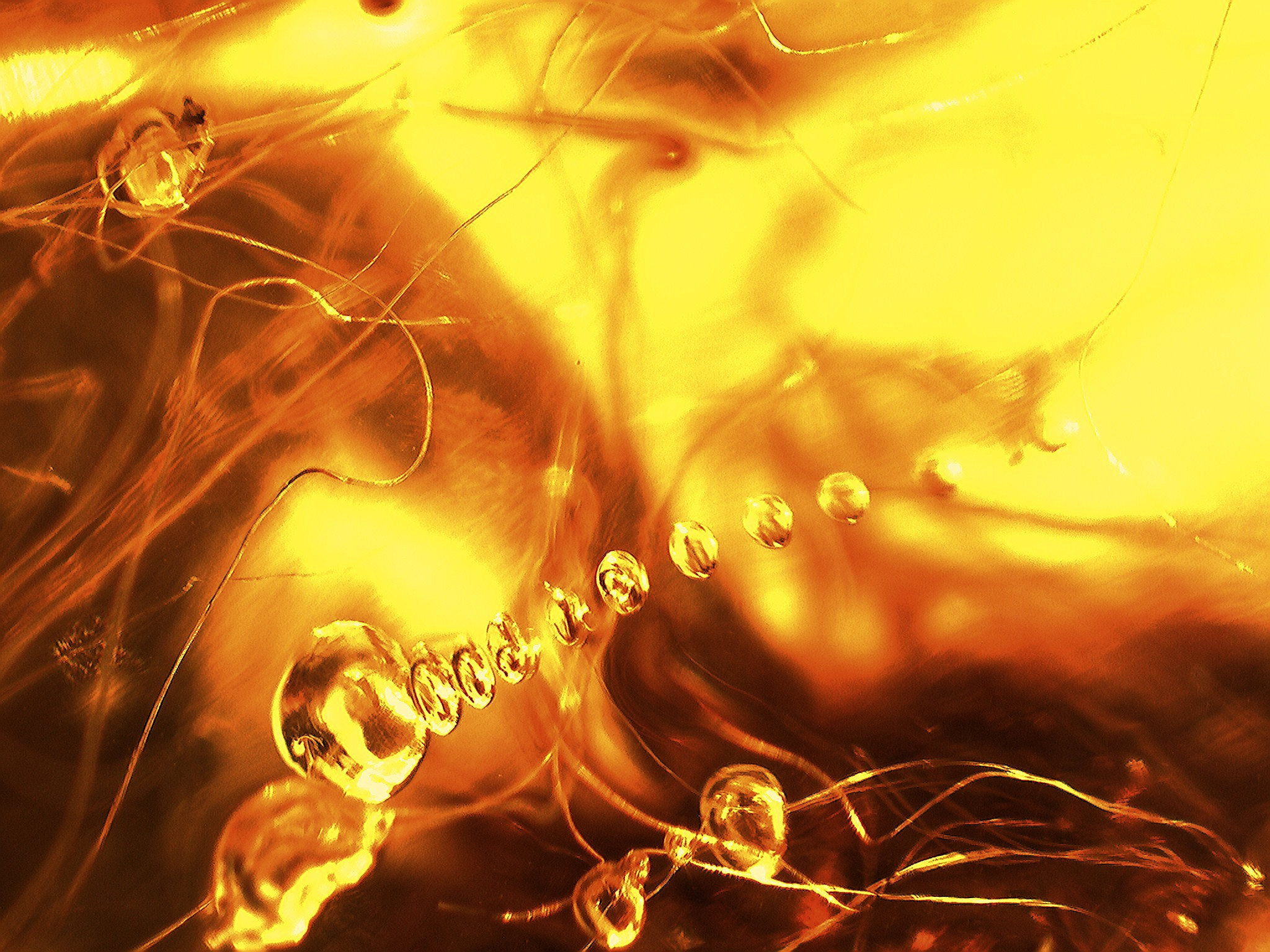
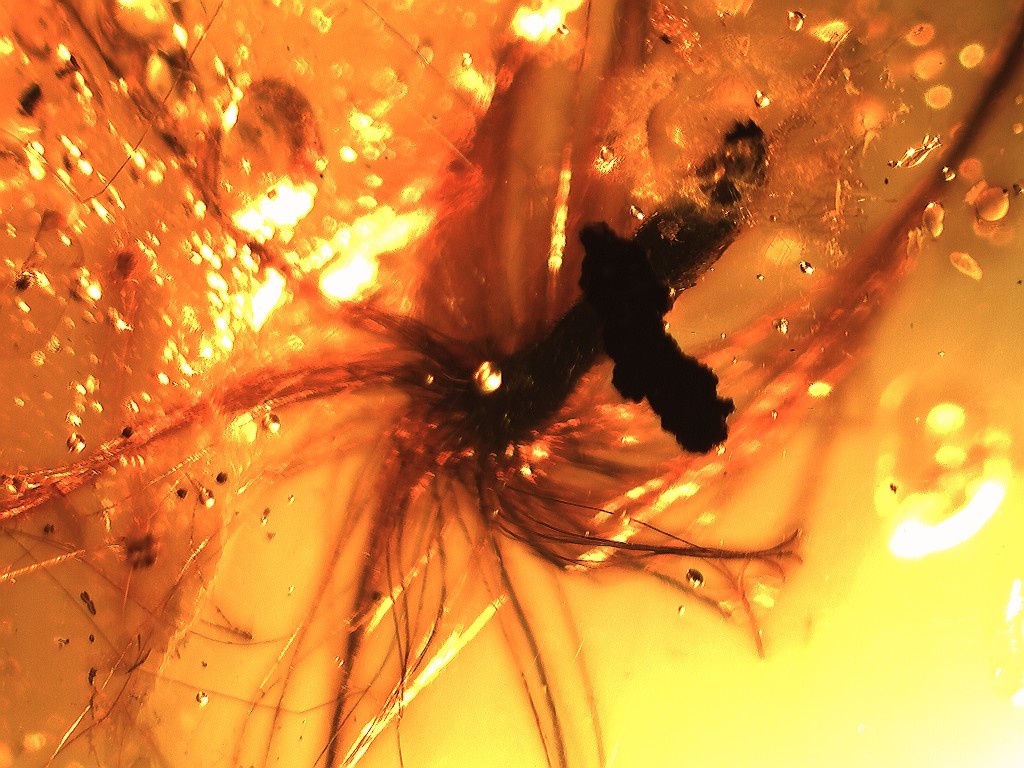
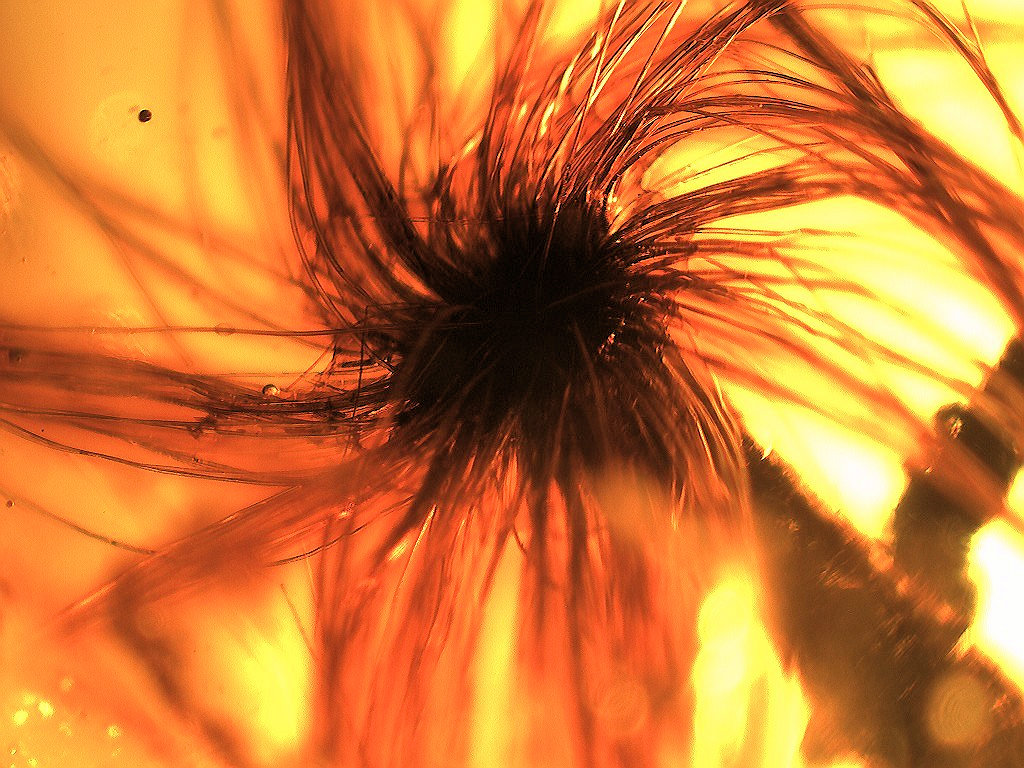
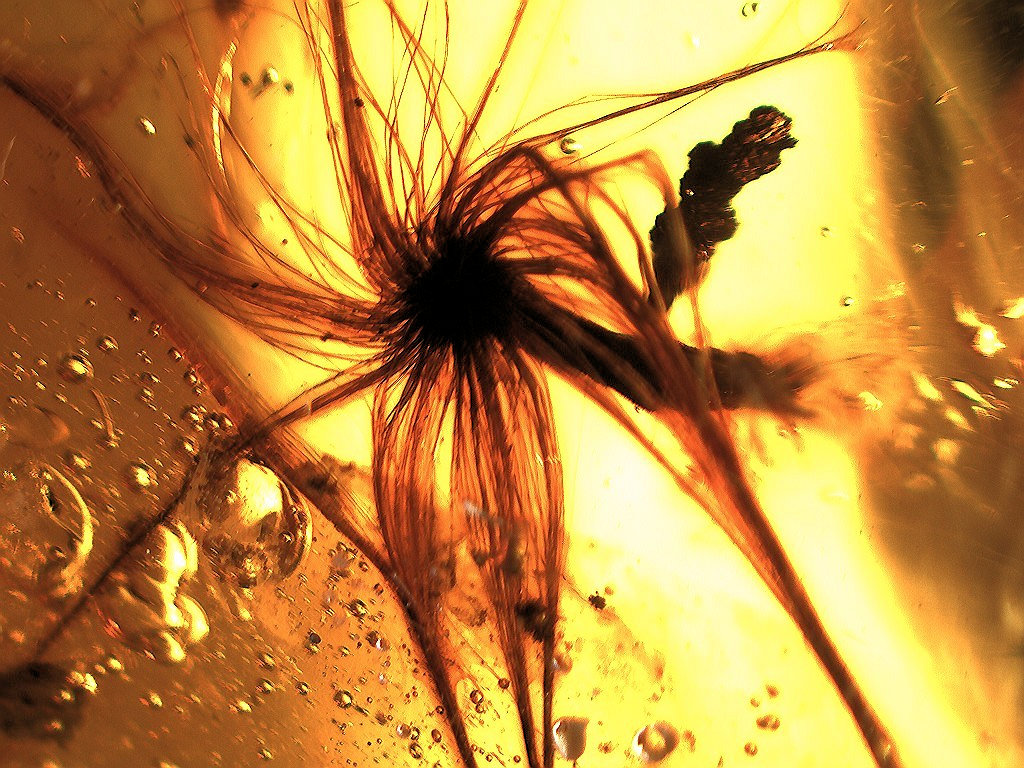
Now entomologist David Grimaldi of New York City's American Museum of Natural History has announced a find he calls "scientifically the most important of all amber fossils." It's three tiny flowers, probably from an oak tree, that date to the age of the dinosaurs, some 90 million years ago. That makes them the oldest intact flowers ever found in amber, and an important clue to the origin of the flowering plants that now dominate the earth.

Amber's dual roles as artistic medium and scientific research tool have rarely intersected. But that's just what they'll do starting later this week. On Saturday the American Museum will unveil, under Grimaldi's curatorial supervision, the most compreh ensive display of amber ever mounted. The exhibition, "Amber: Window to the Past," features 146 fossil specimens and 94 decorative objects from museums and private collections all over the world, including Stone Age amulets from Scandinavia, 18t h and 19th century Chinese figurines and treasures once owned by the Medicis of Italy and the Czars of Russia. Many of these artworks have never been publicly shown; none of them have ever been seen in North America. A lavishly illustrated companion text is being published by Abrams ($49.50).

Not bad for a substance that's essentially dried-up tree resin. The viscous stuff that eventually turns into amber comes from a variety of ancient trees, mostly conifers, including pines and extinct relatives of sequoias and cedars, but also some decid uous trees. It probably evolved, says Grimaldi, as a defense against wood-boring insects. "As it dripped down the bark," he explains, "it acted like flypaper and encapsulated them, hermetically sealing the trees' wounds at the same time.&qu ot;

Eventually the trees and their stalactites of dried resin fell, some of them ending up buried in soft sediments at the bottom of still and shallow bodies of water. There, over millions of years, the molecules of resin gradually amalgamated into long, d urable chains, creating a material remarkably like plastic: airtight, watertight, chemically inert.

Although wood-boring insects might have been its target, the resin would also trap anything else that happened to stumble into it, including small lizards and frogs. Bad luck for them, but extraordinary good fortune for evolutionary biologists. In one major deposit--a site in New Jersey whose location is closely guarded--Grimaldi and a team of volunteers have found nearly 100 previously unknown ancient species of plants and animals. These and other discoveries around the world have given scientists som e important insights into the workings of natural selection--how, for example, insects and flowers helped guide each other's evolution.

Other samples provide dramatic snapshots of prehistoric behavior: mites hitchhiking on the back of sweat bees; a leaf beetle spitting out a stream of noxious bubbles in self-defense; spiders caught in the act of mating; a praying mantis attacked by ant s; a spider finishing off a millipede.

As anybody who has seen Jurassic Park knows, plants and animals sealed in amber are a potential source of prehistoric DNA. Scientists have extracted genetic material from, among other things, a 17 million-year-old magnolia leaf, a 30 million-year-old t ermite and a 120 million-year-old weevil. Yet no serious biologist believes it will ever be possible to clone a dinosaur from a few bits of DNA. Even so excellent a preservative as amber apparently can't keep DNA from breaking down into fragments that may be scientifically interesting but are biologically inert. That's one reason many researchers doubt the claims of California scientists who announced last year that they had managed to revive bacteria preserved in amber for 25 million years.

For scientists, a piece of amber with nothing trapped inside is not so exciting. For artists and their patrons, however, it is an uncut gem. According to Grimaldi, Stone Age artisans used amber found on beaches of the Baltic Sea 10,000 years ago to car ve amulets, pendants and tiny figurines. Indeed, Baltic deposits were Western civilization's primary source of amber at least as far back as 1200 B.C.

The name notwithstanding, amber isn't always amber in color. It can also be milky white, red and even blue or green--more than 250 different shades in all, say researchers--and artists have used just about every one of them.

Because it sometimes contains dead animals, amber was strongly associated with death in ancient times. "It was believed to serve as a ray of light for the dead person in the afterlife," says Faya Causey, a historian of ancient art at the Nati onal Gallery of Art in Washington. Many of the amber figurines carved during the classical period relate either to death or to fertility and rejuvenation. Amber may have been used by Egyptians in the mummification process, possibly because it is a powerfu l desiccant, or drying agent. It was also valued as a medicine. According to Pliny the Elder, Roman peasants used it to cure diseases of the neck and head. In the New World, the Maya burned it as incense to treat a variety of ailments.

By the time of the Renaissance, the Western world had largely abandoned the mystical and medicinal uses of amber. But the great amber deposits of the Baltic still had plenty of business: guilds of craftsmen produced an enormous variety of secular objec ts, from jewelry to furniture. Under the patronage of aristocrats, amber carving reached its height in Prussia in the 16th, 17th and 18th centuries, culminating in the mystery-shrouded Amber Room (see box).

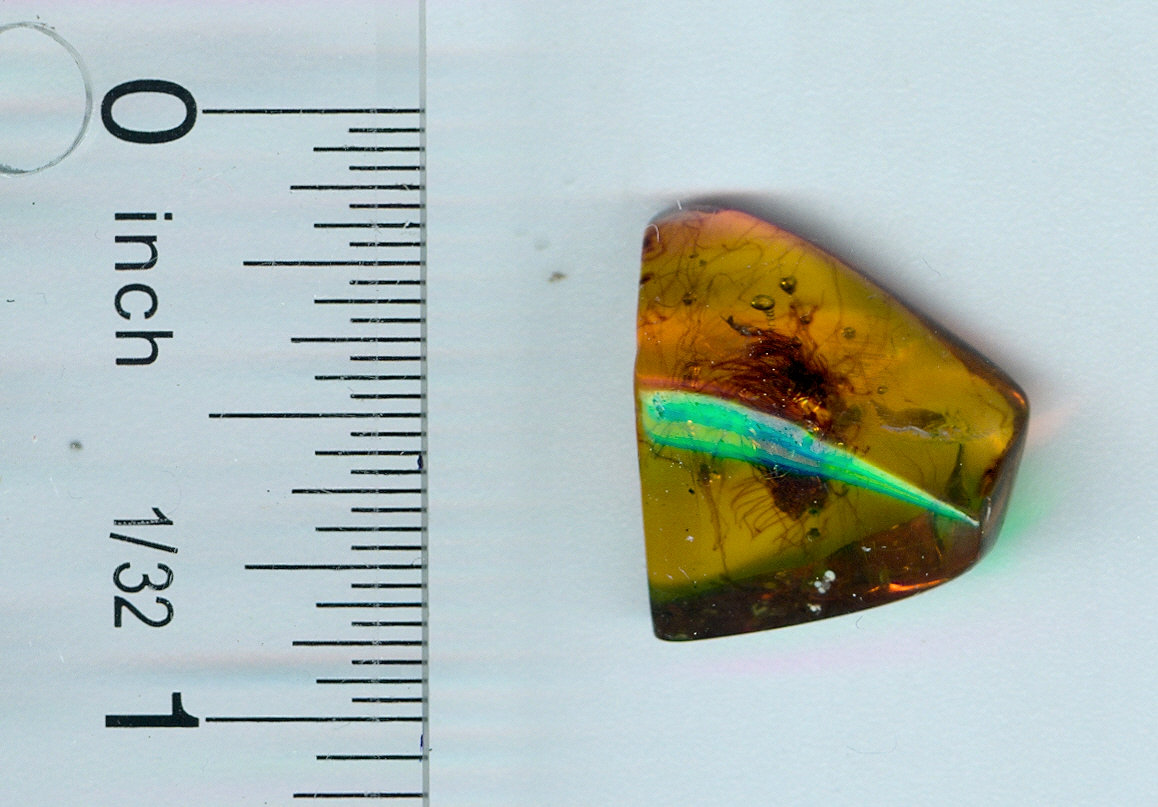
The romance isn't over yet. Amber jewelry is still being produced in prodigious quantities, and thanks to Jurassic Park, there is a new market in bug- and animal-bearing amber as well. The growing demand for such items has run up prices for larger spe cimens to thousands of dollars--creating a secondary, shadow market for amber forgeries. Careless consumers may find themselves owning very expensive chunks of yellow plastic. But buyers who deal with reputable specialty catalogs and museum stores can, fo r a modest price, experience firsthand the beauty and mystique of these golden treasures from the ancient past.

--Reported by Andrea Dorfman/New York

[SIDEBAR]

THE CASE OF THE MISSING ROOM

THANKS TO ADOLF HITLER, THE MOST ELABORATE AND arguably the most glorious work of amber art ever created disappeared in 1941. It was at the height of World War II that invading Nazis dismantled the fabled Amber Room of Czar Peter the Great and carted t he whole thing off.

Perhaps they thought they were entitled. The room was commissioned by Frederick I of Prussia in 1701 for his lavish palace in Berlin. It took Europe's finest craftsmen eight years to complete the dozen 16-ft.-high mosaic panels, comprising nearly 100,0 00 perfectly fitted pieces of carved amber depicting flowers and Prussian royal emblems.

But Frederick's son Frederick William I had no use for such frills, so in 1716 he gave the panels to Peter the Great. In 1755 they were assembled in the freshly completed Ekaterininsky Palace, near St. Petersburg, and supplemented with trompe l'oeil am ber wallpaper and amber objects from Peter's collection. In the rays of the setting sun, according to contemporary accounts, the whole room seemed to glow.

It must have looked good to the invading Nazis, who shipped the room--six tons' worth of paneling valued at more than $150 million--to Konigsberg (modern Kaliningrad). What happened to the panels is a mystery. They may have been deliberately burned, or inadvertently bombed in an Allied raid, or even--a theory that Boris Yeltsin reportedly favors--preserved to this day in a private German collection. "There are an enormous number of legends," says Alexander Shedrinsky, an art-conservation expe rt at New York University, "but I think the most realistic suggestion is that they disappeared during the bombing."

That doesn't mean, however, that the Amber Room is lost forever. Since 1979, Russian craftsmen have been painstakingly trying to re-create it--using as their guide a single color photograph, some drawings and notes, and bits of amber that fell off the original walls. The project is expected to cost millions of dollars and take at least five more years. "What they have done so far is absolutely mind-boggling," says Shedrinsky.

Visitors to the amber exhibition at the American Museum of Natural History will get a chance to judge for themselves: on display will be a corner table and surrounding wainscoting--which seem illuminated from within in warm tones ranging from pale yell ow to coppery red. Master amber craftsmen from Russia will be on hand to demonstrate their techniques and to prove that not every instance of Nazi desecration is irreversible.

1 1b 2 3 4 5 6 7 8 9 10
Blue Amber | Green Amber | Feather | Millipedes | Spiders | Books | Loupes
Expensive Amber | Unique Amber | Pseudoscorpions | Botanicals in Amber
Candy Amber | Amber Cam | Baltic Amber | Black Lights | Amber Chunks
Amber Medicine | Chiapas Amber | Malaysian Amber | Kauri Gum | Specials
Mounted Bugs | Jewelry | Fake Amber | Bug Specials | Newsletter | FAQs | Copal
Free Screen Saver | Gift Certificate | Field Guide | Unpolished Kauri | Weather
Testimonials | General Info | Amber Poster | Rough Amber