Chiapas Botanicals
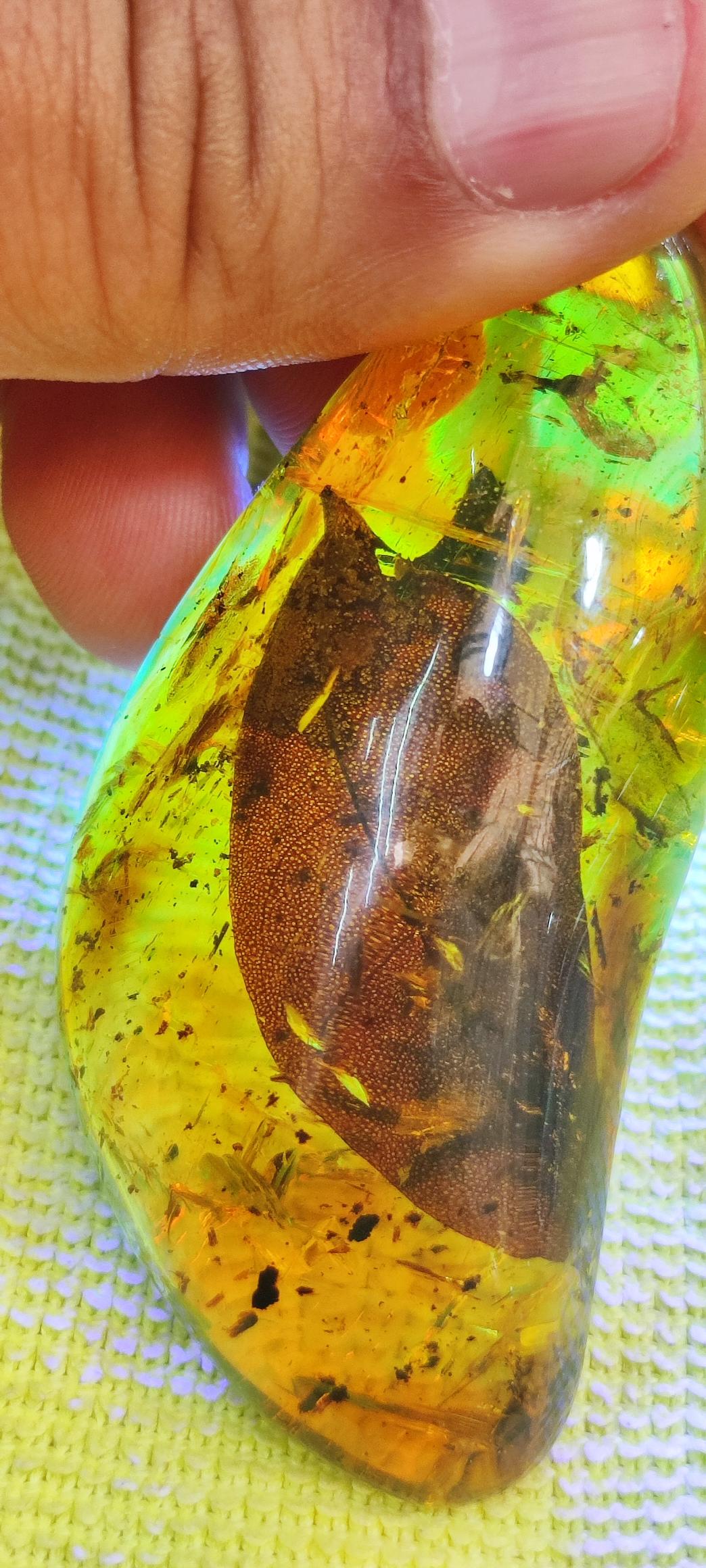
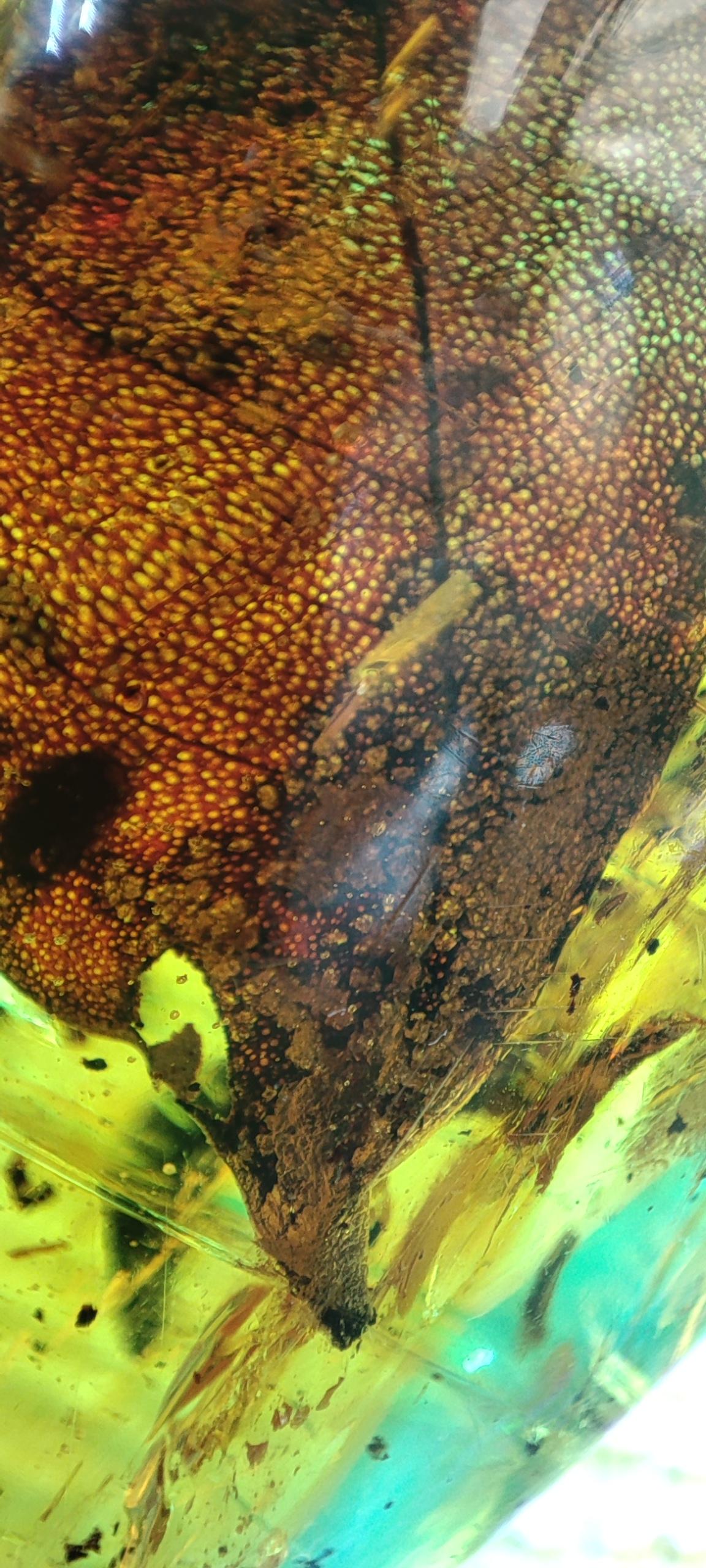
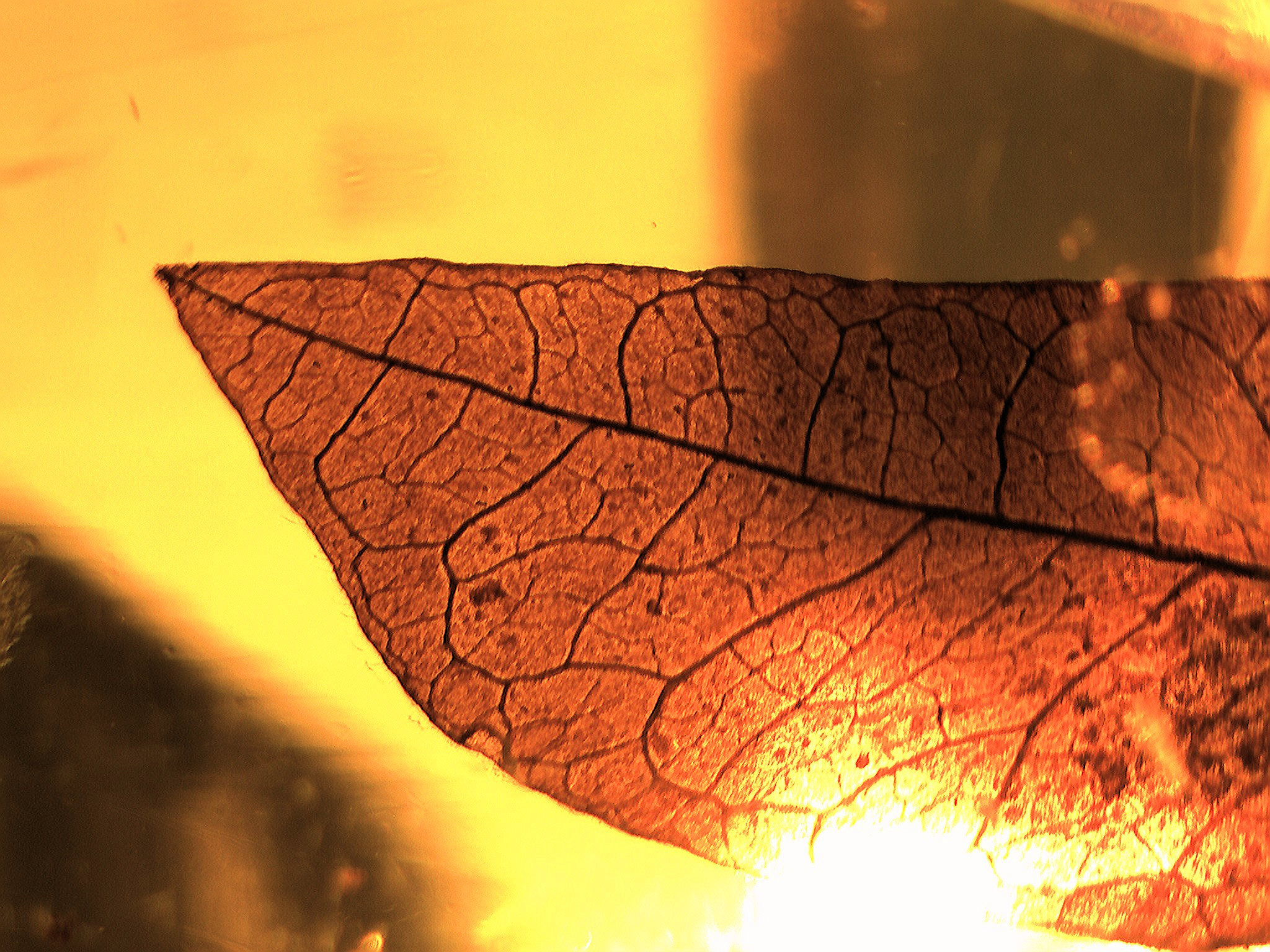
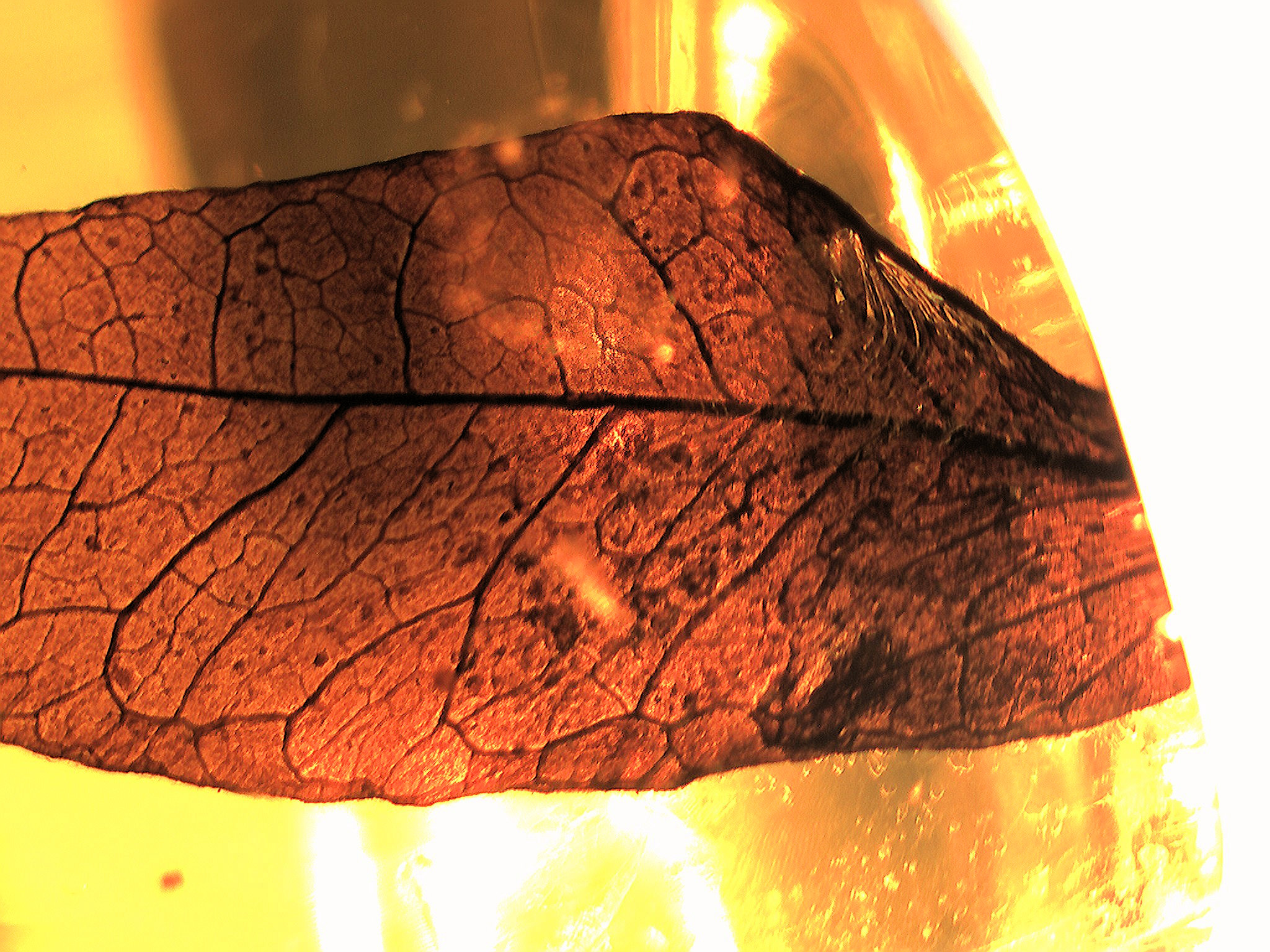
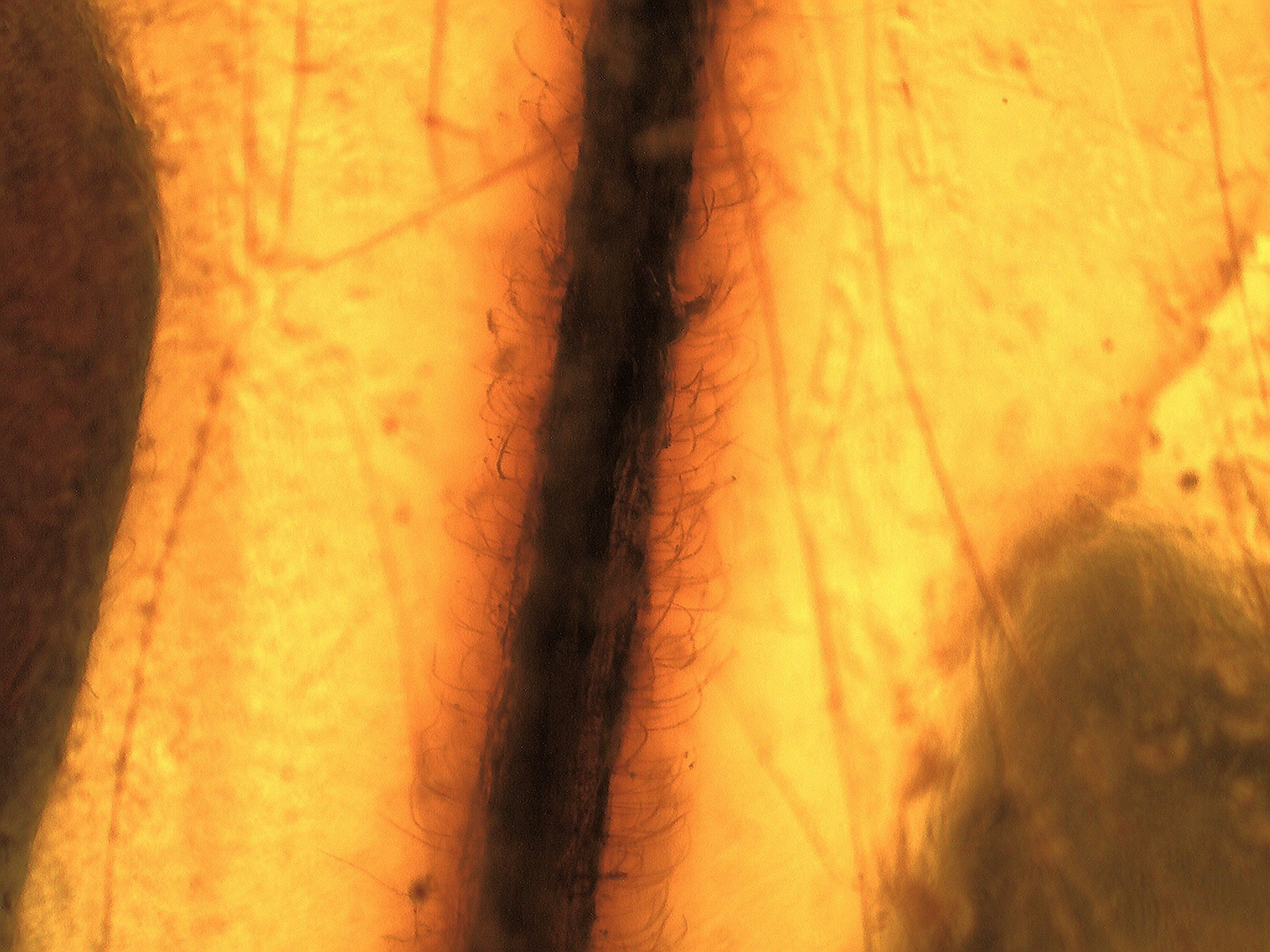
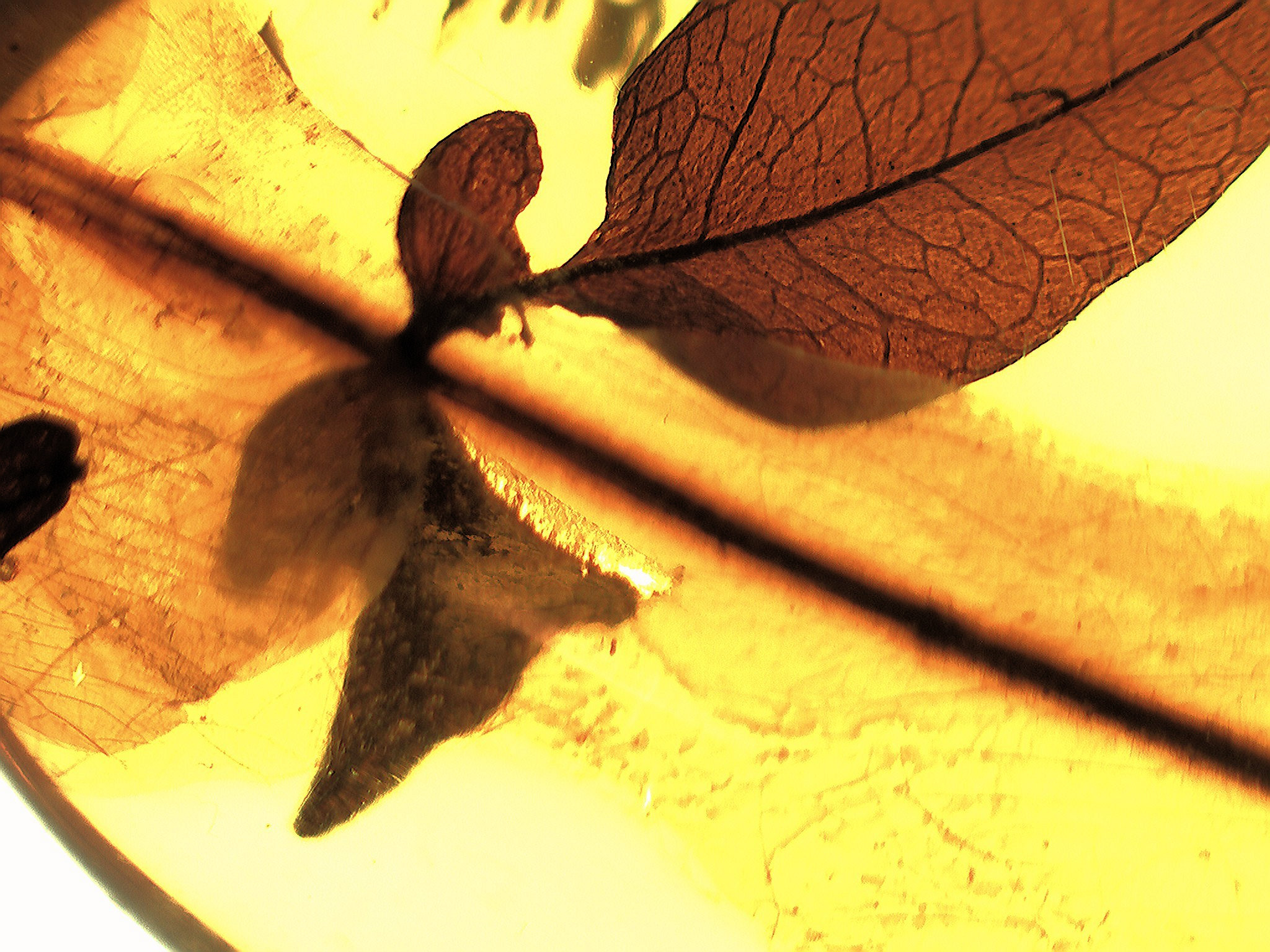
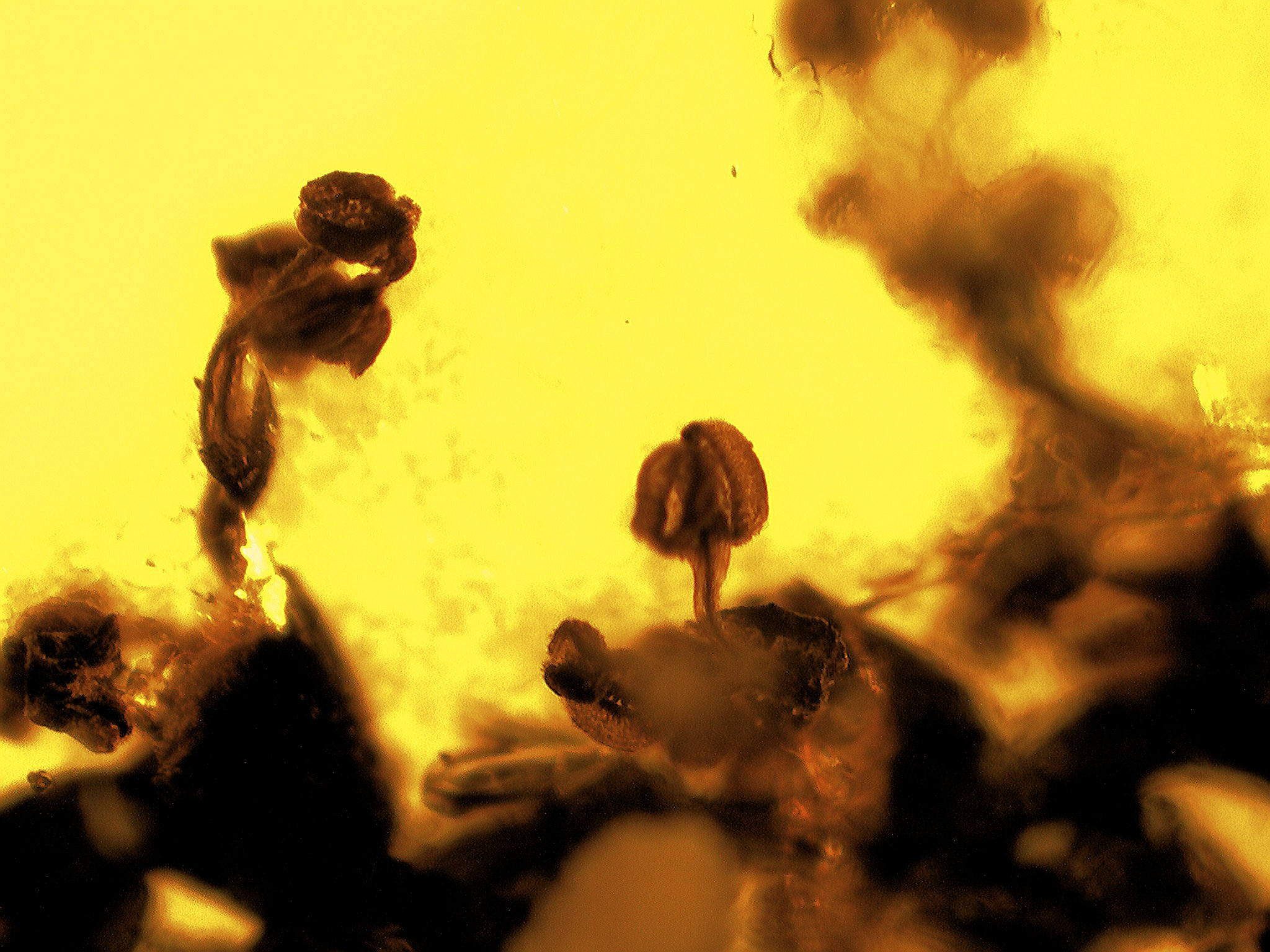
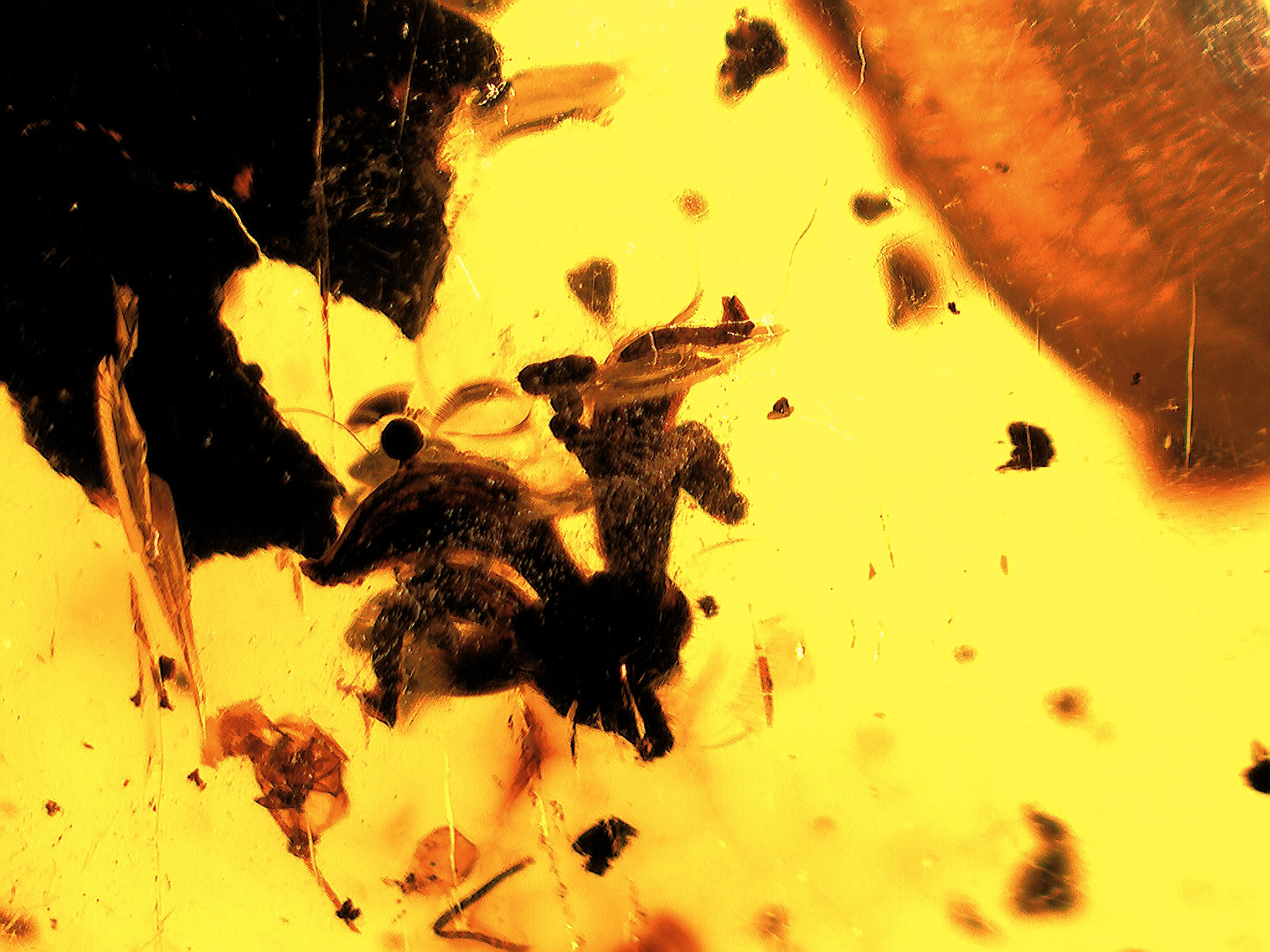
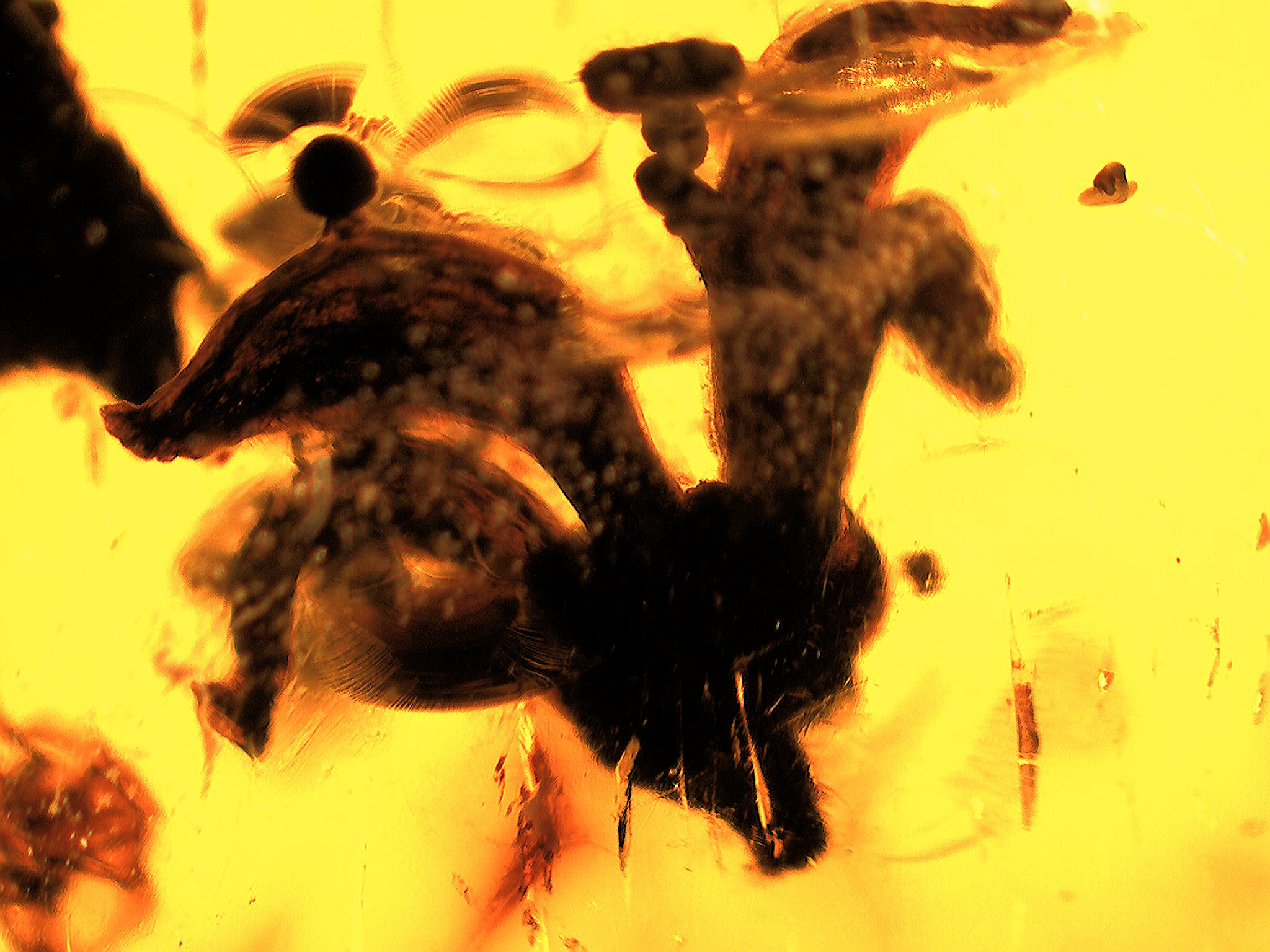
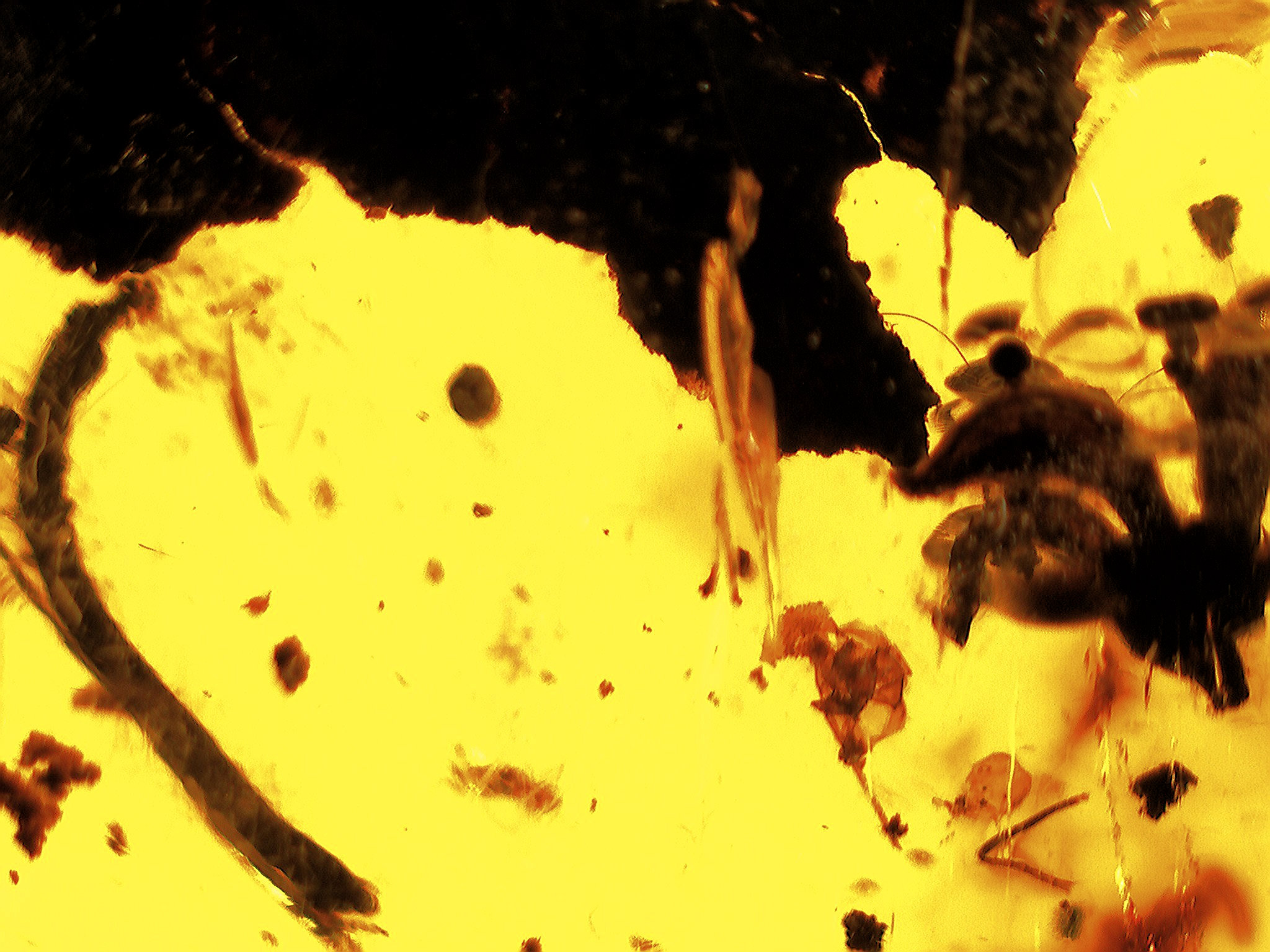
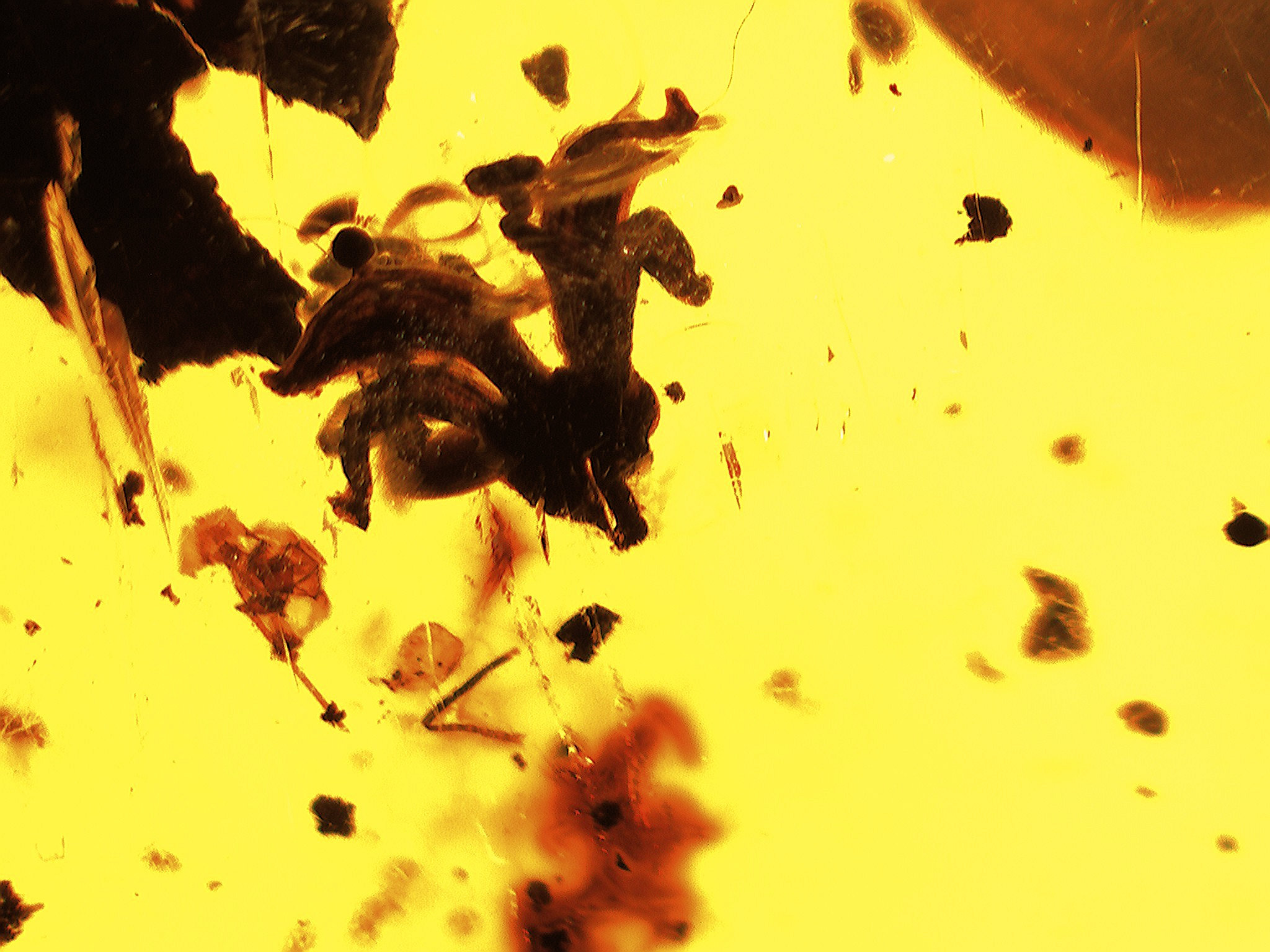
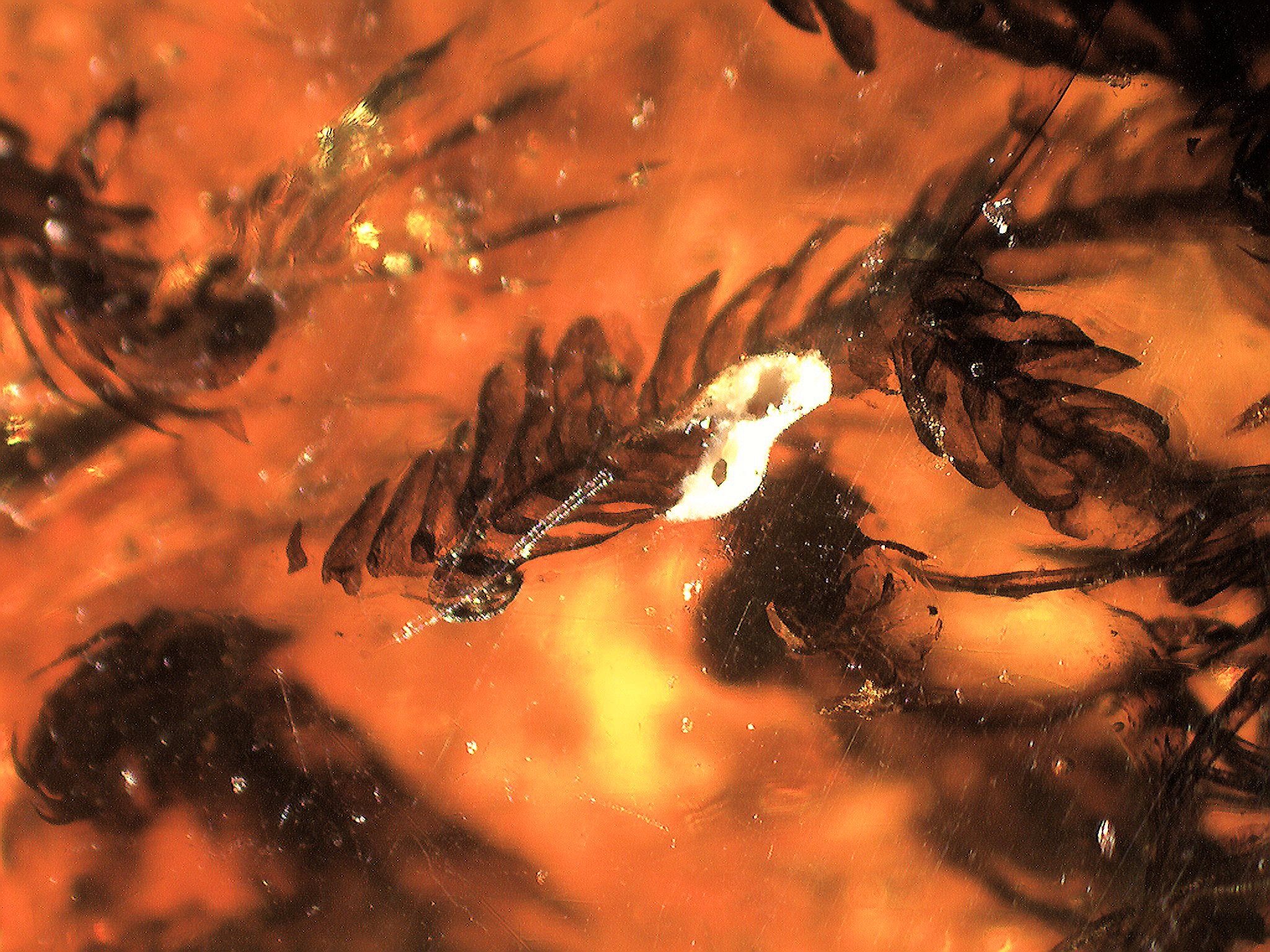
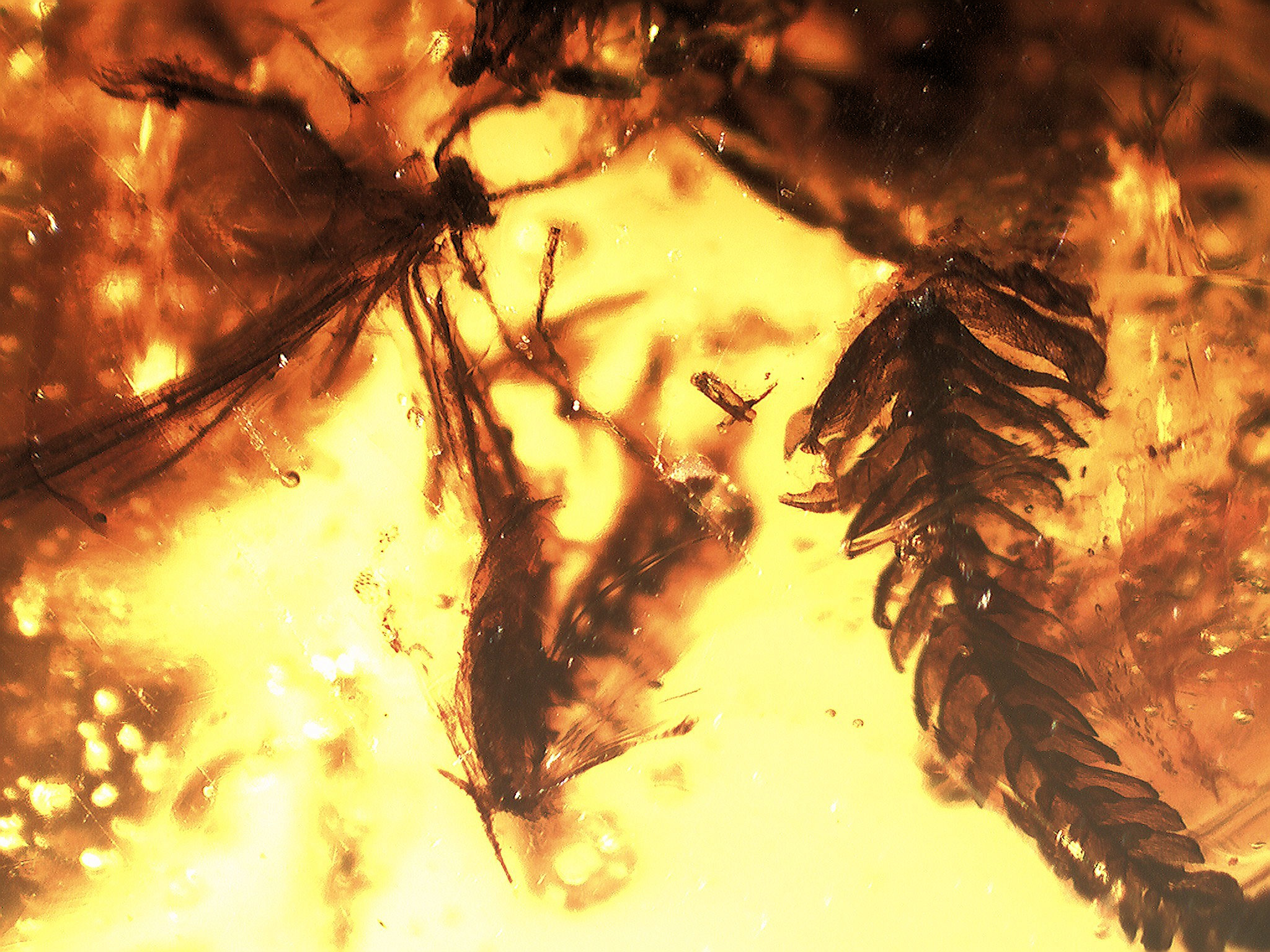
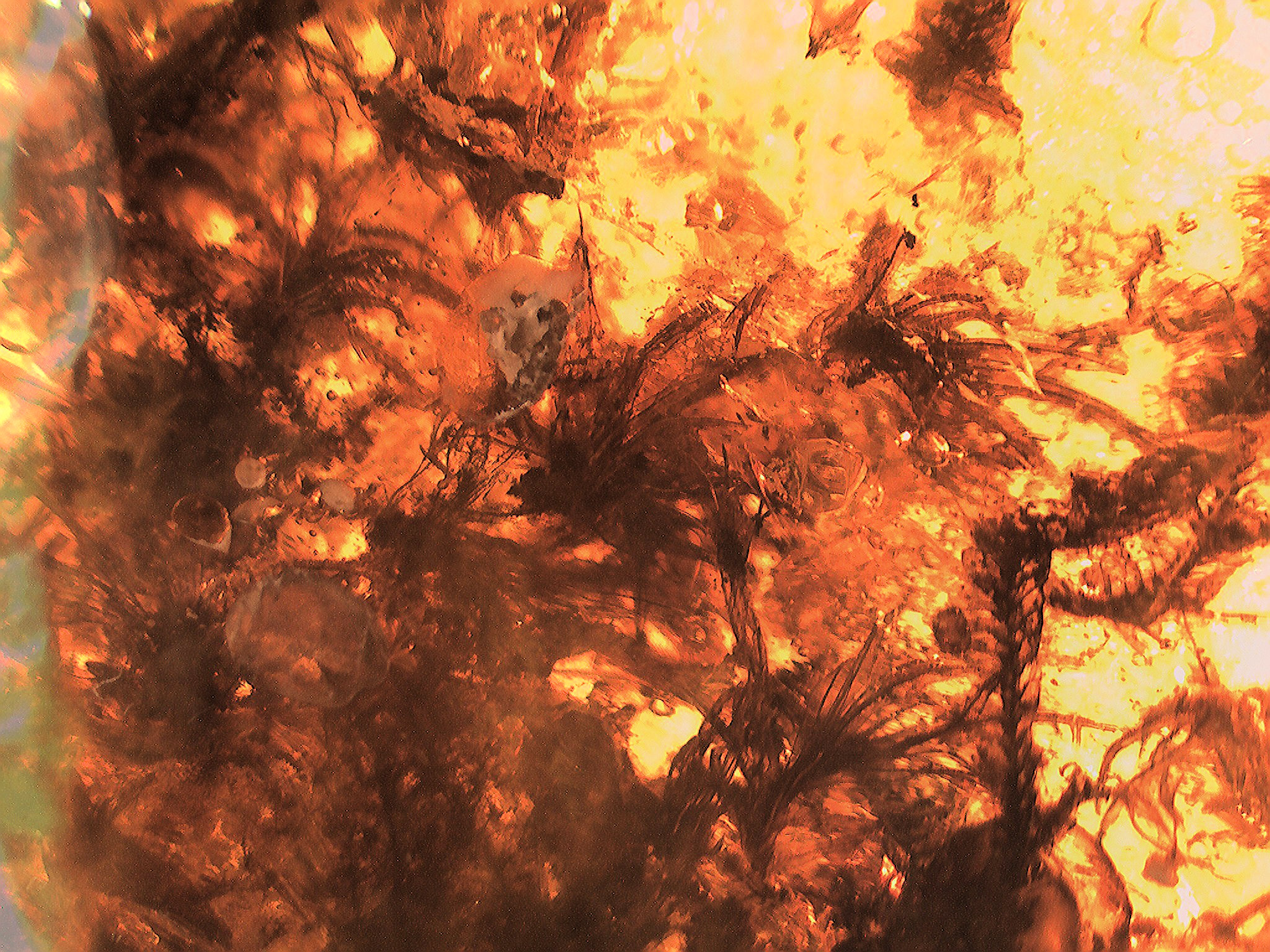
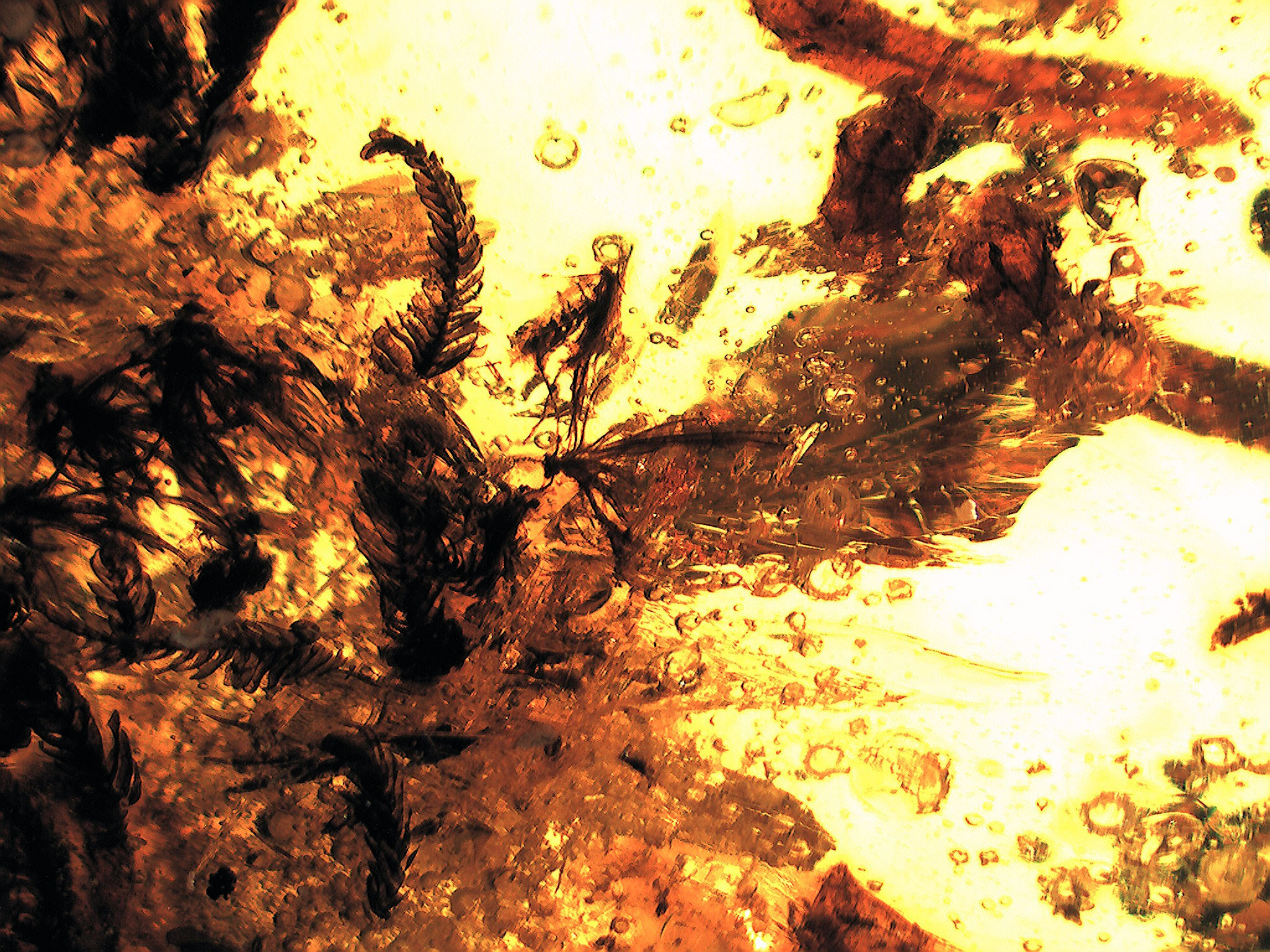
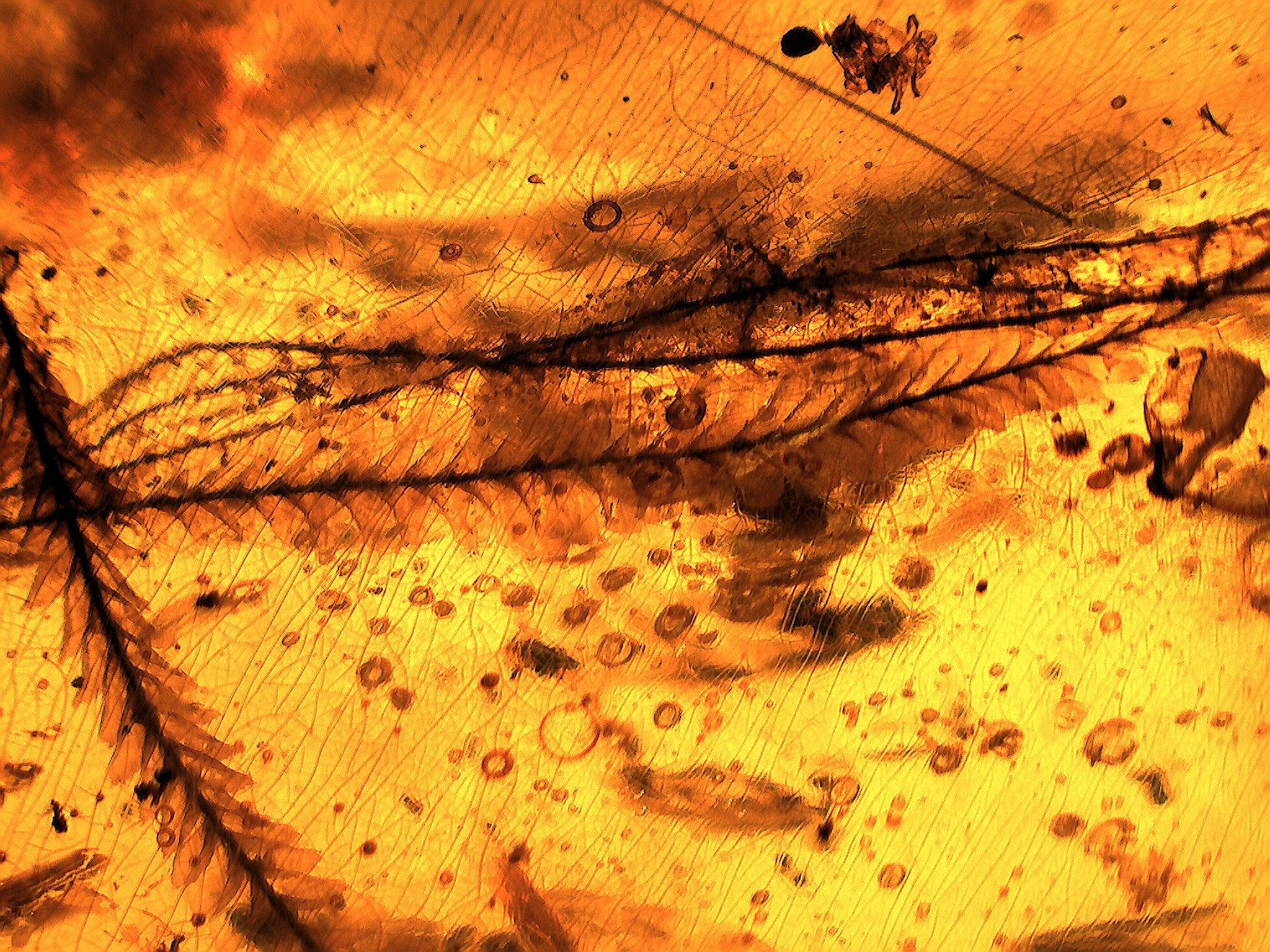
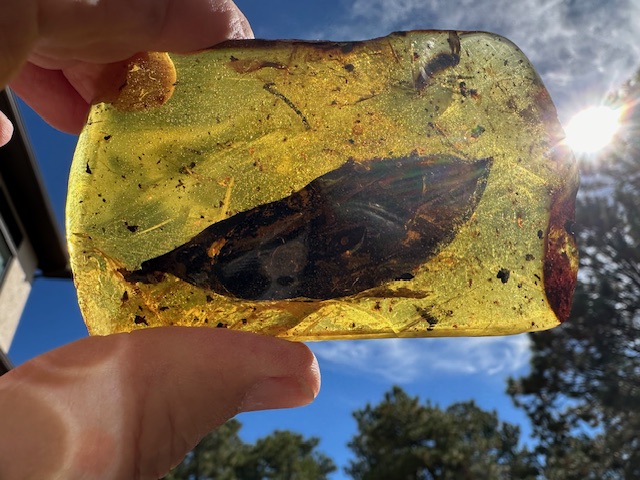
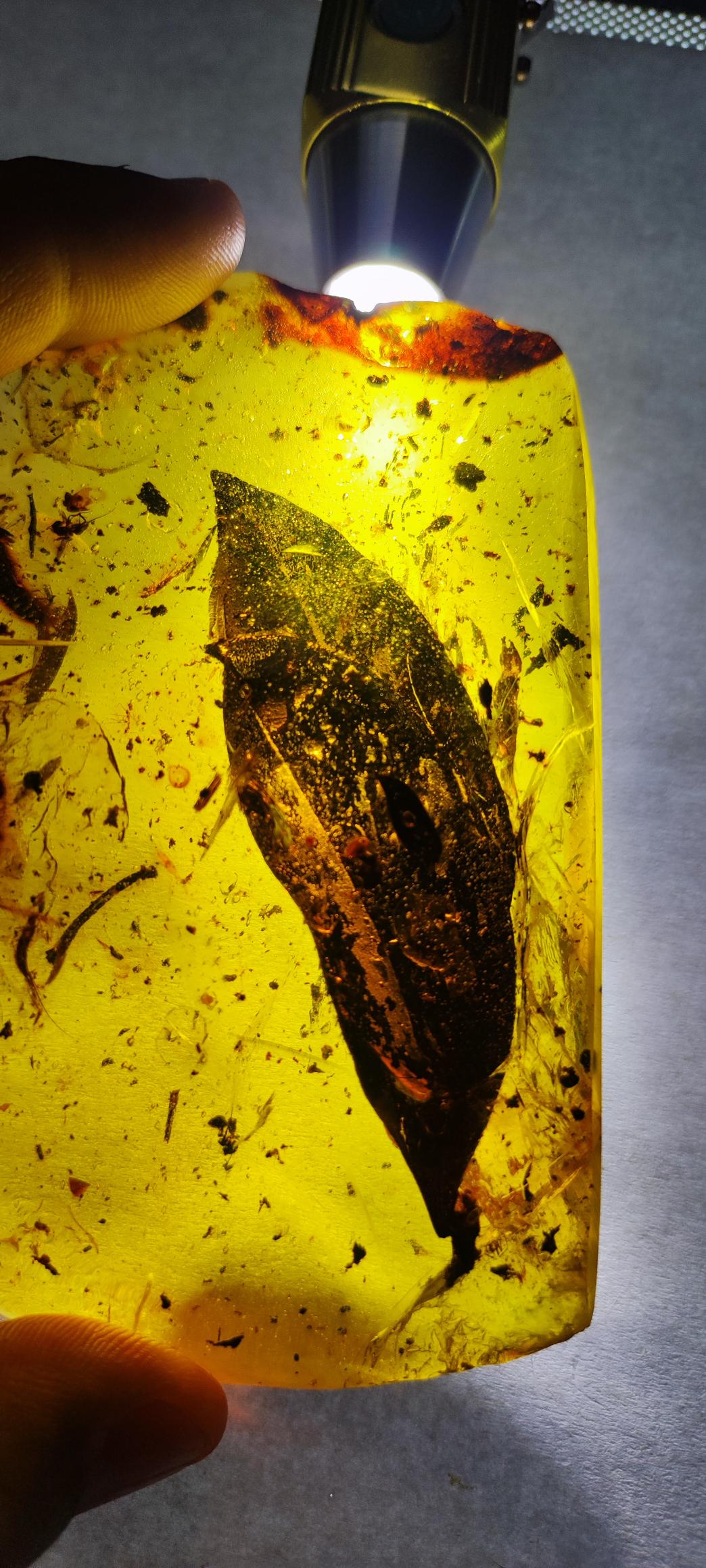
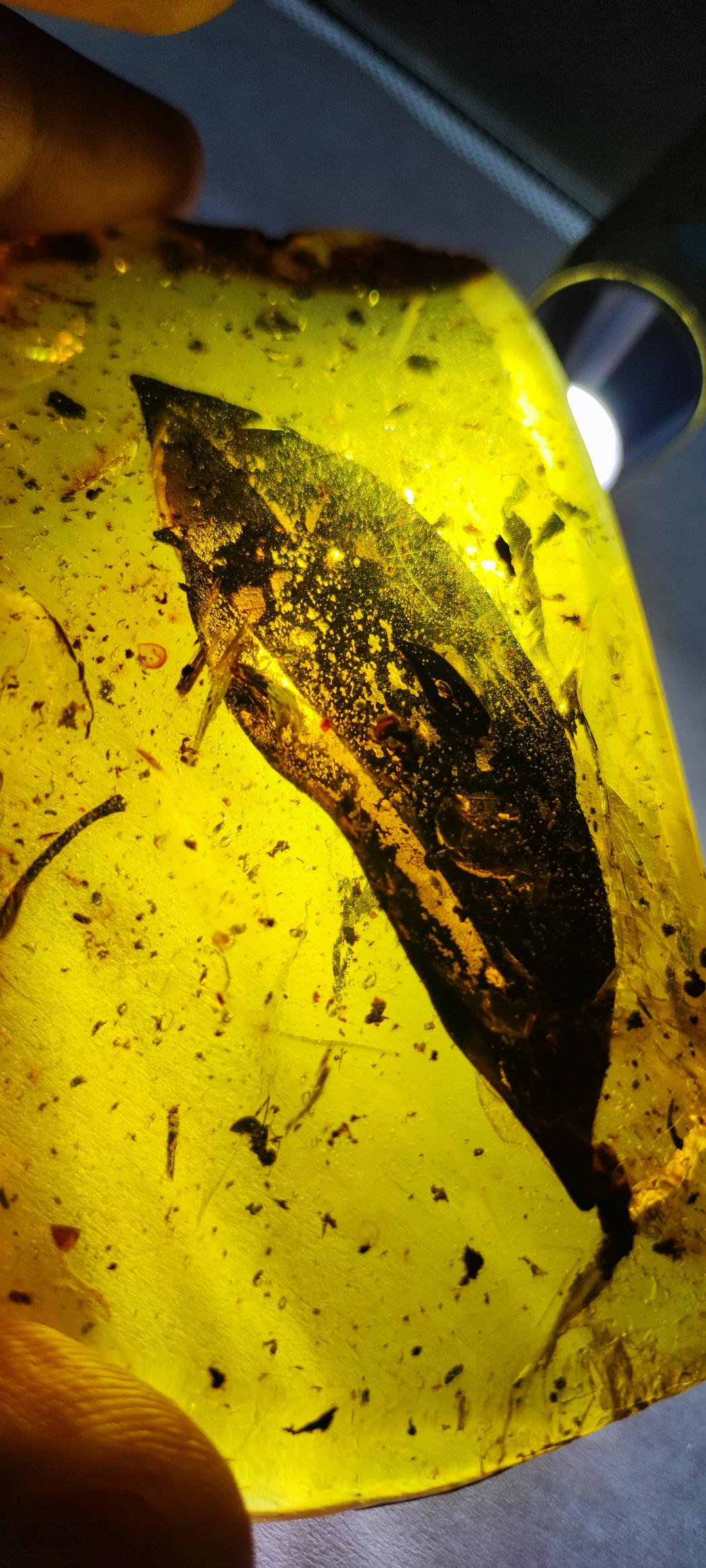
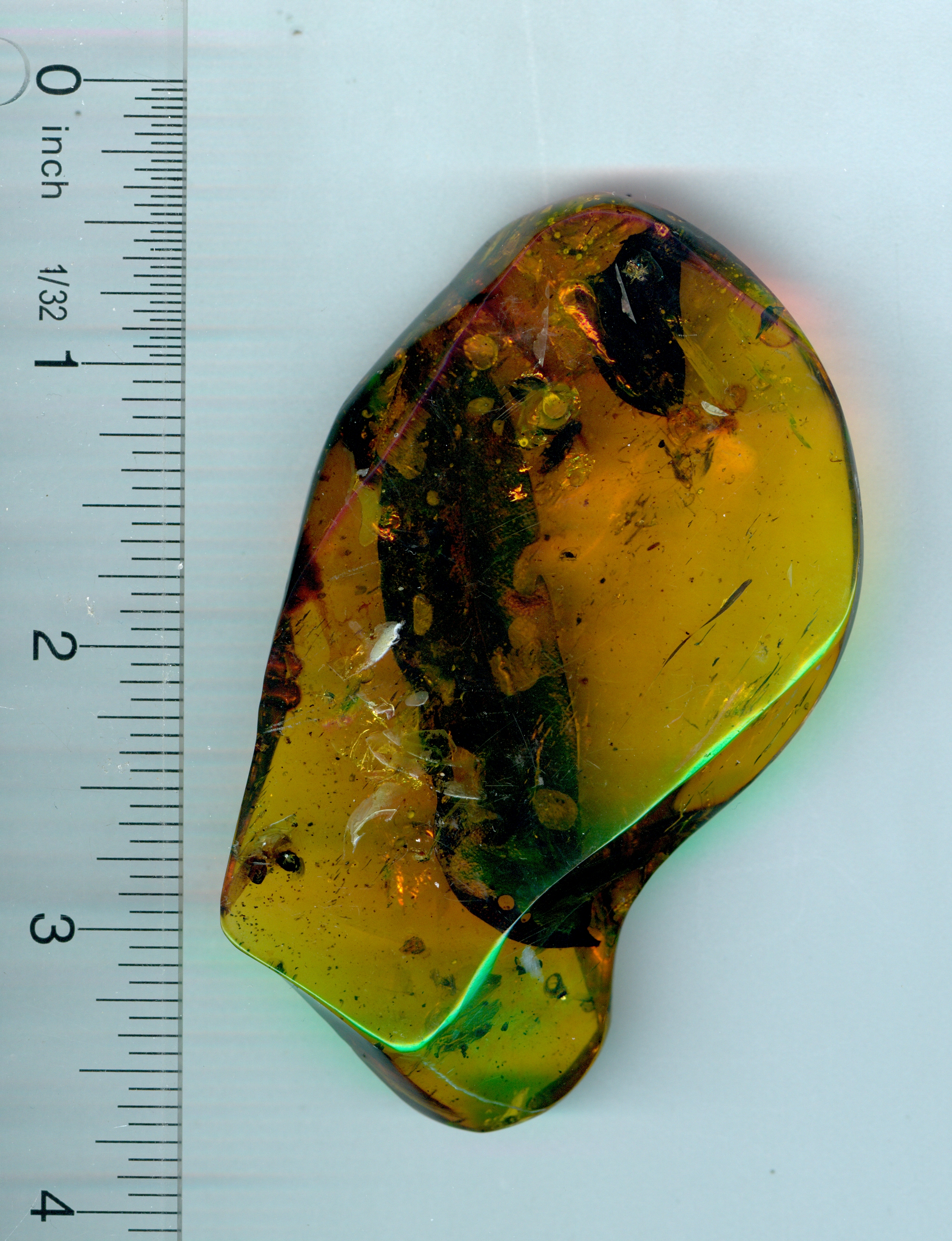
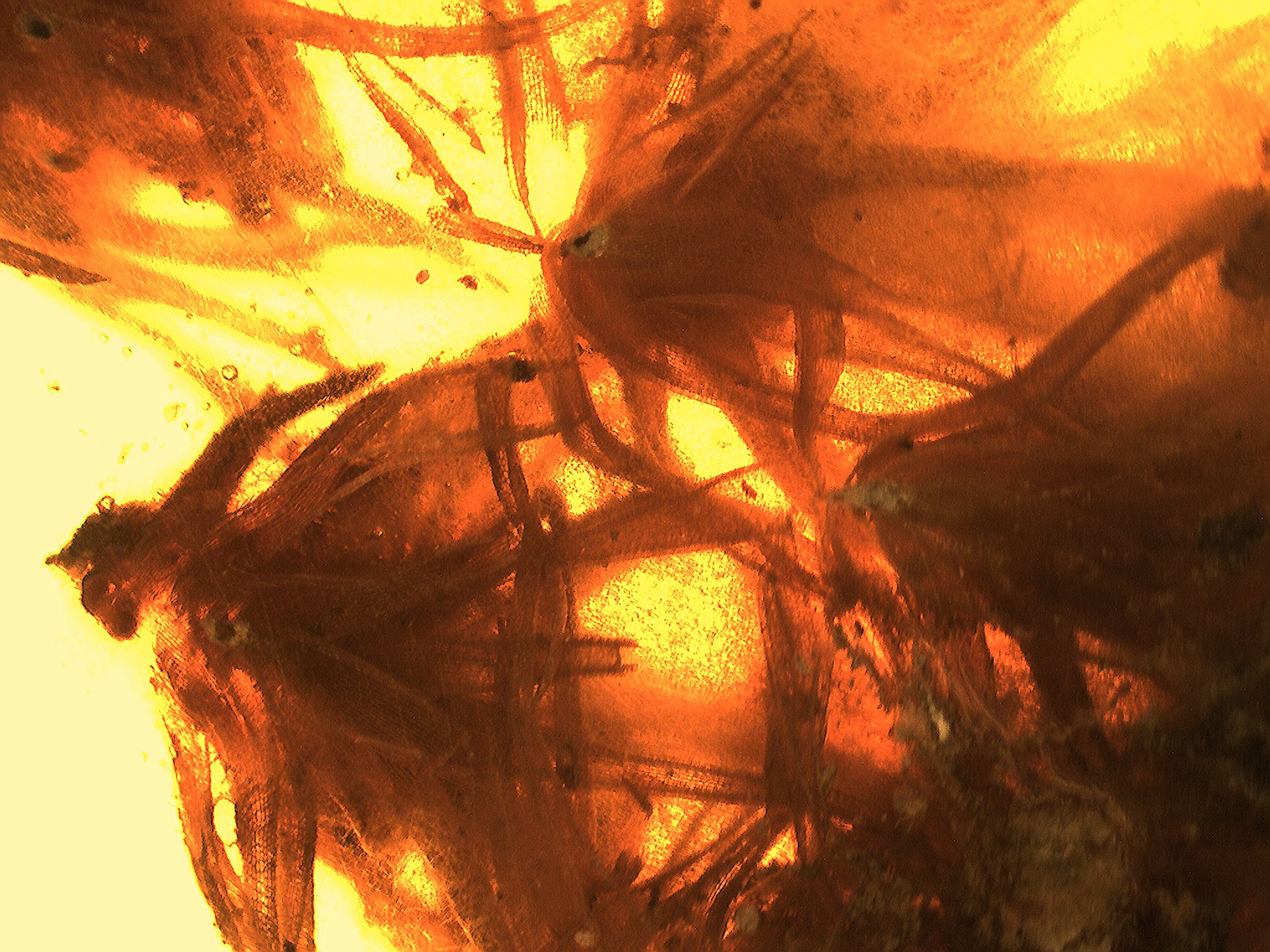
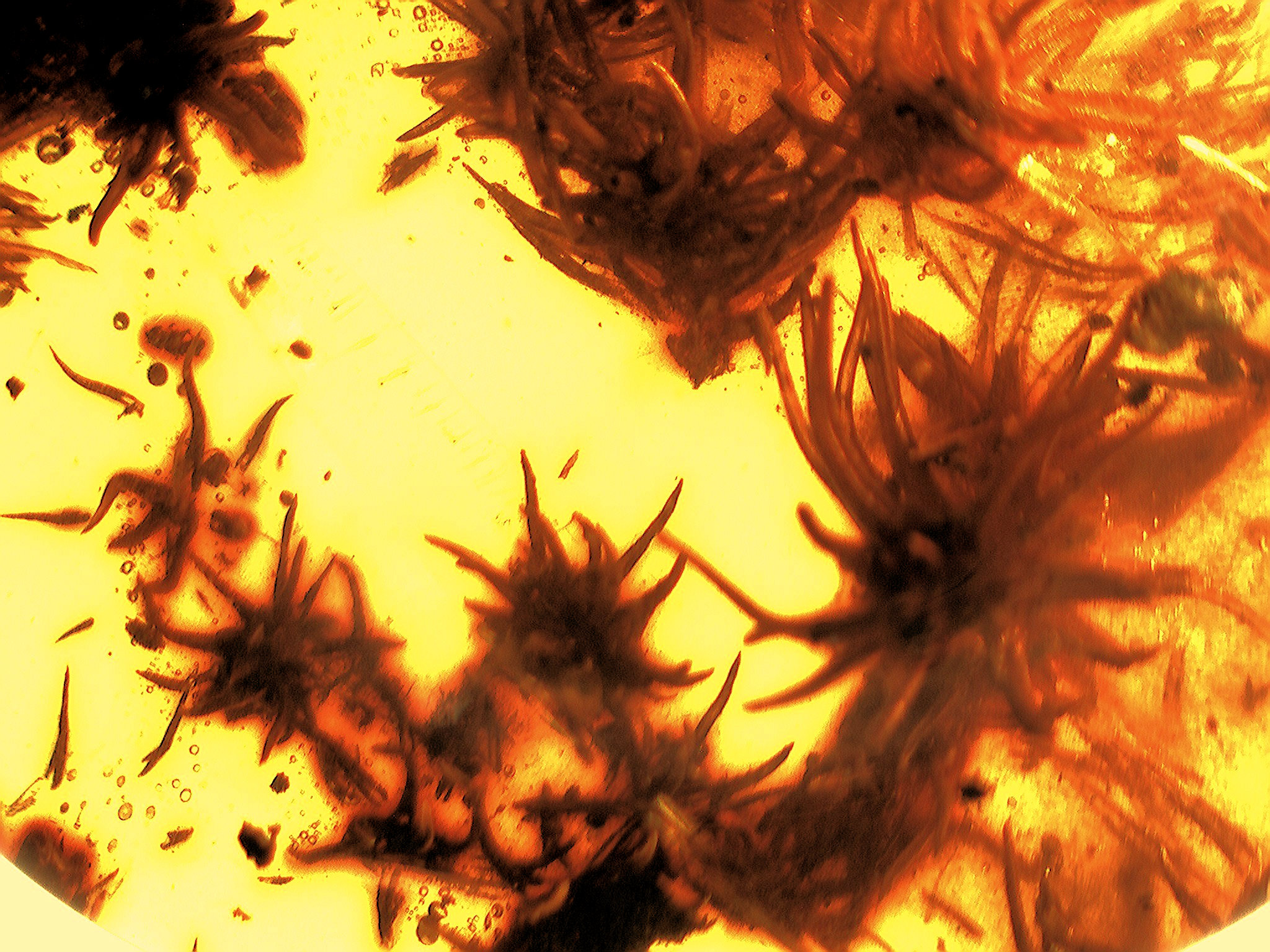
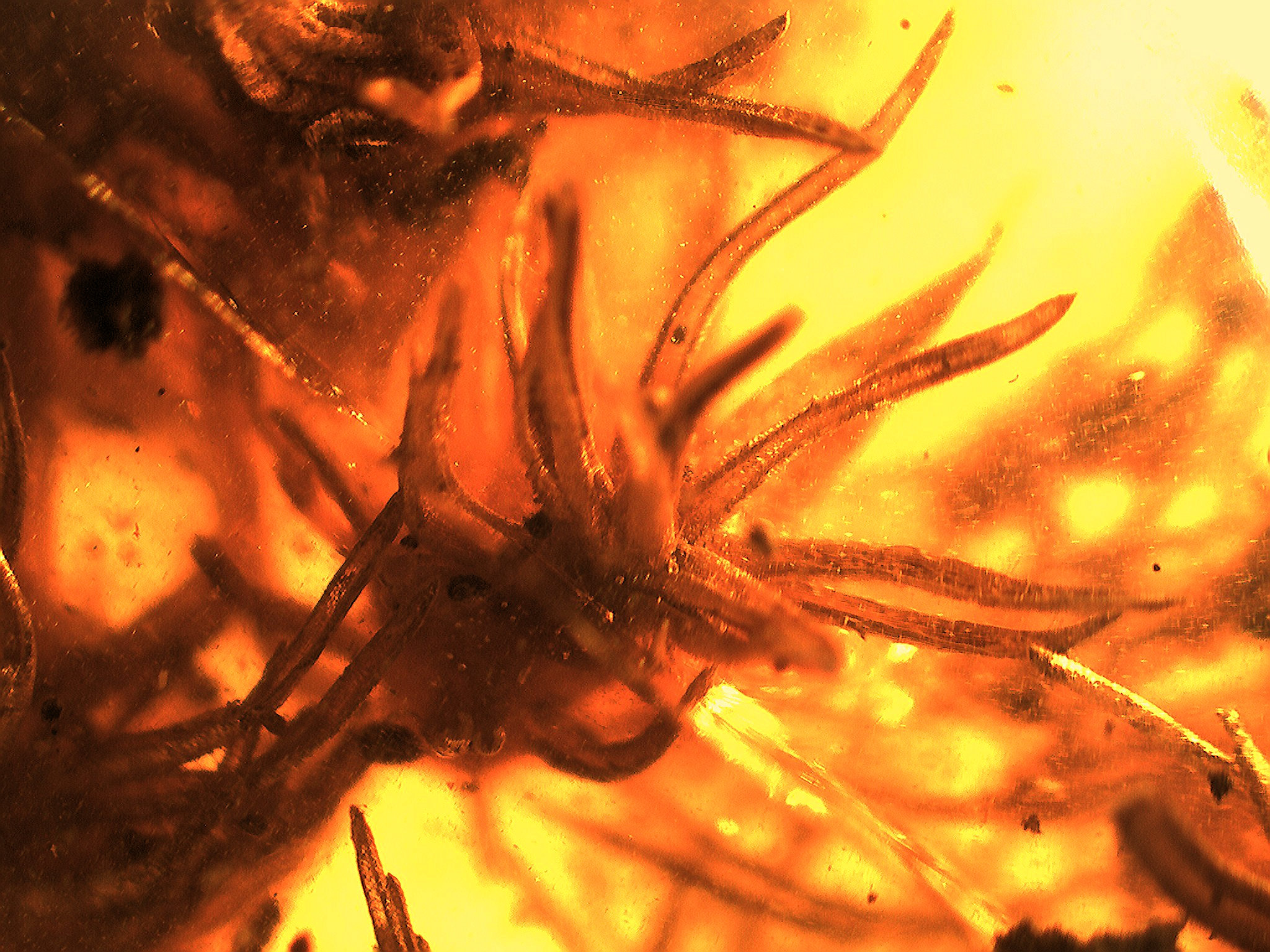
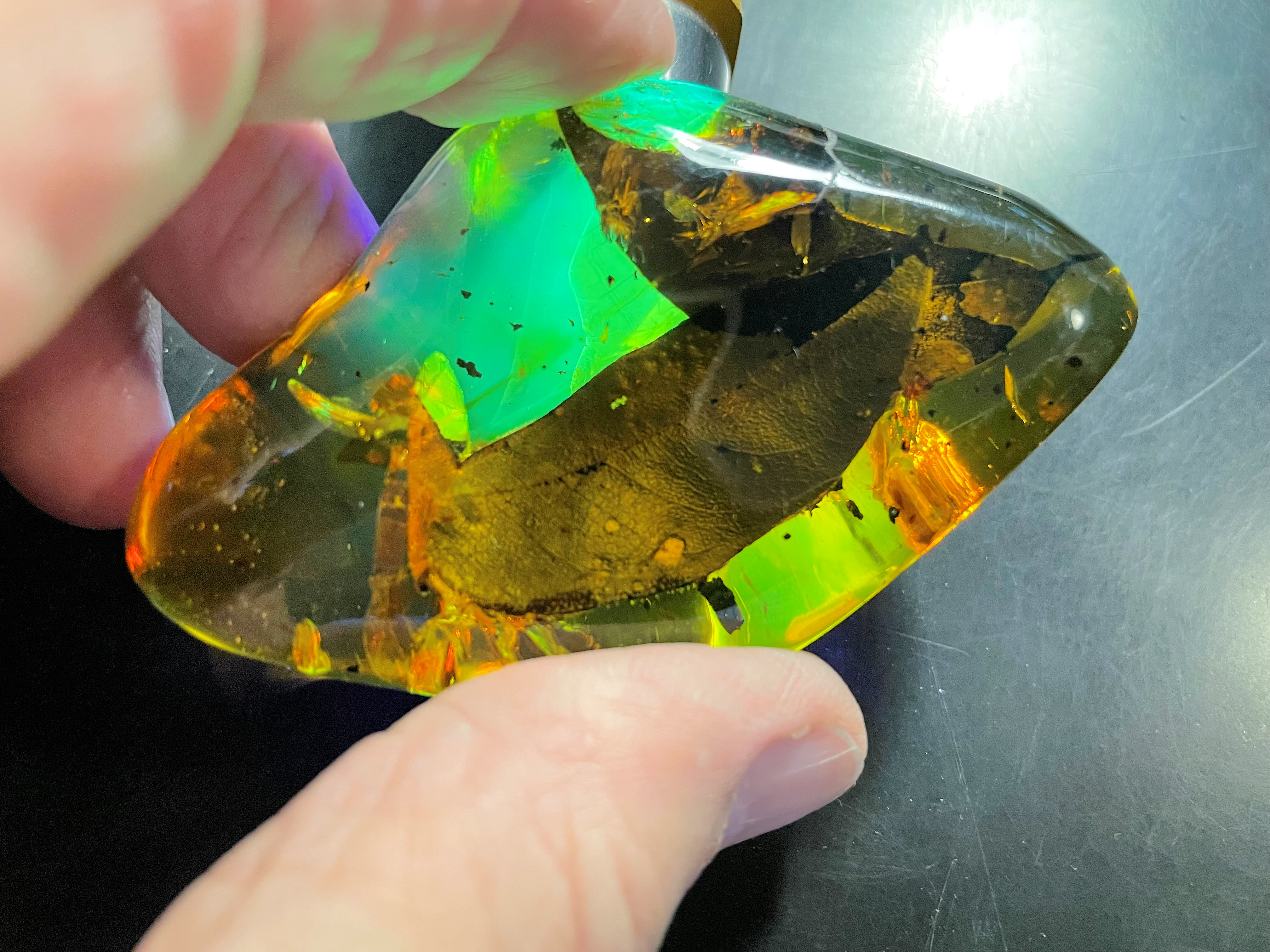
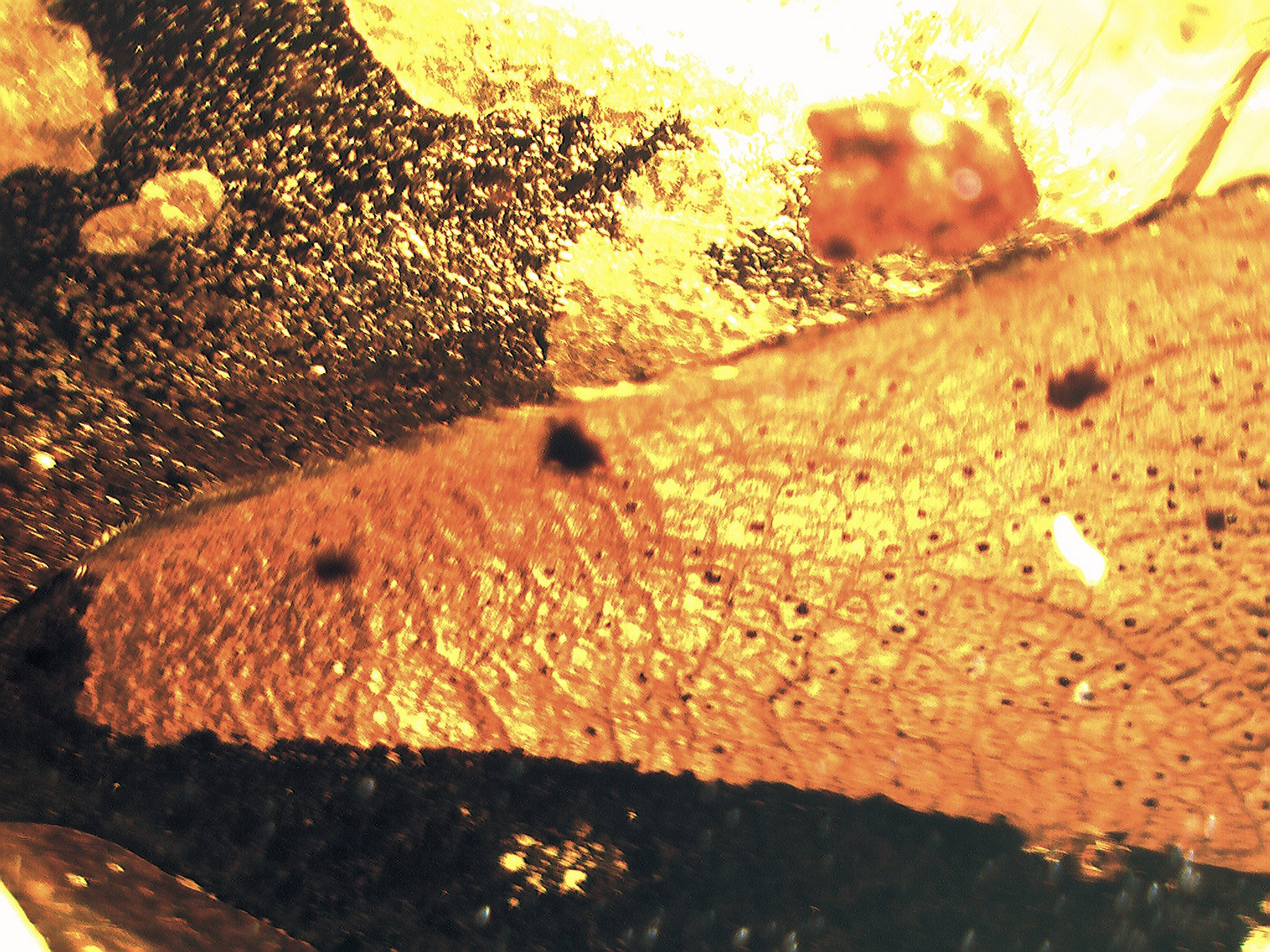
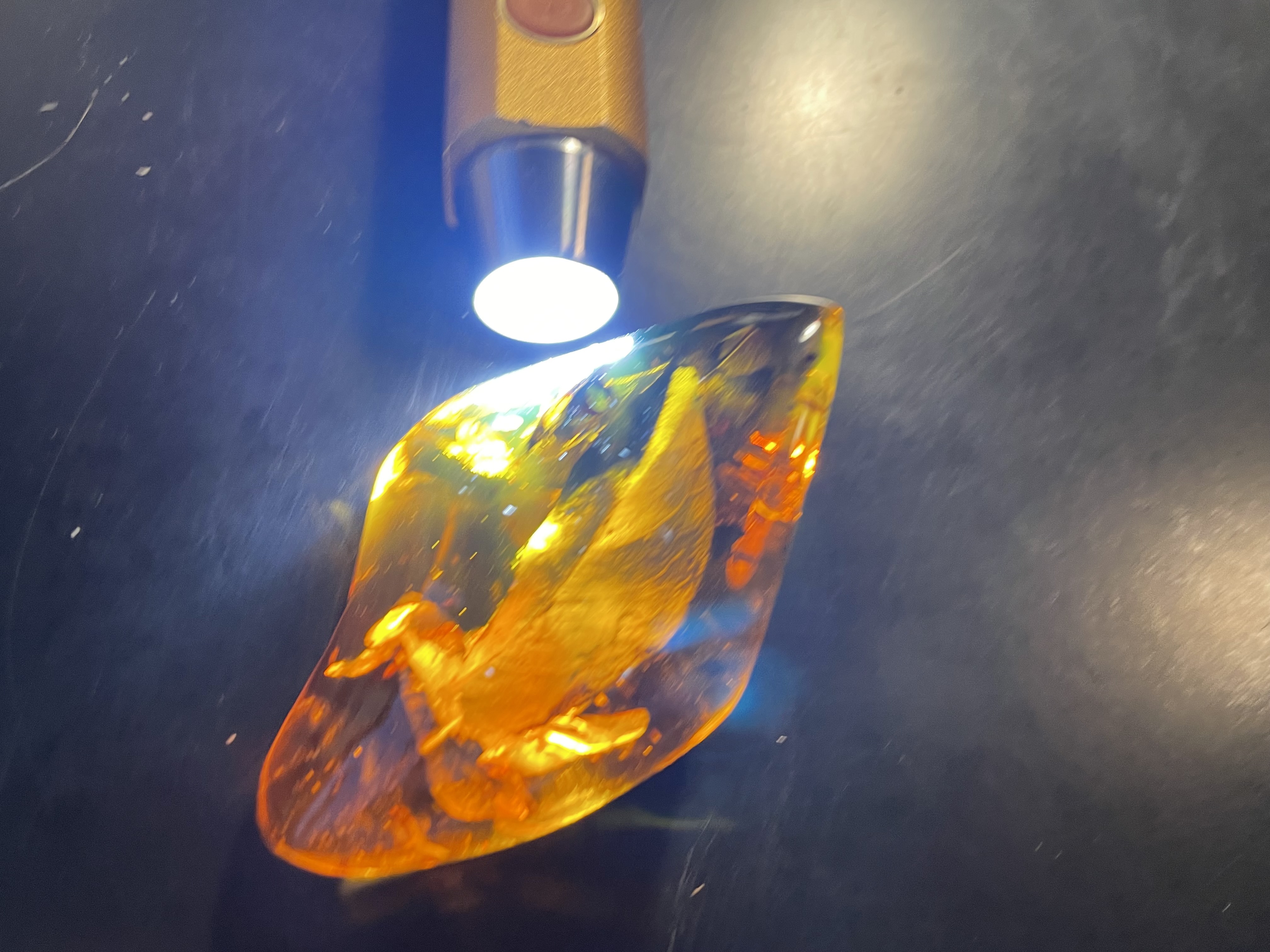
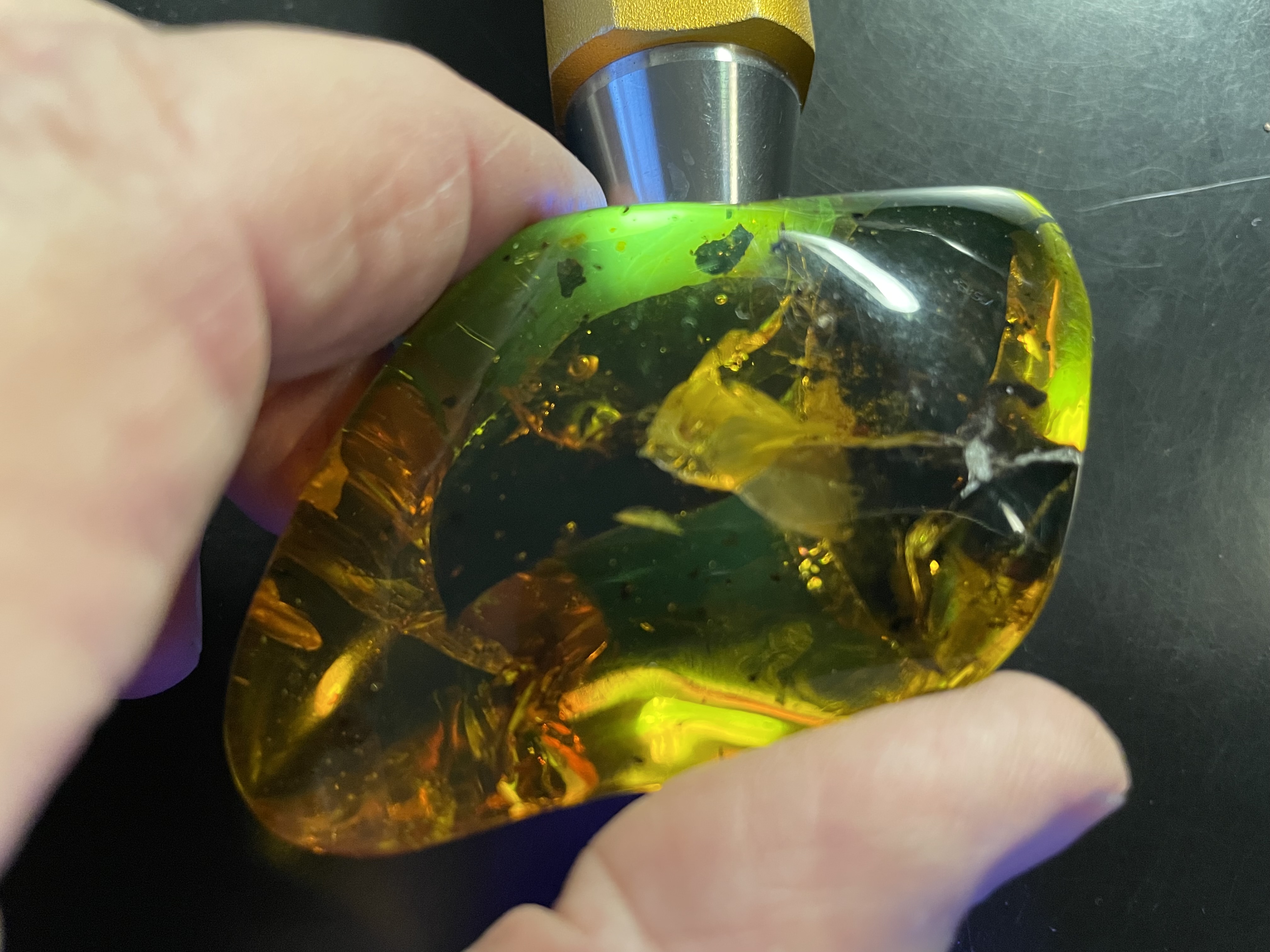
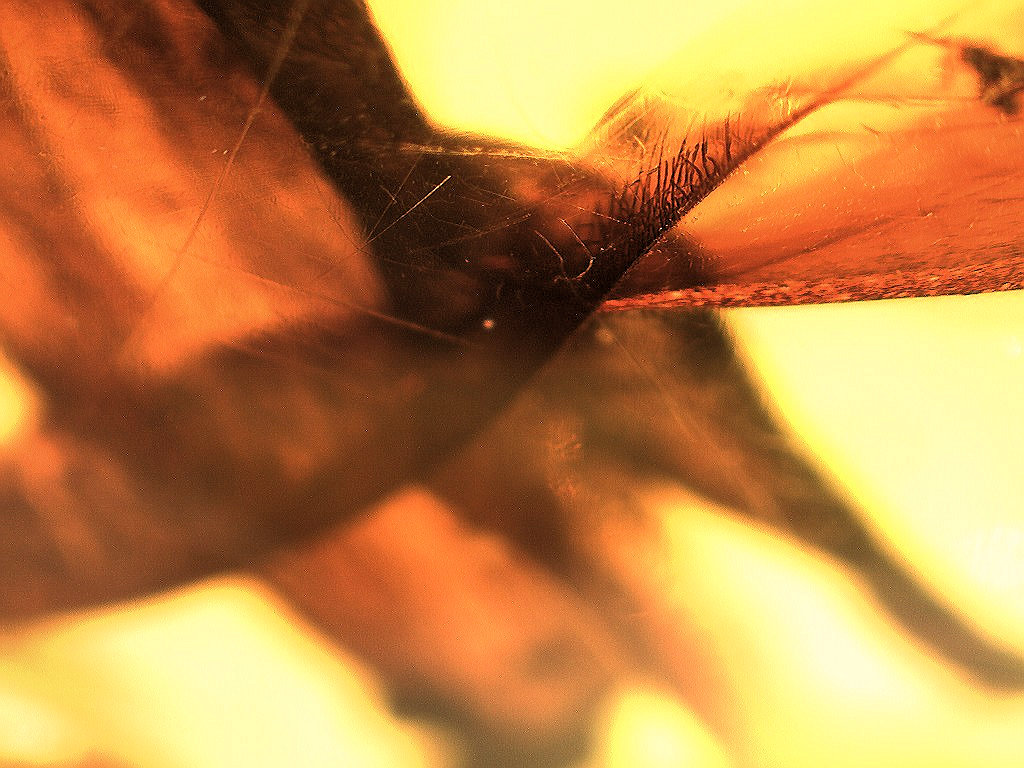
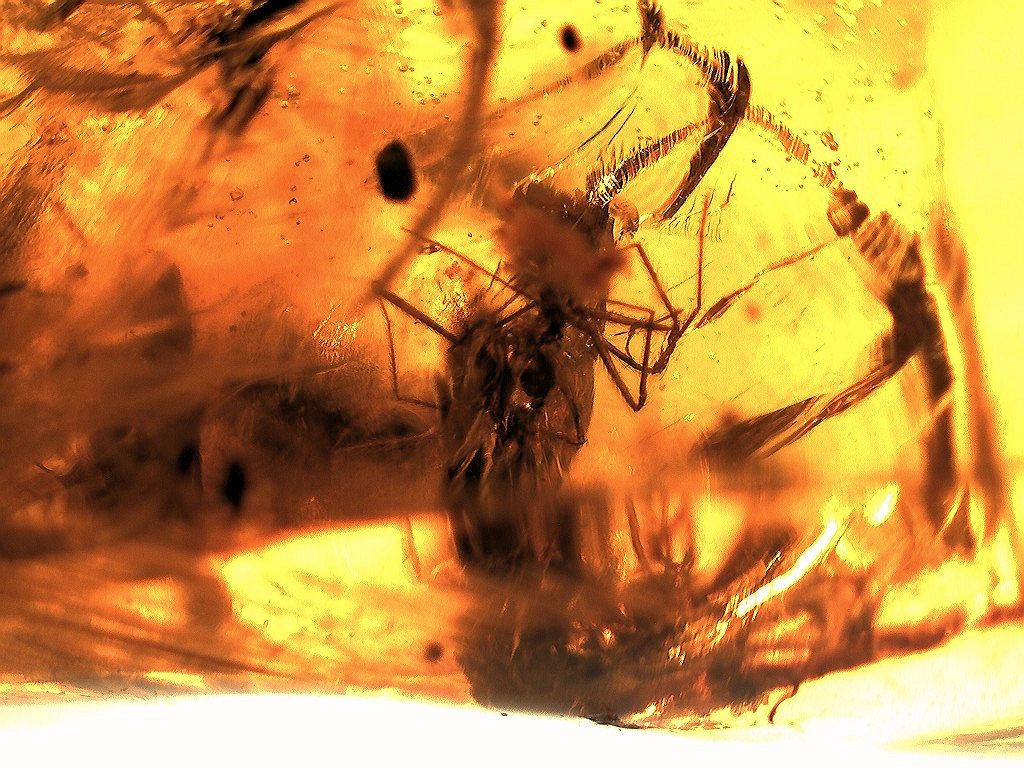
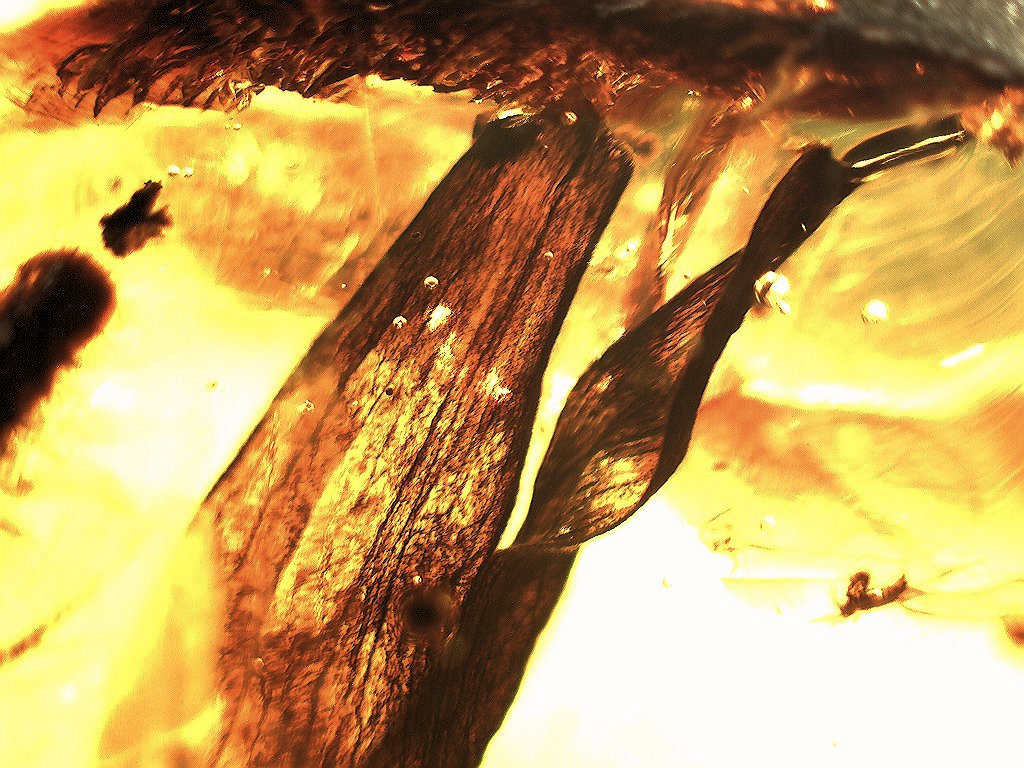
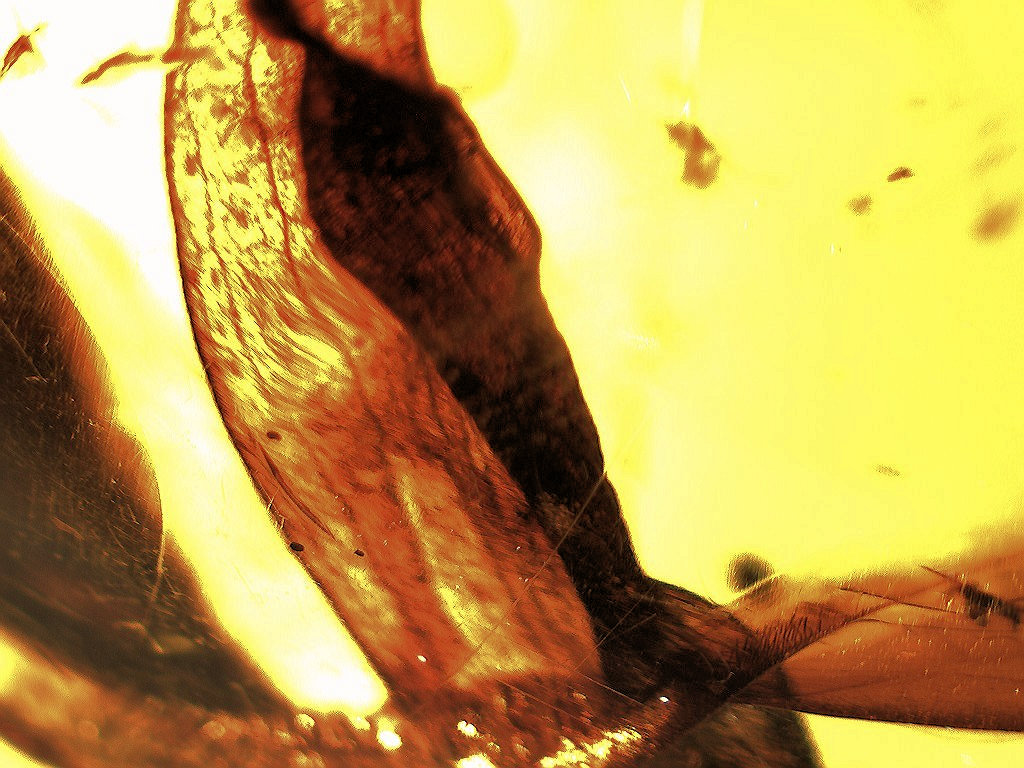
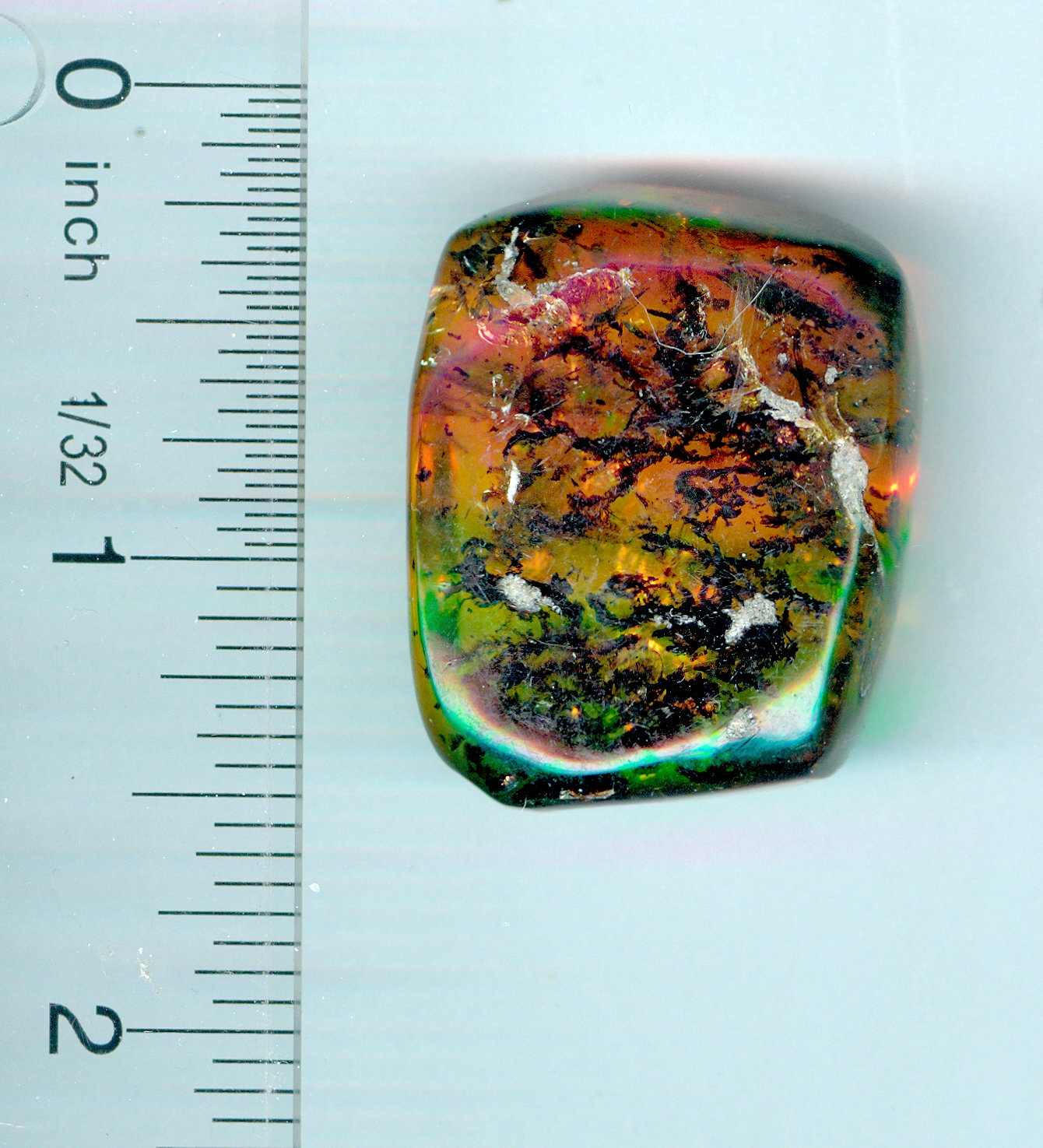
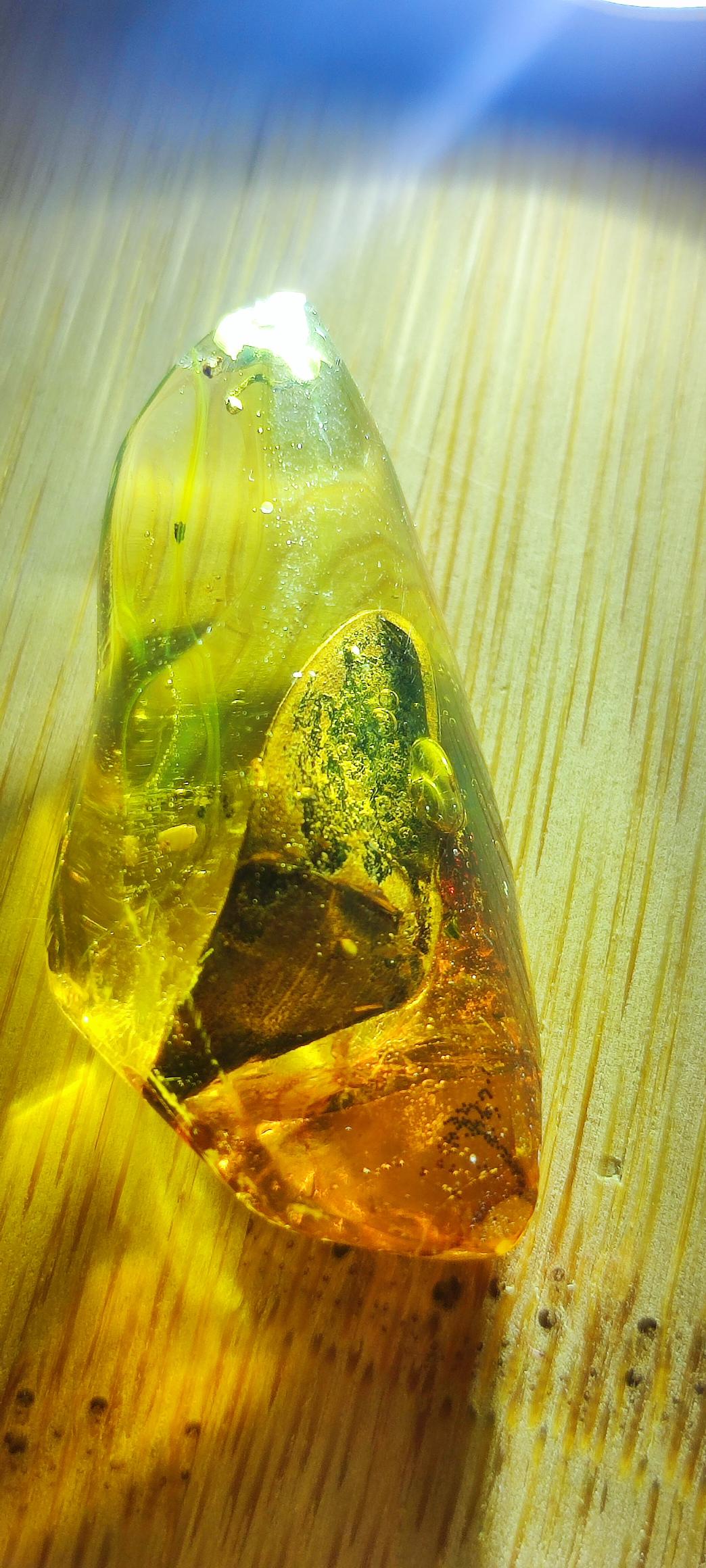
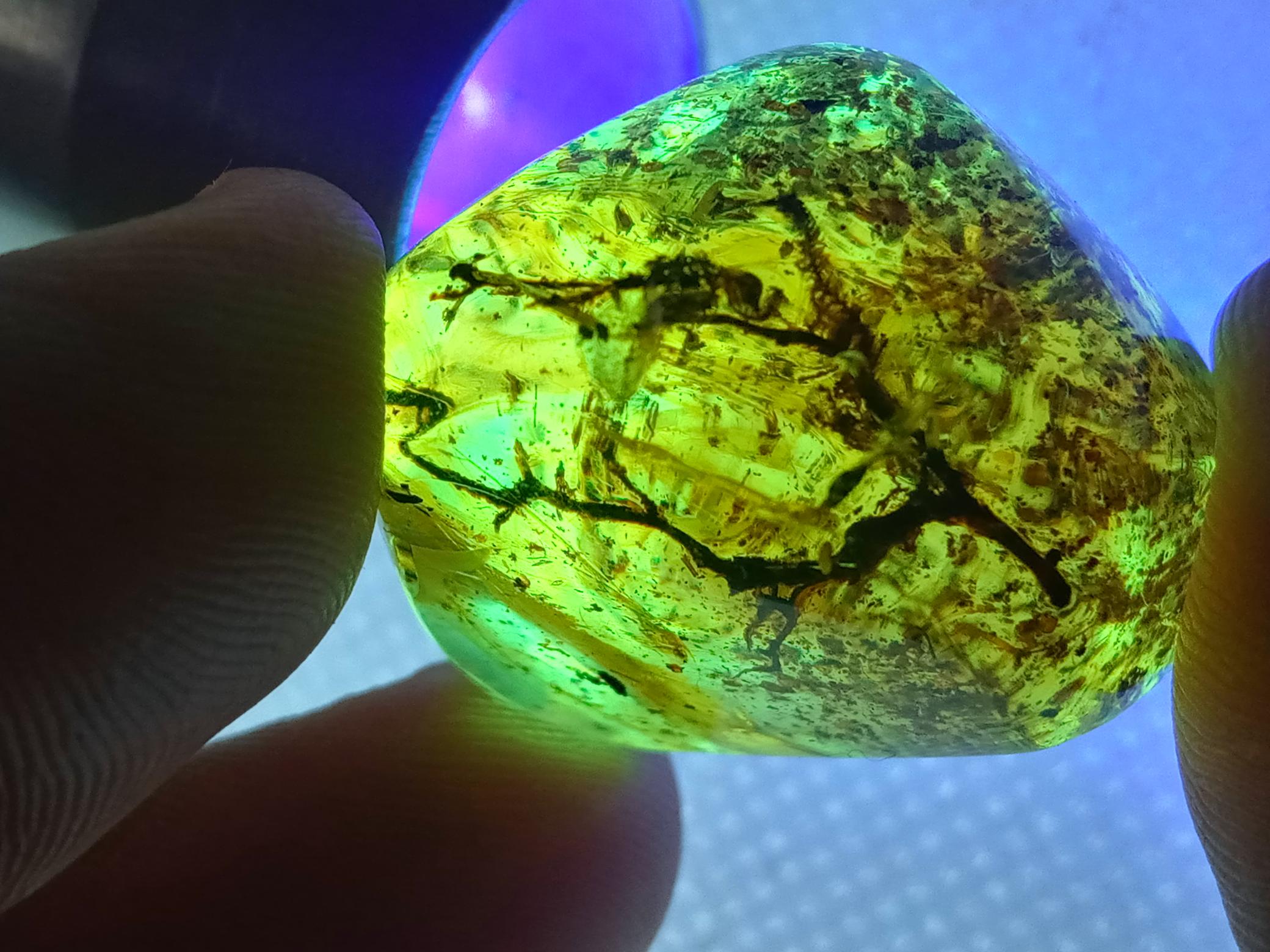
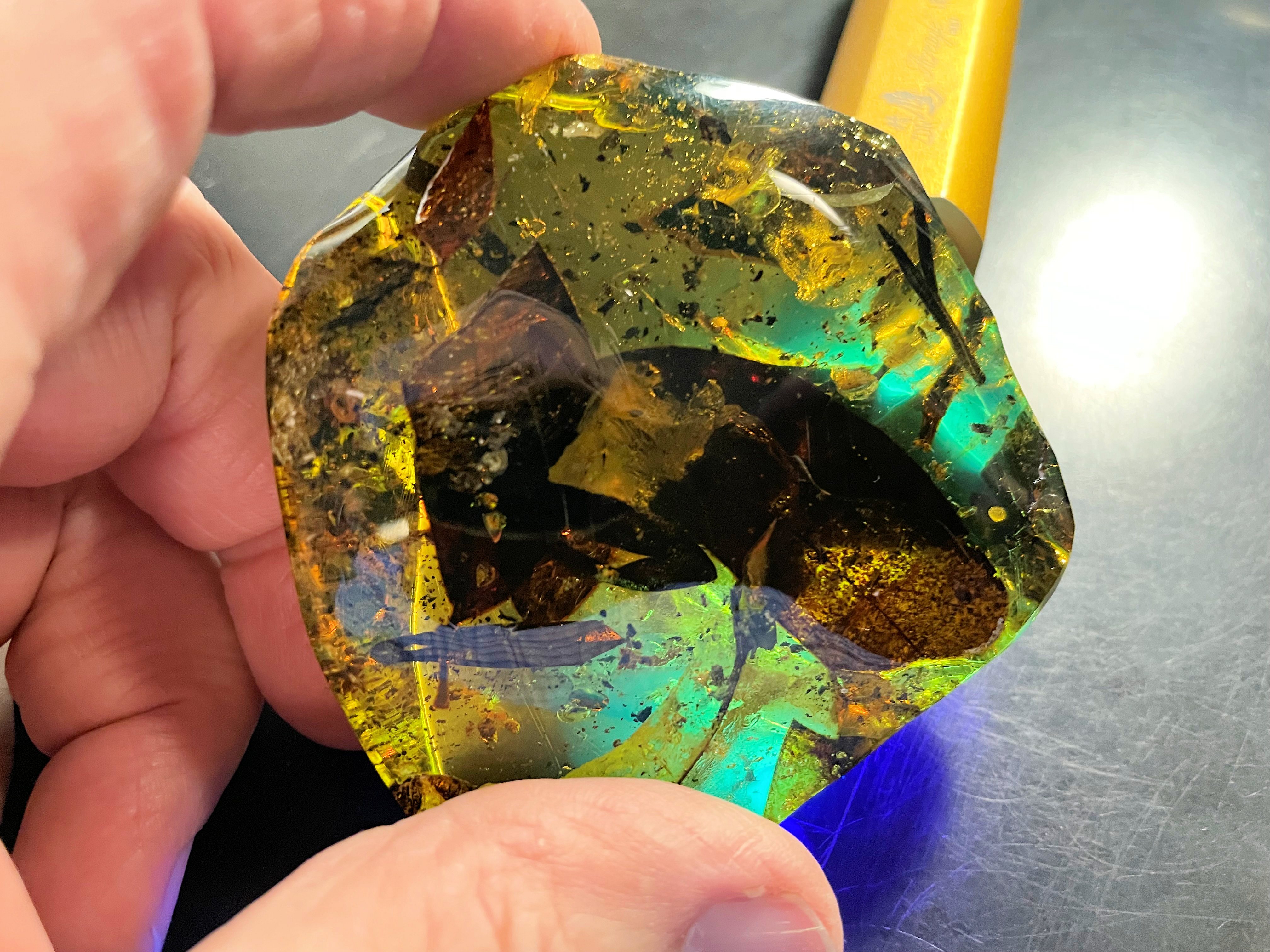
This is the fabled Chiapas amber from the Mayan mines in Chiapas, Mexico. Mainly, this page is centered on botanical specimens in Chiapas amber. It is fairly difficult to get a hold of and is highly prized for its impressive color and transparency. You can find reds, blues, greens and of course amber colors. This is real color, not like altered Baltic amber. This is quite a find and not seen often! You can do just about anything you want with this amber. My suggestion is for jewelry - the depth of color is seldom seen in any amber from anywhere else!
By the way, here is an interesting web site devoted to just high quality Chiapas amber (nice way to say expensive amber).
Item 1
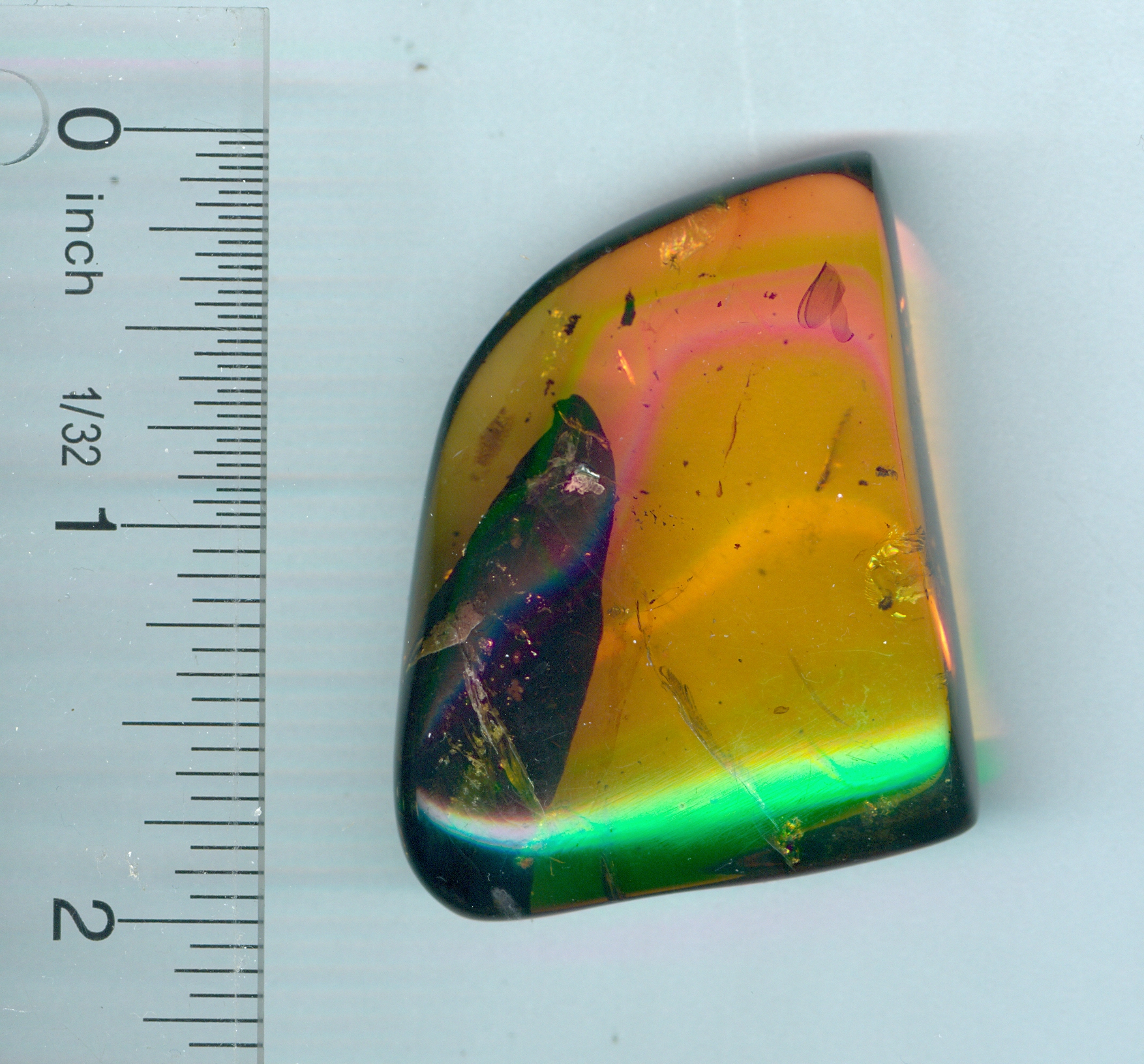
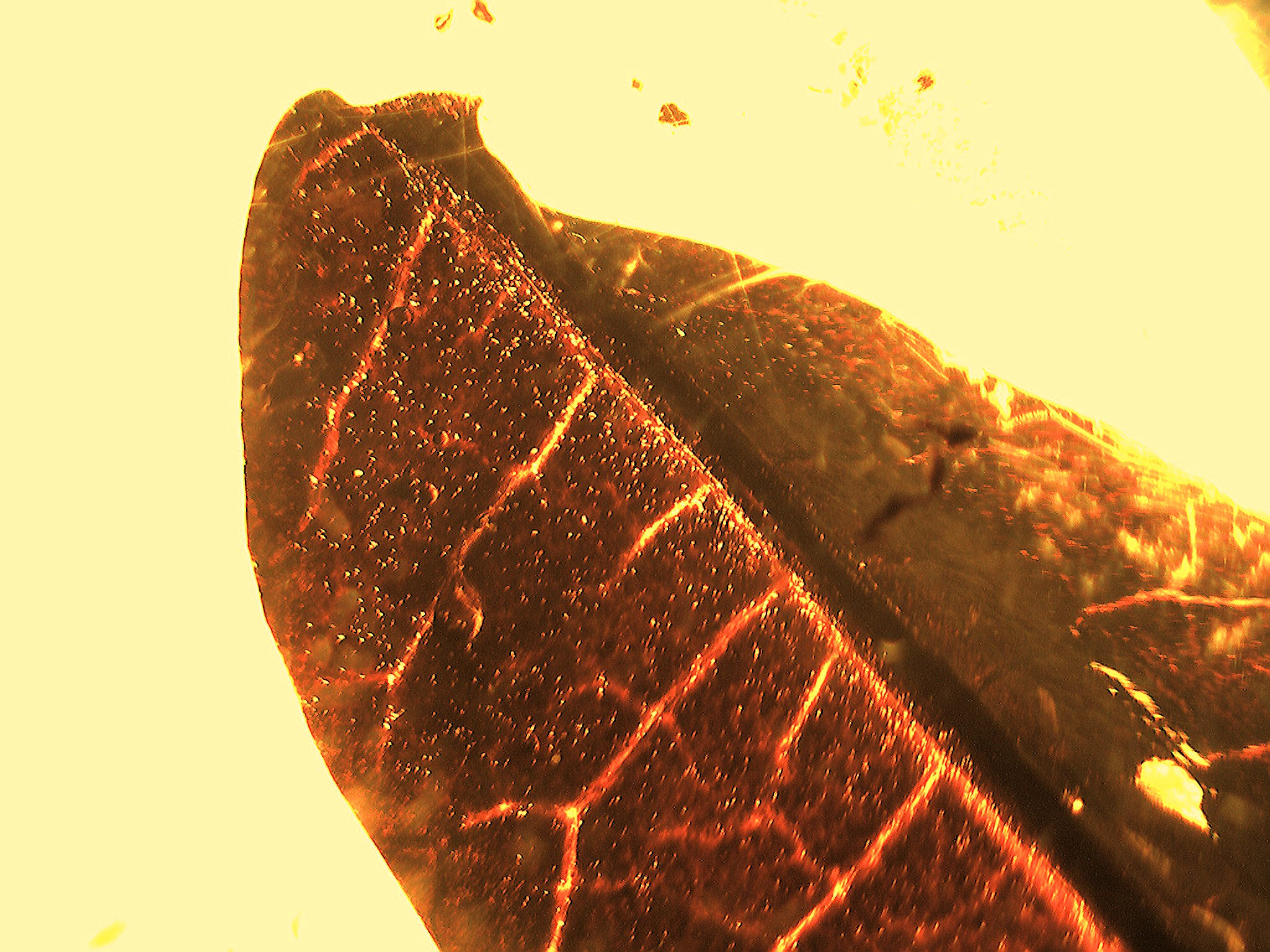
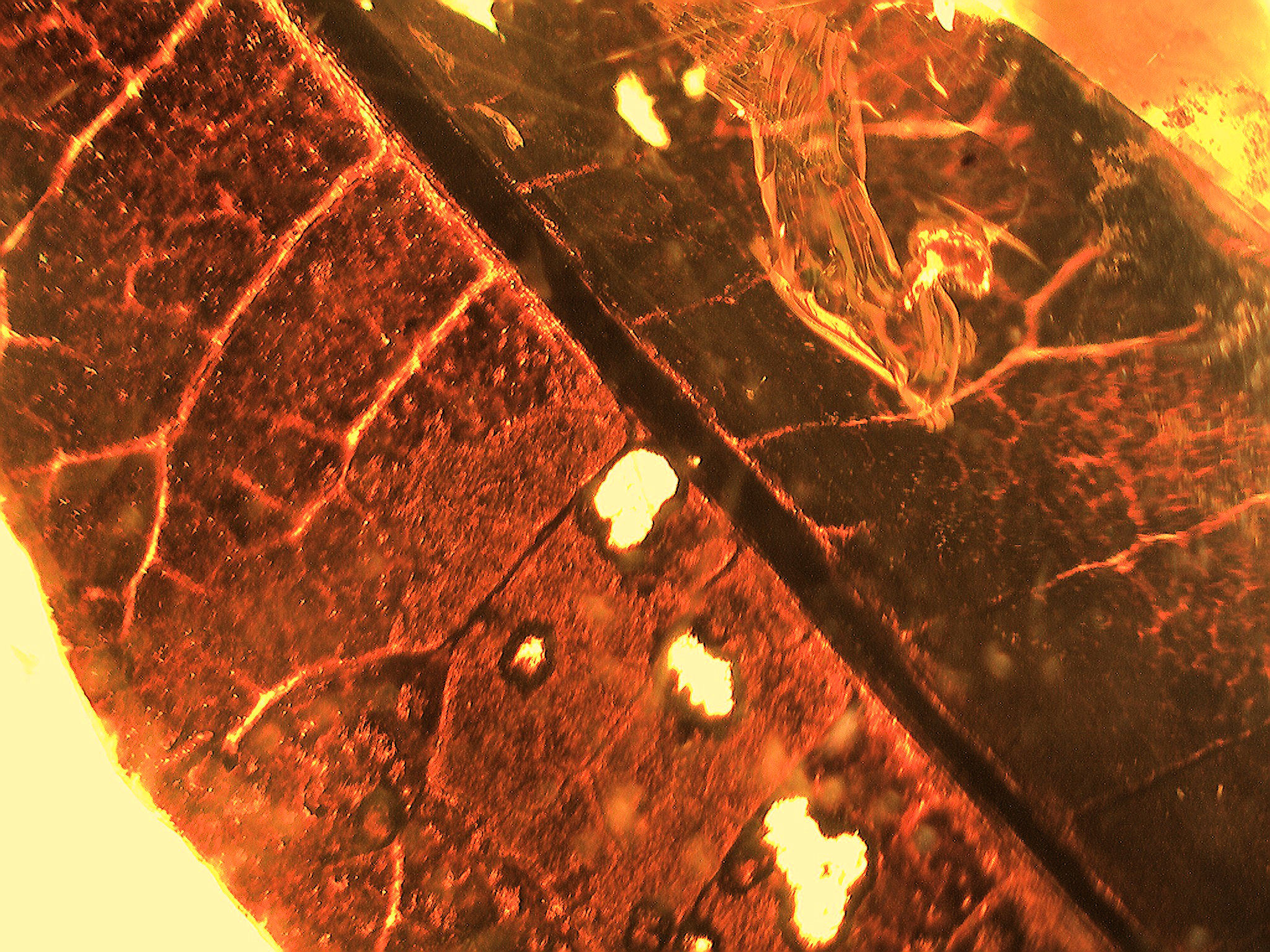
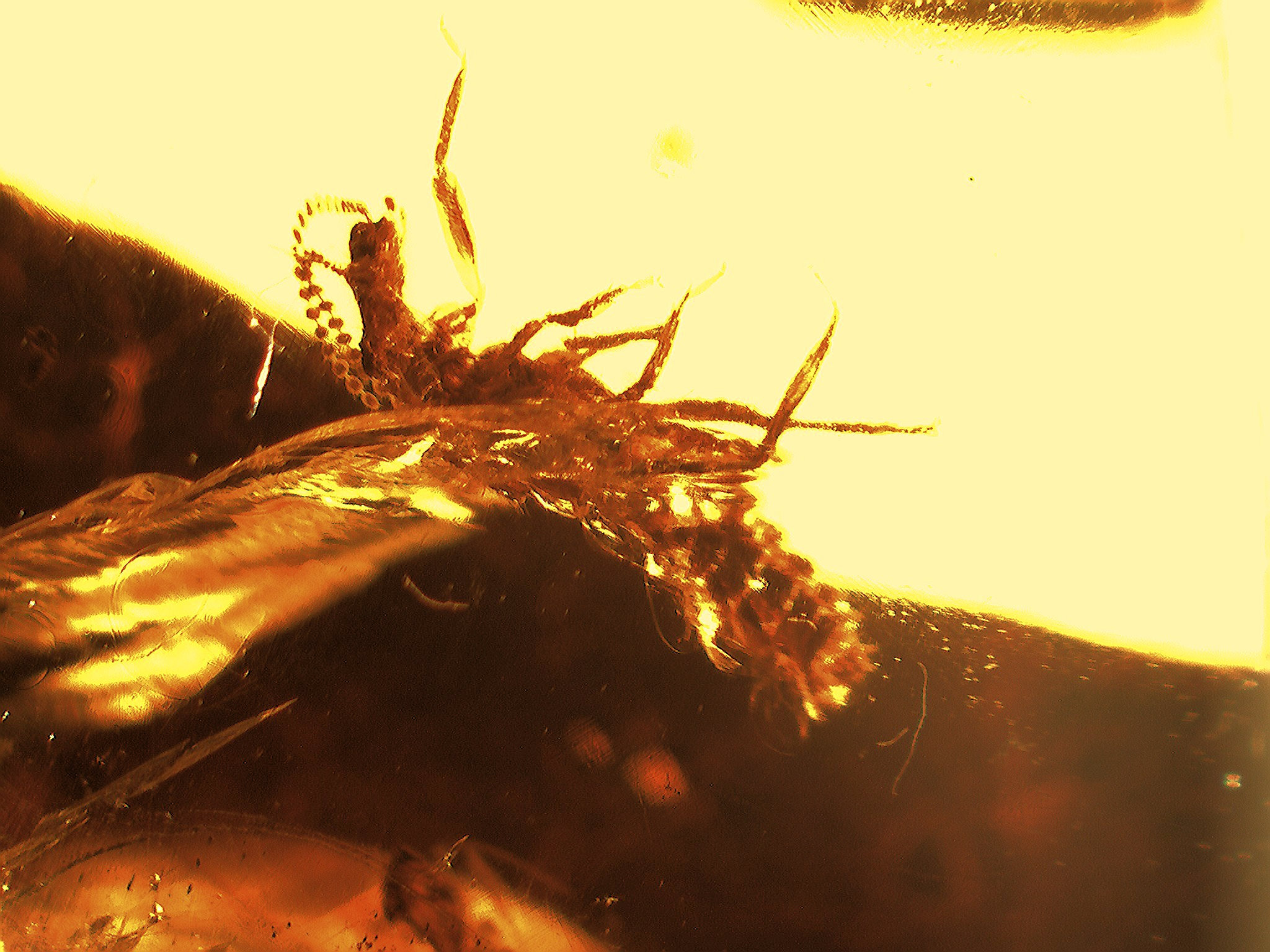
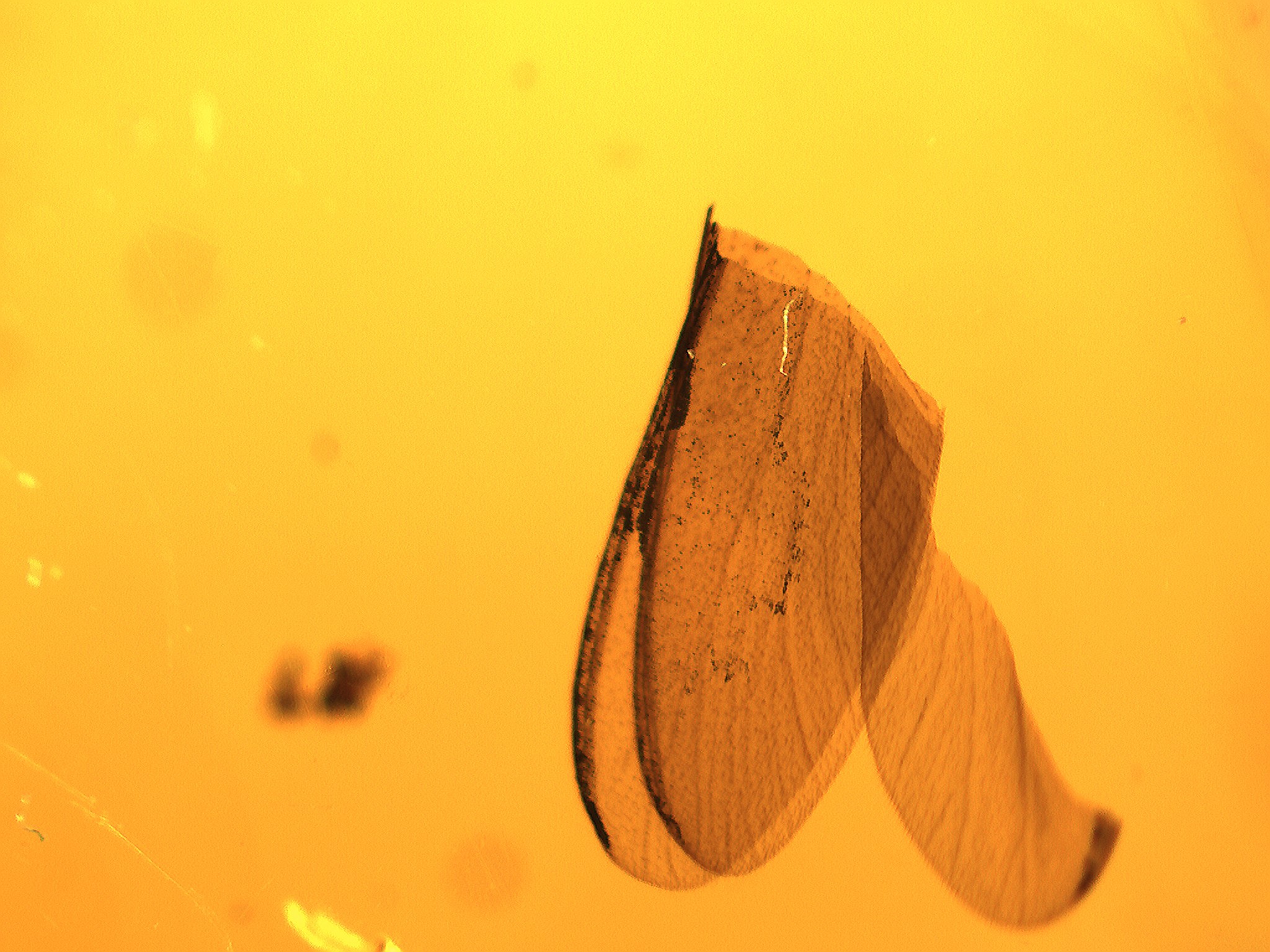
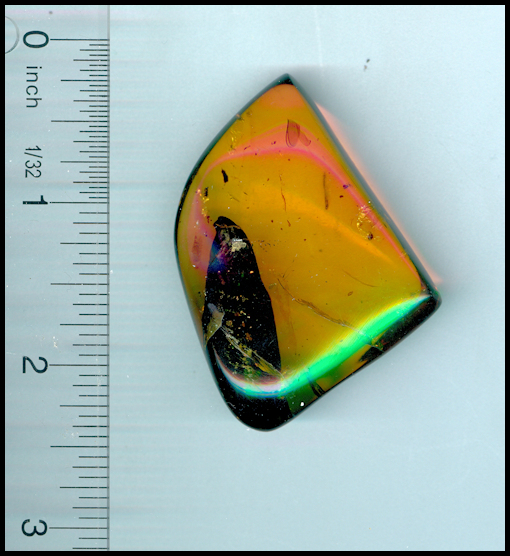
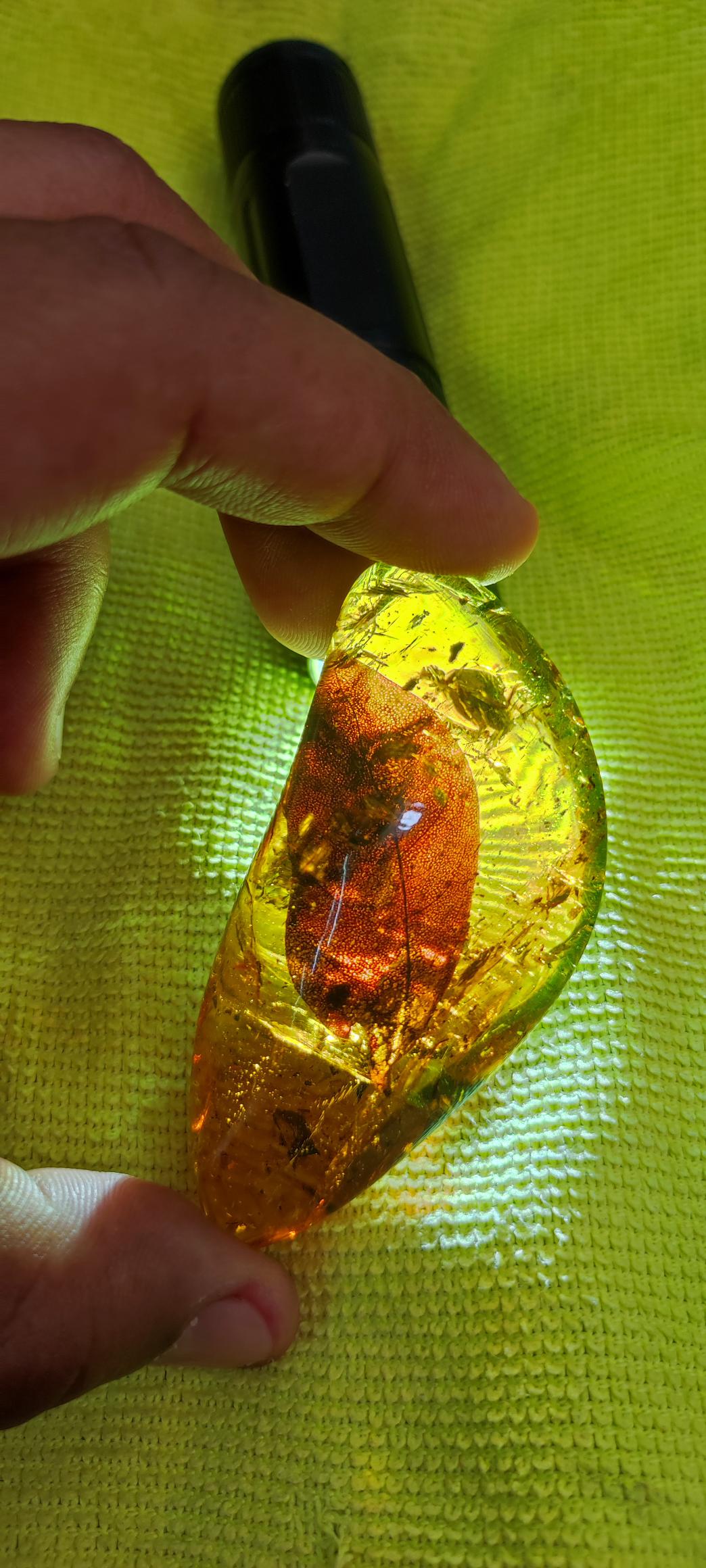
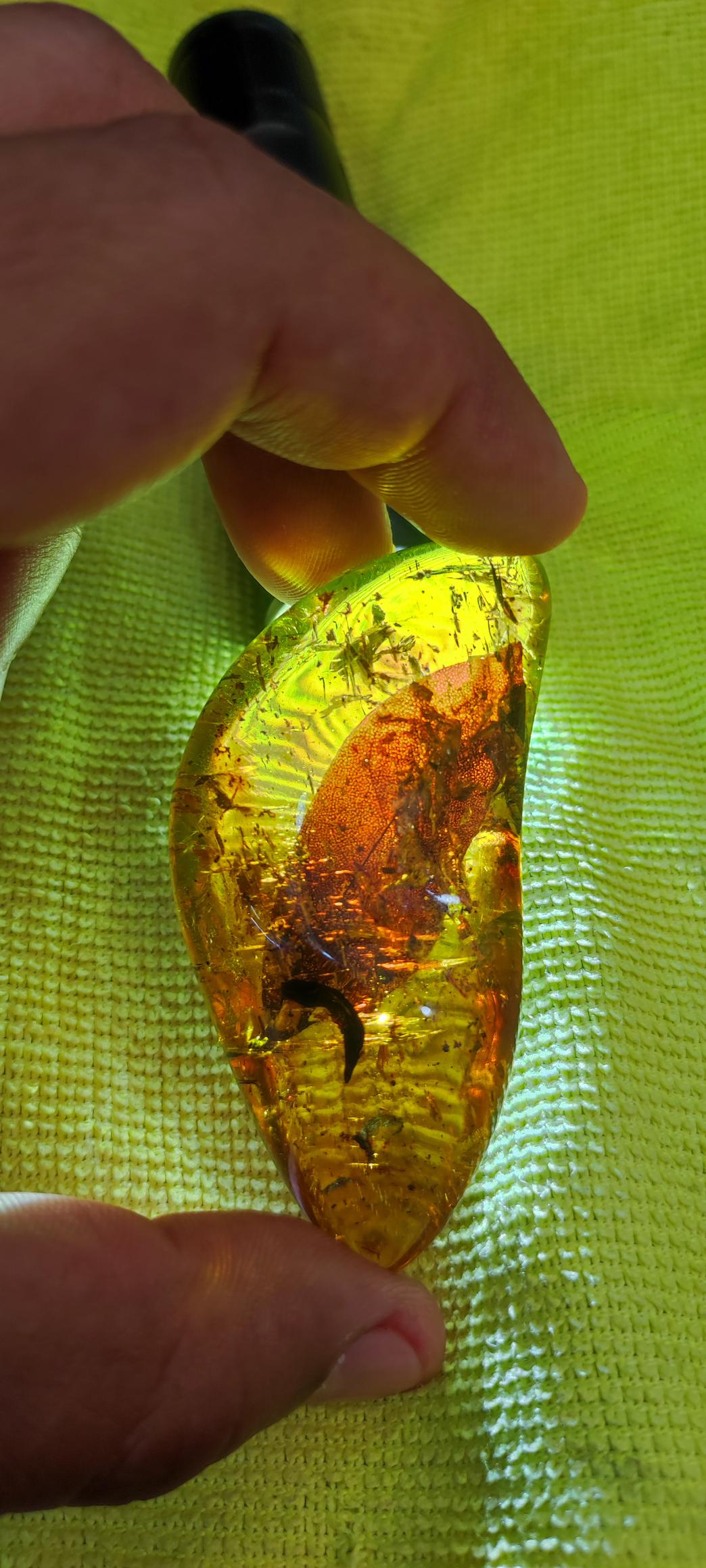
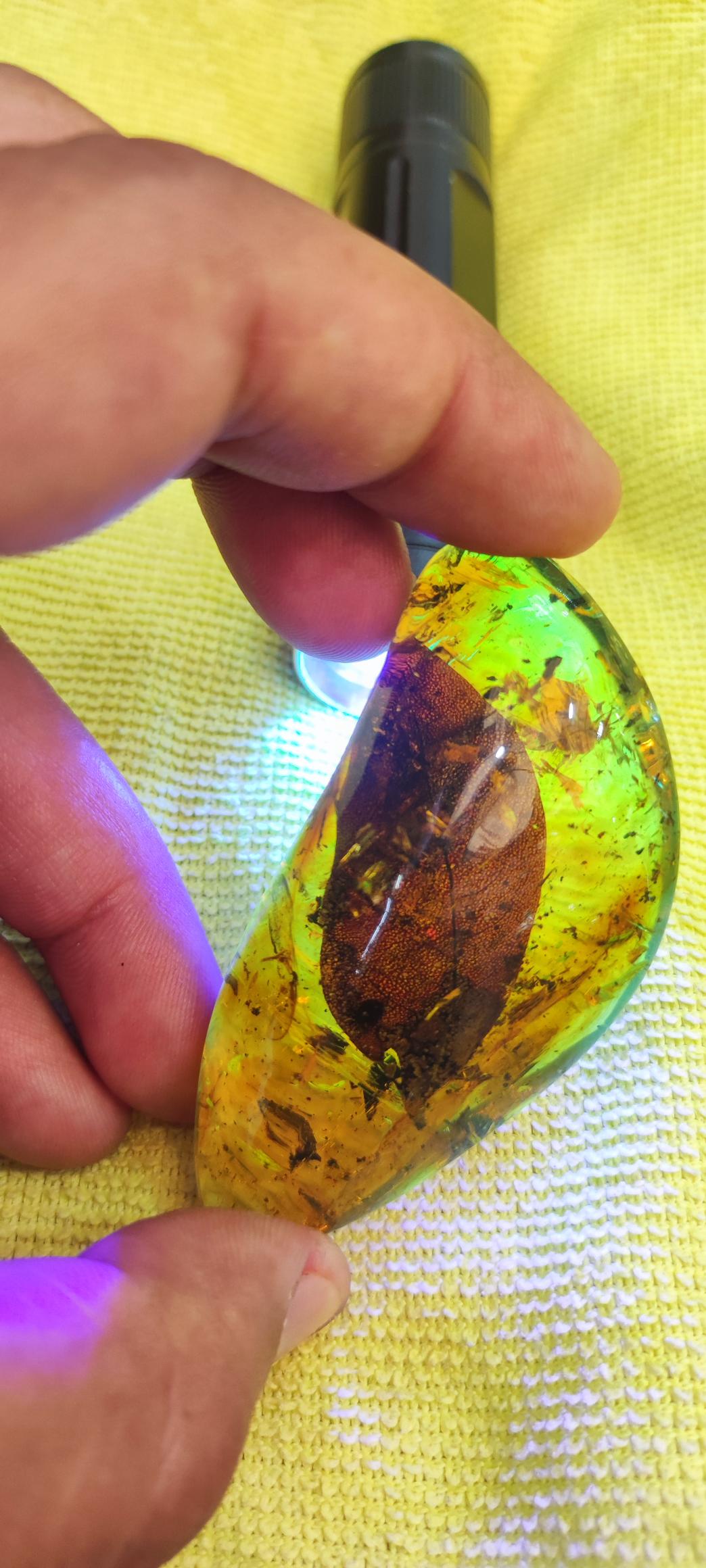
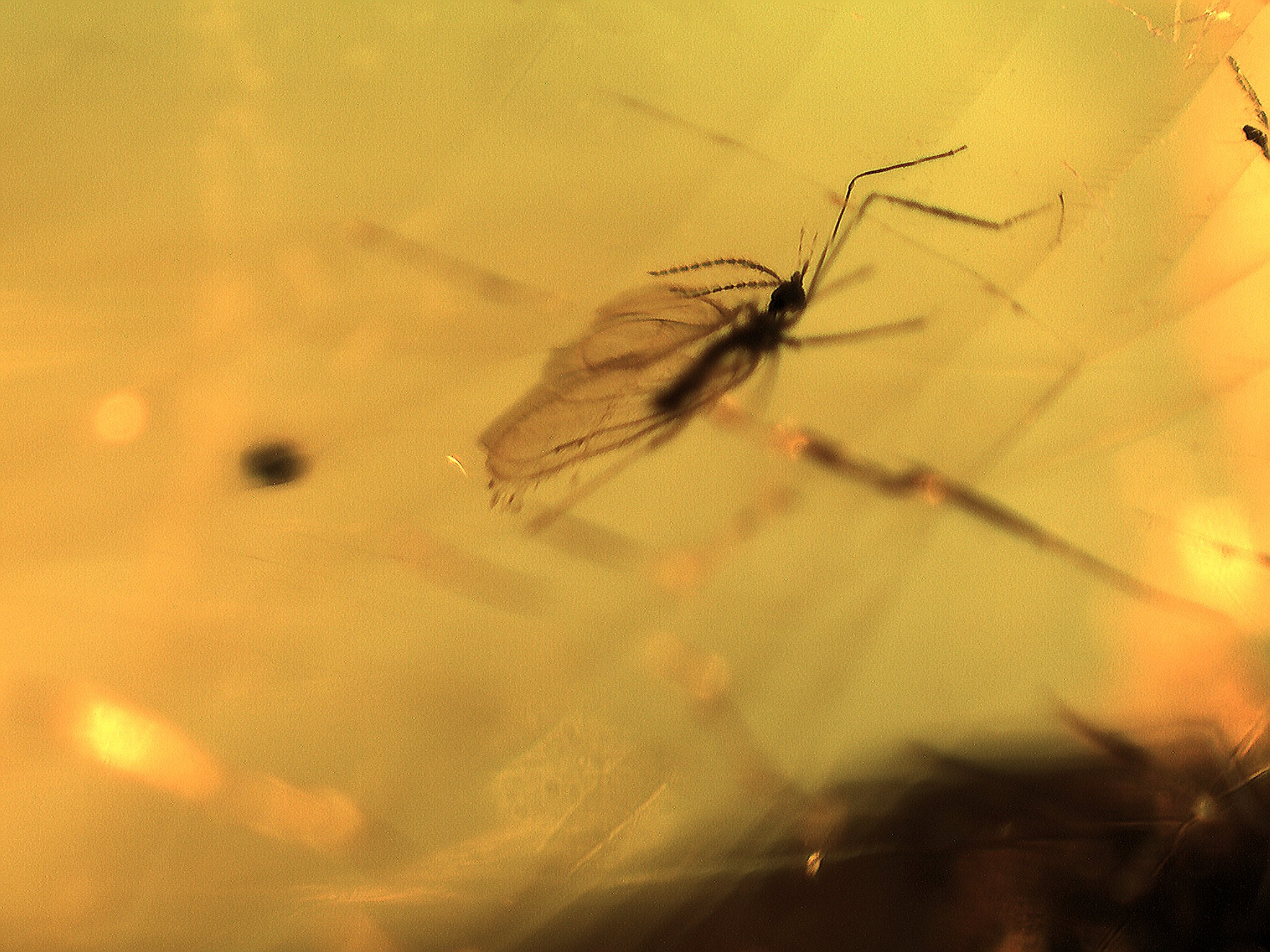
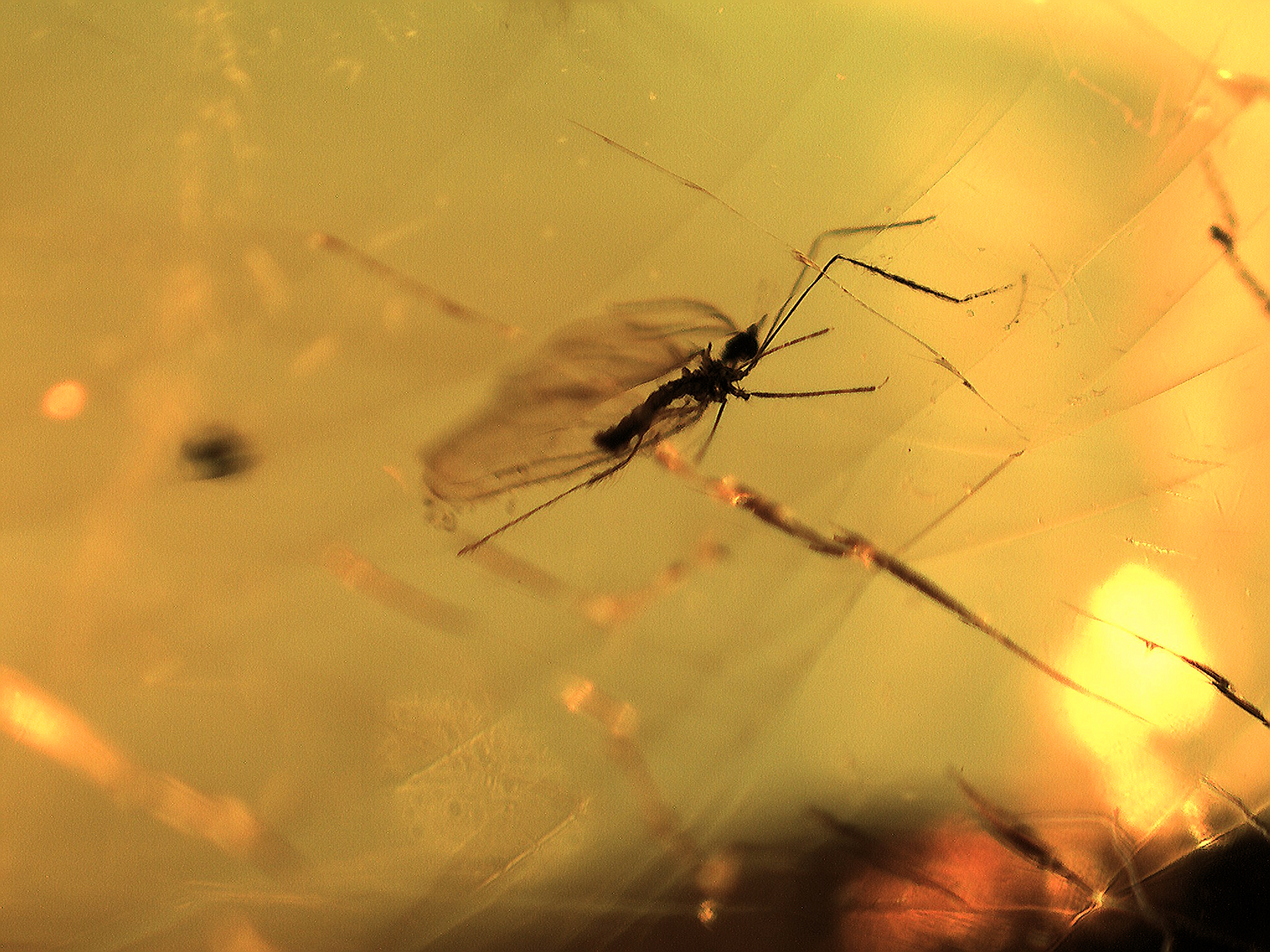
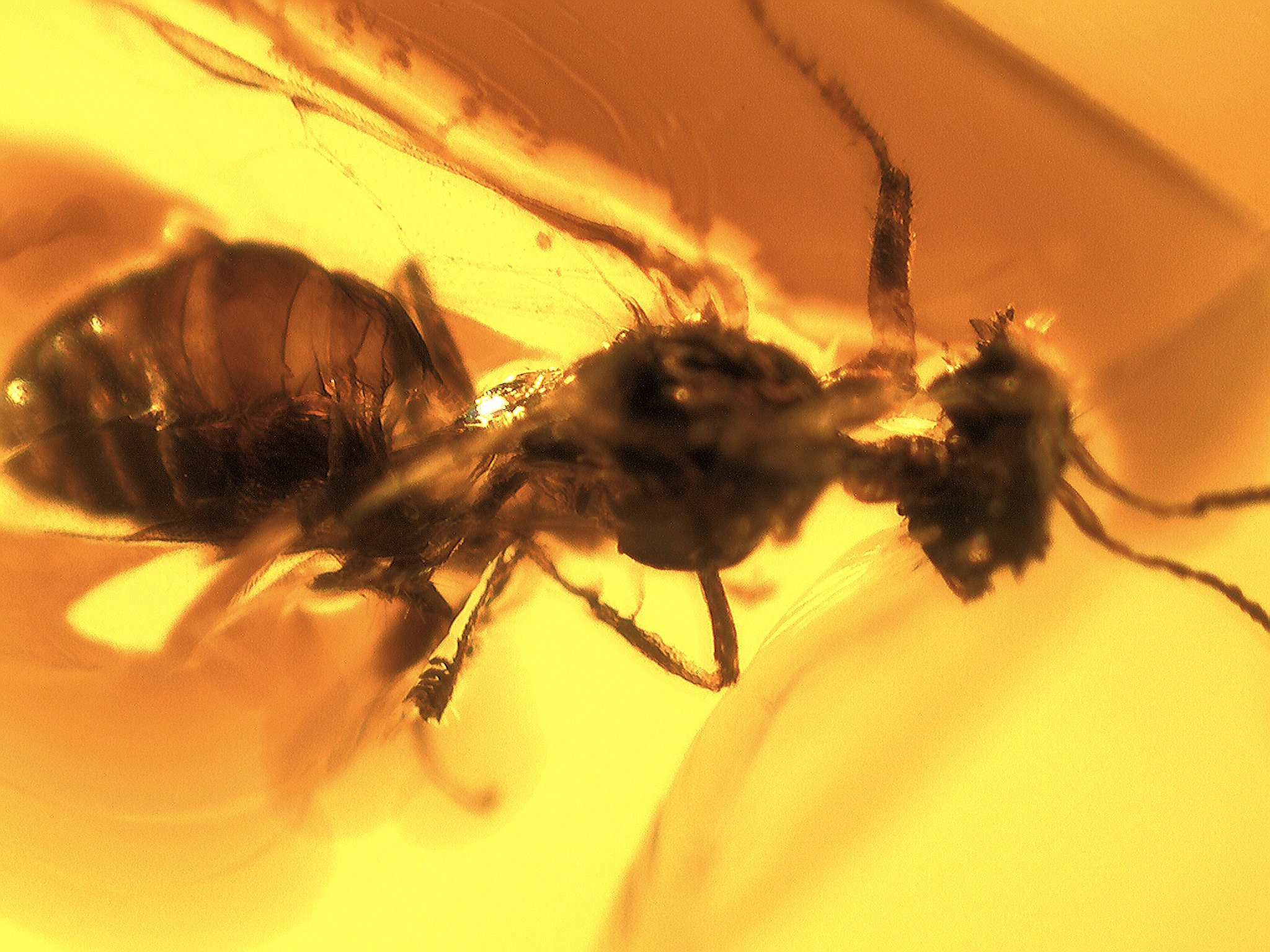
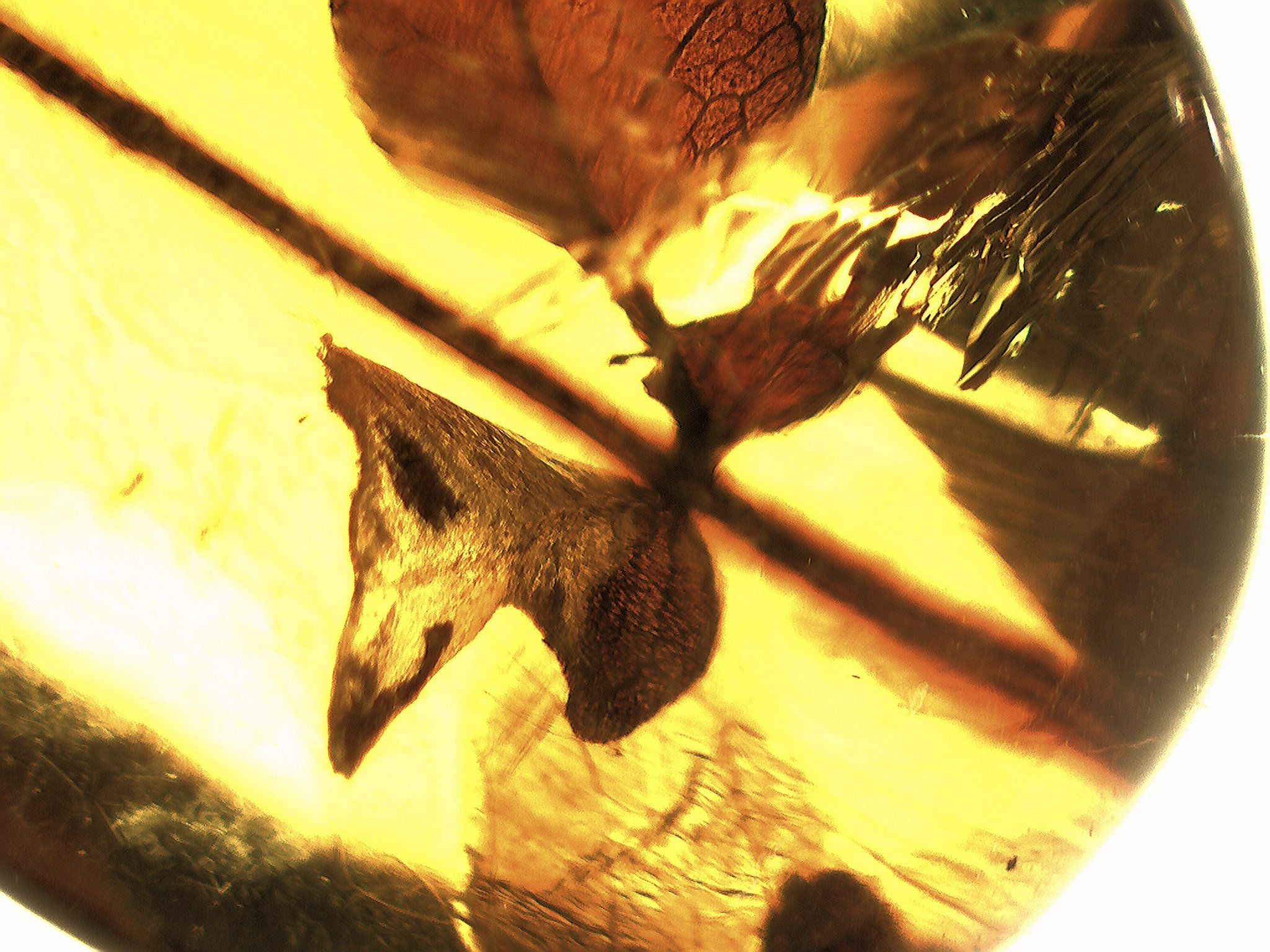
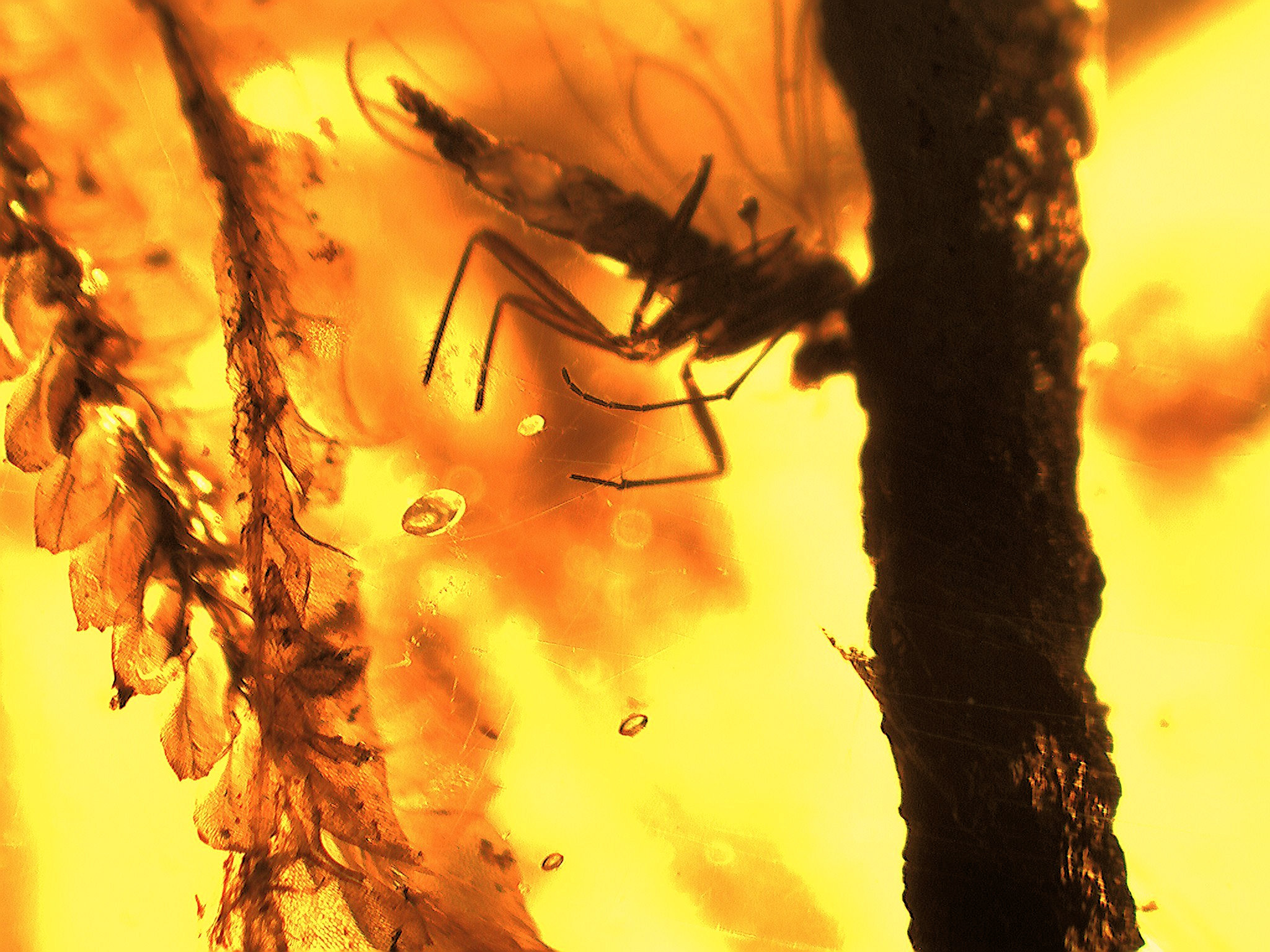
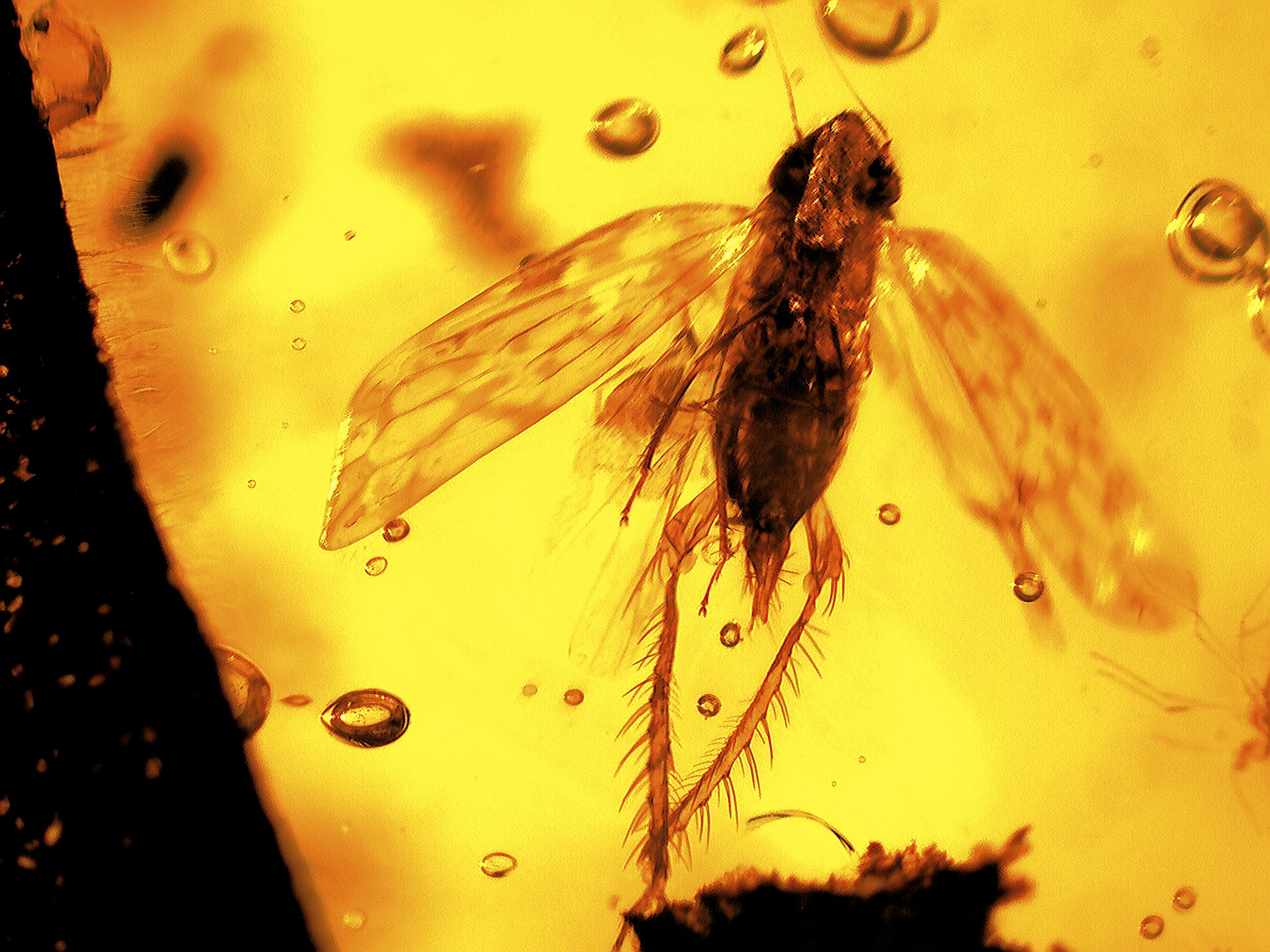
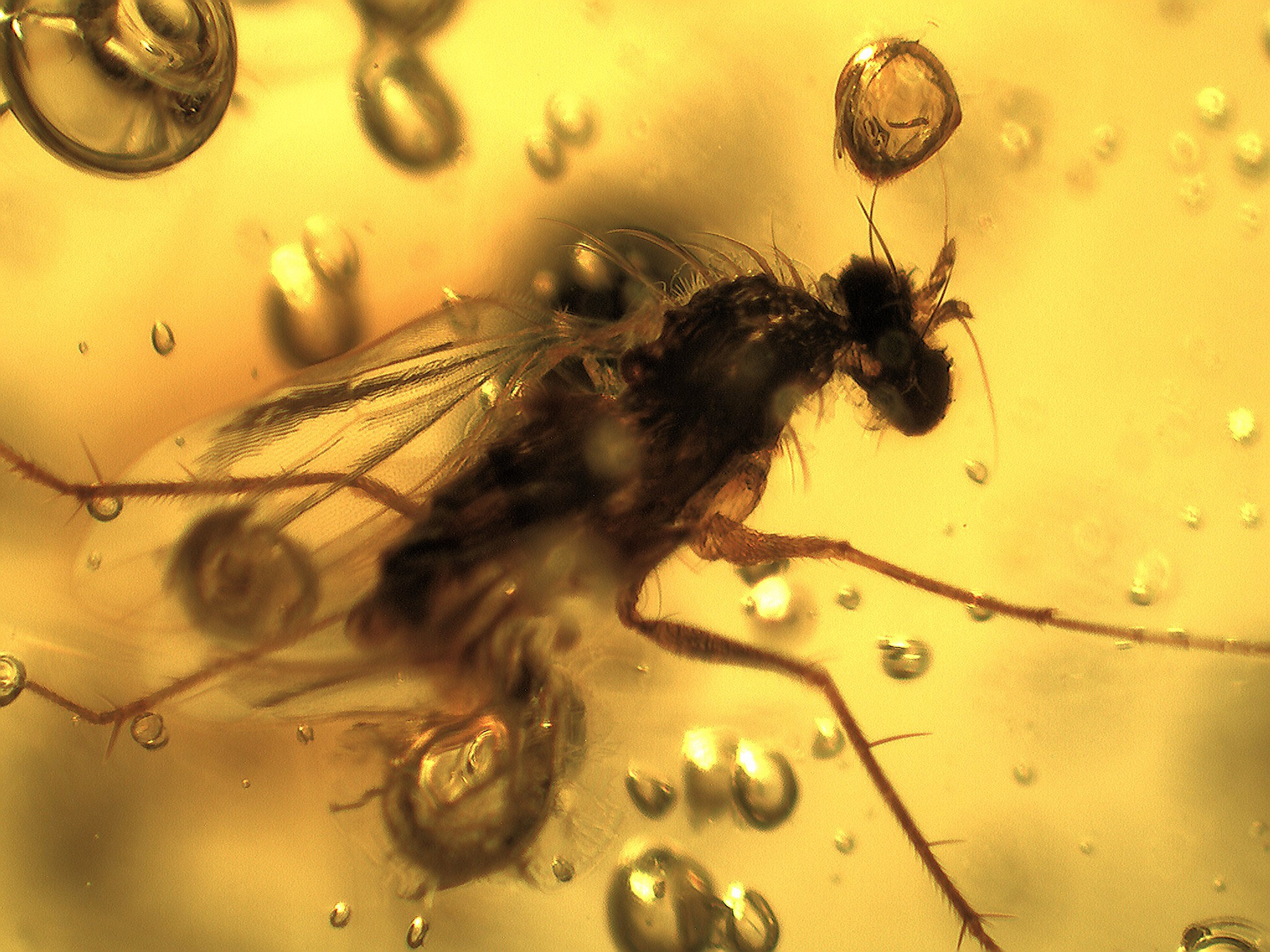
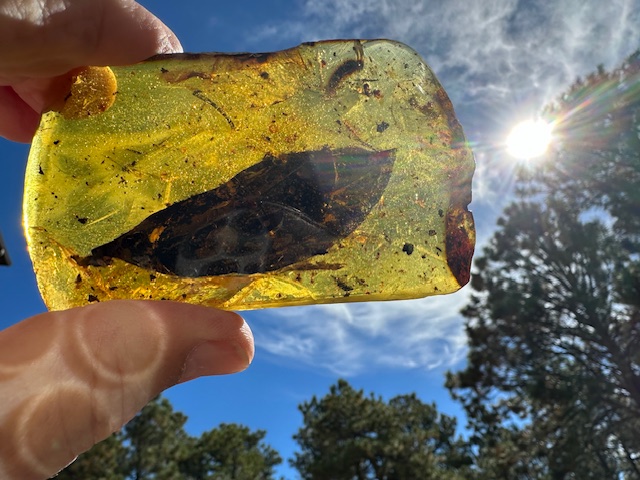
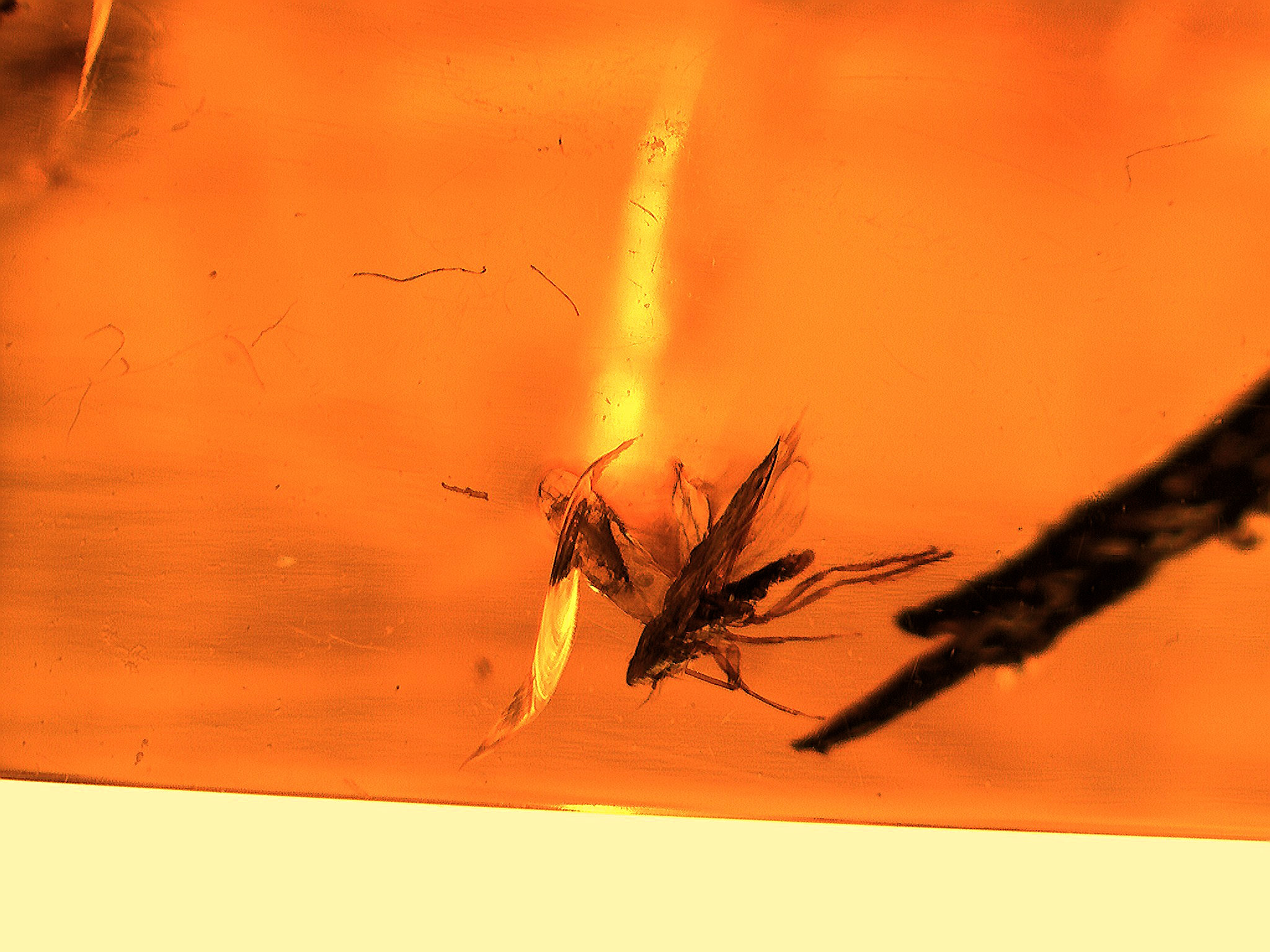
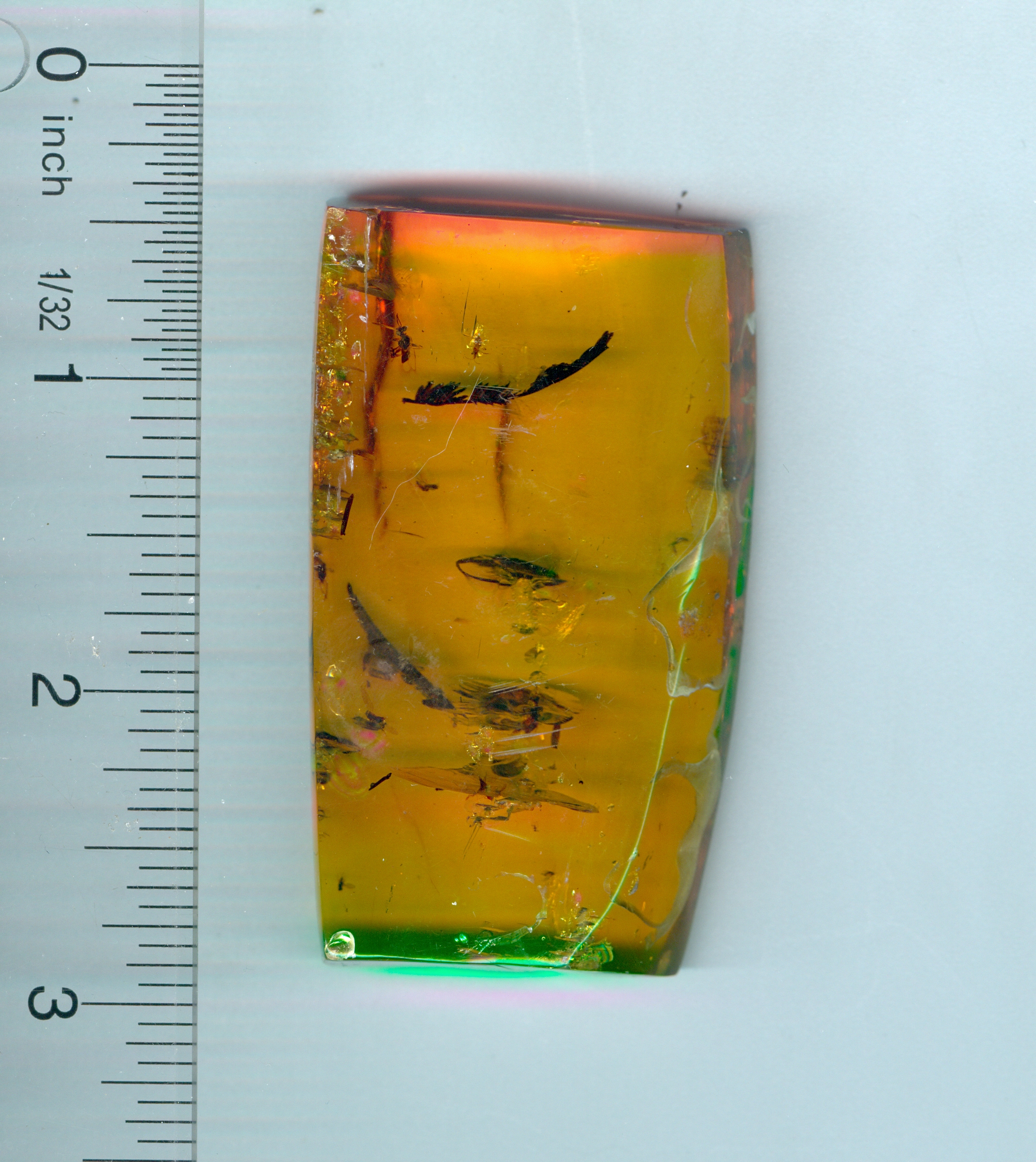
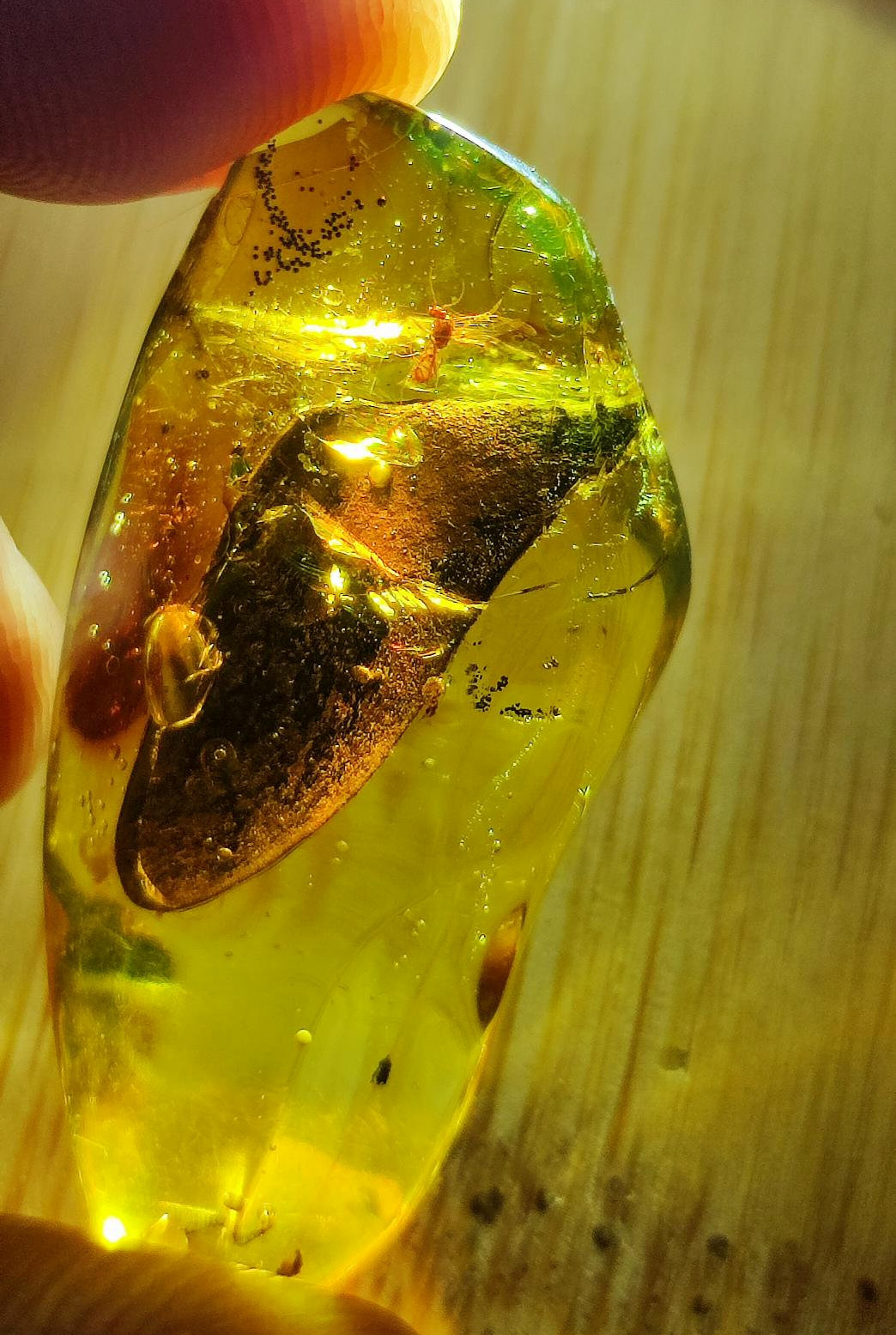
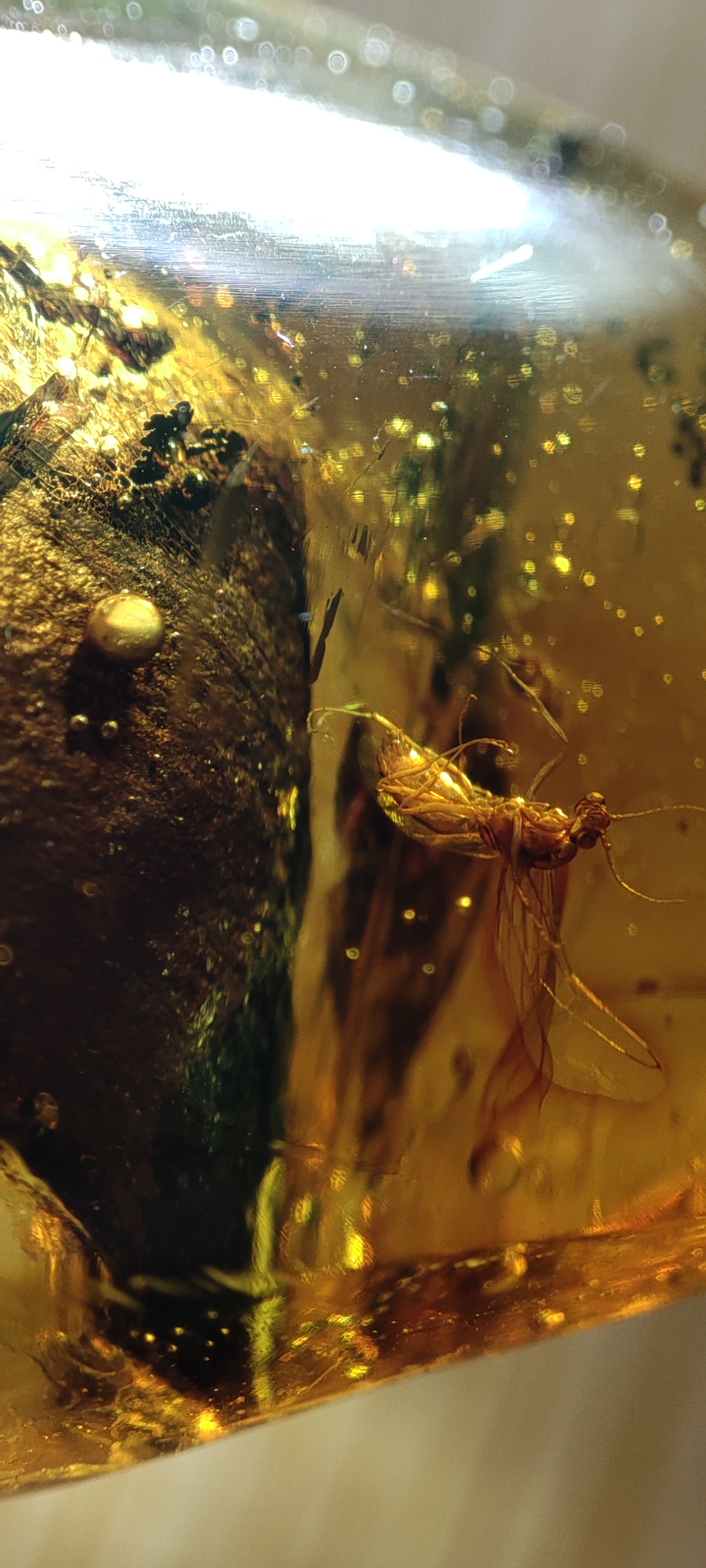
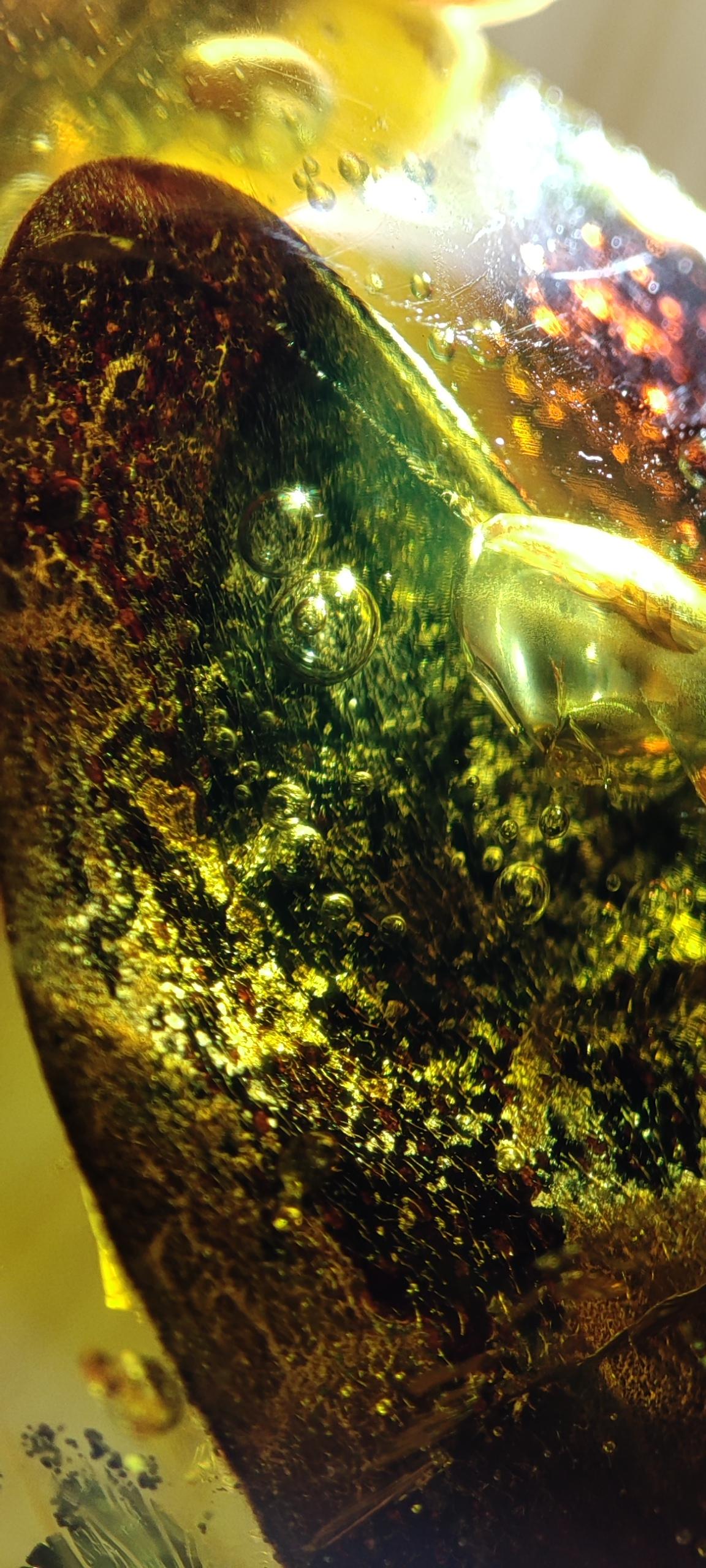
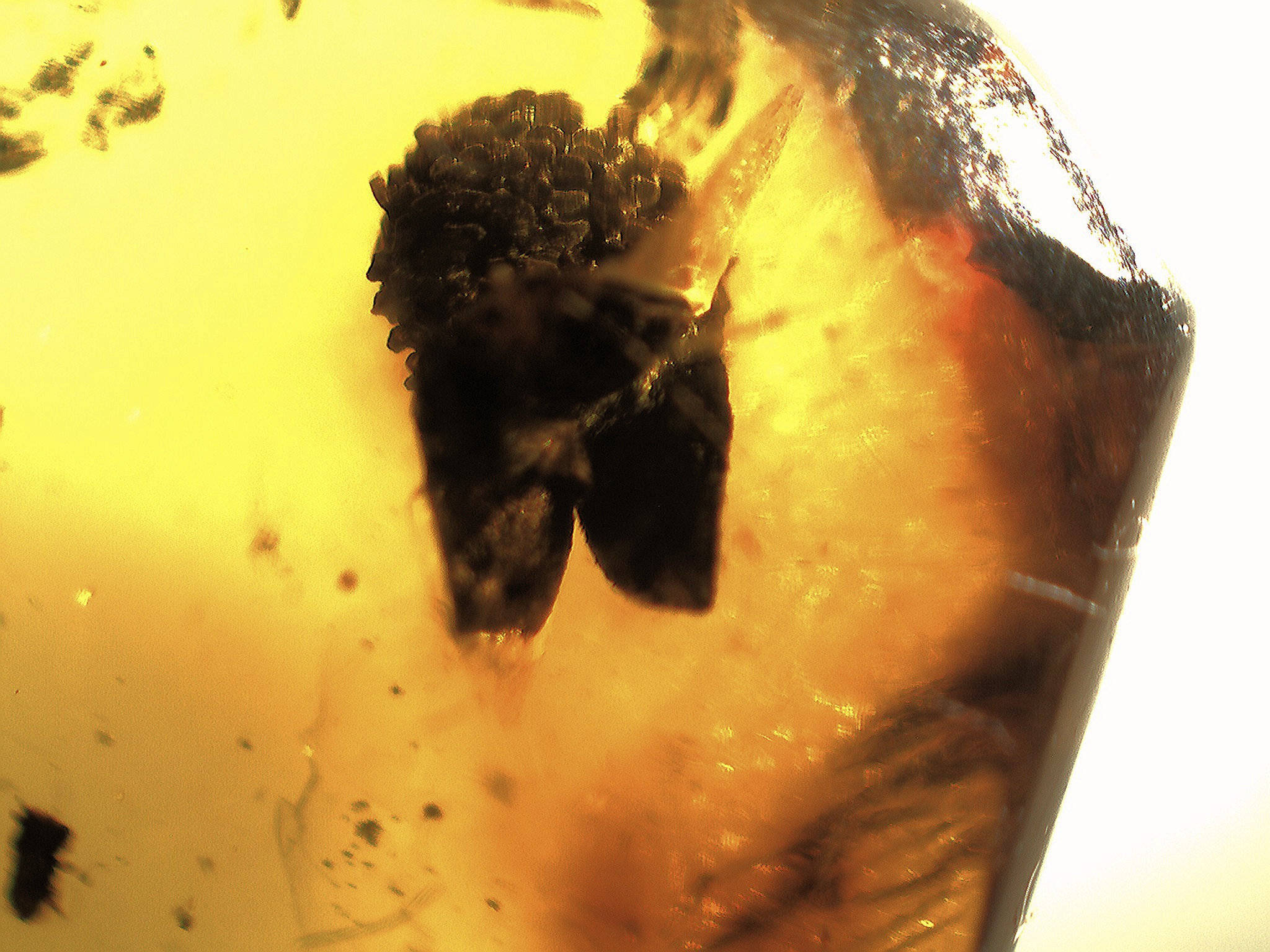
It does not happen very often where you get the majority of the leaf - but here it is. the rest of the amber is clear. This is a lovely piece, great color and it even has a bunch of insects inside. There is an unknown along with a partial set of wings. This is about 1.5 x 1.5 x .5 inches in size.
Item 2
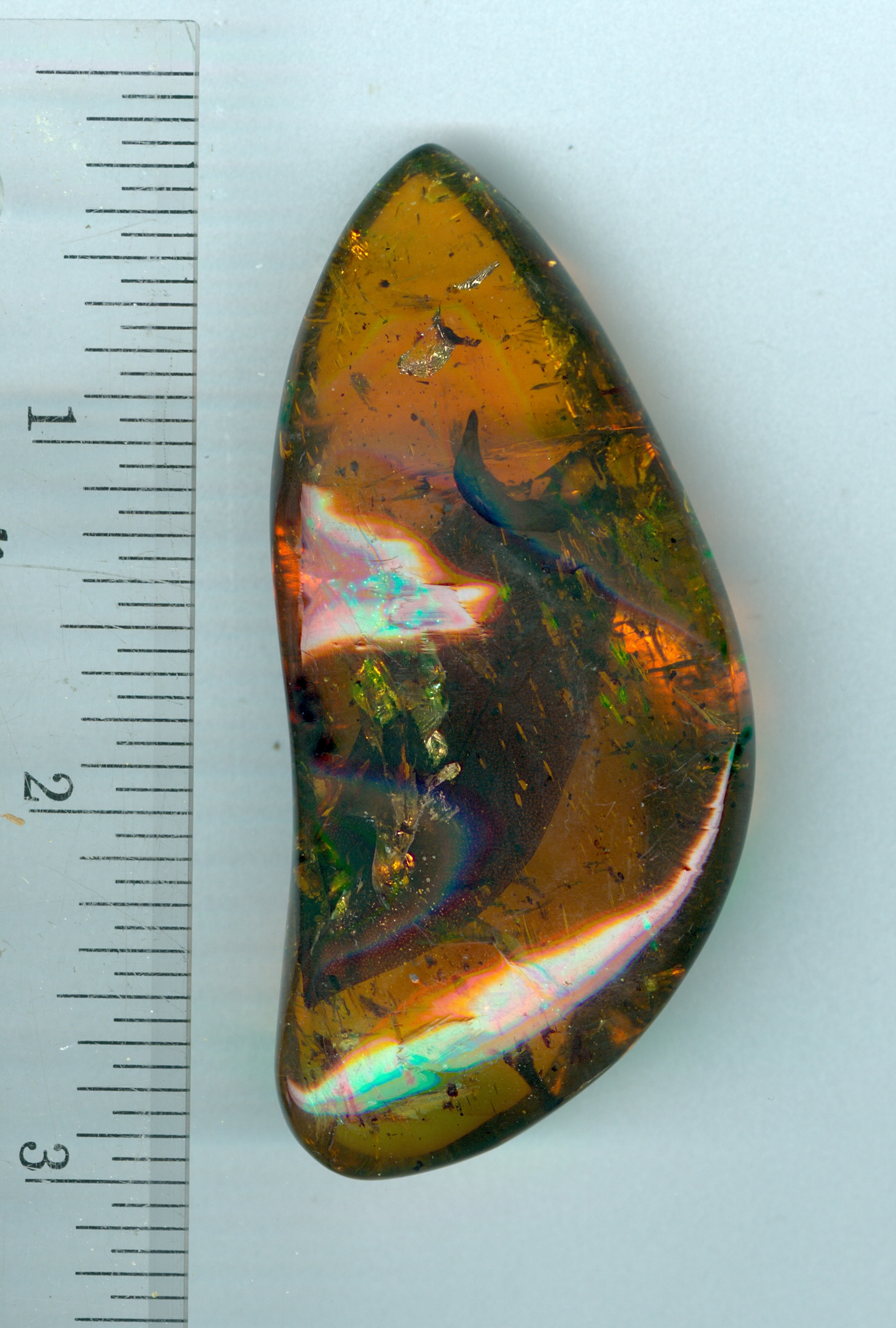
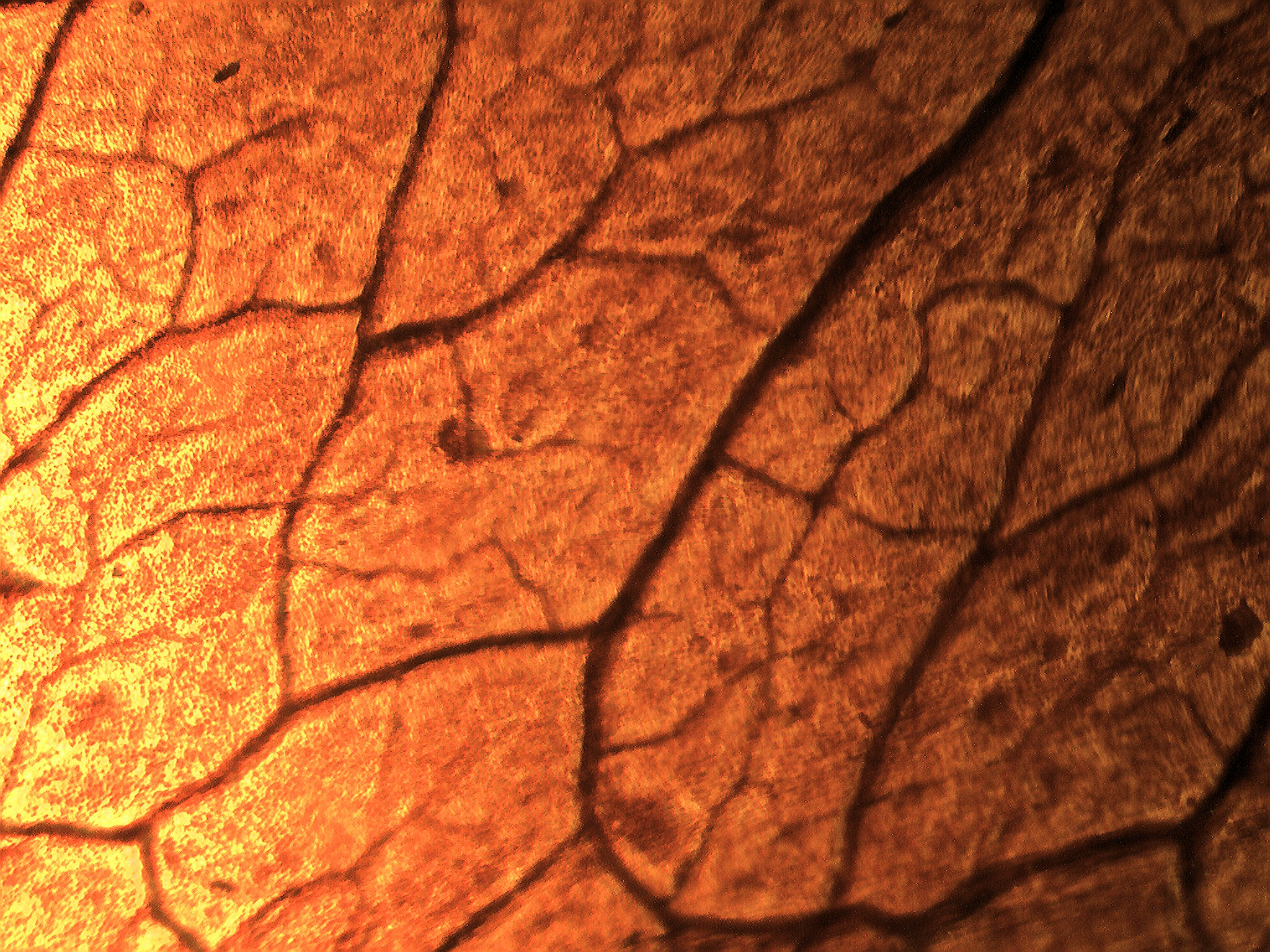
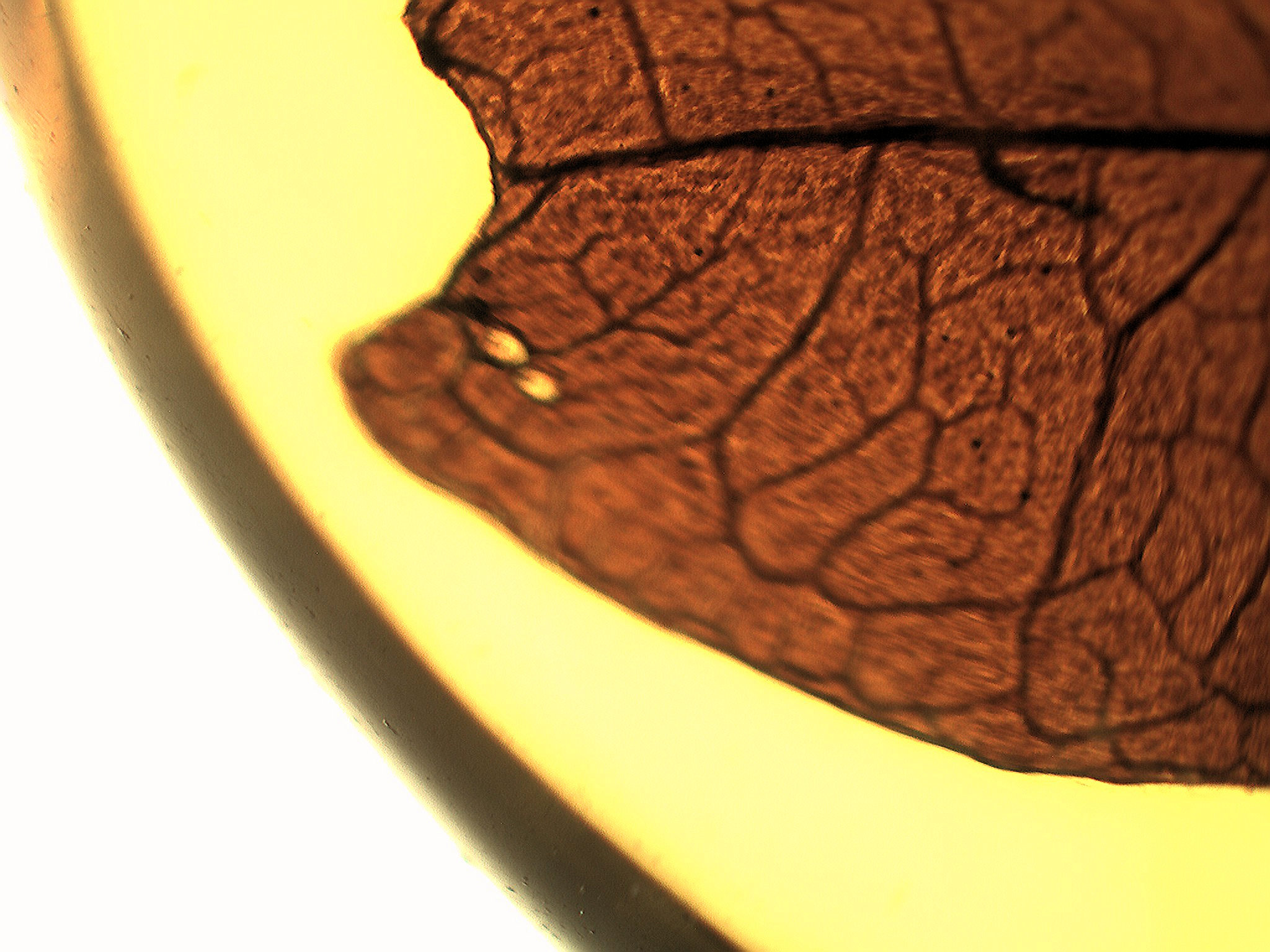
The amber is almost 3 inches long and the leaf is about 1.5 inches in size. This is a leaf from the tree that makes the resin which turns into amber. It is just a beautiful piece, impressive to look at.
$443
Item 3

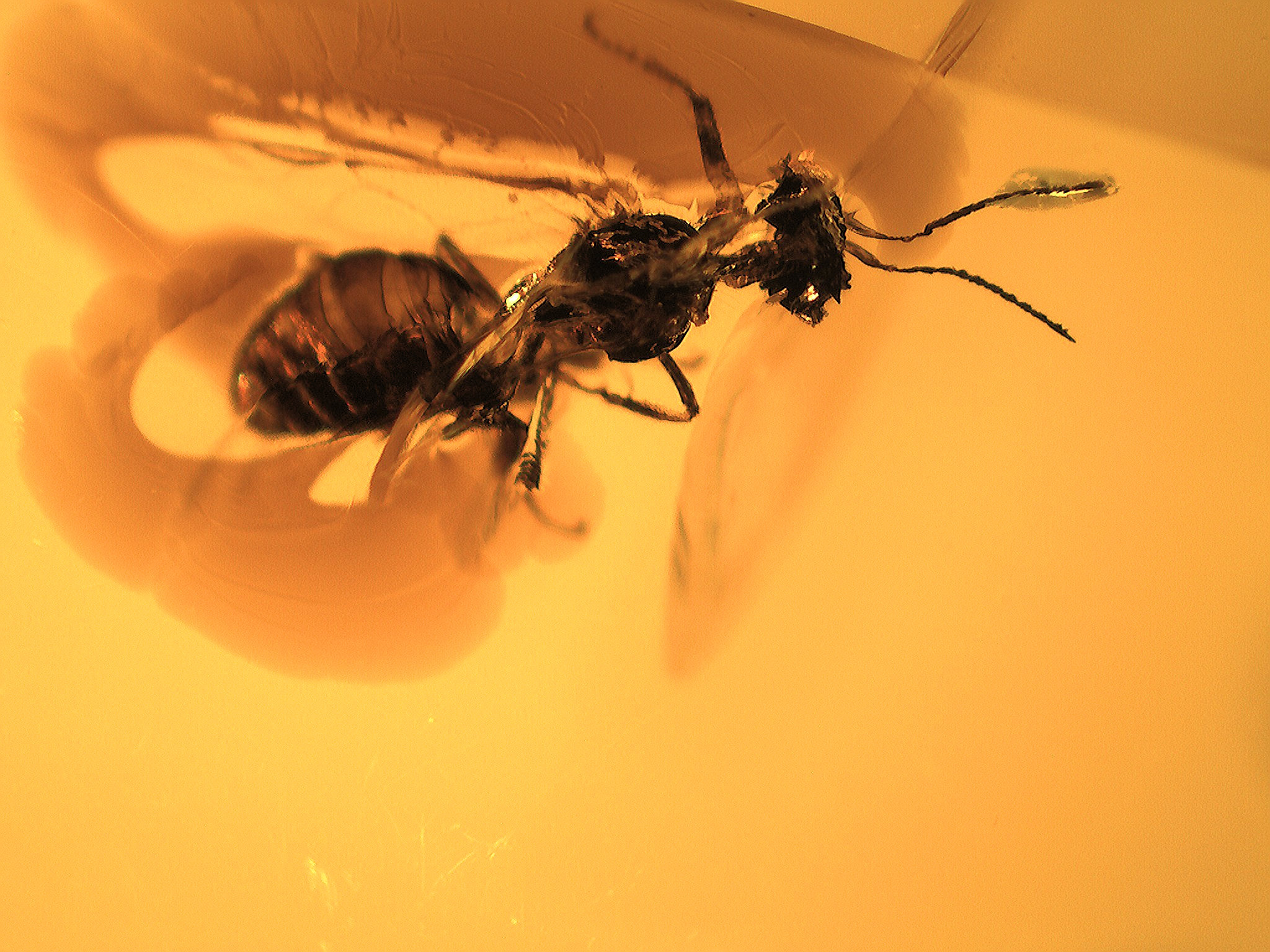
Nice sized chunk of amber with a beautiful medium sized leaf. Easily visible and just a great piece. There is also a well defined wasp, Hymenoptera.
Item 4
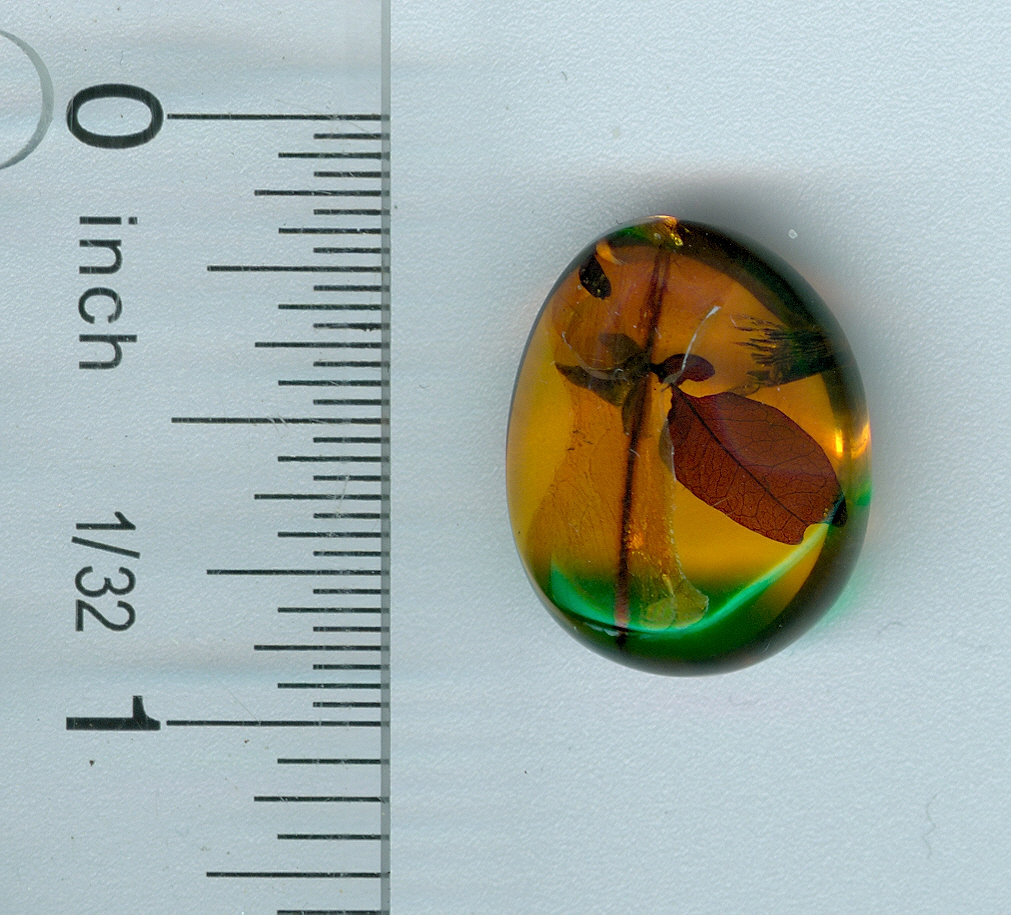
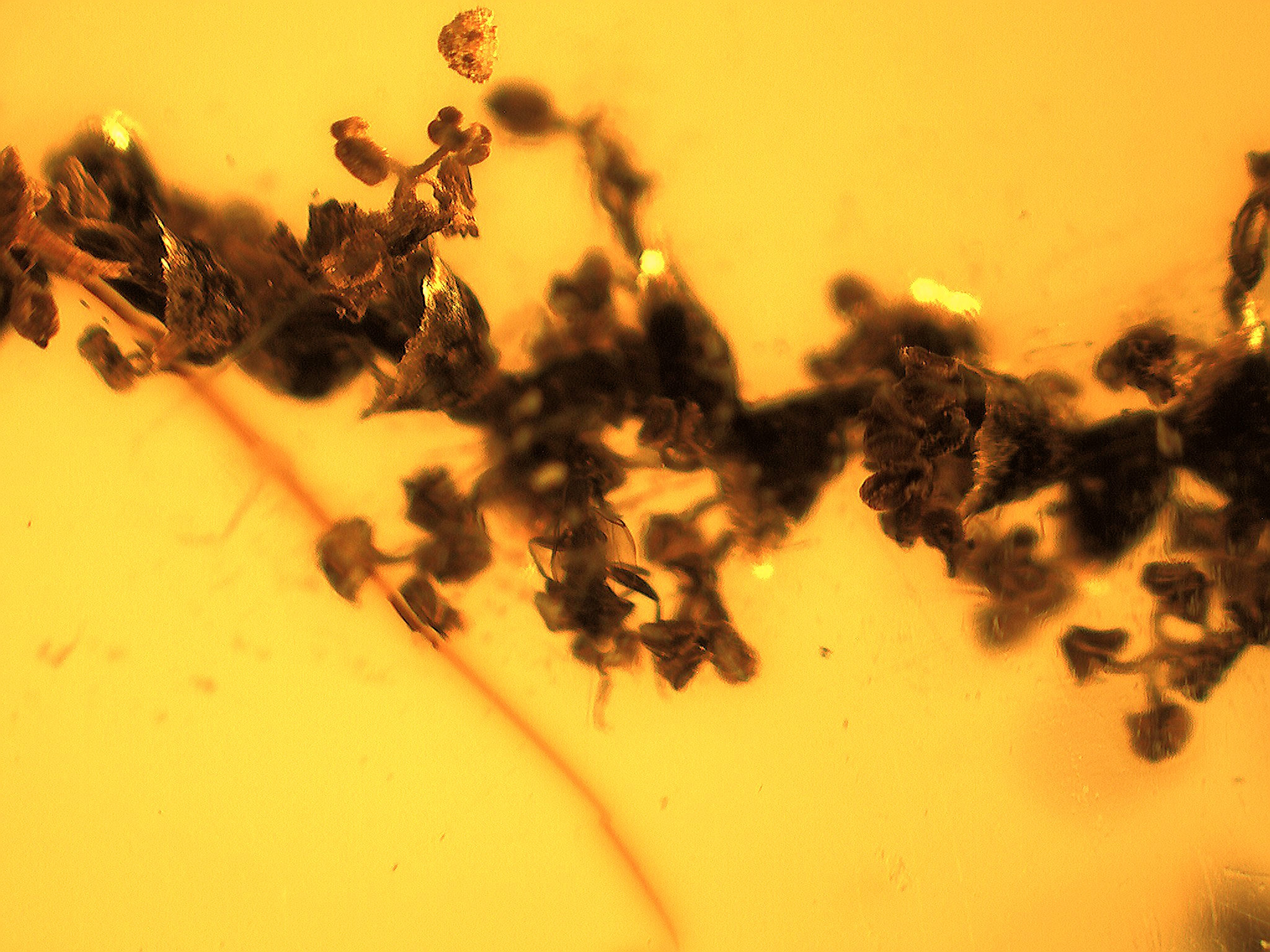
Good sized piece of amber with a gob or plant material inside. There are many leaflets, stems, ants - really a lot. You will enjoy the pictures. This is an impressive piece.
Item 5
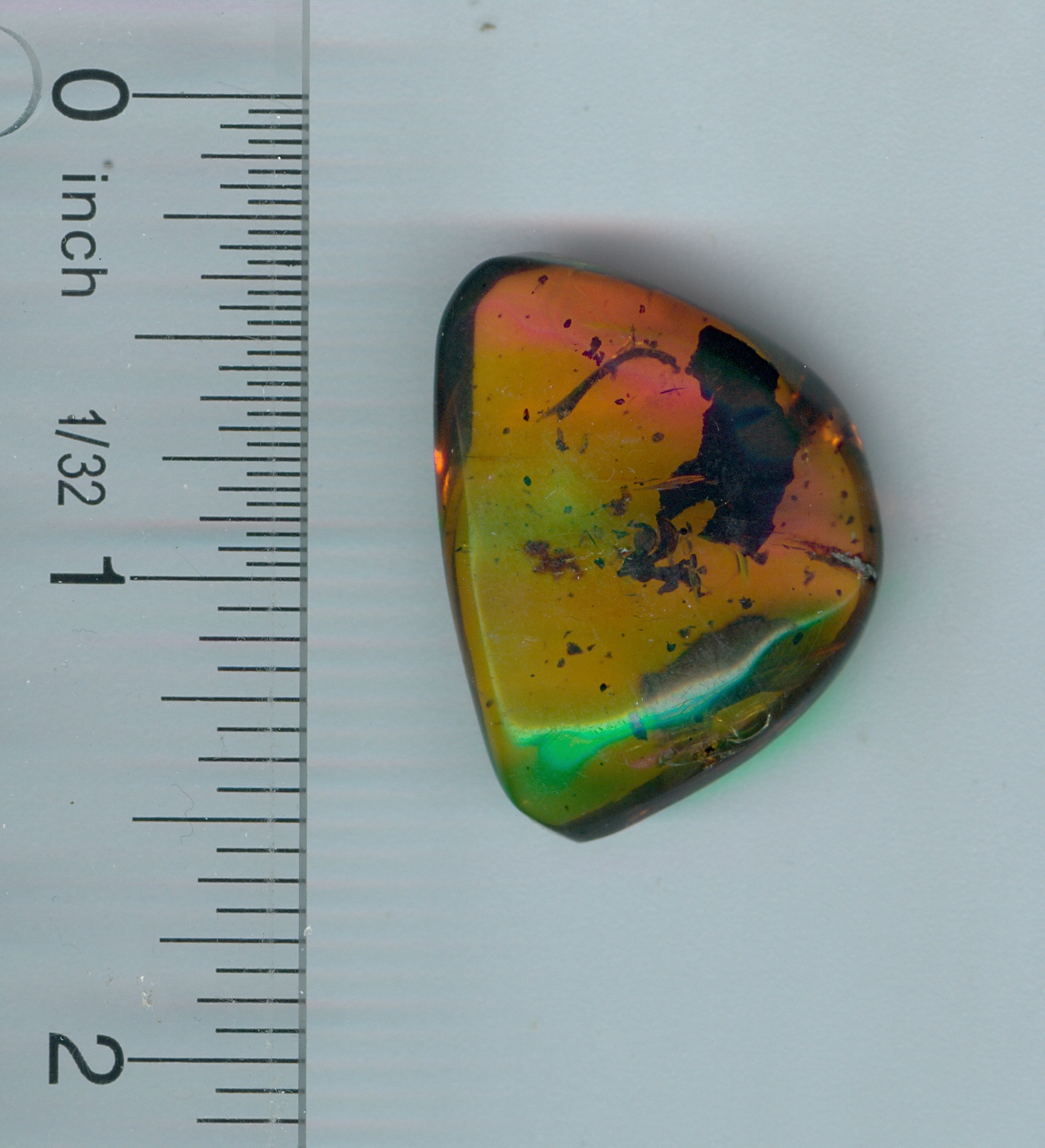
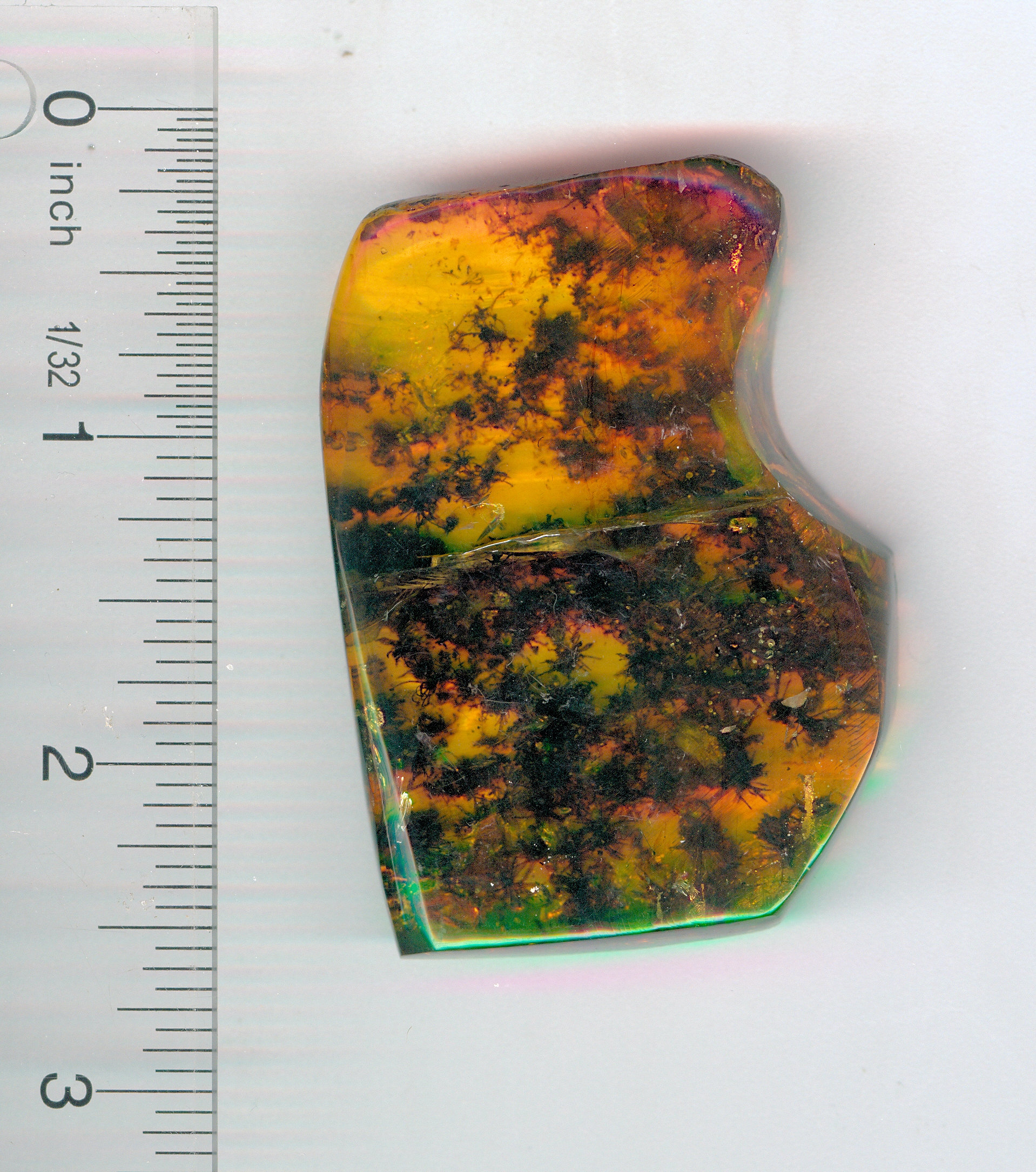
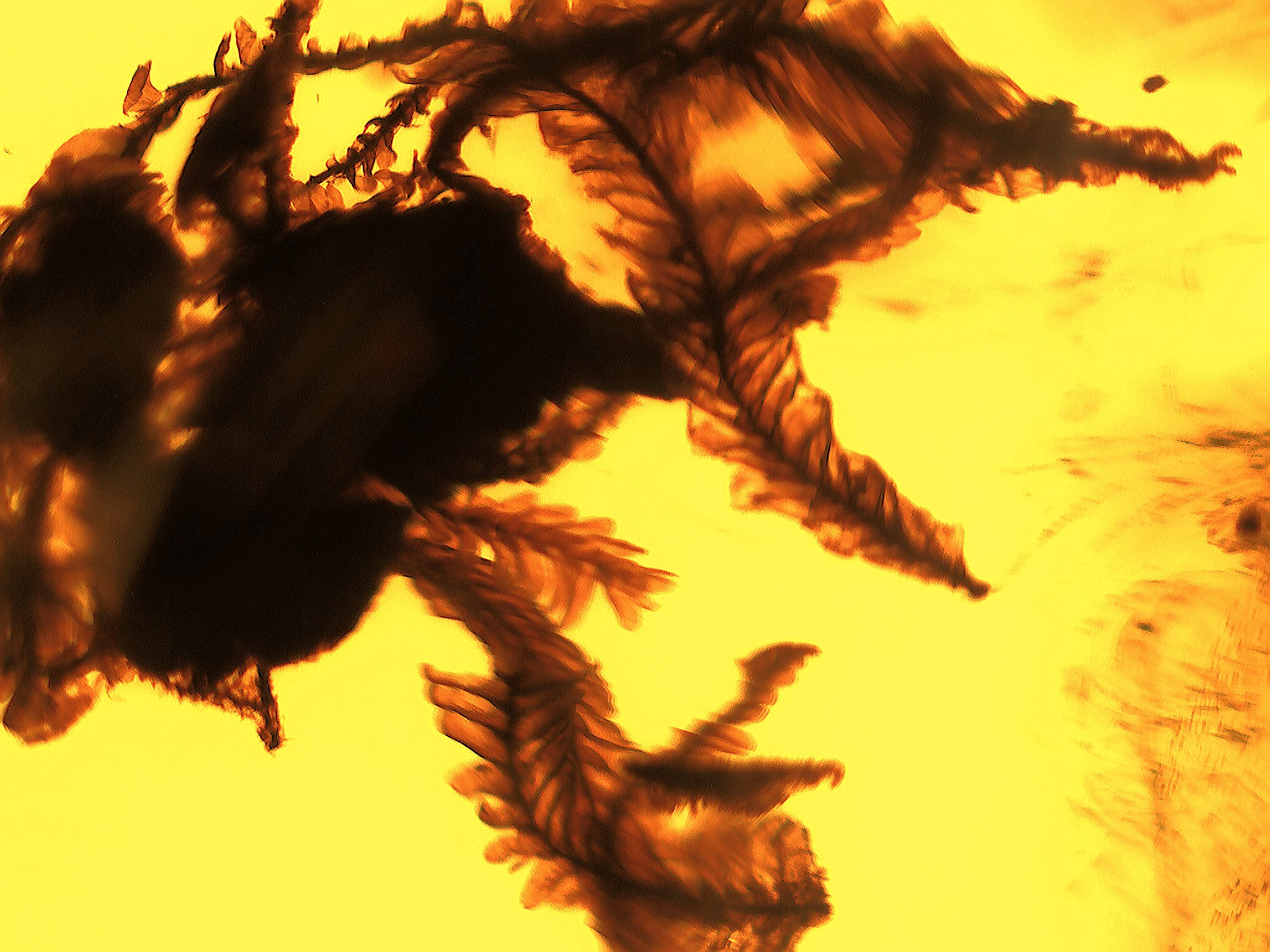
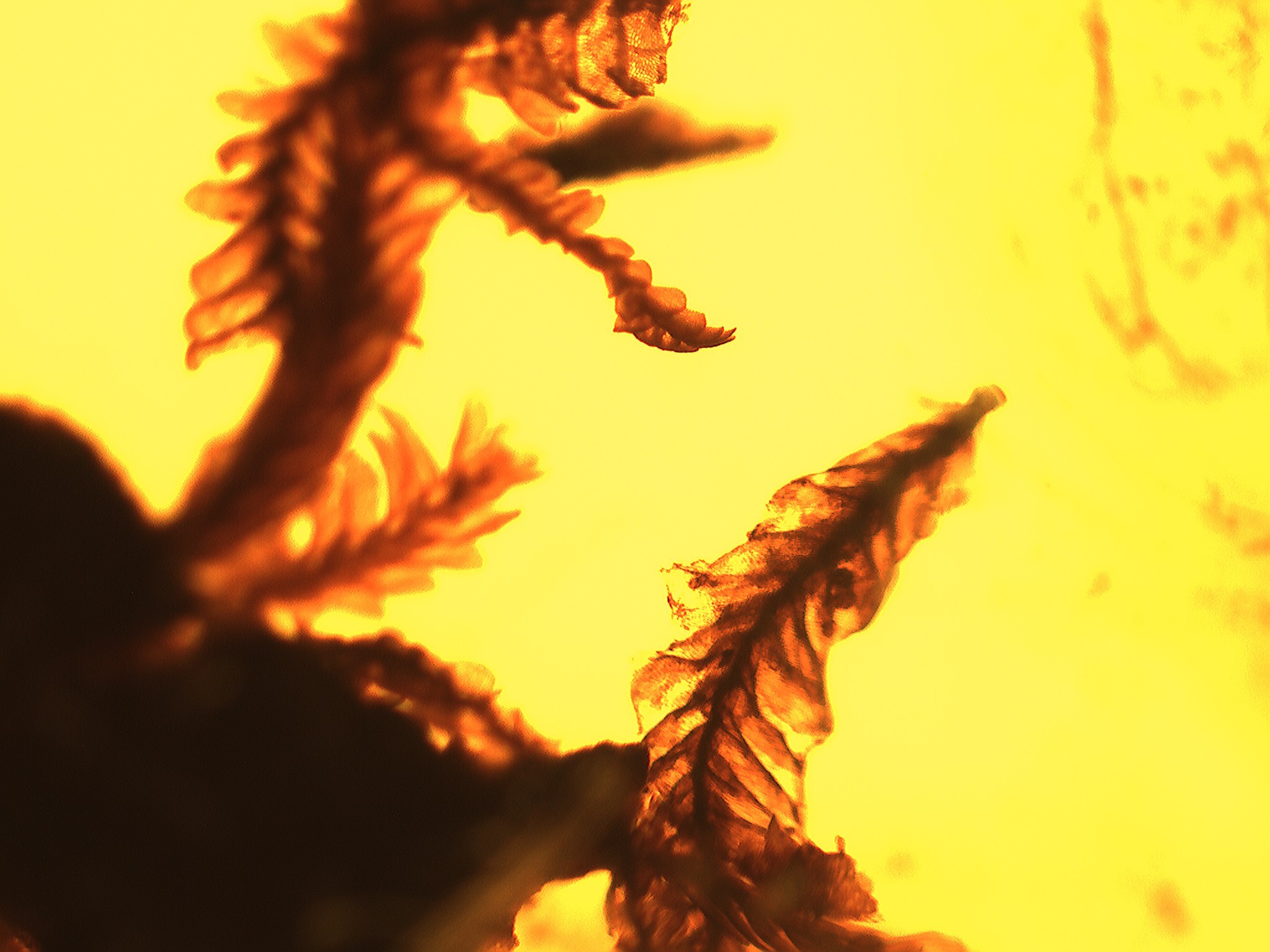
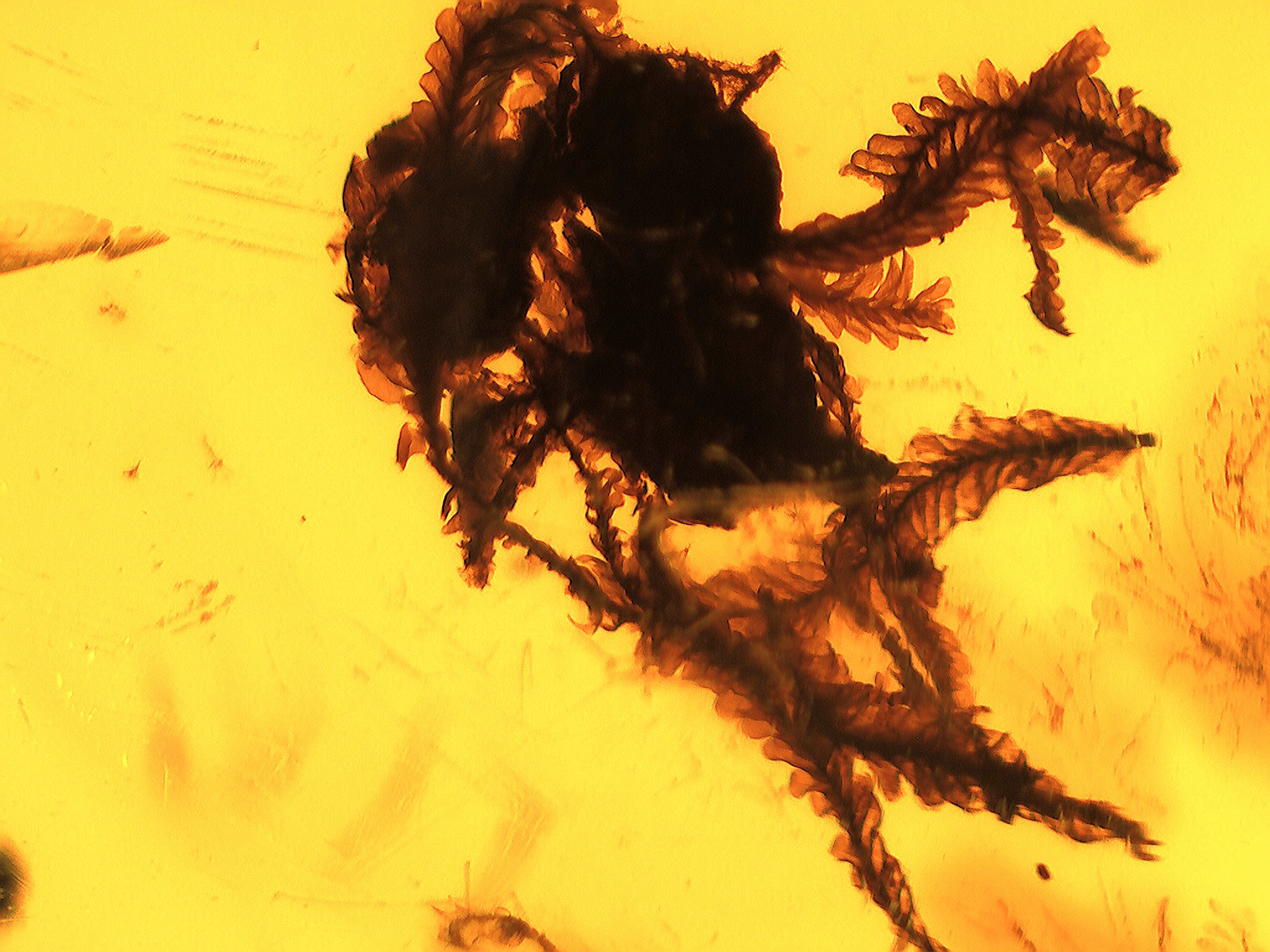
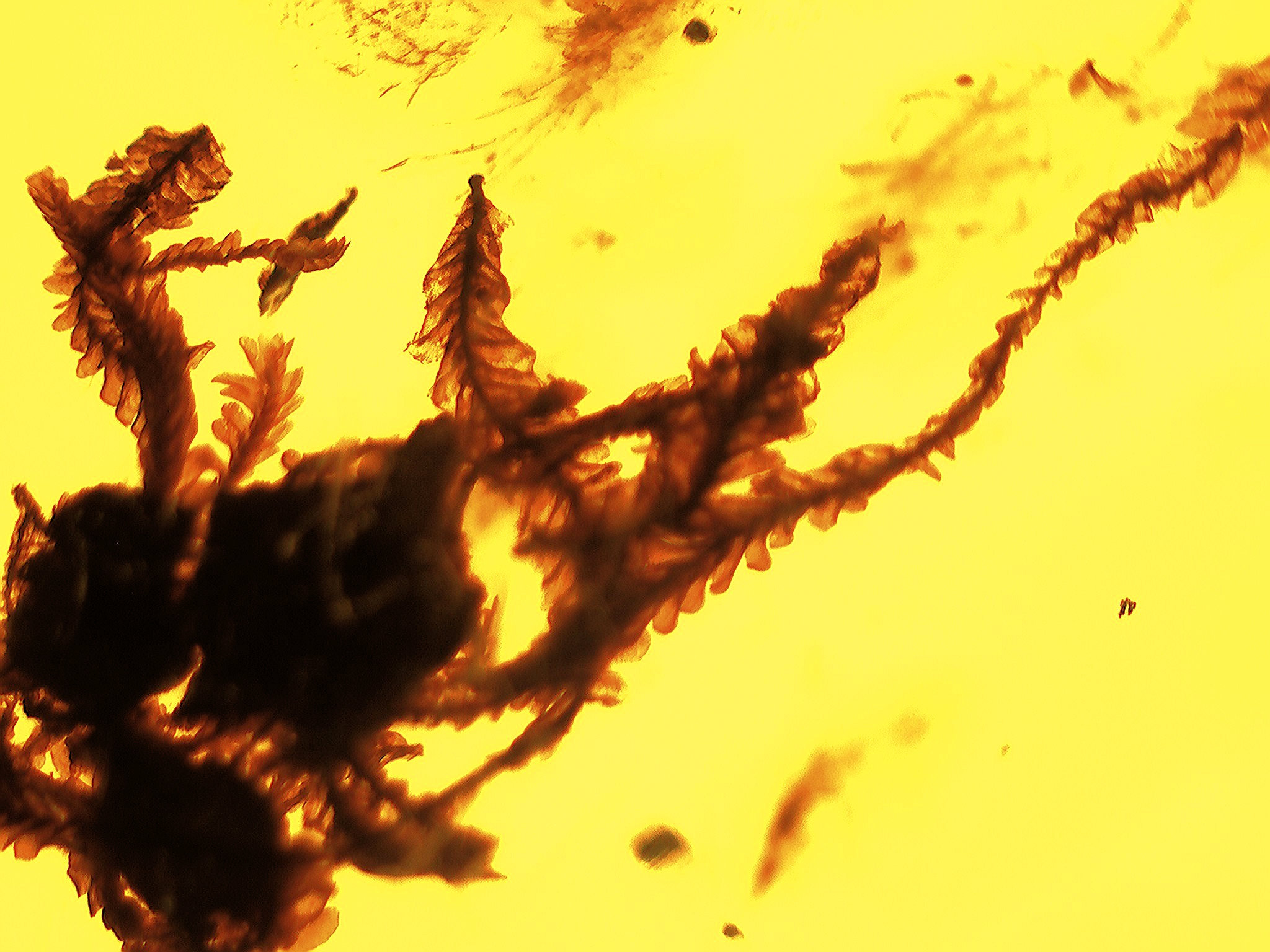
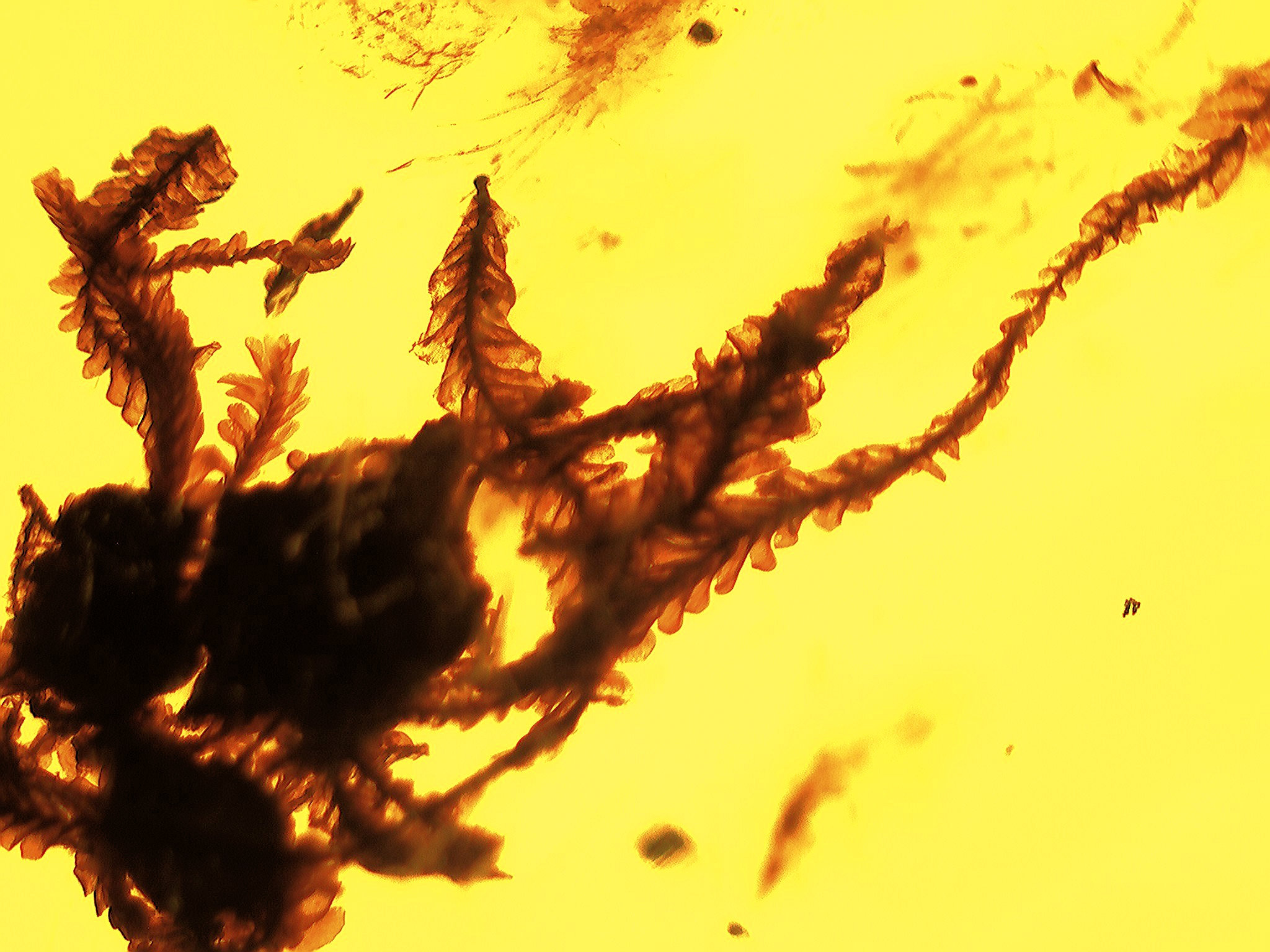
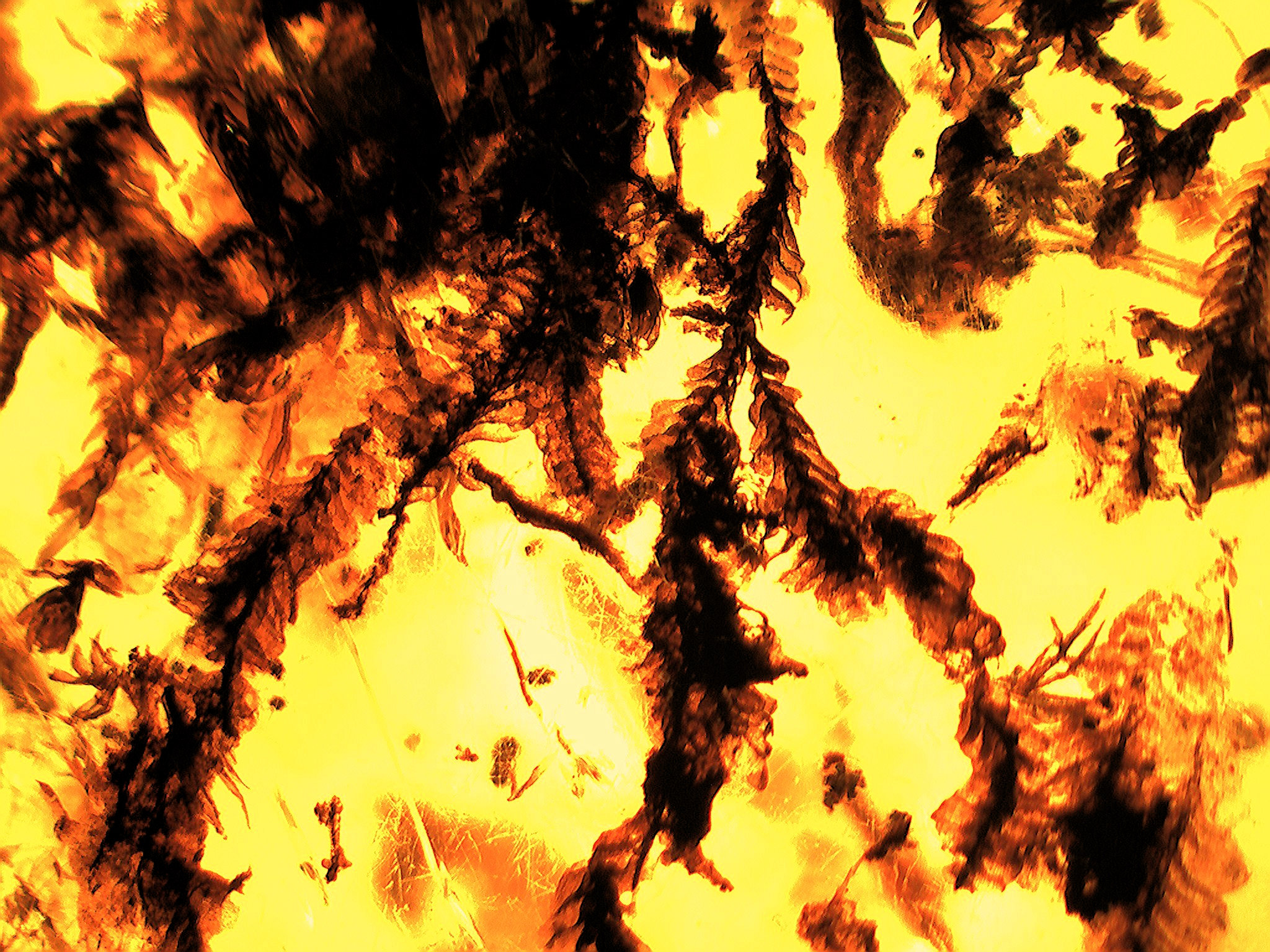
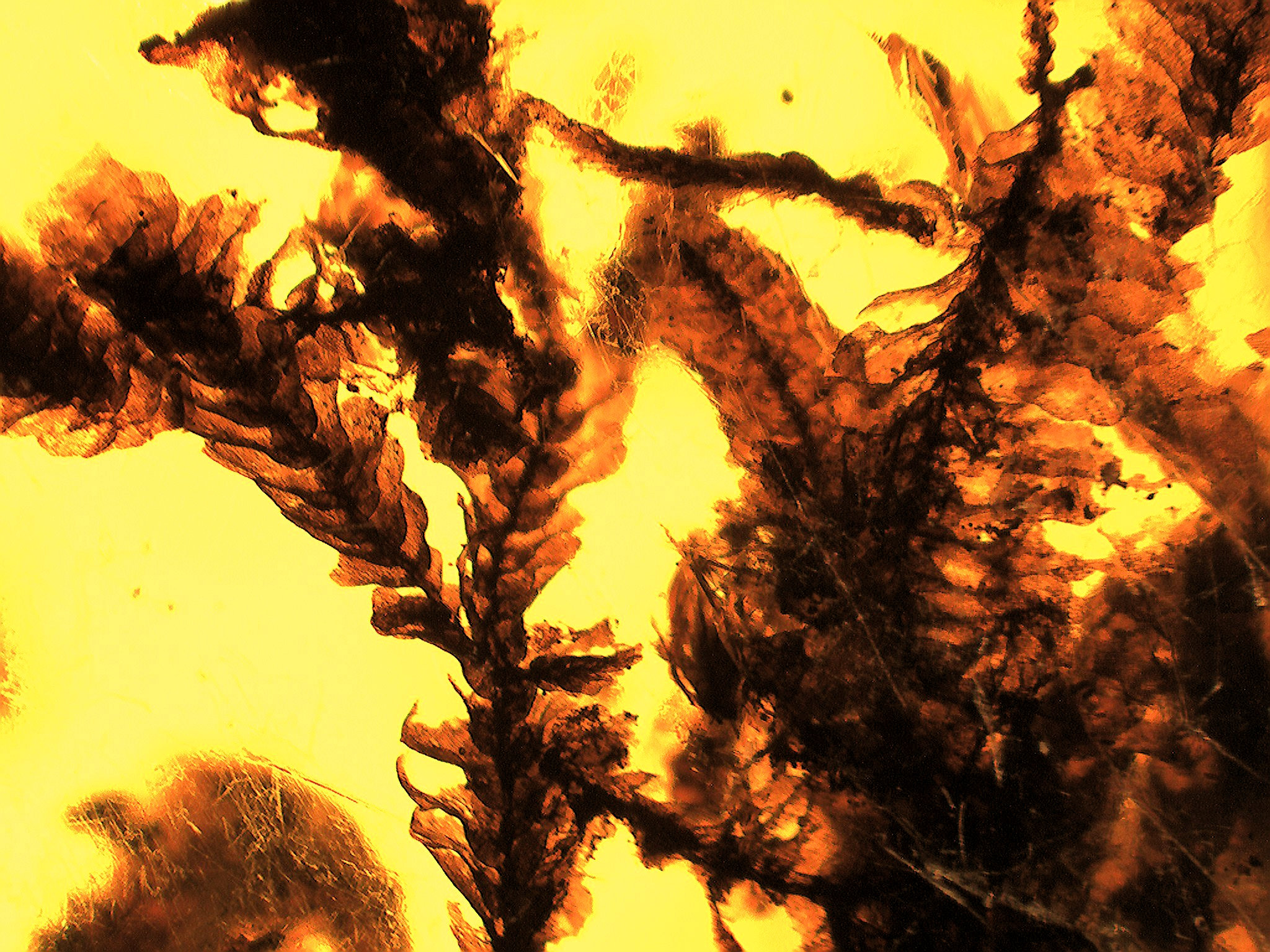
Large, flat, elongated coin shaped piece of amber with a LOT of moss inside. Really cool. This will provide a lot a of viewing time for you. There are also some insects inside this gem.
Item 6

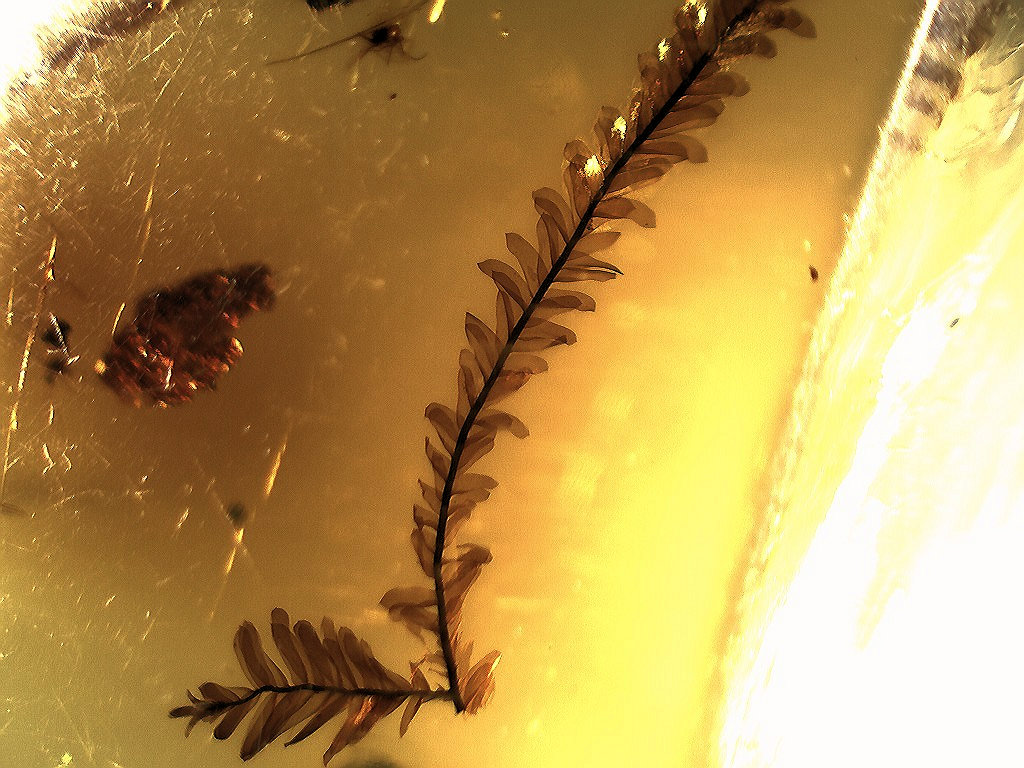
A rather large piece of amber that contains some very long Bryophytes. There are 2 poorly preserved winged termites along with ants and single fungus gnat, Mycetophilidae. It is a good piece.
Item 7

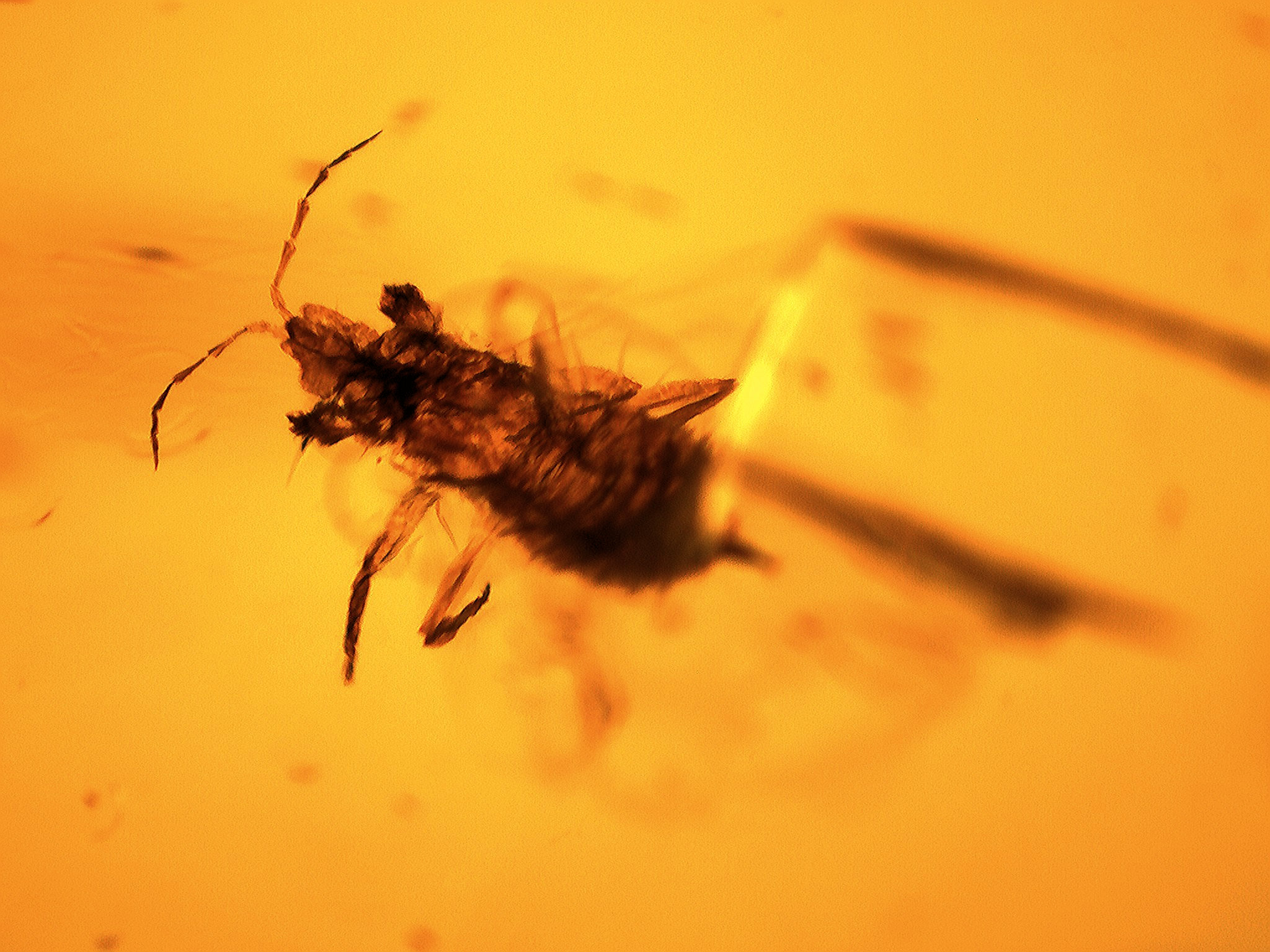
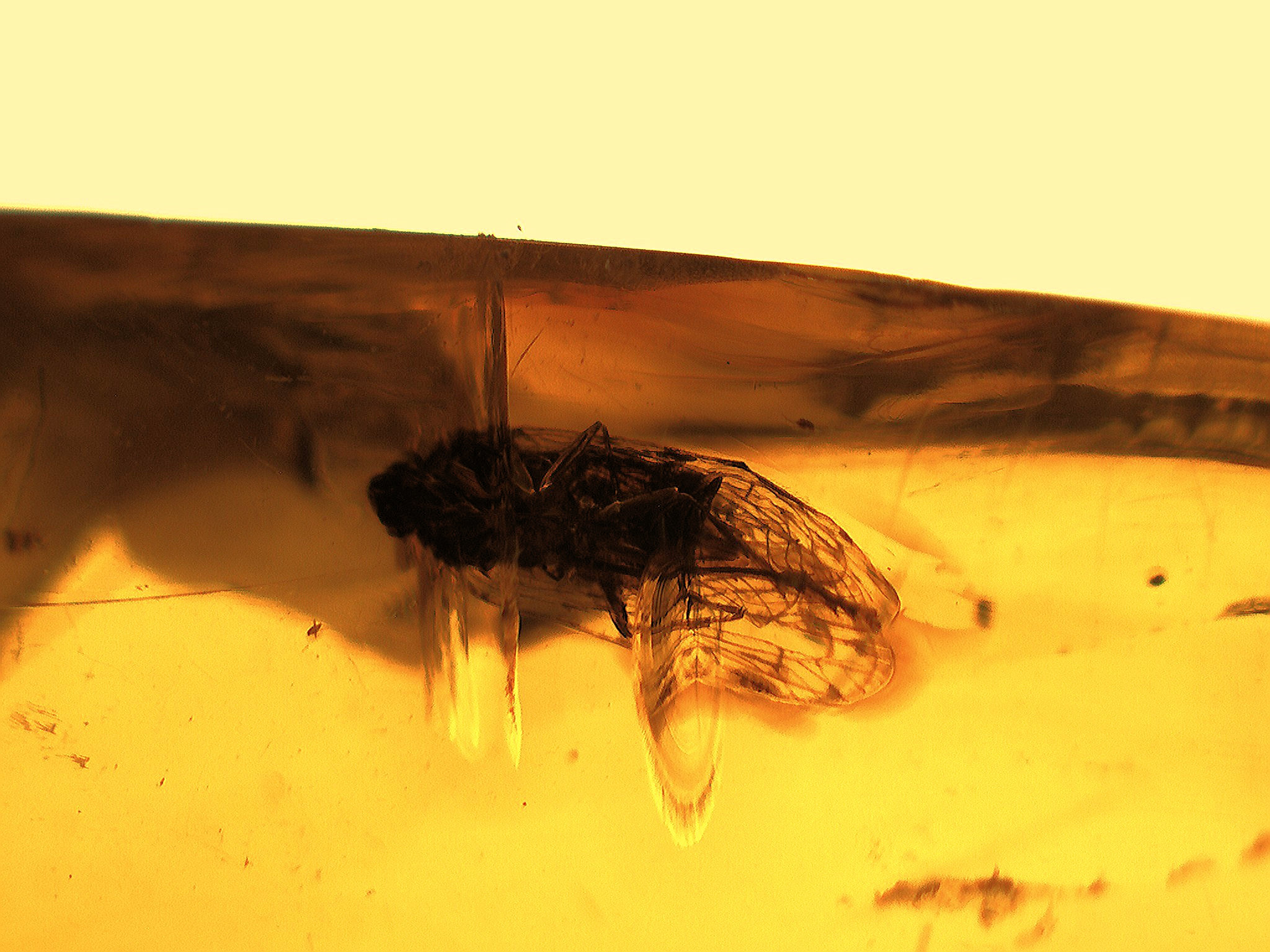
Quite a piece of amber. This has a large, visible leaf inside. Rather cool, you can see places where an insect has 'chomped' part of the leaf. I love when amber tells a story. There are a bunch of animals also. One beautiful is an immature planthopper, Homoptera, Fulgoridea, an unknown and a fly, Nematocera. You will like this one.

Item 9
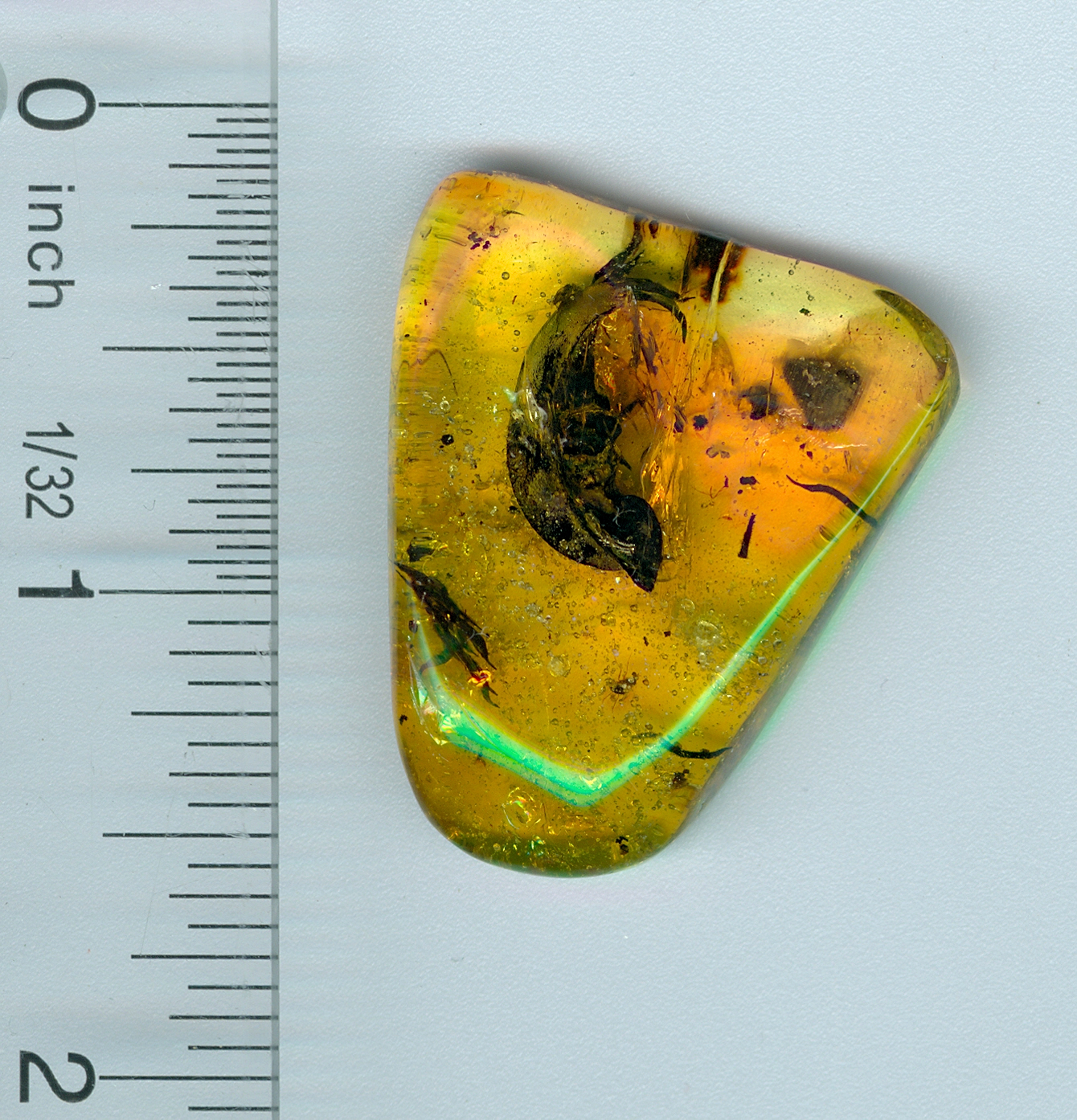
A clear piece of Chiapas amber with a curved leaf. There are some other miscellaneous bits of botanical parts, but the leaf is the main piece. Couple of flies, maybe a thrip and even other flies.
Item 10

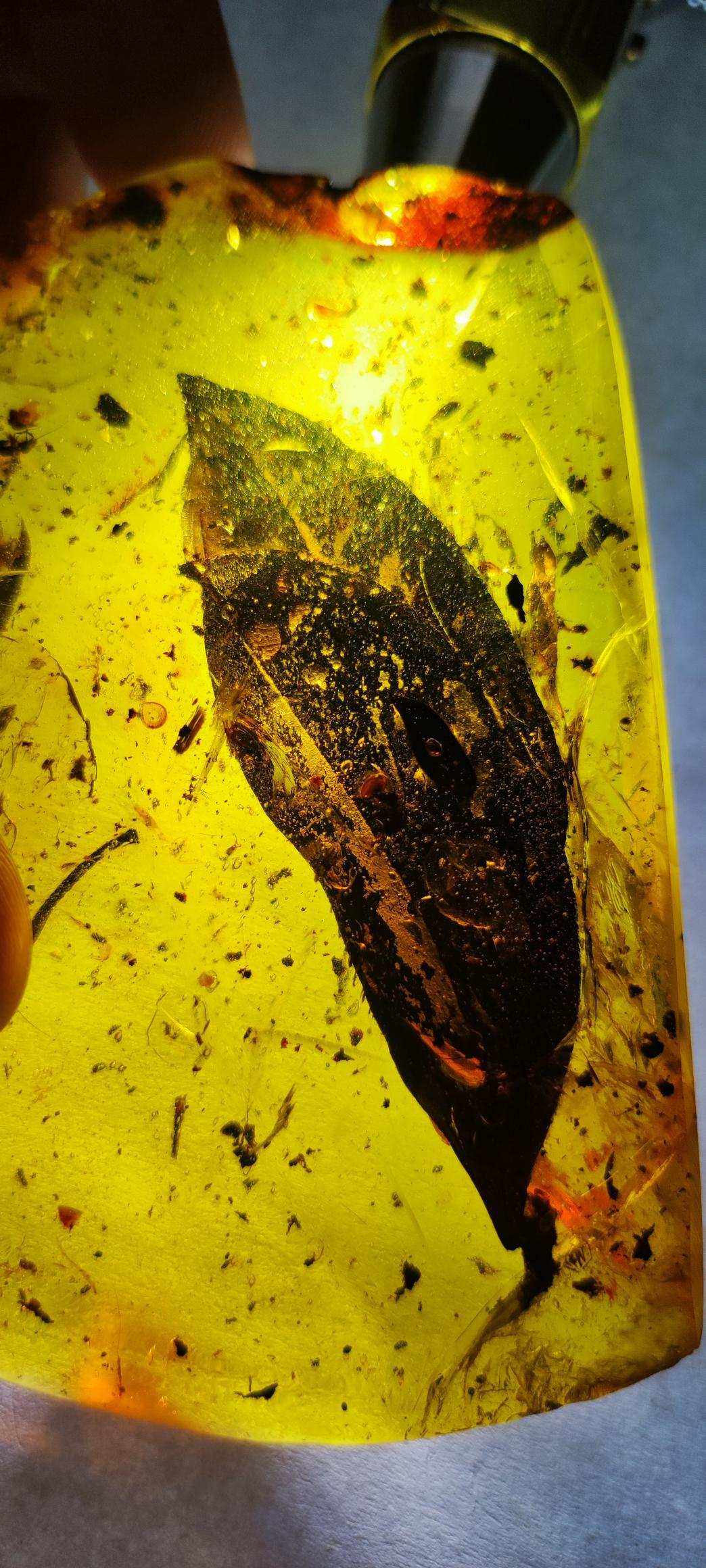
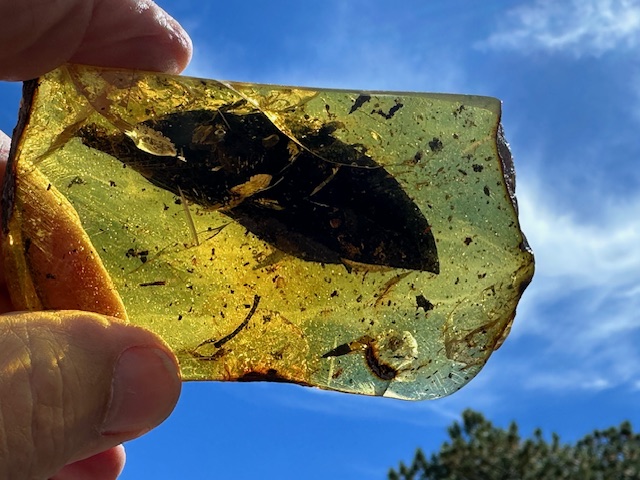
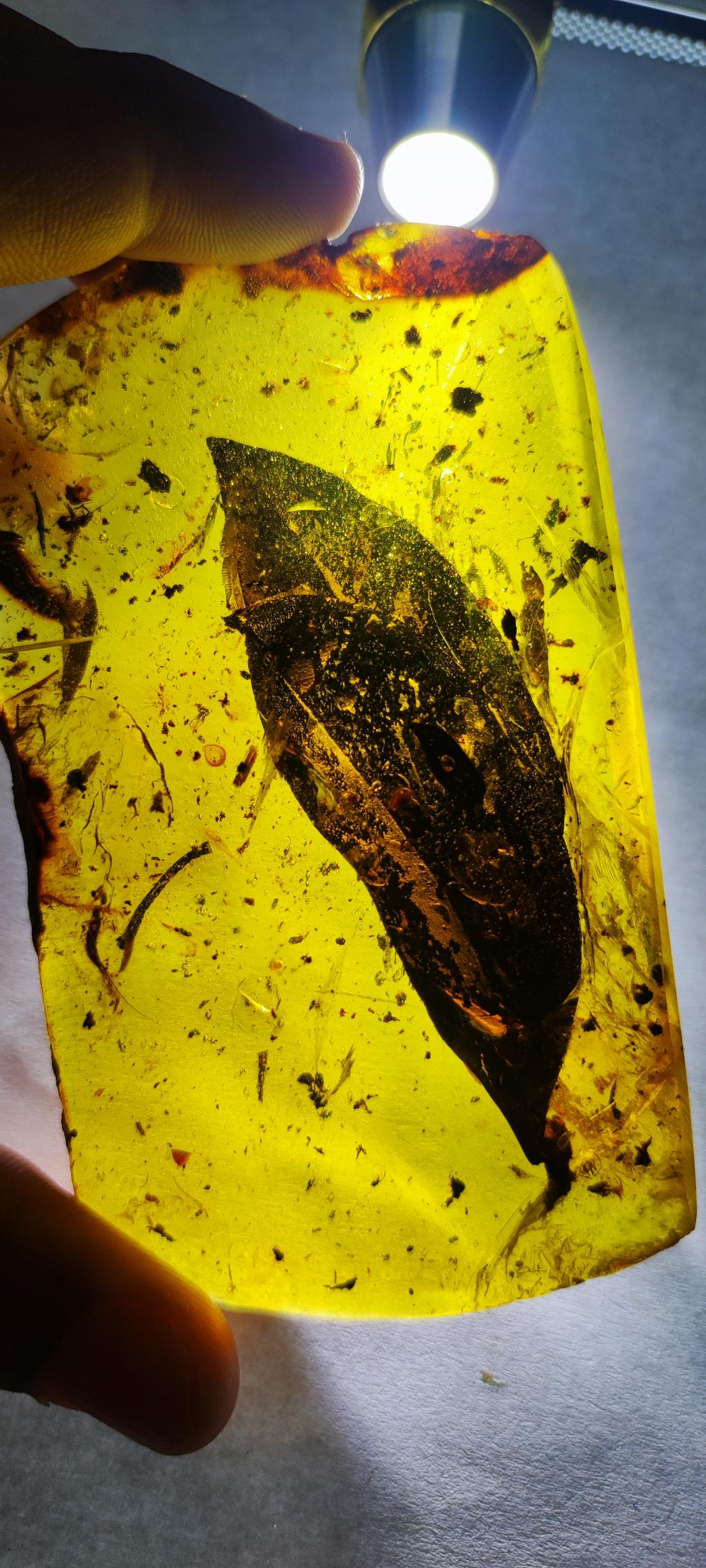
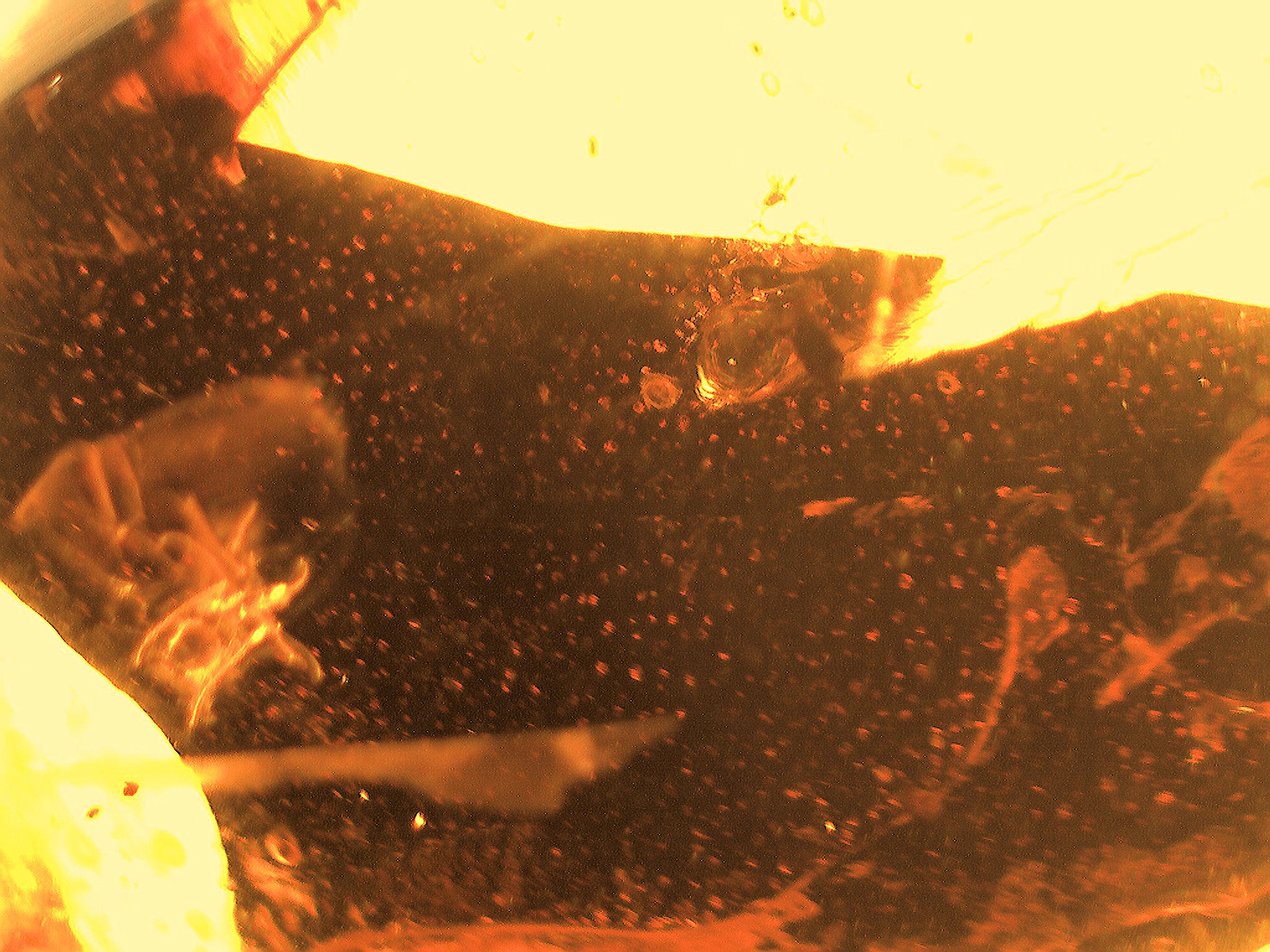
Here is the best of the best. In the last 30 years I have only seen one specimen that is in this museum category. This is a large leaf in a large piece of amber. To give you an idea the leaf is over 3 inches in length. One of the largest I have seen. The entire piece is about 4 inches x 2.5 inches x 3/4 inch. Huge, this is a capstone to anyone's collection, a true museum piece. There is really 1.5 leaves in this piece. Half of one leaf is directly underneath a full leaf.
Item 11

The leaf on this beauty is 2 inches long. That is a very large inclusion in Chiapas amber. You can see some holes in the leaf where an insect probably chewed away (or something similar). There is also half a leaf off to the side. This is a big piece of amber, about 3 inches long. The kind you can put on your desk as an example.
Item 12

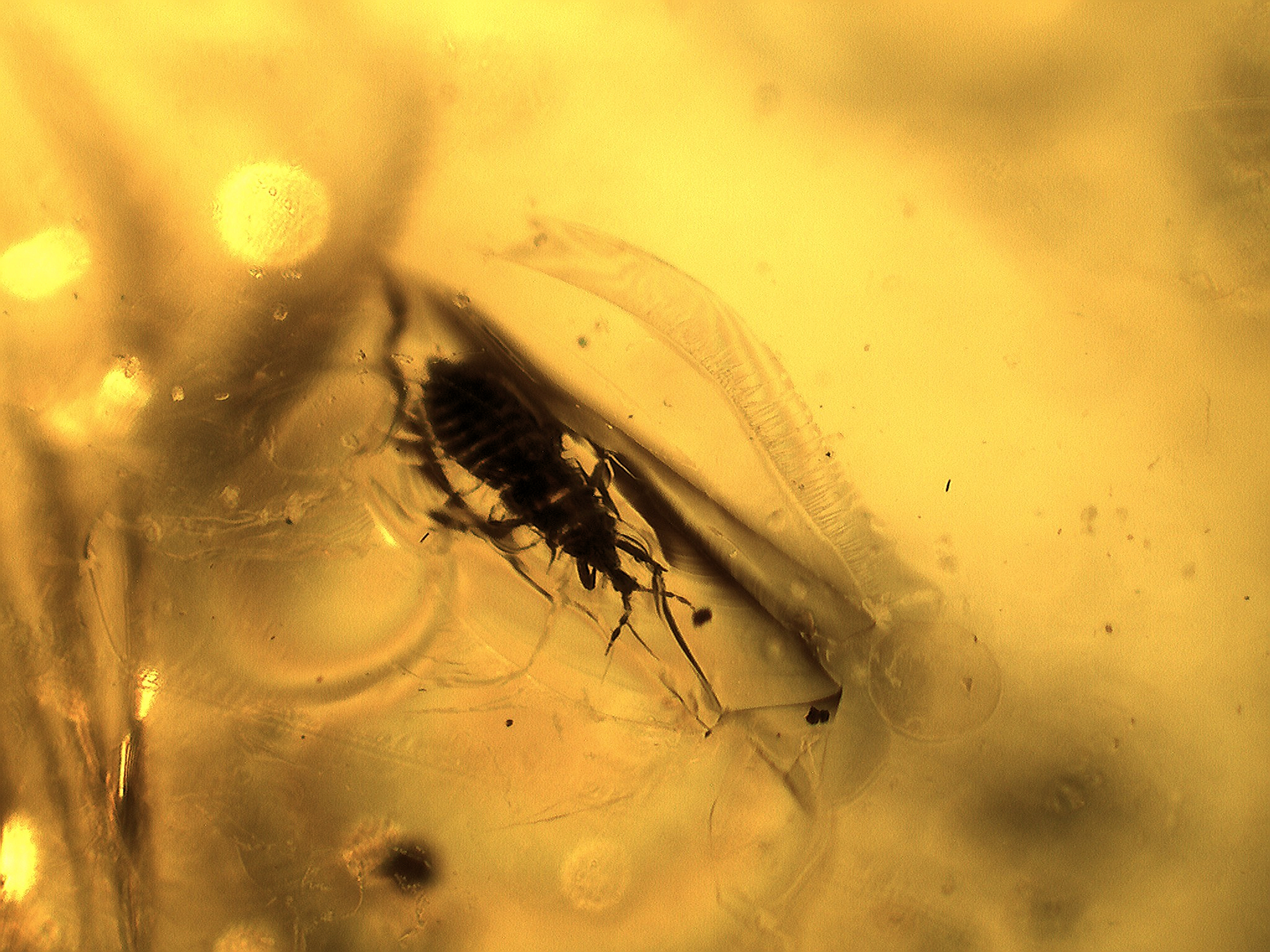
Looks like a partially eaten leaf, along with a silverfish, 2 large fungus gnats, Mycetophilidae and 2 midges, Chironomidae.
Item 13

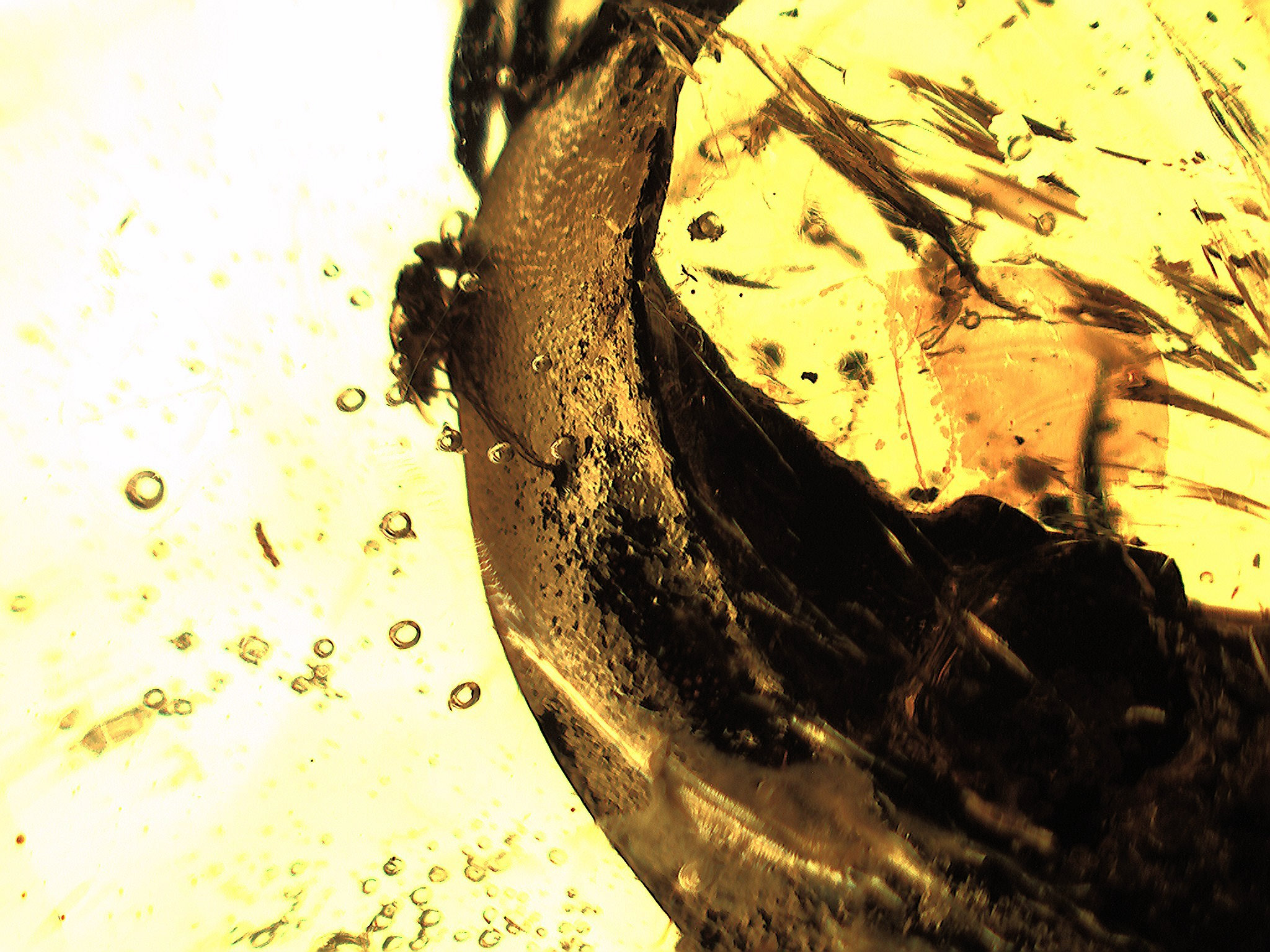
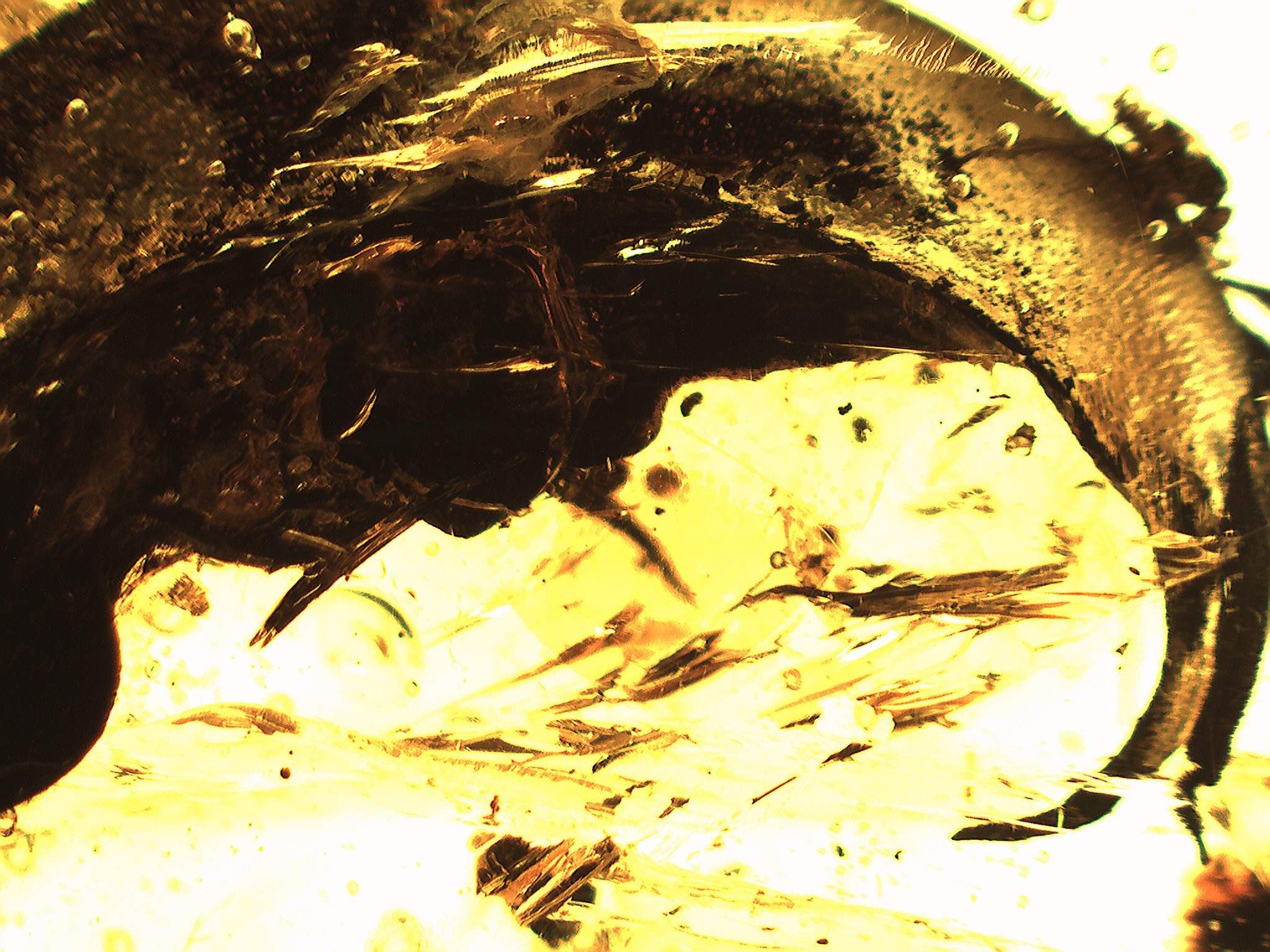
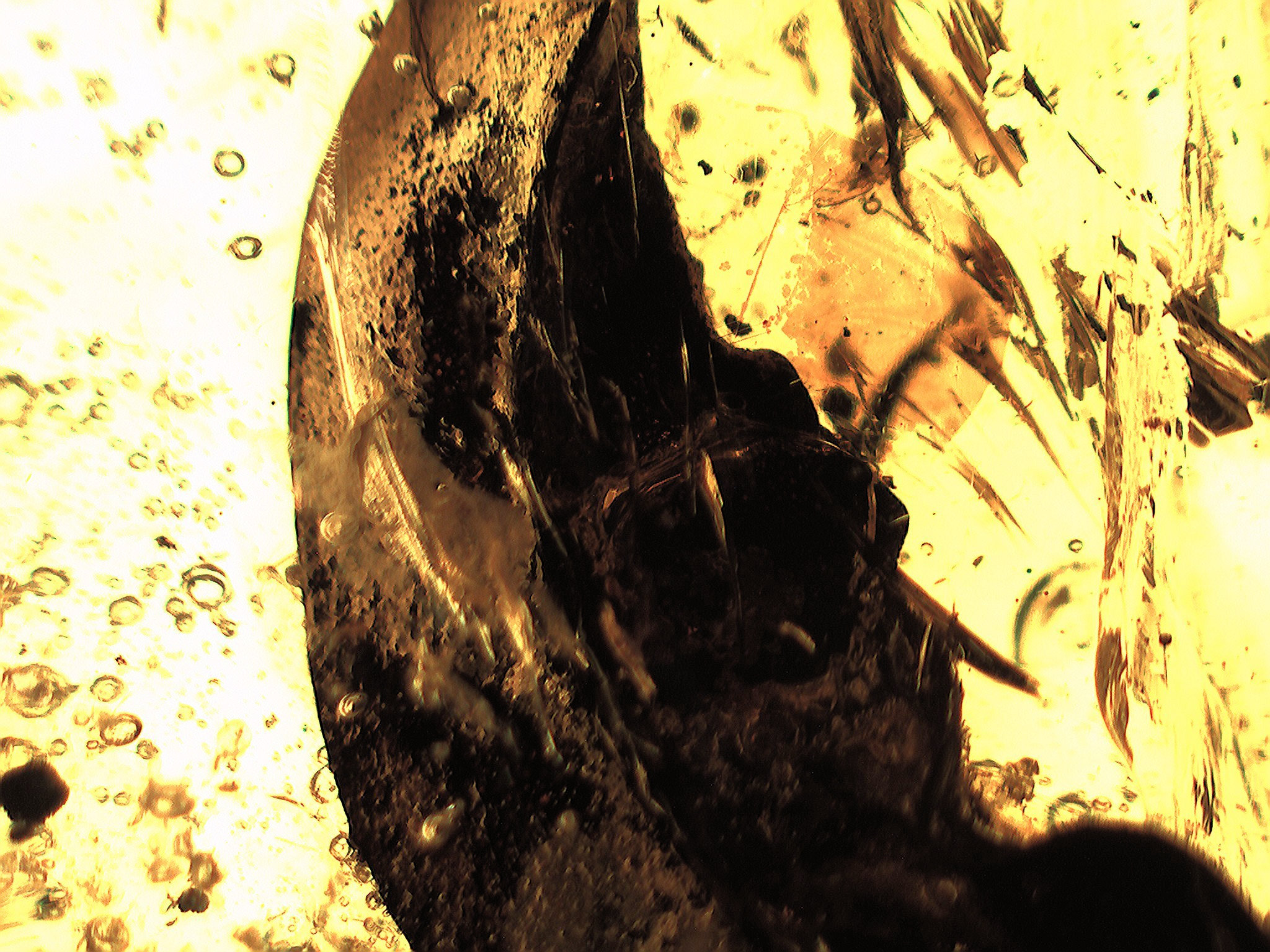
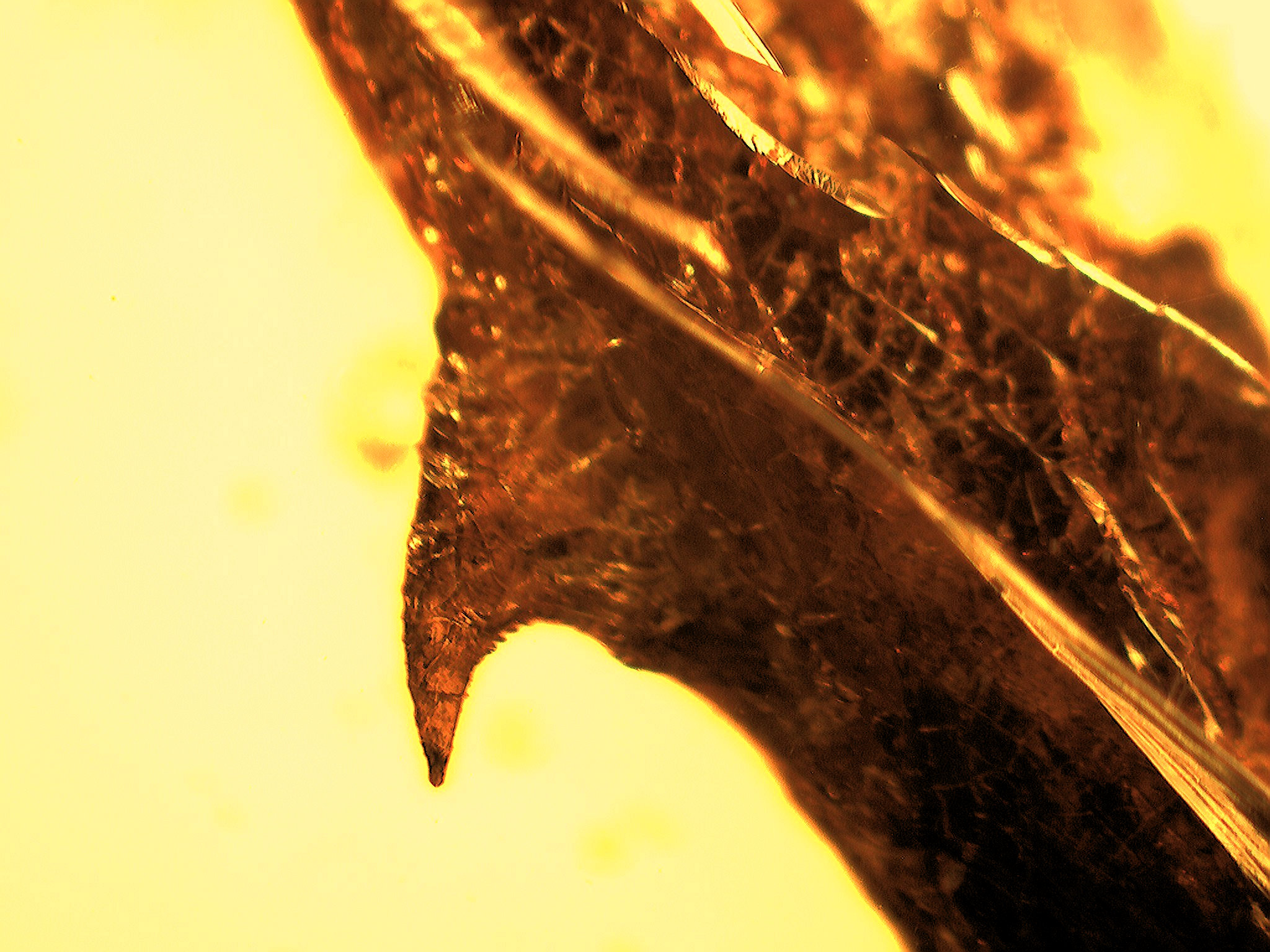
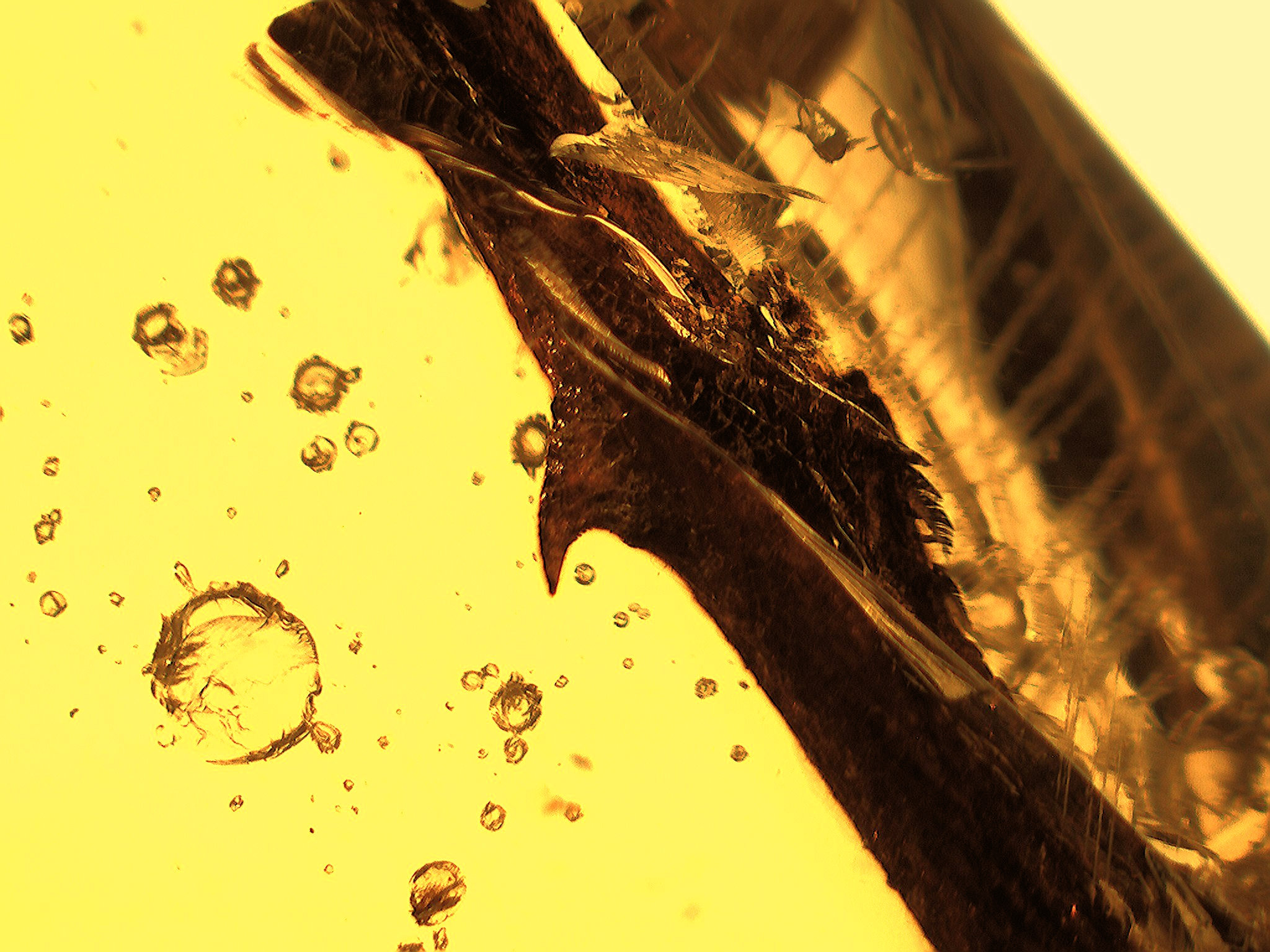
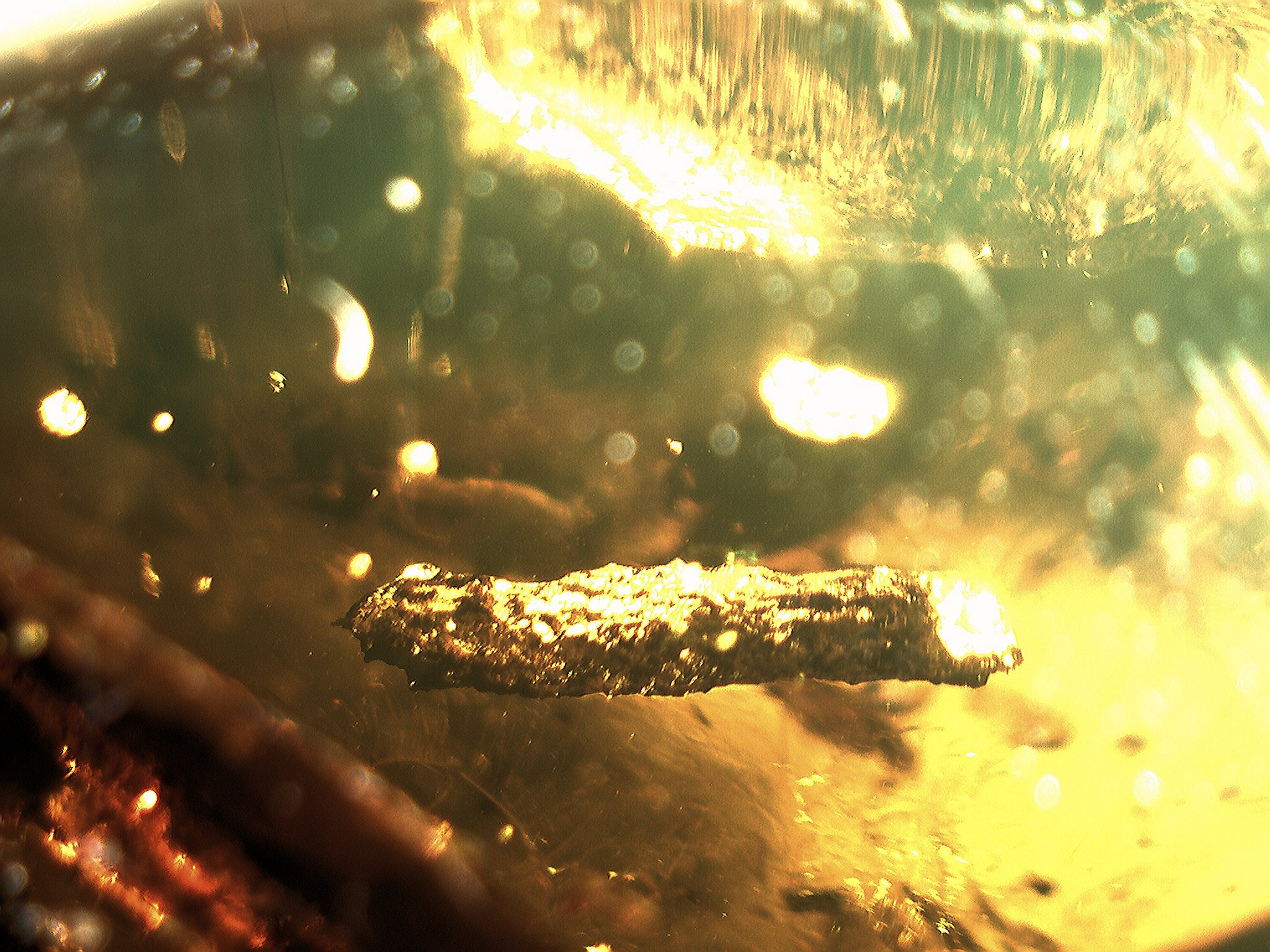
I just do not know what this is. Could be part of a very large insect - or even an animal. I am going to wildly guess that this is an internodal segment of a fairly large stemmed plant. that is a guess. It is more and .5 inches in length.
Item 14
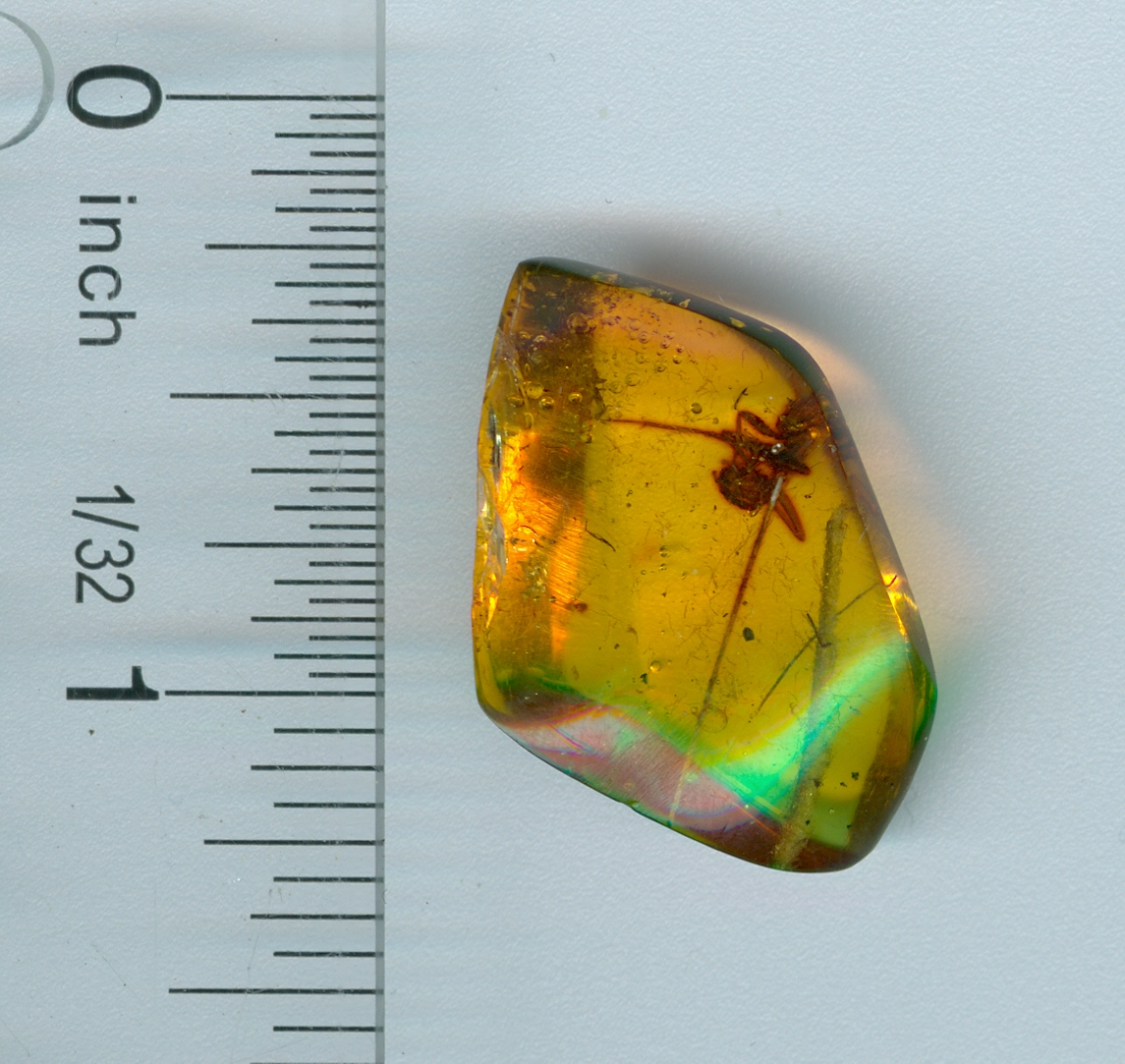
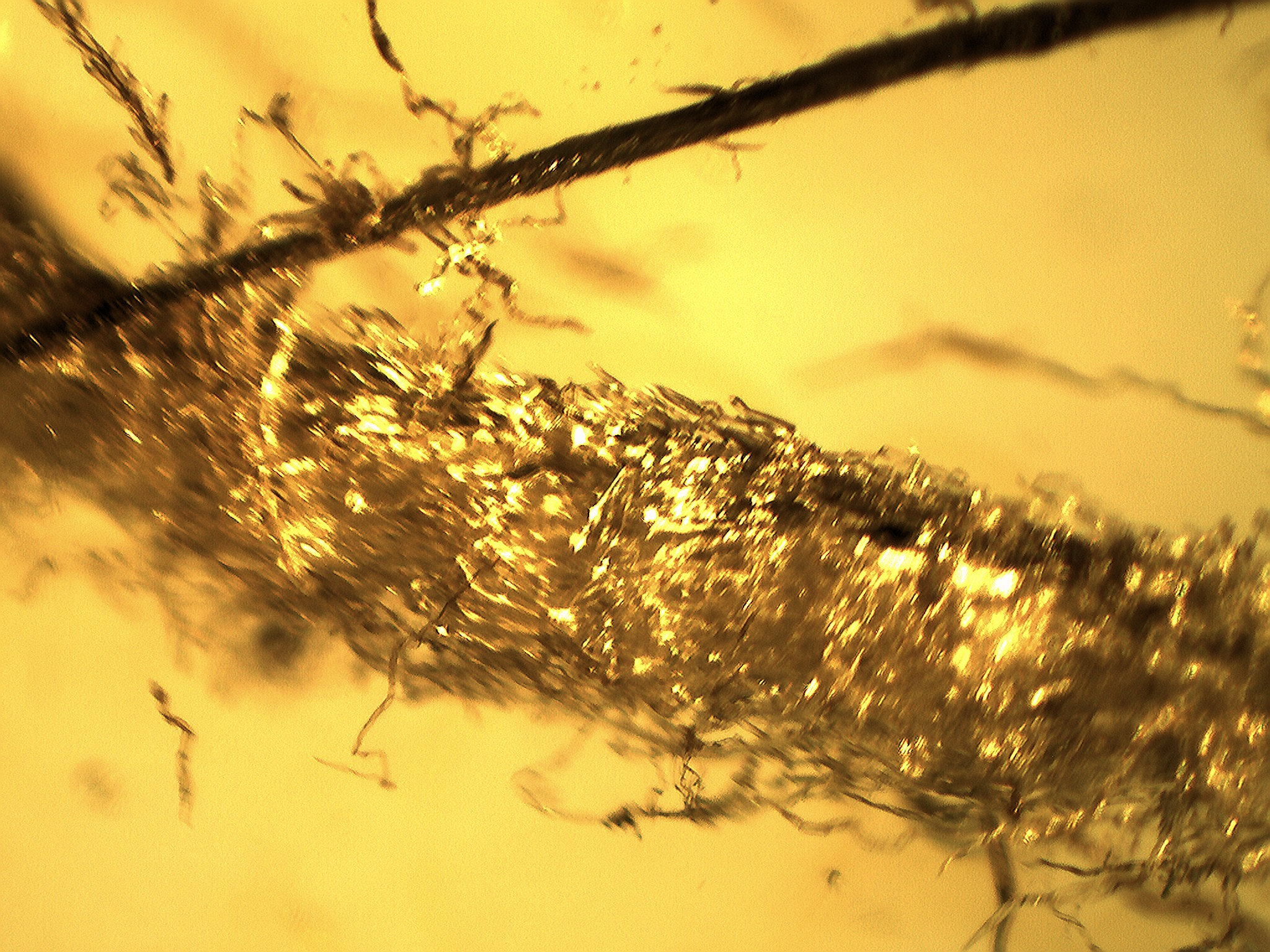
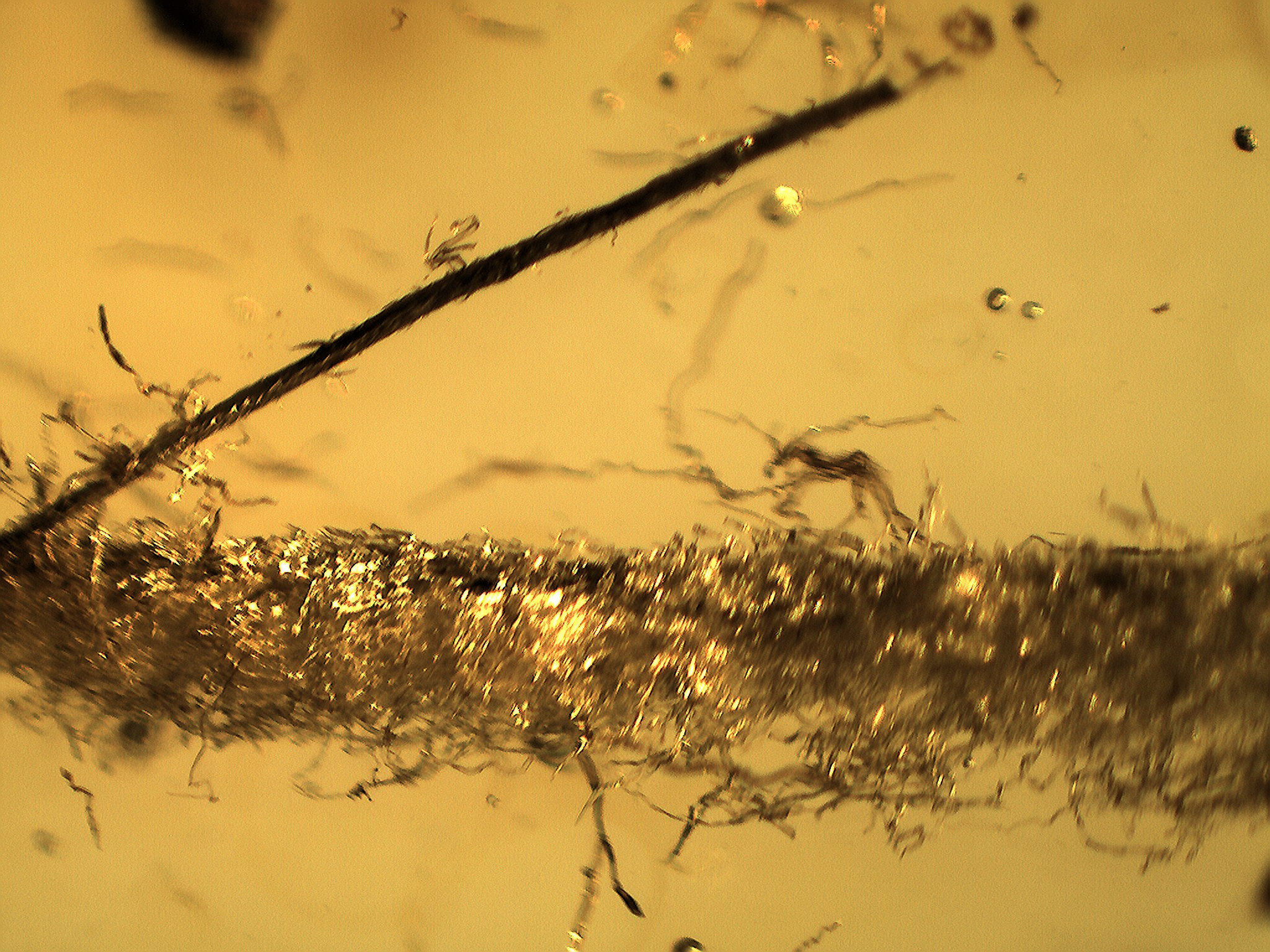
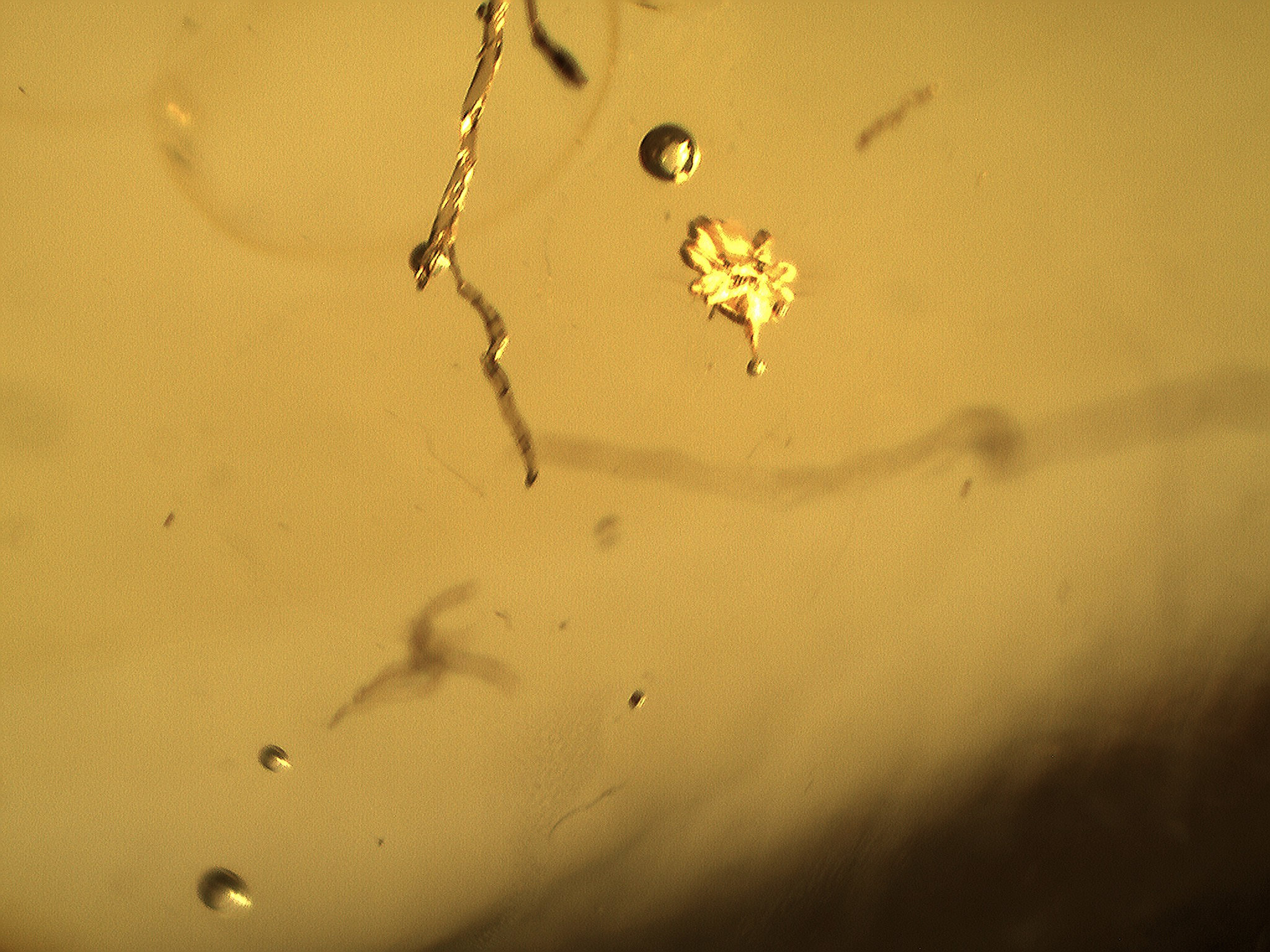
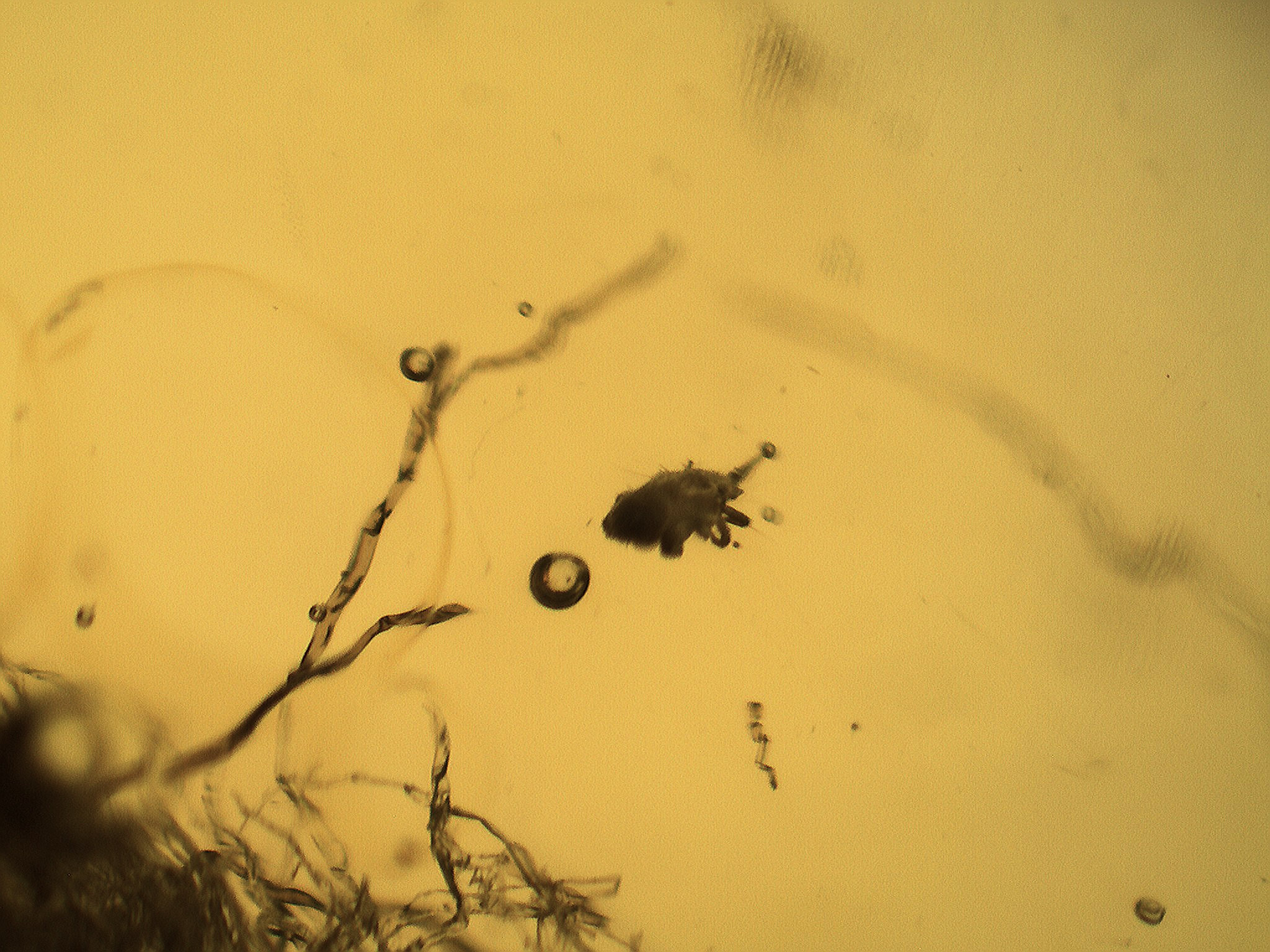
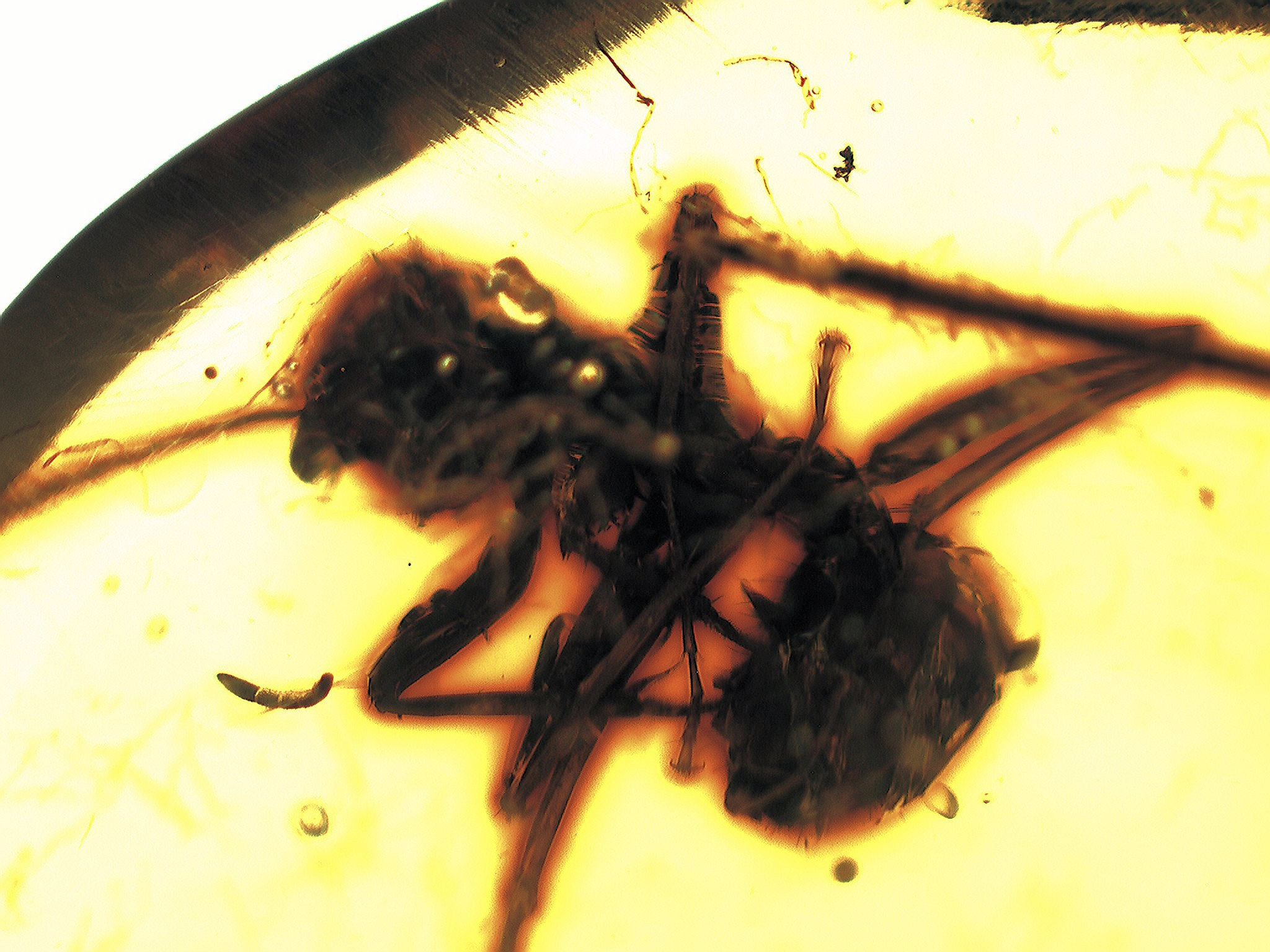
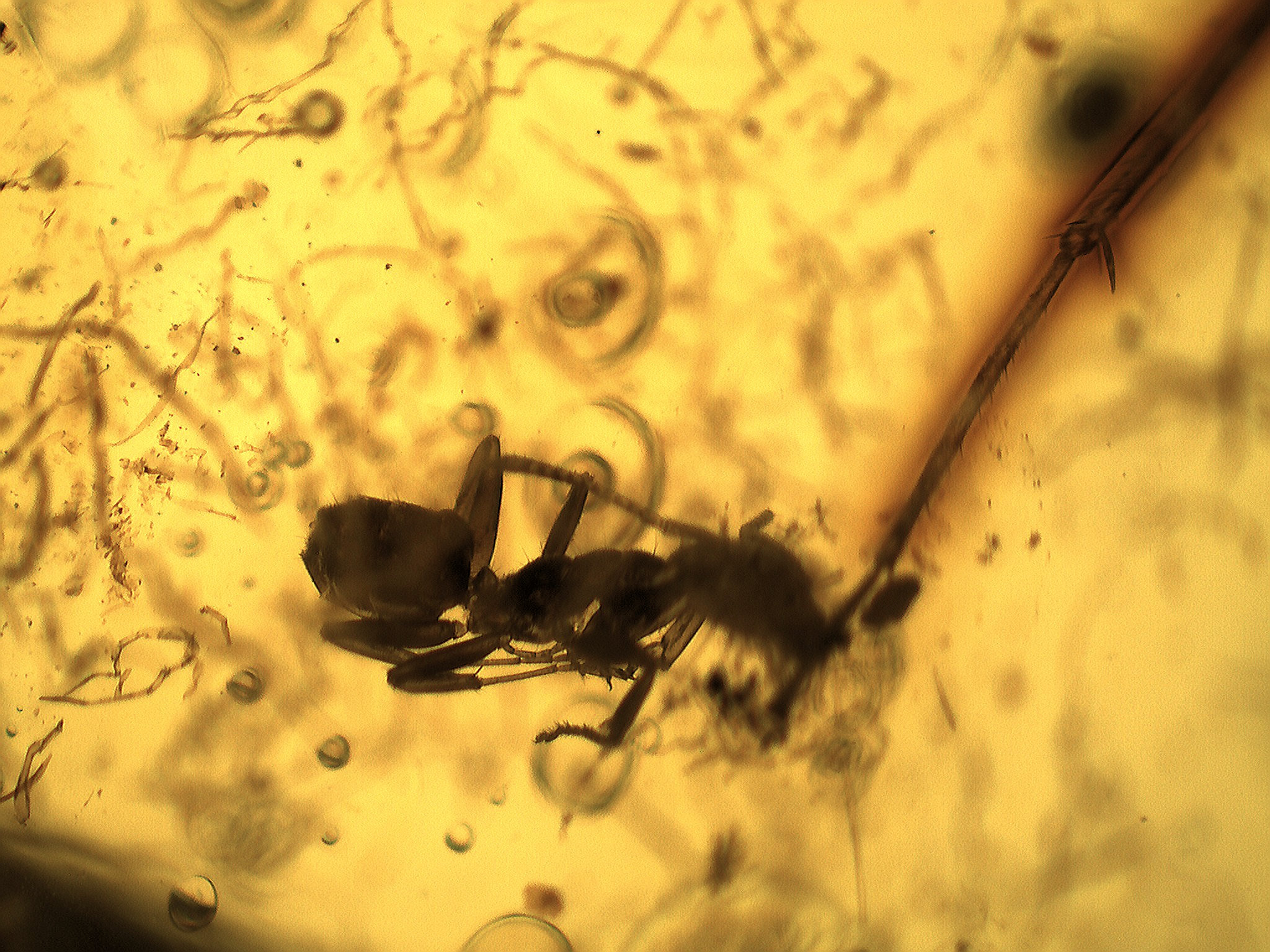
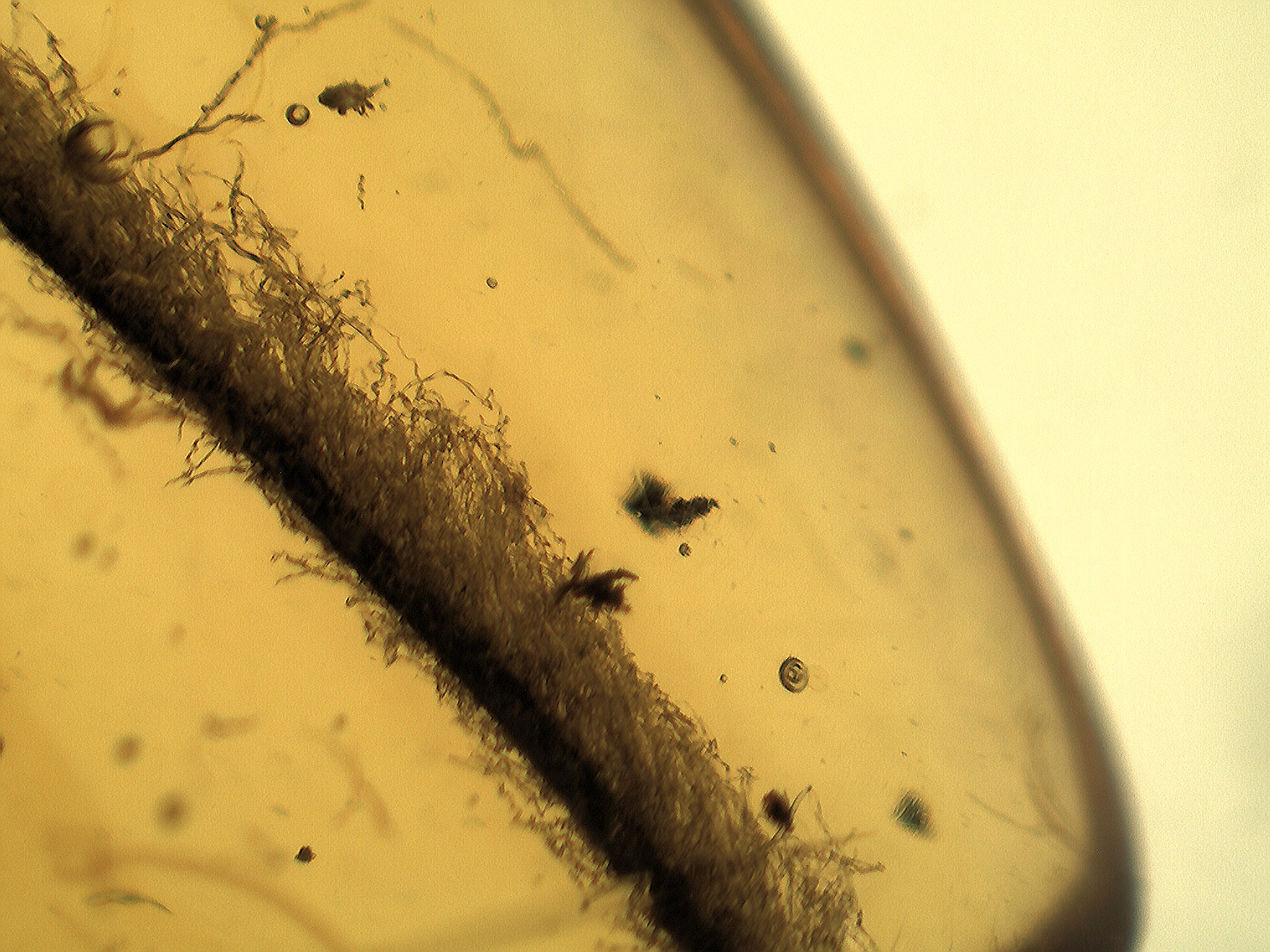
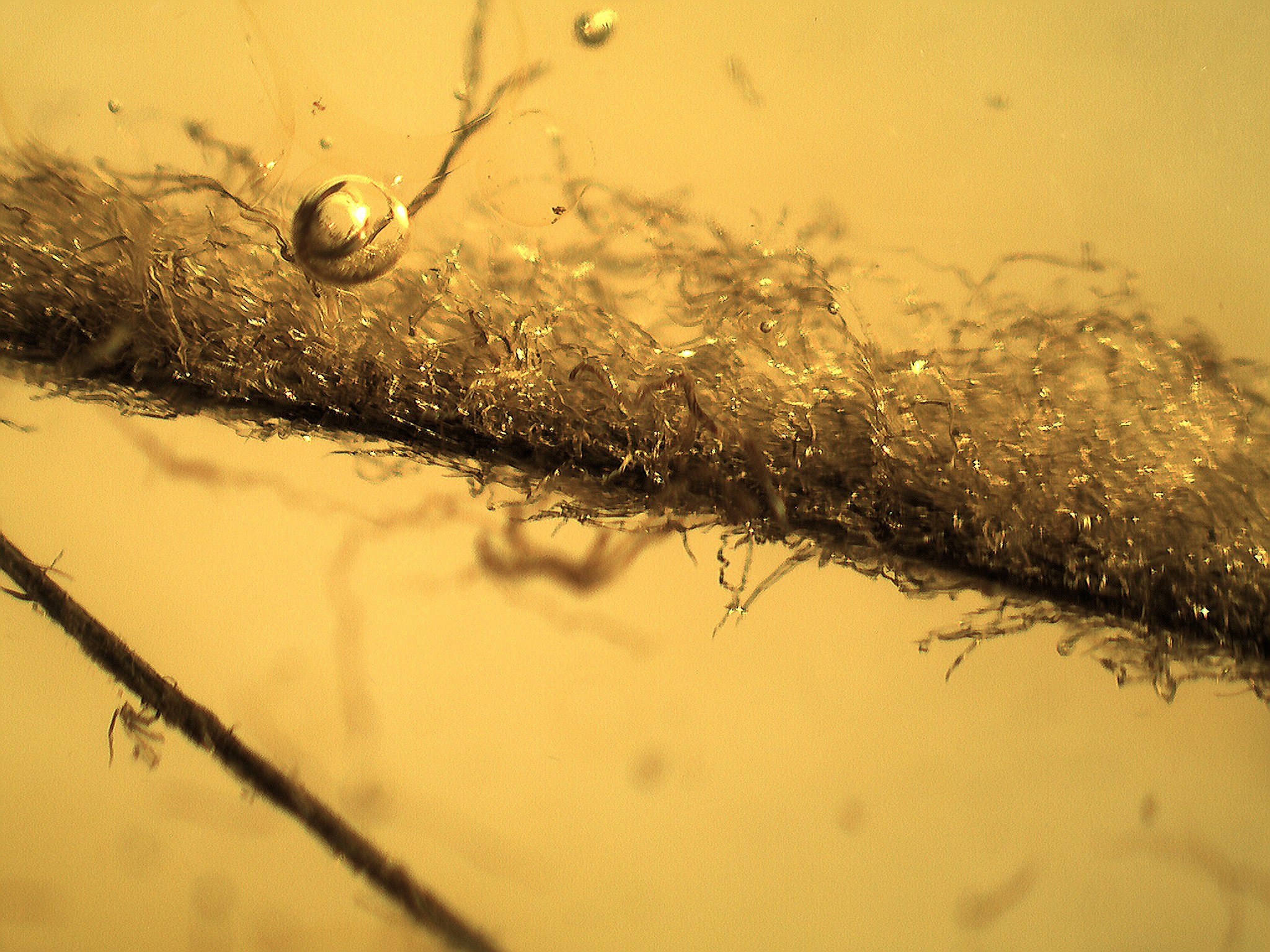
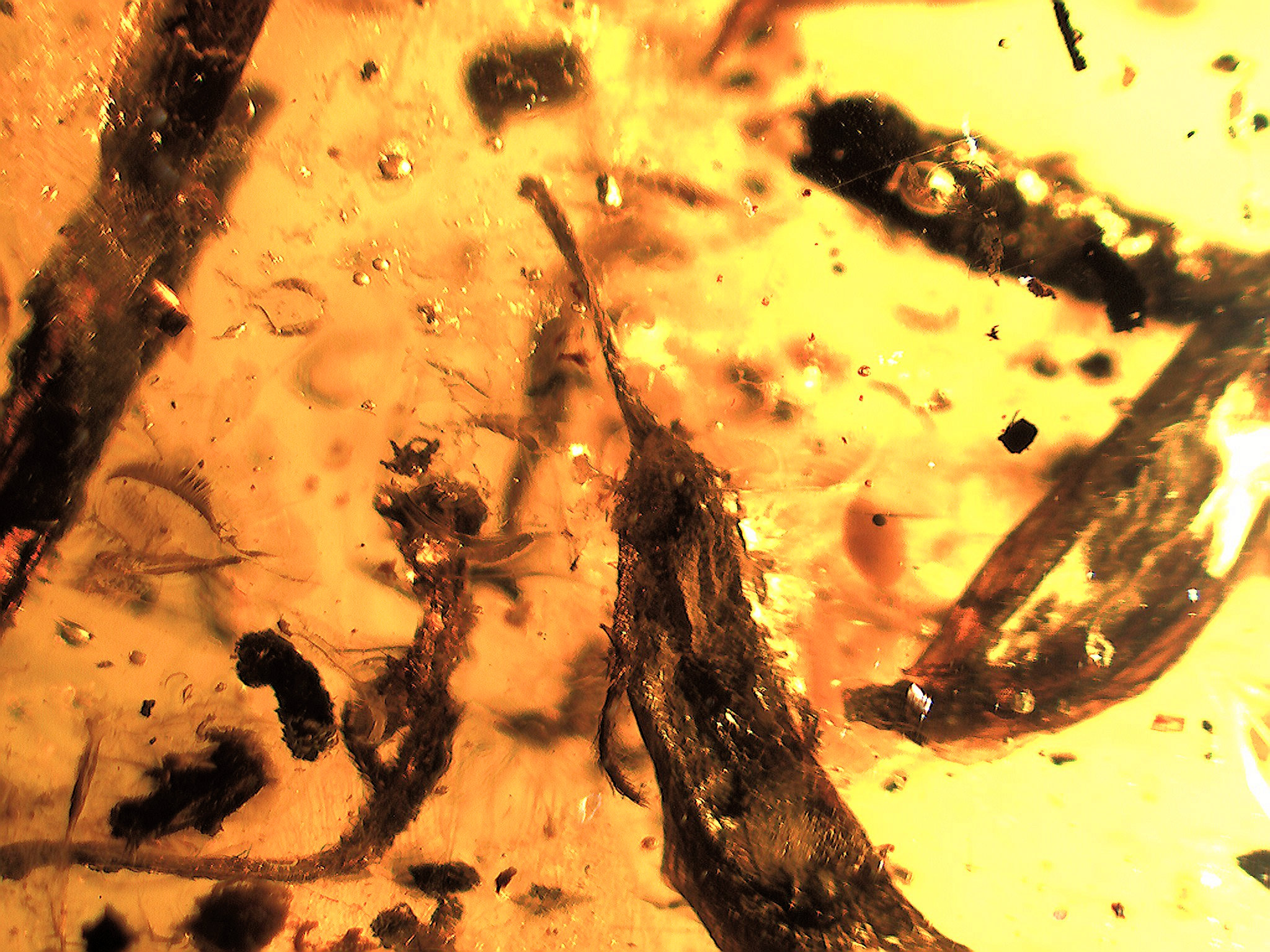
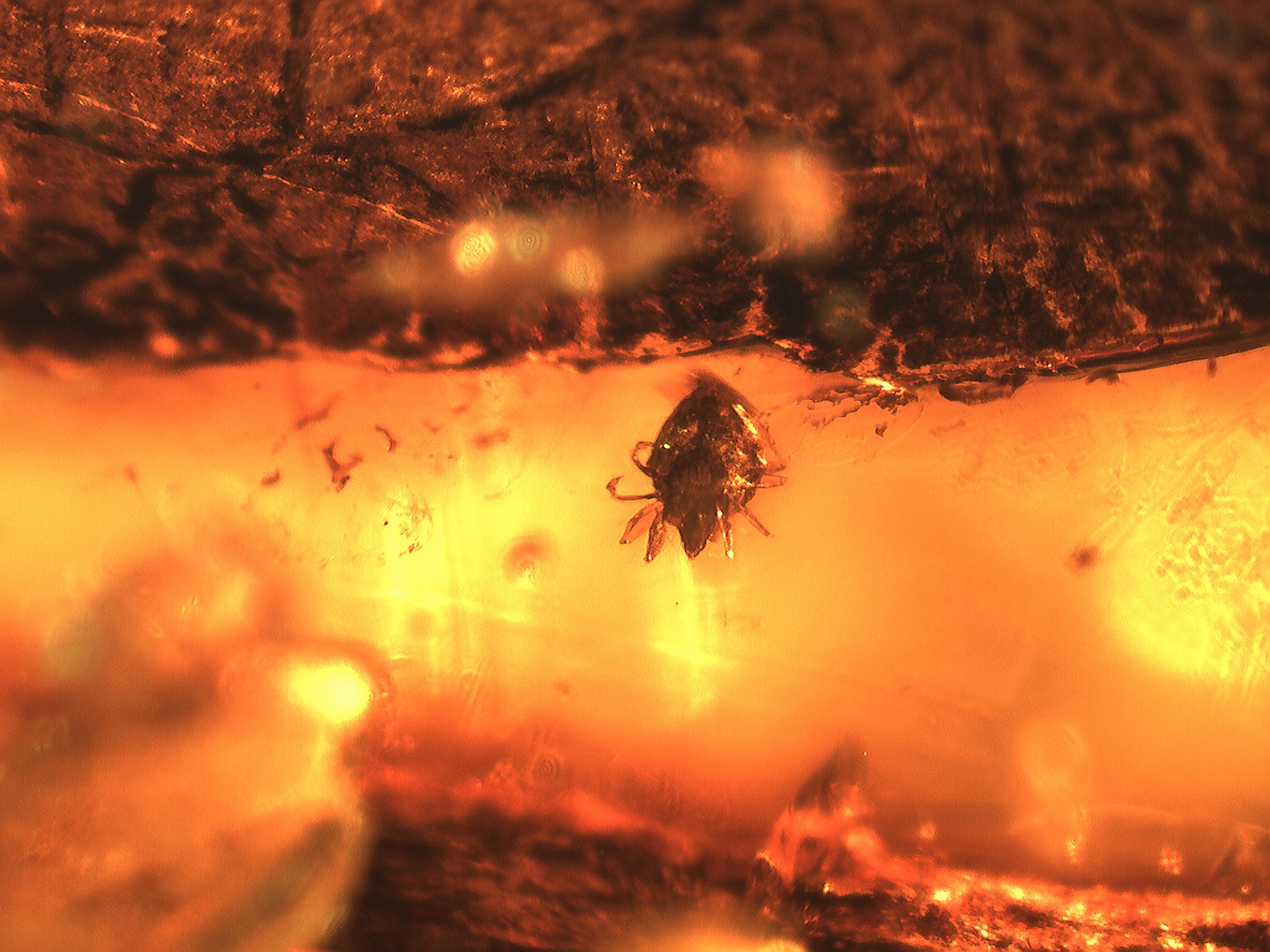
Strange piece. Reminds me of what I think a root might look like - but I doubt it is a root. In reality, I am not sure what this is. There is a small mite off to one side (all mites are small). In addition there are two ants, one very large and one very small. This is a cool piece - even if I cannot ID the structure.
Item 15

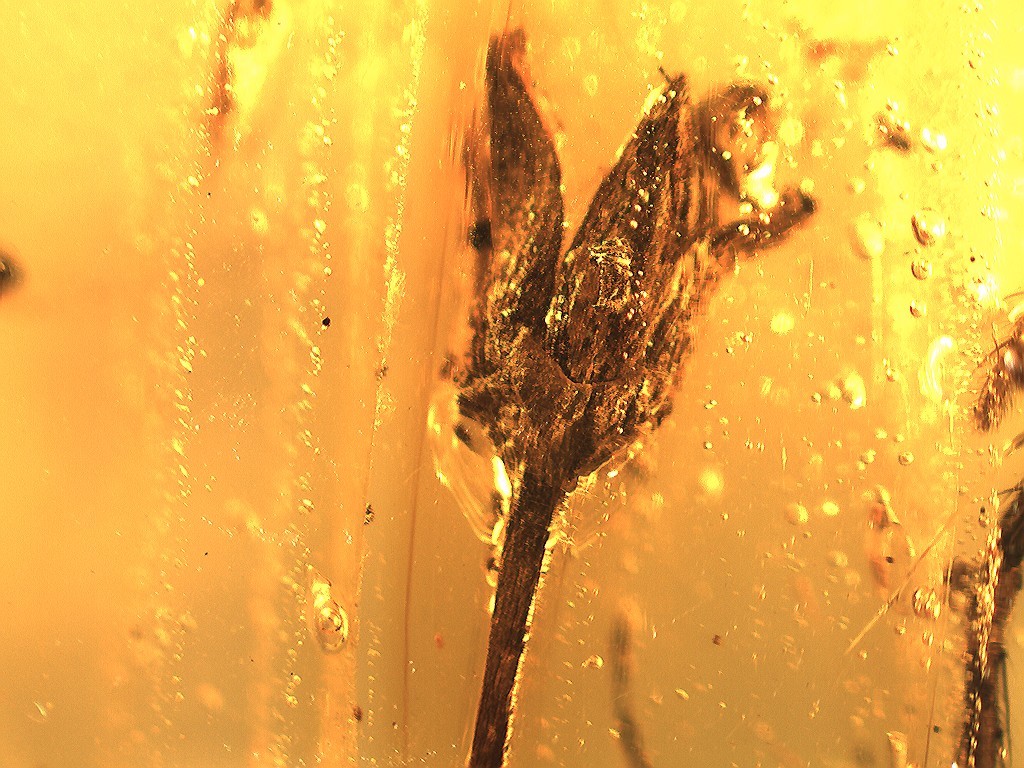
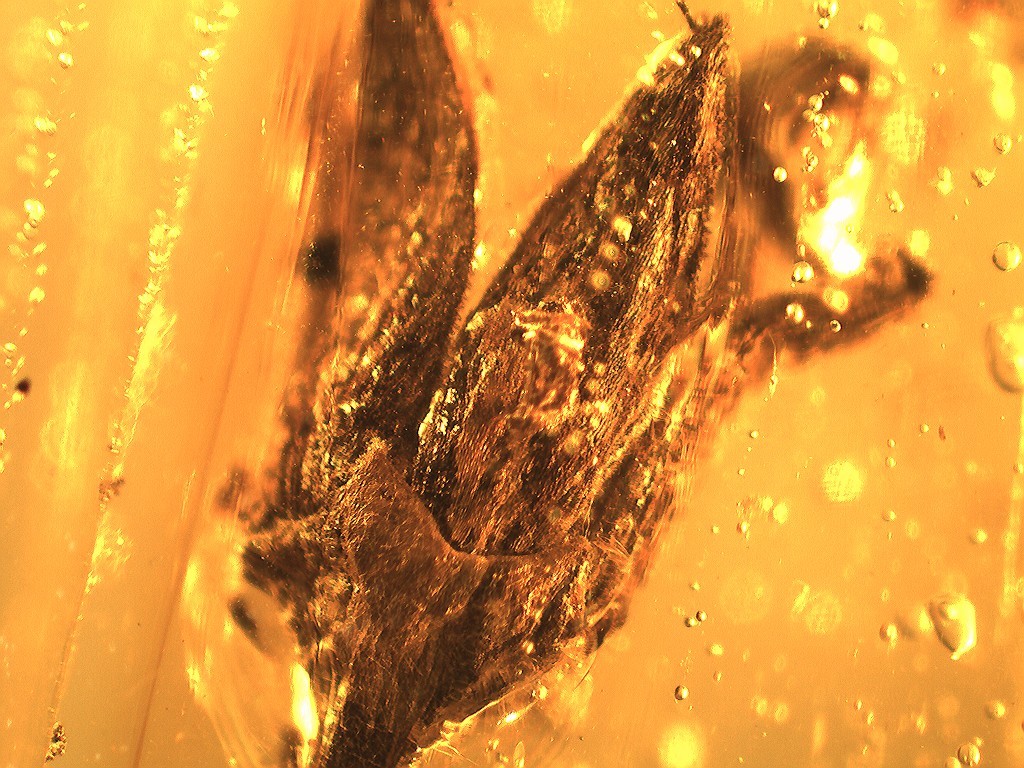
There are 2 flowers in this one. It is a 2'fer. One flower closer to the middle and the other close to the edge. Darkish amber, but the flowers are still easily seen.
Item 16

An amazing piece, large, about 2.5 x 1.5 x .25 inches. There is a lovely winged termite on one side of the piece. The other side has a beautiful seed. At least I think it is a seed. Looks like an 'enlarged' dandelion seed. Very easy to see since it is so large. Very rare to find seeds in amber. This just might be the high-lite of your collection.
Item 17

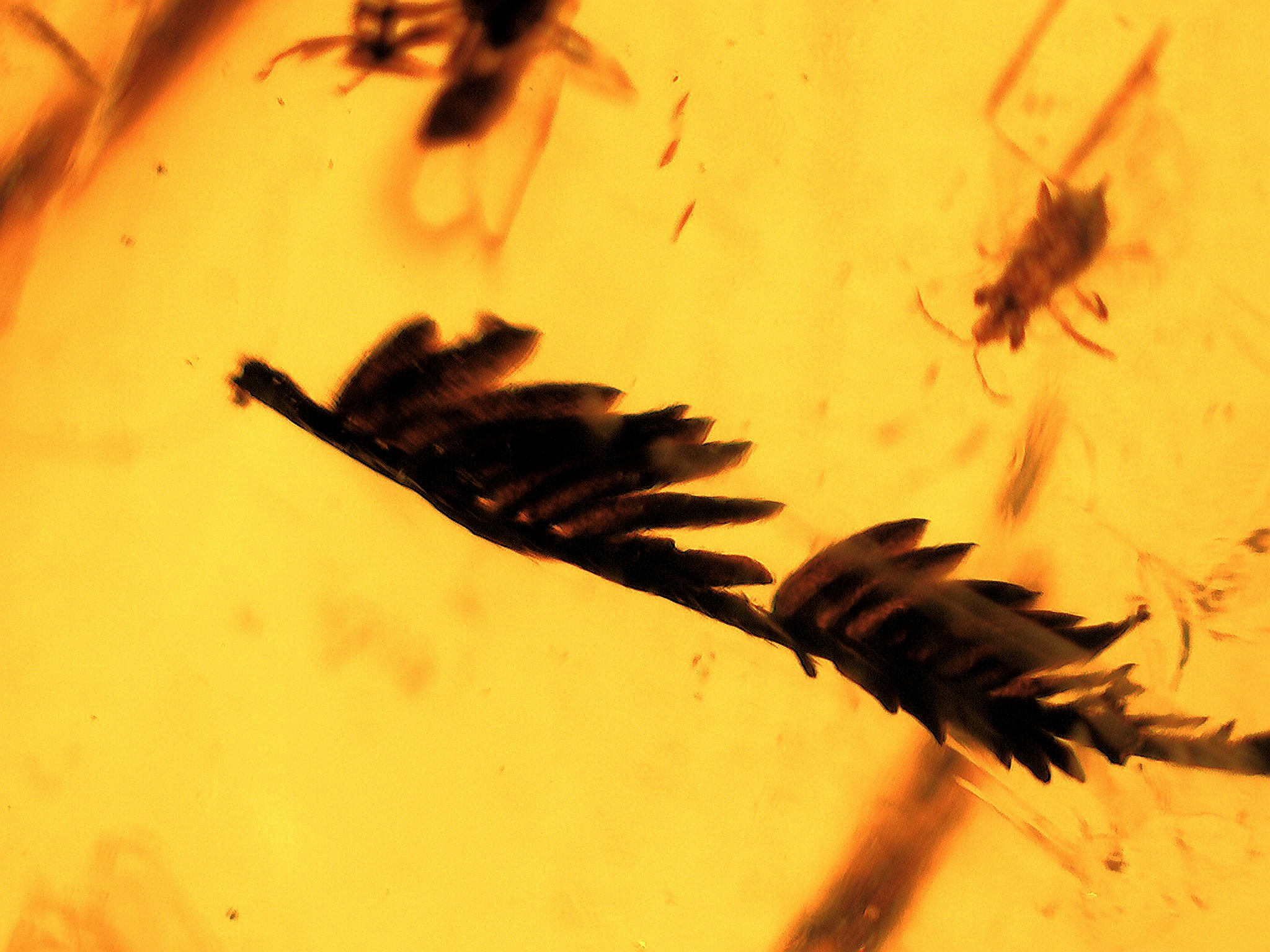
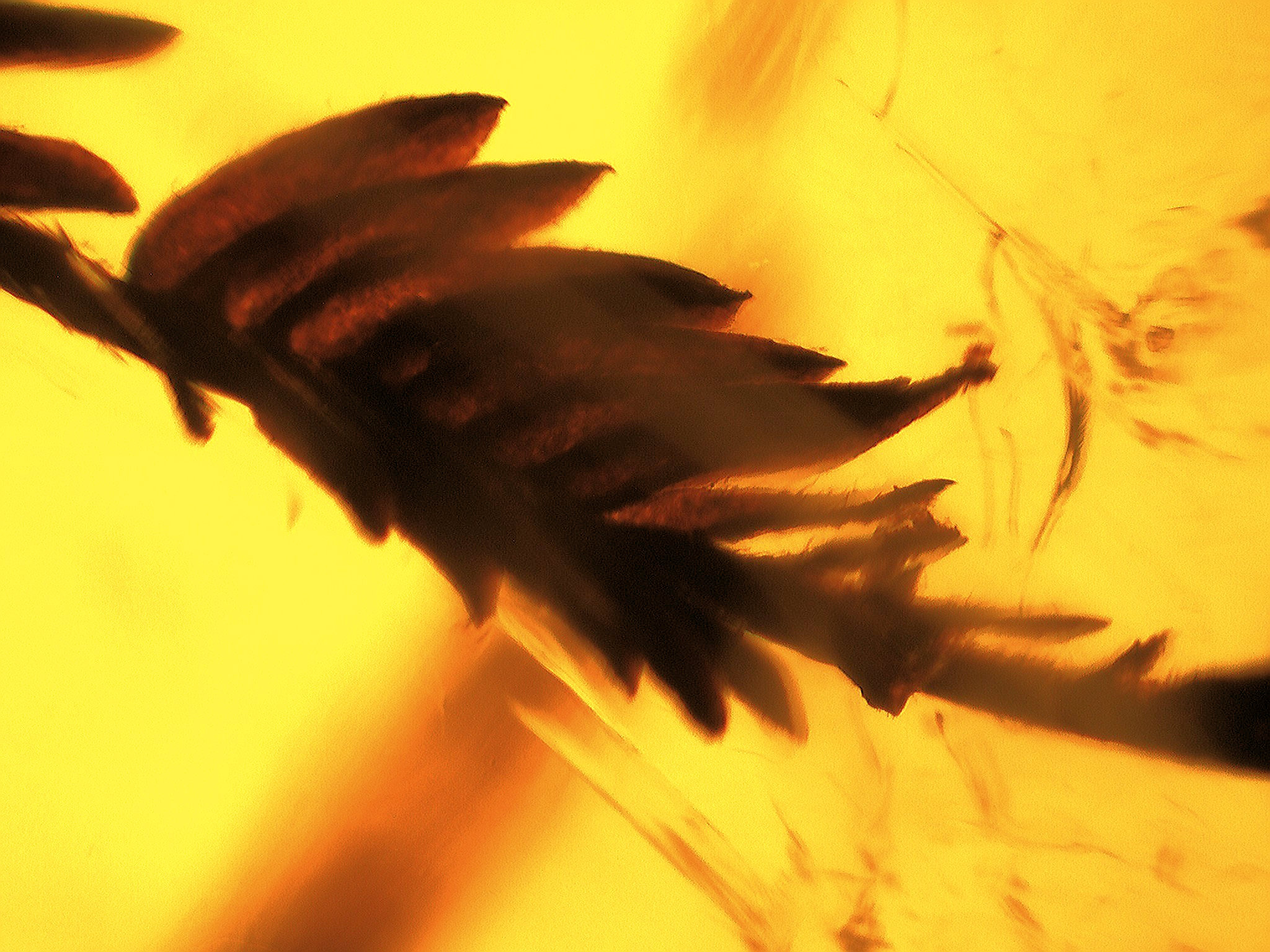
A nice and large piece of clear amber. Inside is a set of leaflets, partly compressed - just beautiful. I am not sure why I like this type of leaflet assembly - but it is really sharp. There is also a stem with some leaflets on it. Also a few unknowns. good piece. There are two planthoppers, one large and one small.
Item 18
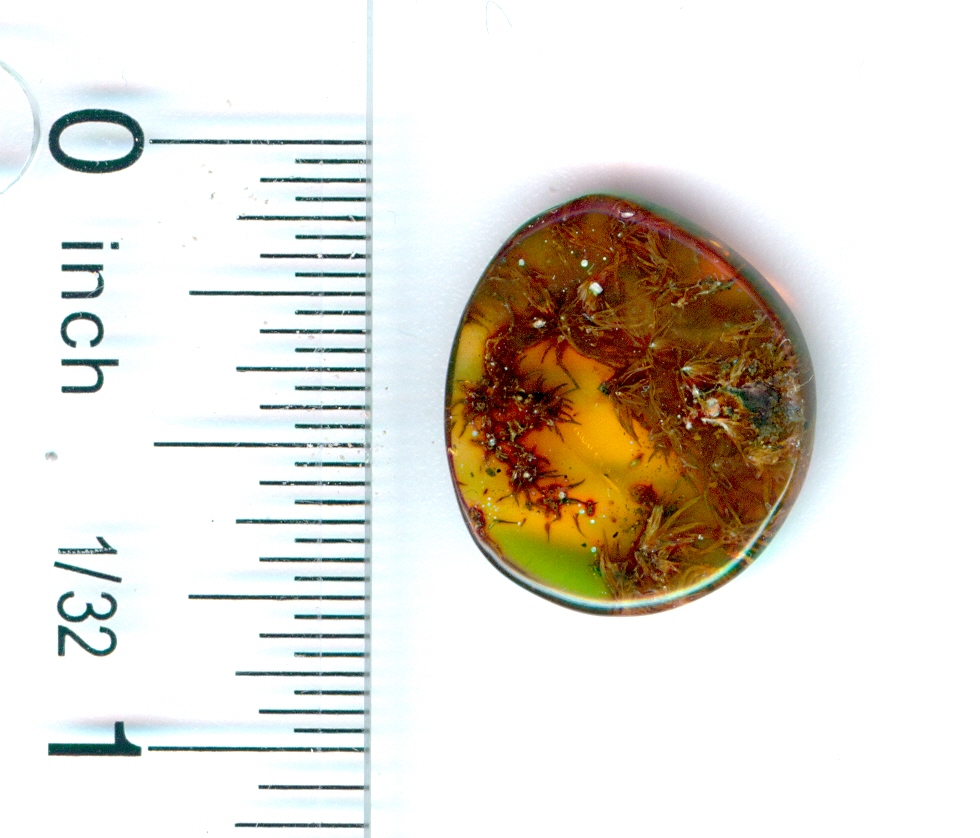
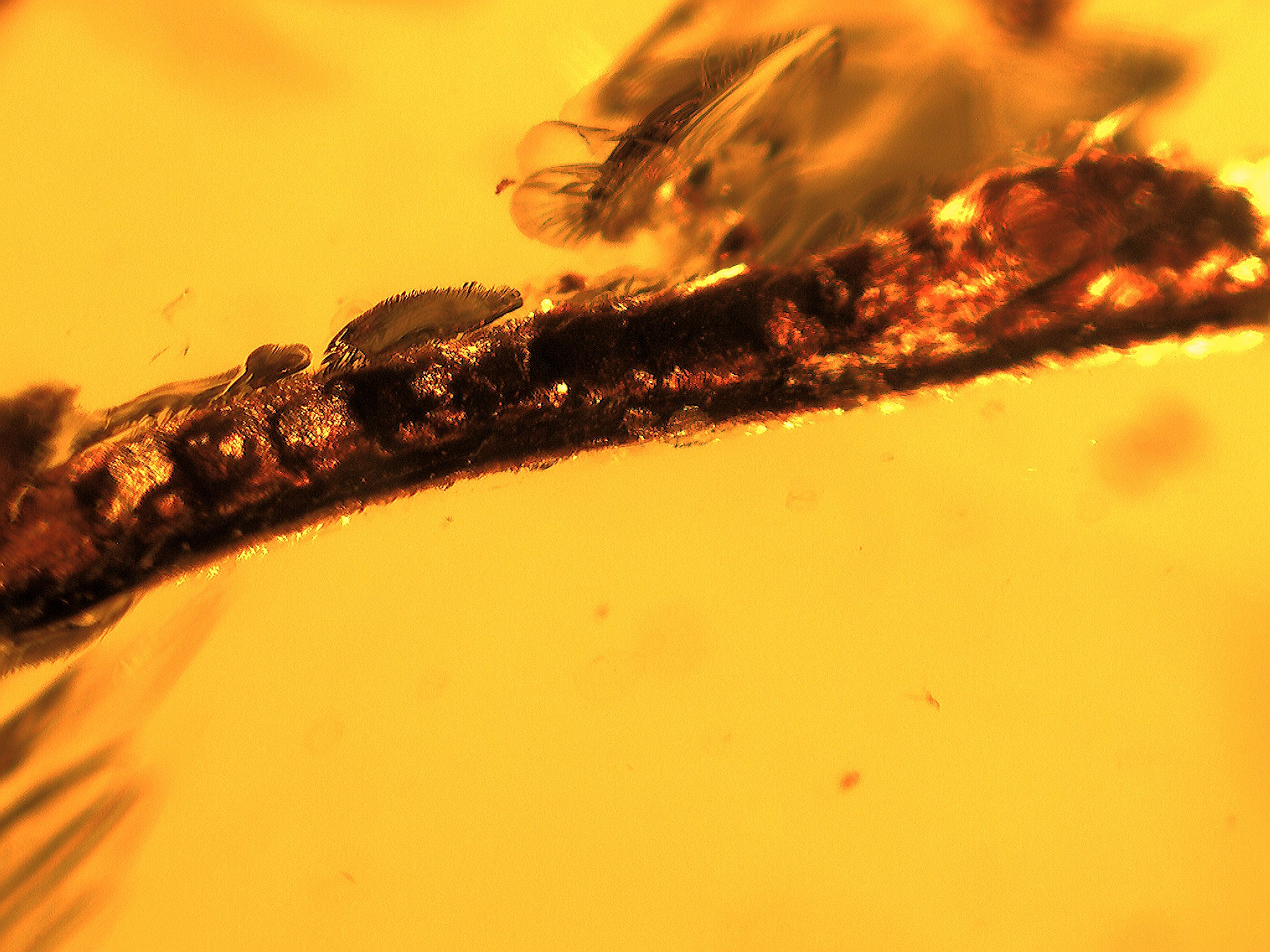
Nice piece, good sized with a remanent of a bryophyte. the bryophyte is located on one side, the rest is filled with forest debris and a few ant heads.
Item 19
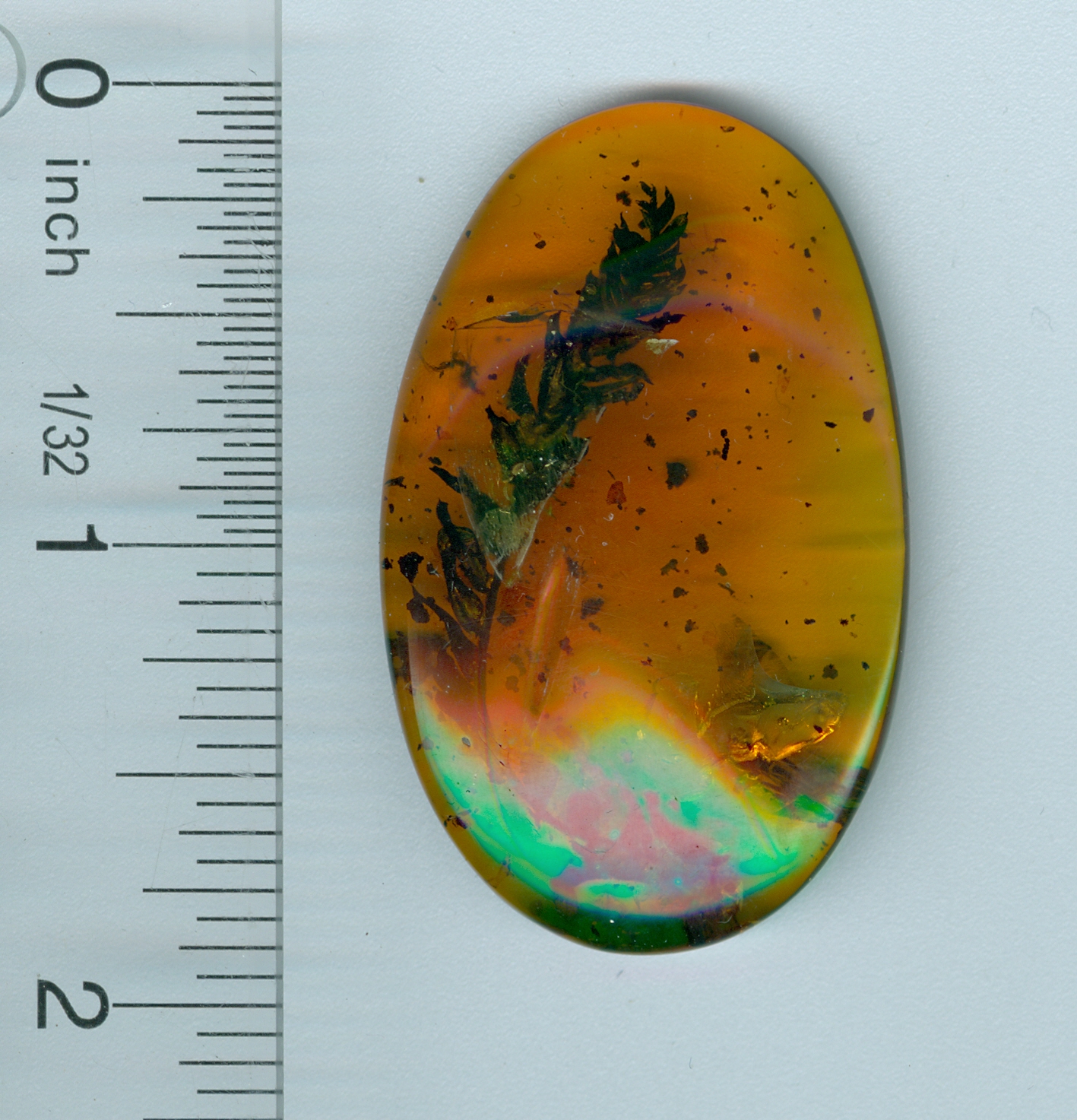
What you are looking at is the bottom side with an indentation that is not polished. On the top side is a leaf and what looks like planthopper.
Item 20
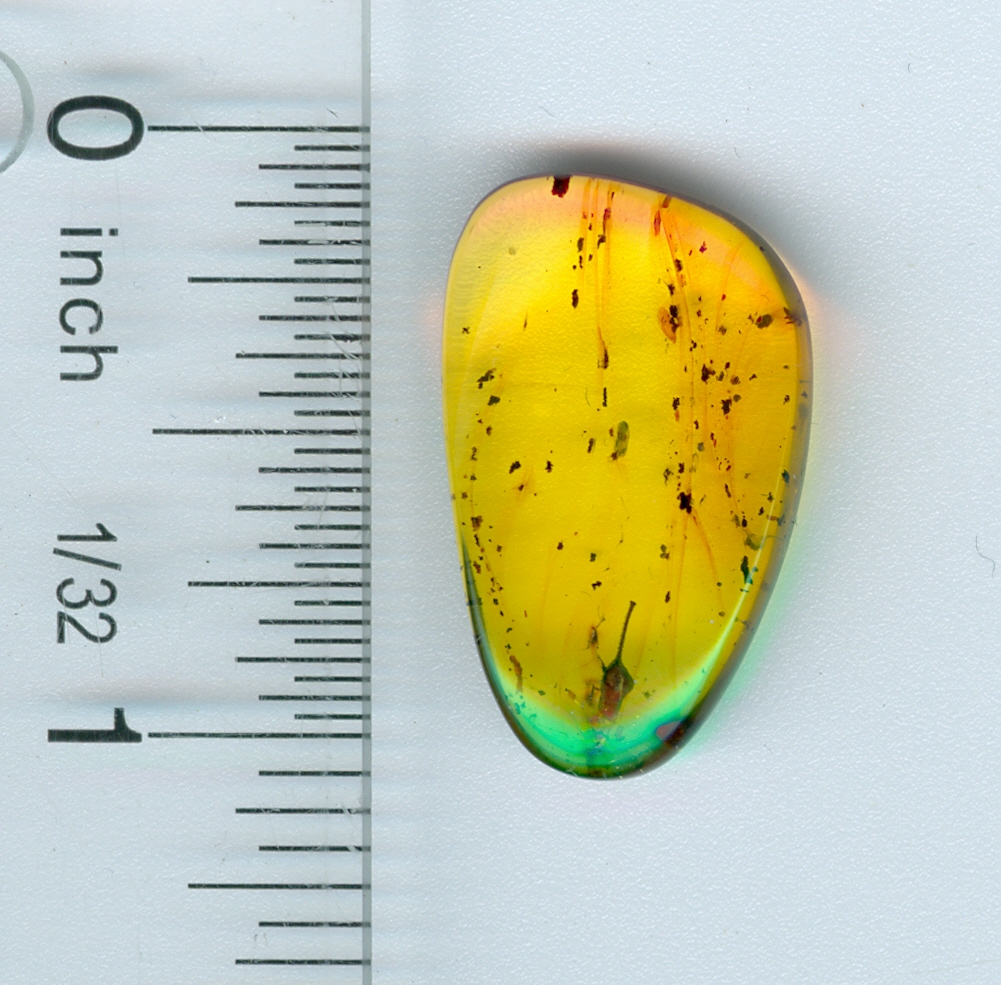
Item 21

A very small and delicate set of leaves from an unknown plant. It is a beautiful piece when you pick this up and look at it.
Item 22
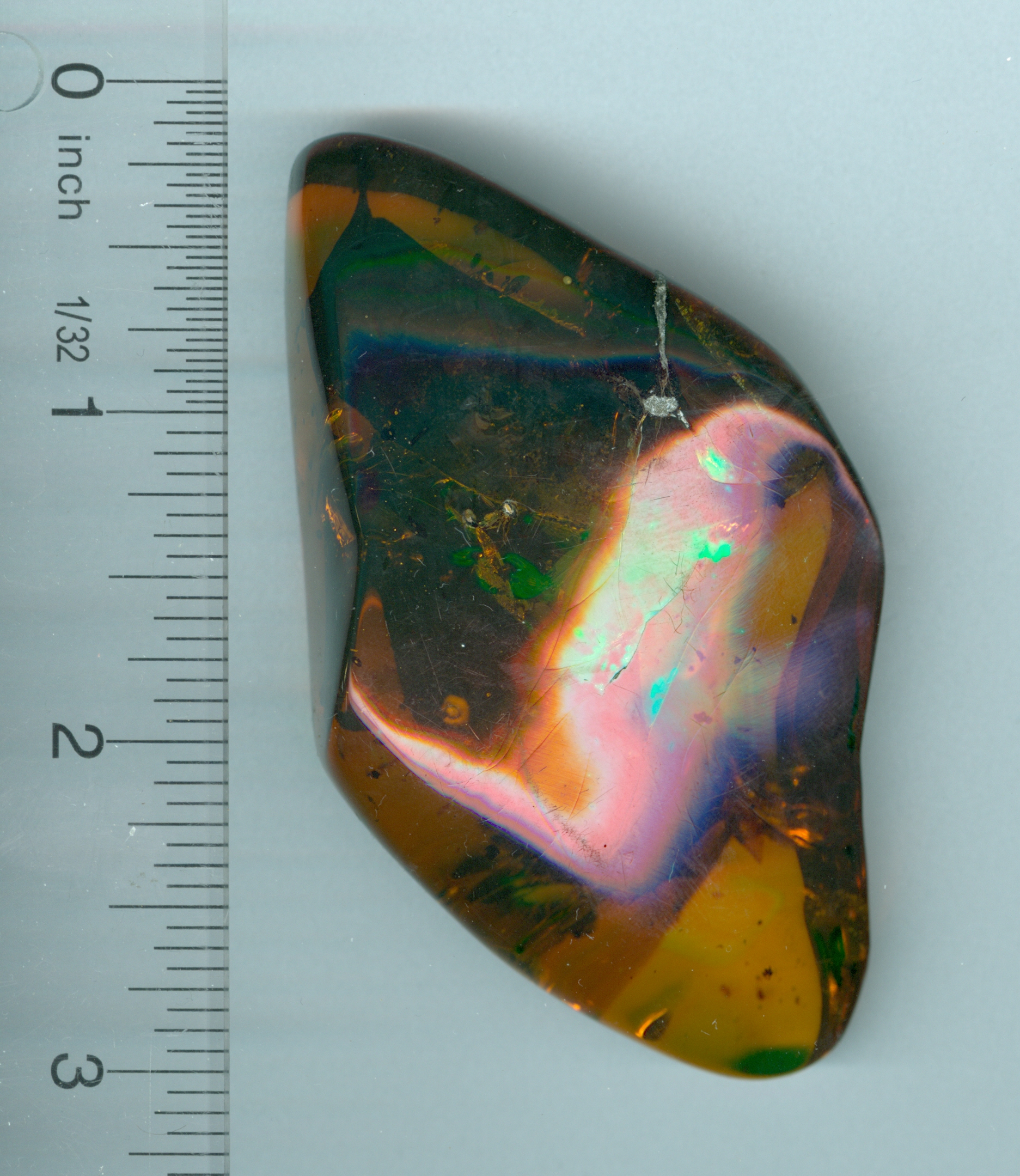
Large chunk of amber, about 4 inches x 2 inches x 1 inch. Contains 2 good sized leaves along with a small amber tube, millipede and a lot of debris from the forest floor. Shows best with strong light through it.
Item 23
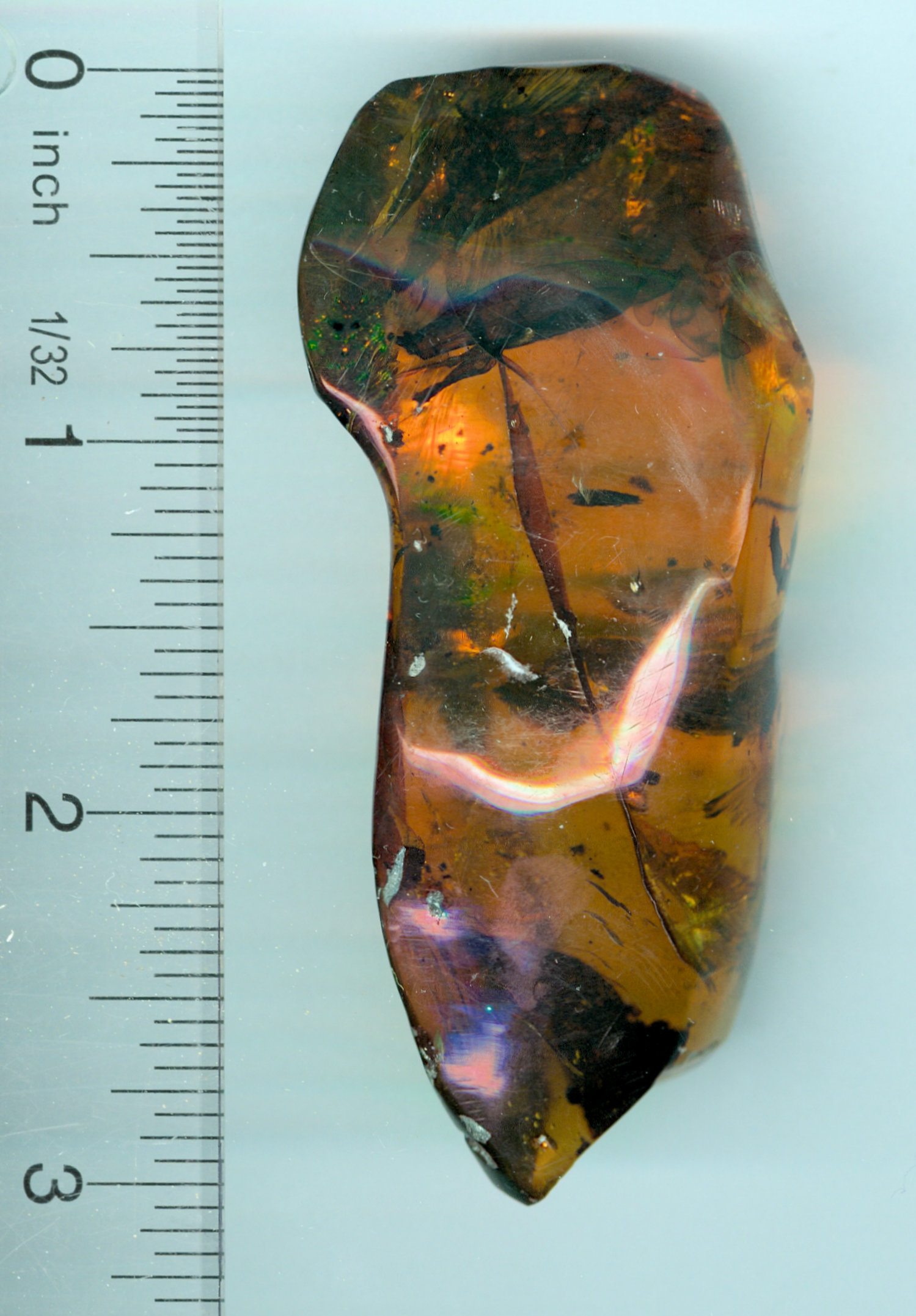
A big piece, about 3 inches long and very thick. There is a nice curled leaf along with a few other unknowns, the leaf is good sized.

Item 25

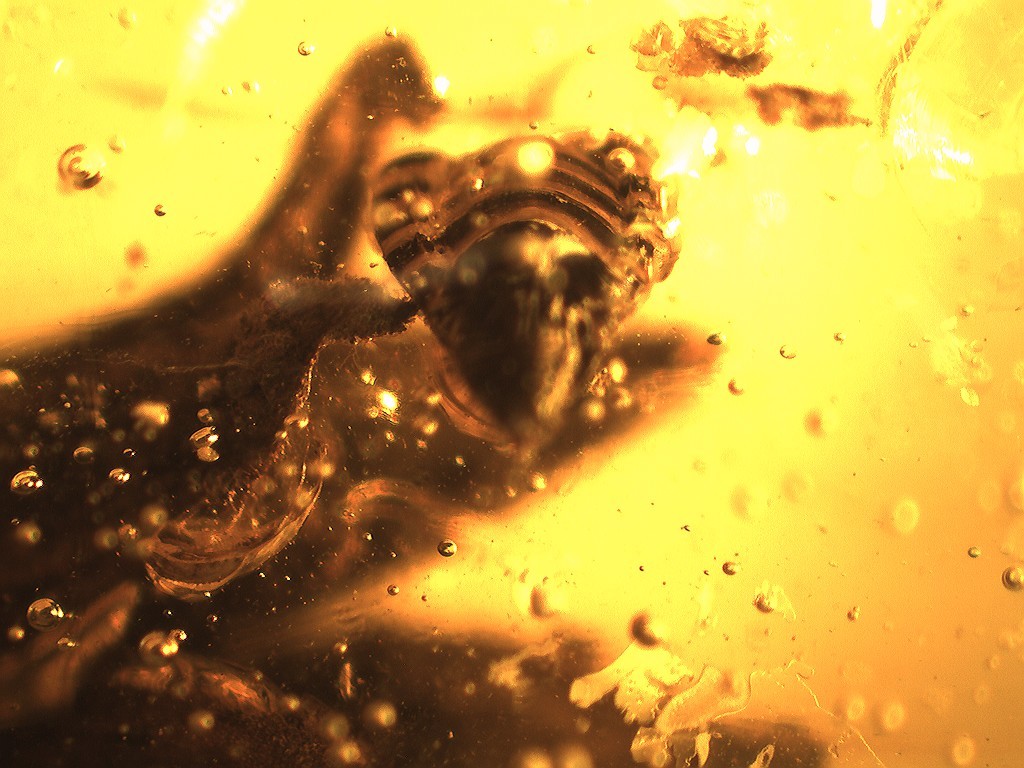
The shape is more like a very thick dime. But it does contain a nice flower. You will enjoy looking at the pictures. Near the top of the flower looks like a roly-poly (I doubt if it is though).
Item 26
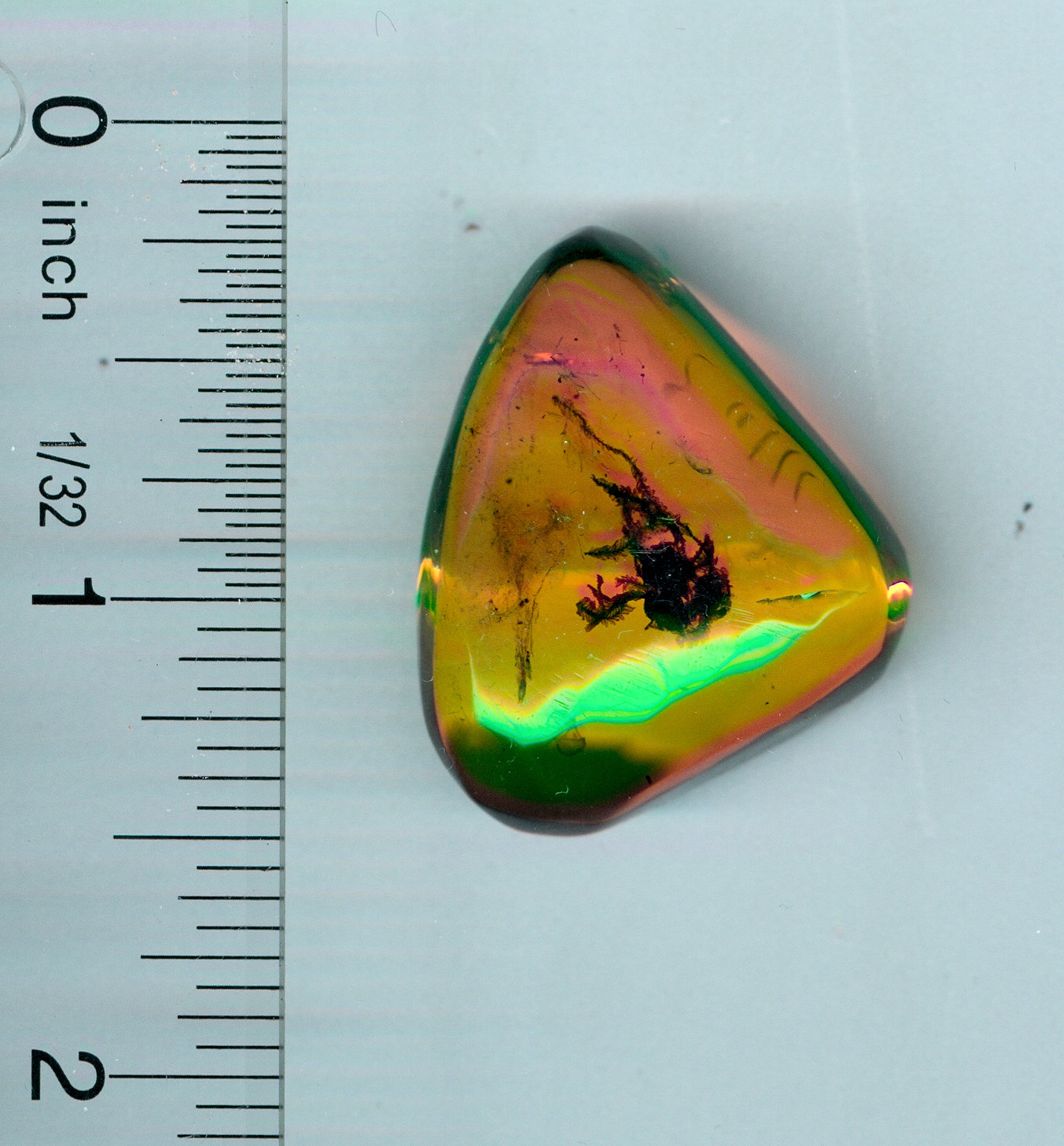
Good piece, this contains a bunch of Bryophytes. Clear piece that shows the plant well. Good for anyone's collection.
Item 27

Squarish piece of Chiapas amber. This has a "bunch" of moss near the bottom of the piece. Fascinating to look at under the microscope - but easily seen without one. This is a nice piece.
Item 28

If perfection is what you are looking for, look no further. What a leaf. It is very impressive. This even has a small cicada off to the side of the leaf.
Item 29

Unusual. Thin piece that shows the leaf impression rather that the real leaf. Pictures will show the story, actually rather fun - great price.
Item 30
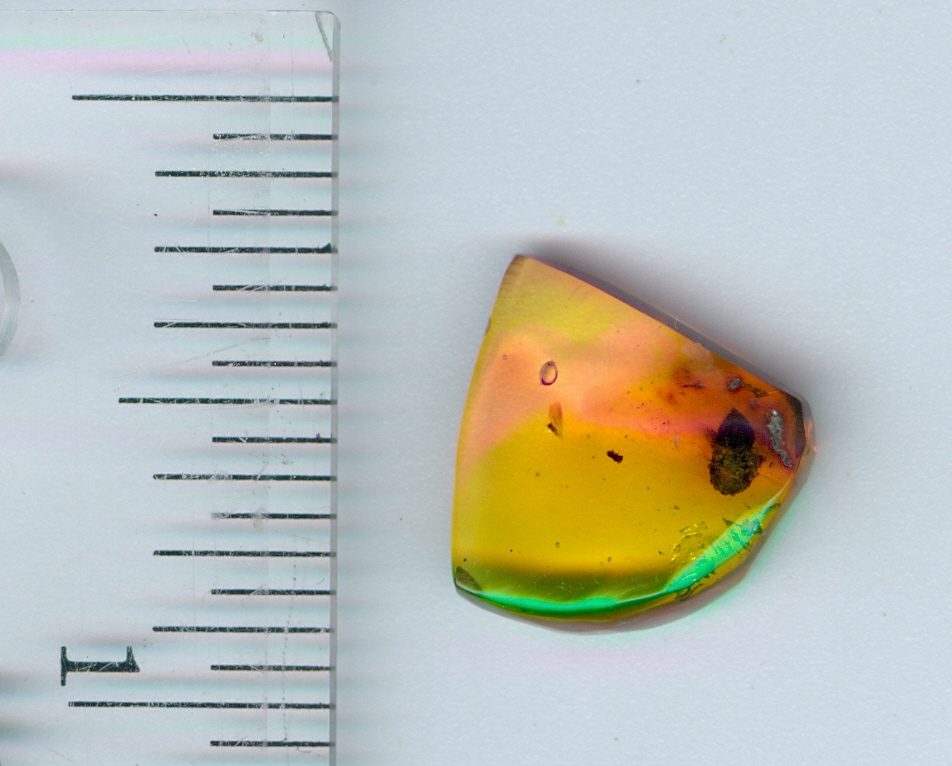
At one time, I thought this was an elongated root structure, but upon close examination, I do not think so. I believe this is a Bryophyte. There was also an ant war near this piece at one time.
Item 31
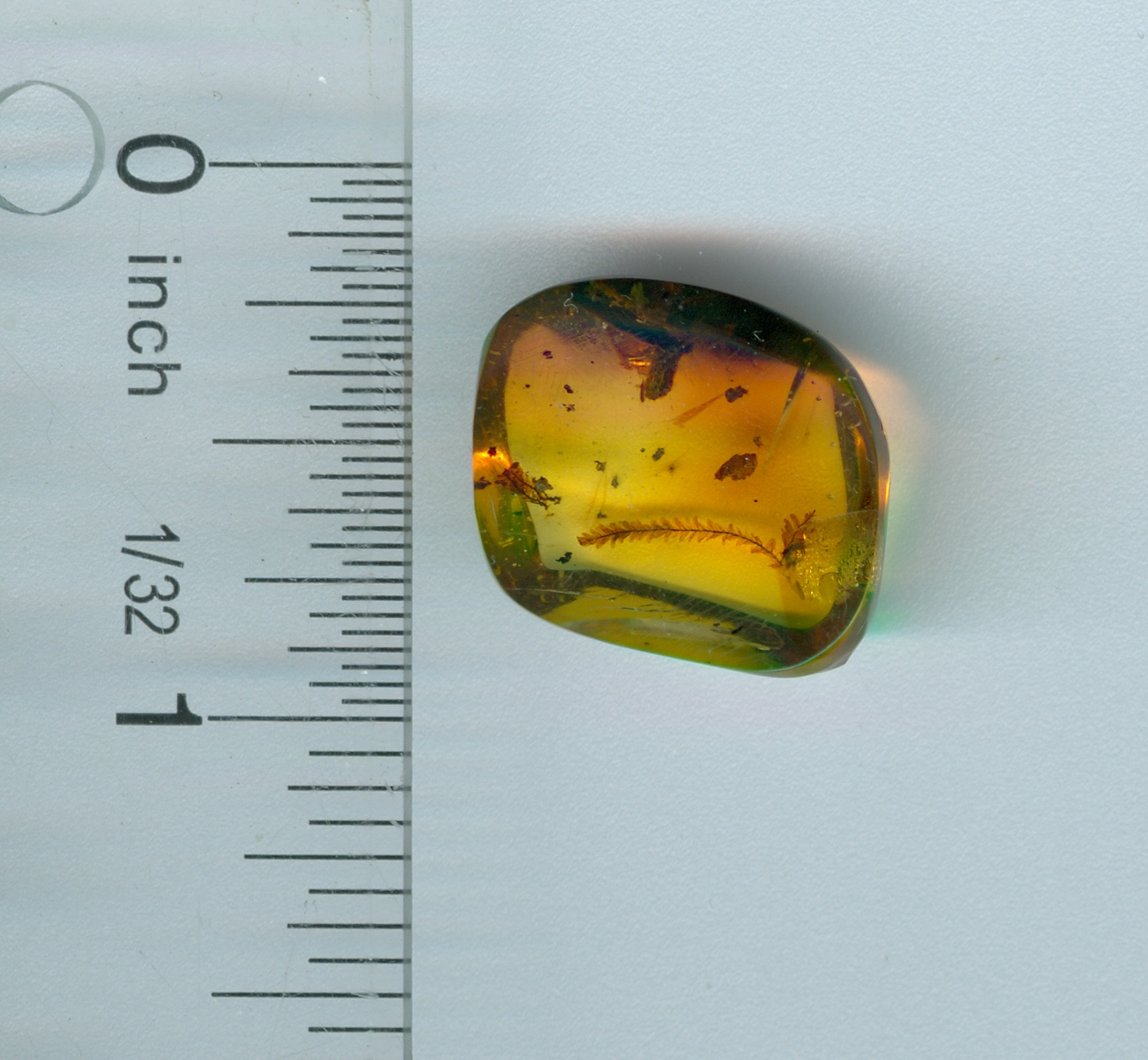
Kind of like number 28 above, this is one of the best pieces. A single leaf with a 'chewed' out area. I love pieces of amber that are impressive and tell a story - here it is. You will fall in love with this piece.
Item 32
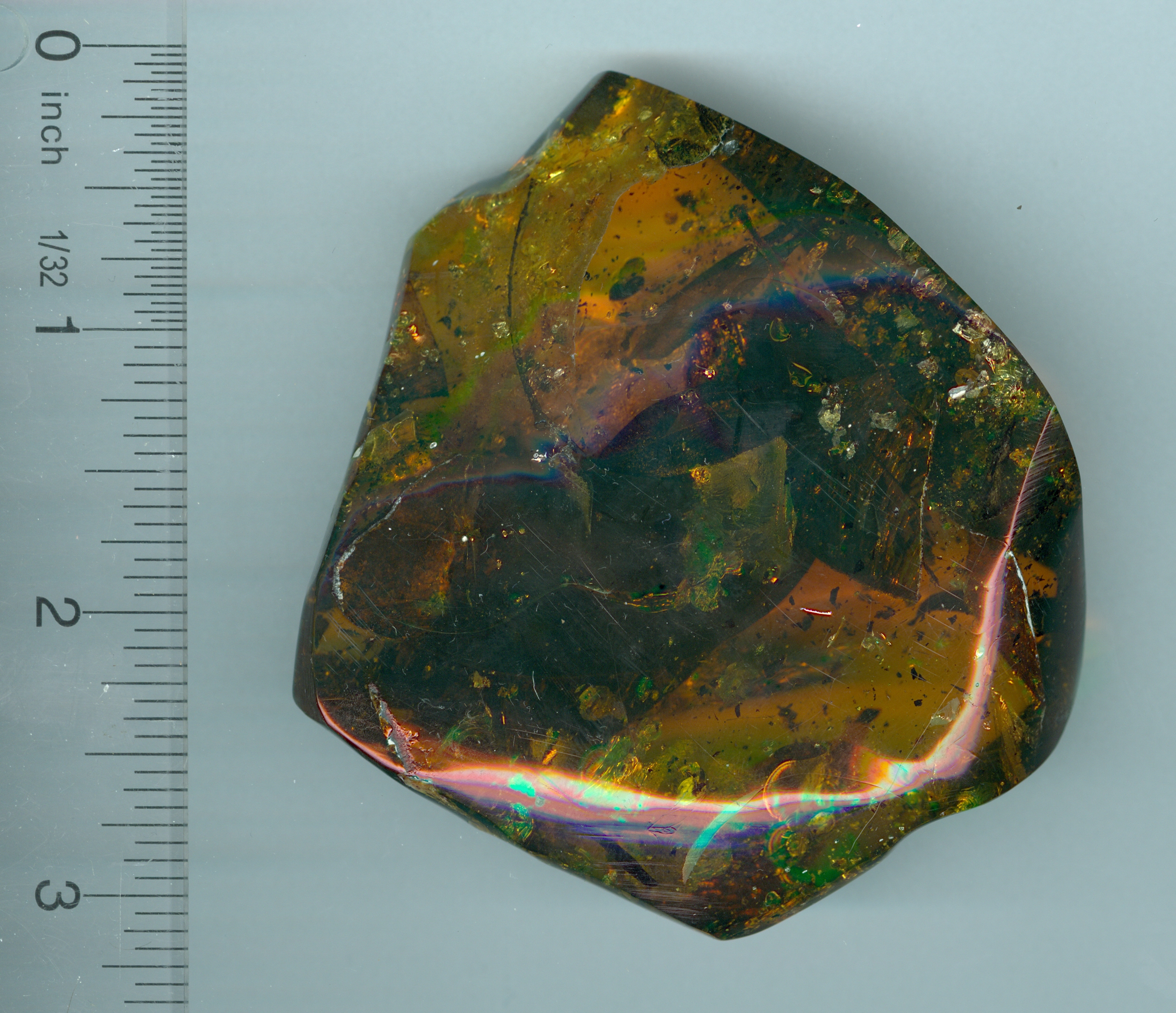
This 1 inch leaf is breath taking. The amber has a great color to it and is clear. The leaf is beyond beautiful. Nice sized leaf with just great details. This is a piece you will treasure since it brings the ancient forest floor to life. This one you will like.
Item 33
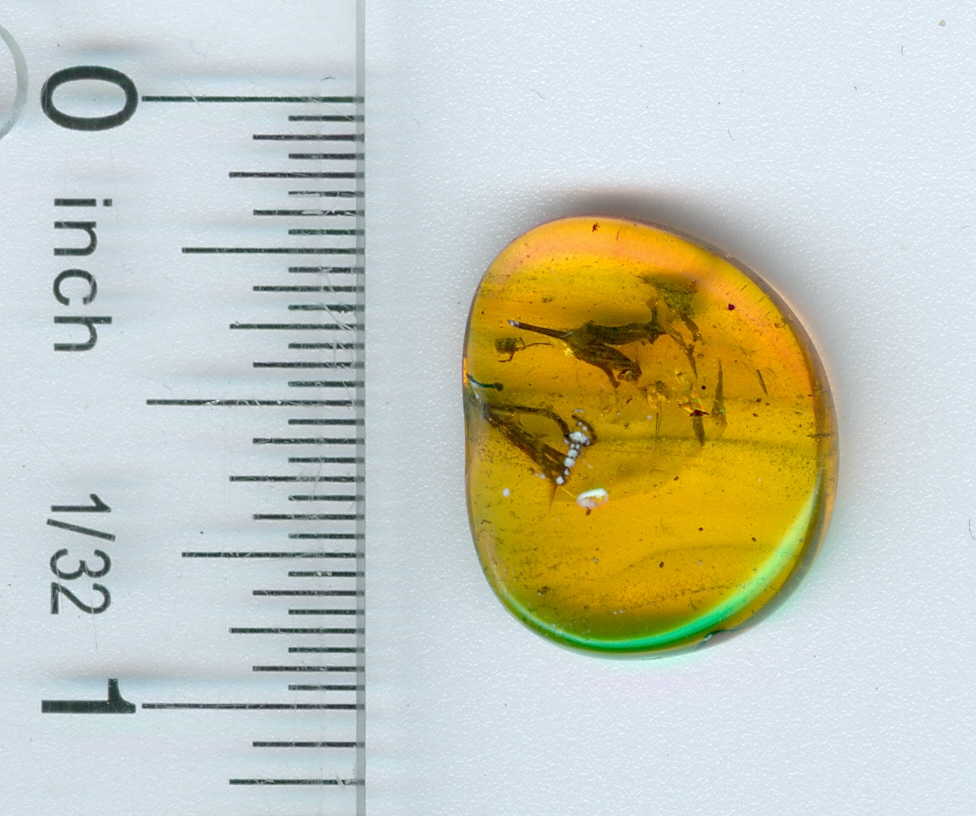
Quite the piece with leaflets coming off a central stem. Just very impressive. This would be a beautiful specimen for a collection or maybe even made into a pendant.
Item 34

A large piece of amber with unknown plant material. At first glance, this looked like sphagnum moss, but closer inspection I do not think so. It is unusual and rather beautiful. If anyone knows, I would love to be informed.
Item 35

If anything is going to catch your attention, this one will. The leaf - it is spectacular. You can see the sides folding over as the resin covered it. Just so impressive. There are numerous other animals (even a large springtail) scattered around. In fact, if you look closely, it looks like a slaughter house for ants - heads all over the place. This is a nice piece.
Item 36

The is a nice leaf that will not break the bank. Actually it is half a leaf - beautiful because it is so obvious. And what is cool is that this is 20 million years old.
Item 37

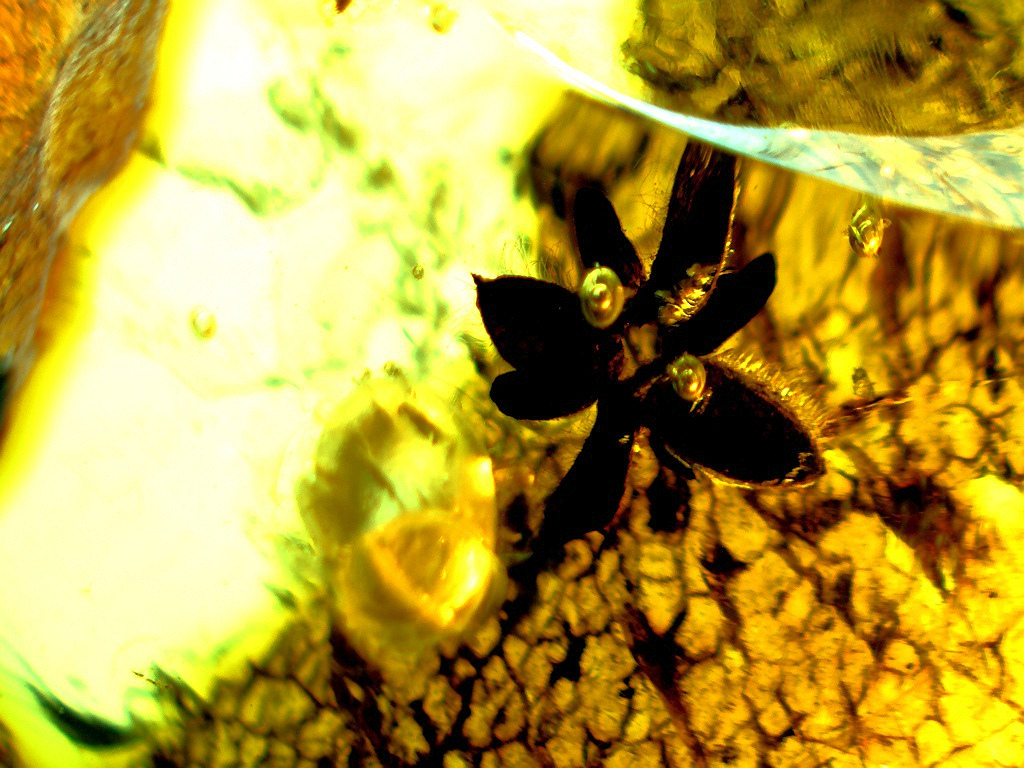
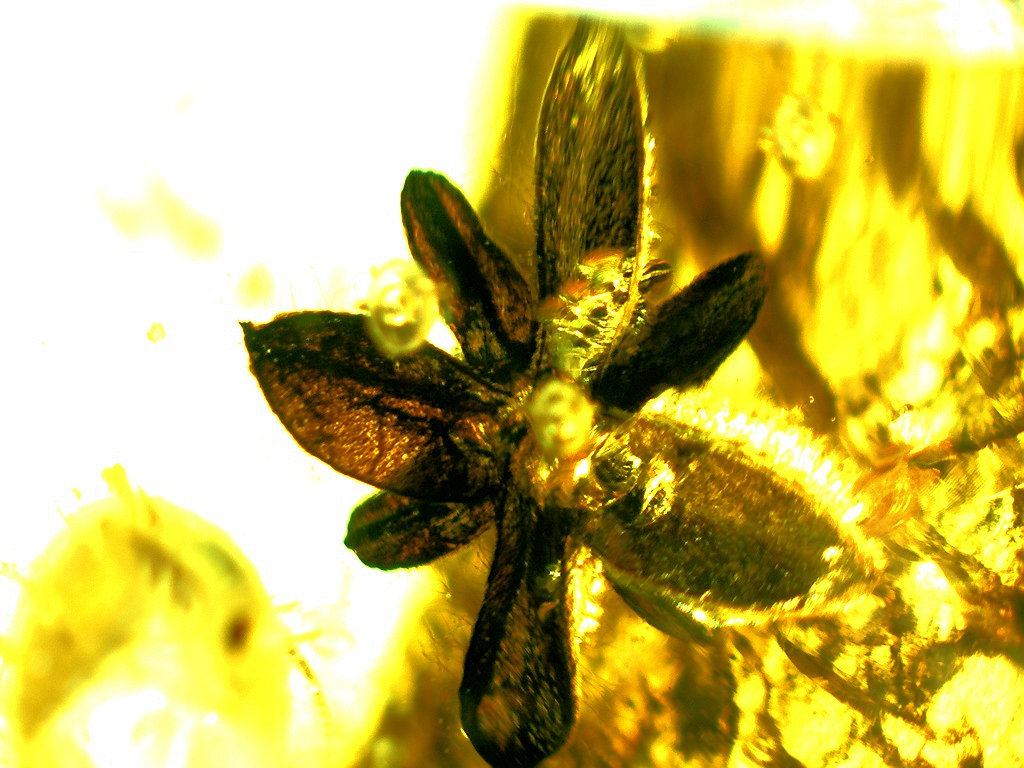
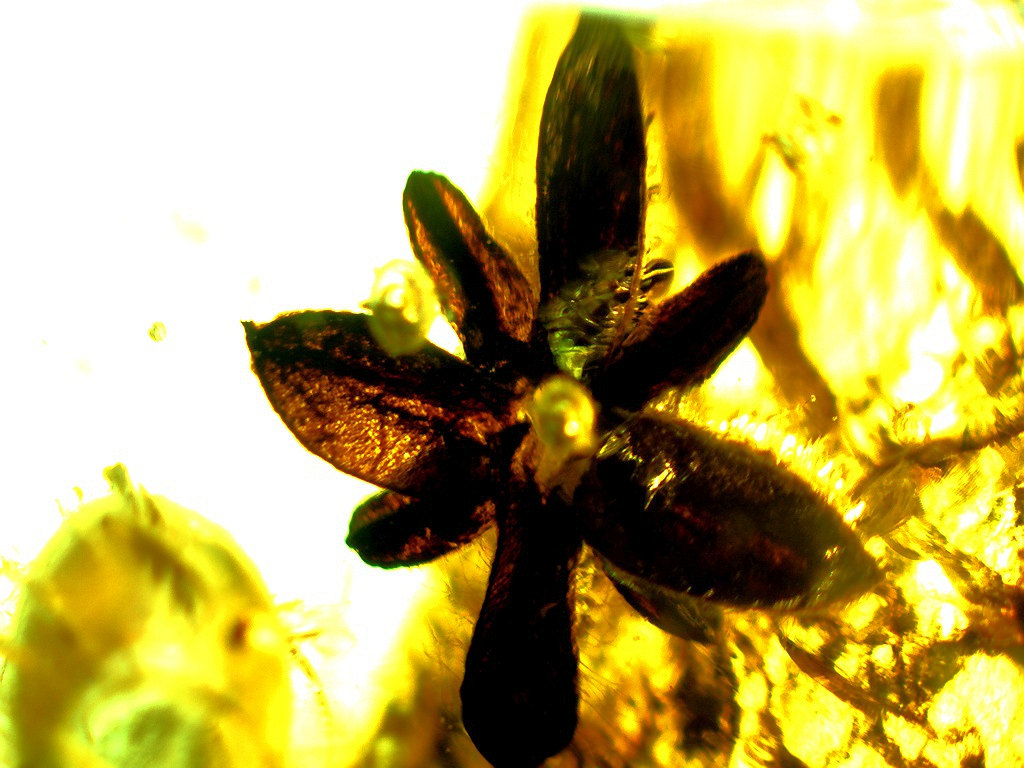
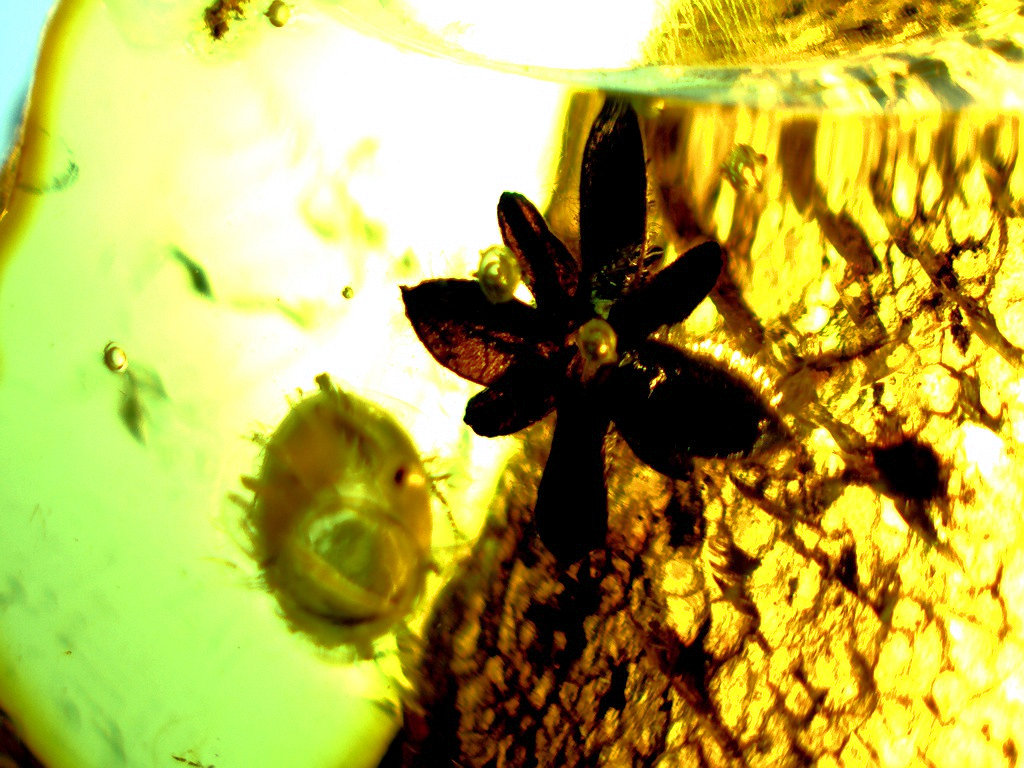
This is a rare fossil tropical flower preserved in Miocene Chiapas amber, likely from a rainforest angiosperm related to modern laurel or custard-apple lineages. The symmetry and dark preserved petals make it visually dramatic. It almost resembles a small star-shaped orchid blossom, though I doubt it is an orchid because orchid flowers usually show more specialized structures.
SOLD
Item 38

As you might guess, I love leaves. This is a complete, large leaf that shows its beauty as age. You can even see some areas that were chewed on by insects. This leaf tells a sotry.