

There’s something almost magical about holding a piece of ancient time in your hand—and that’s exactly what Sumatran amber offers. Formed millions of years ago in the lush, tropical forests of Sumatra, this amber often glows with rich honey, cognac, and deep dark tones. Whether you’re a collector, a jewelry maker, or simply someone who appreciates natural beauty, Sumatran amber is both a conversation piece and a connection to Earth’s distant past.
And right now, there’s never been a better time to own one. For a limited time, everything is 50% off, making these rare and beautiful pieces surprisingly affordable. Opportunities like this don’t come often—once these pieces are gone, they’re gone. Treat yourself (or someone else) to a genuine piece of ancient history at a price that makes it impossible to pass up.


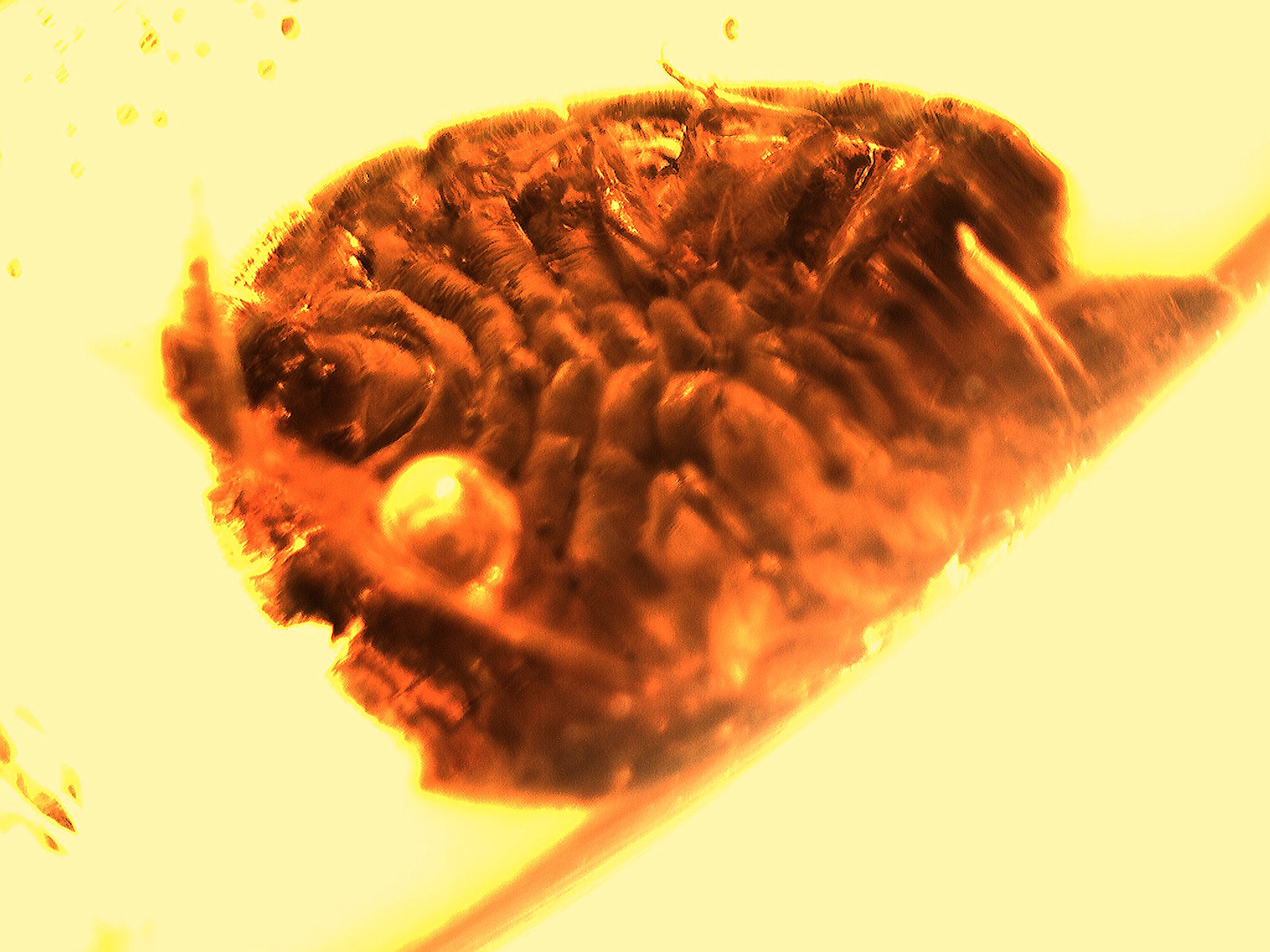
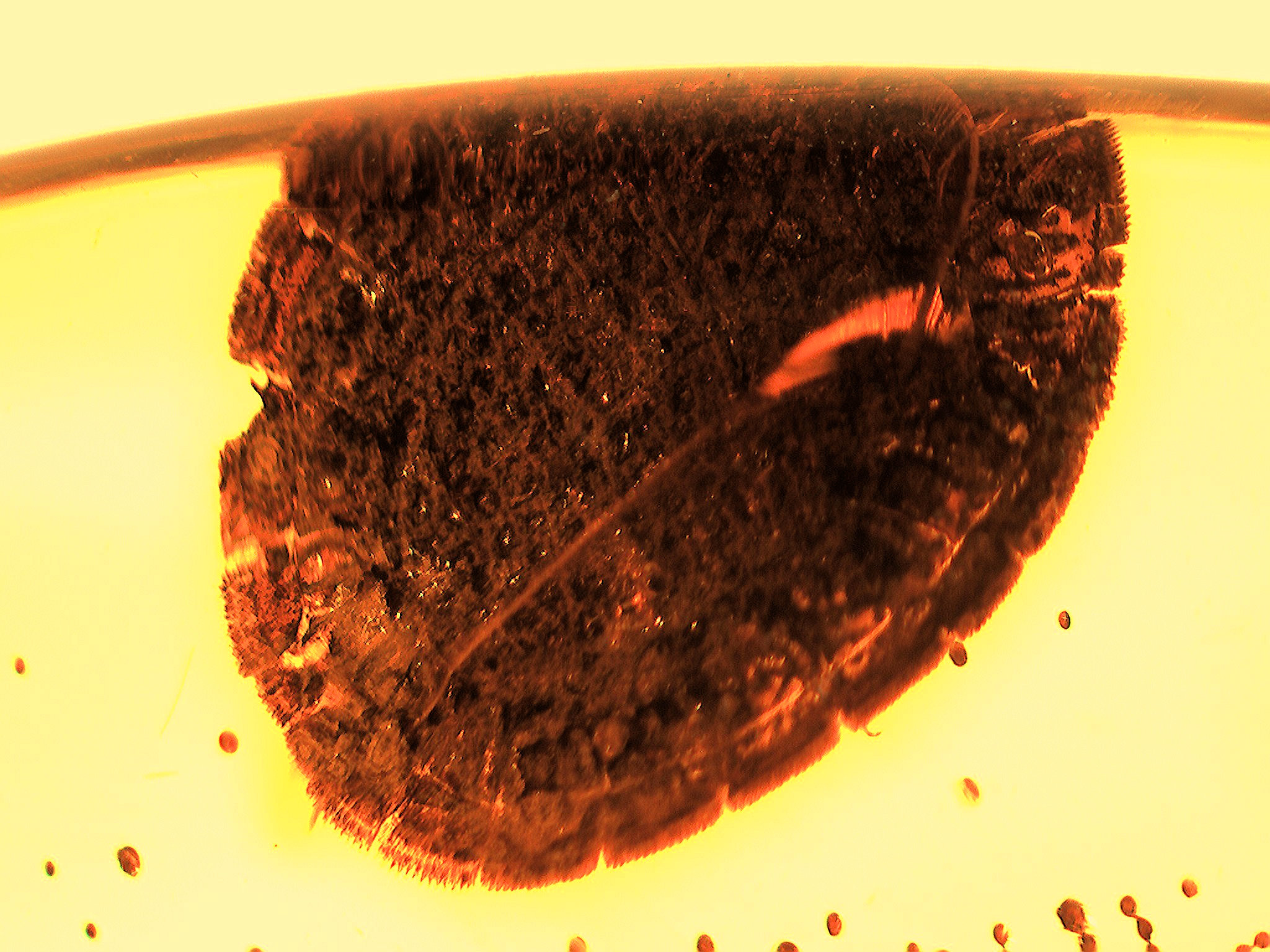
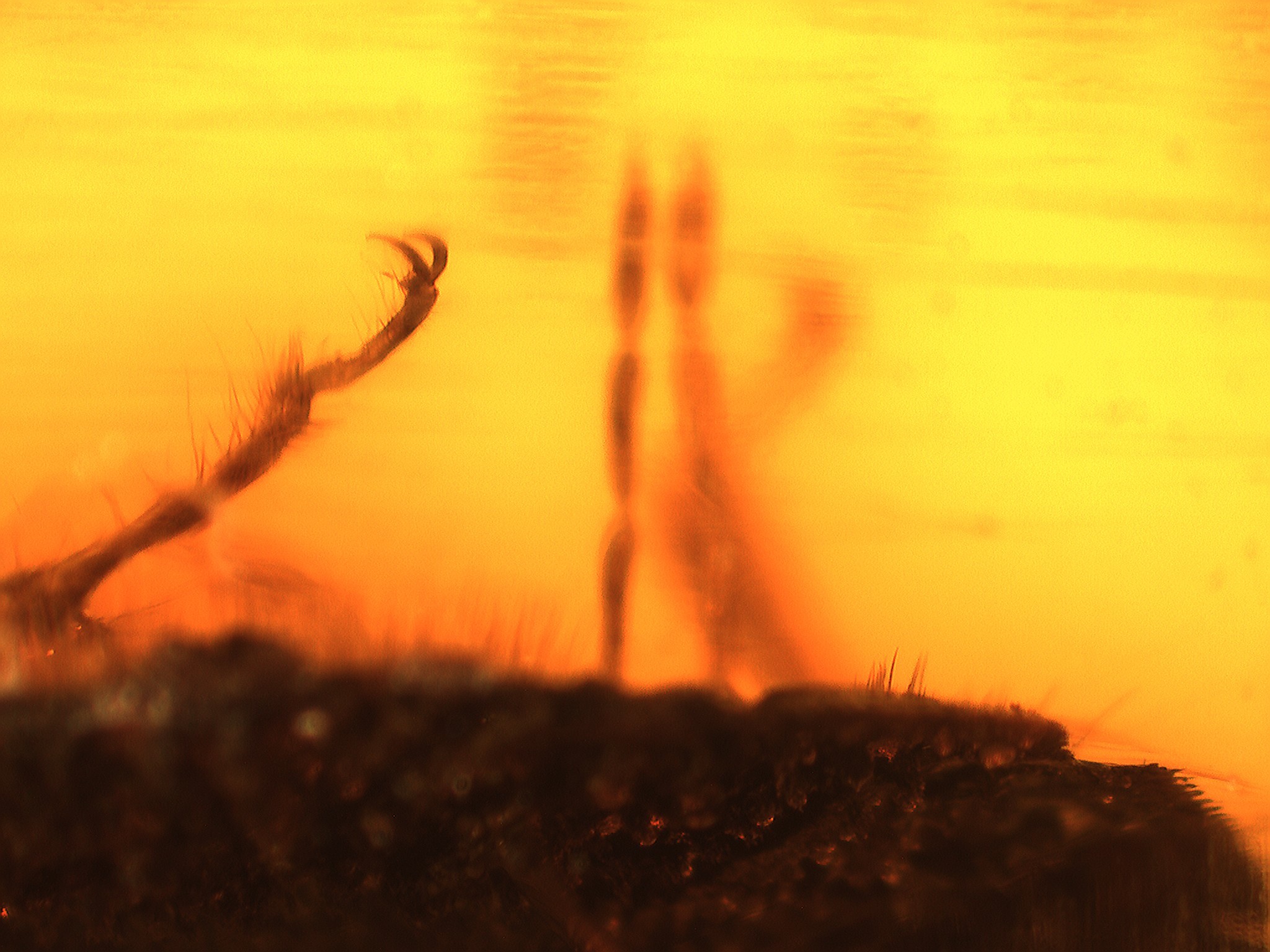
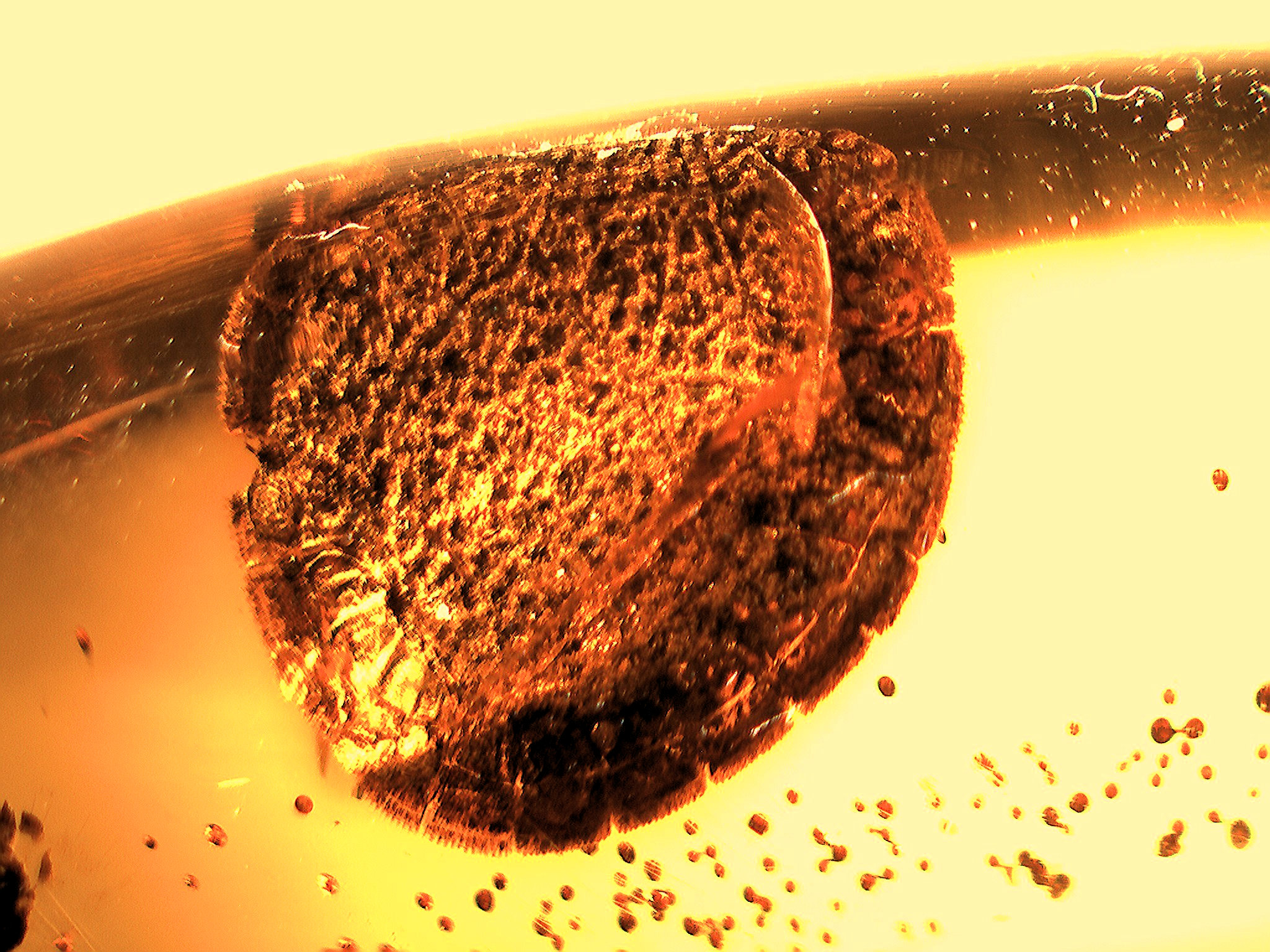
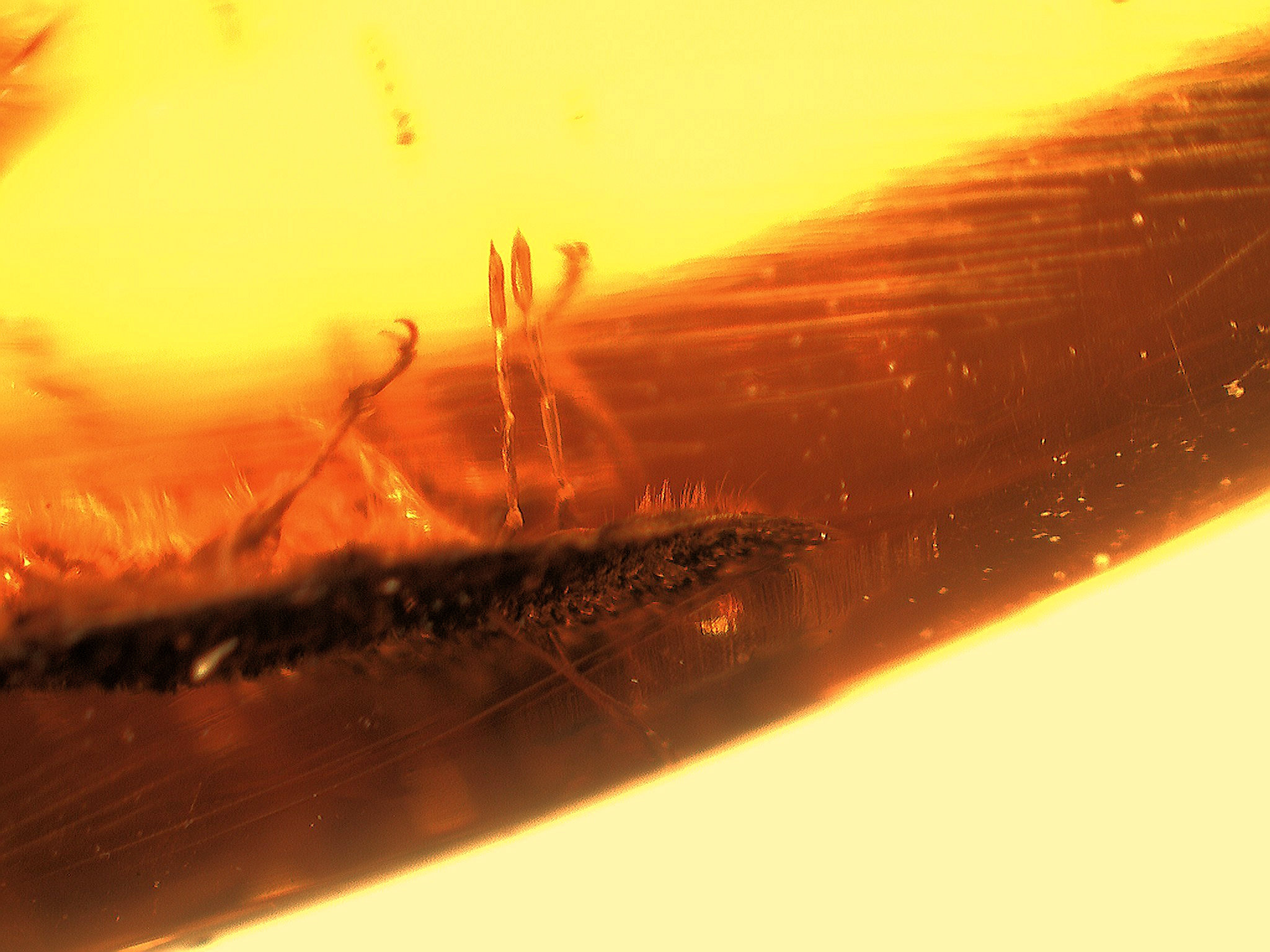
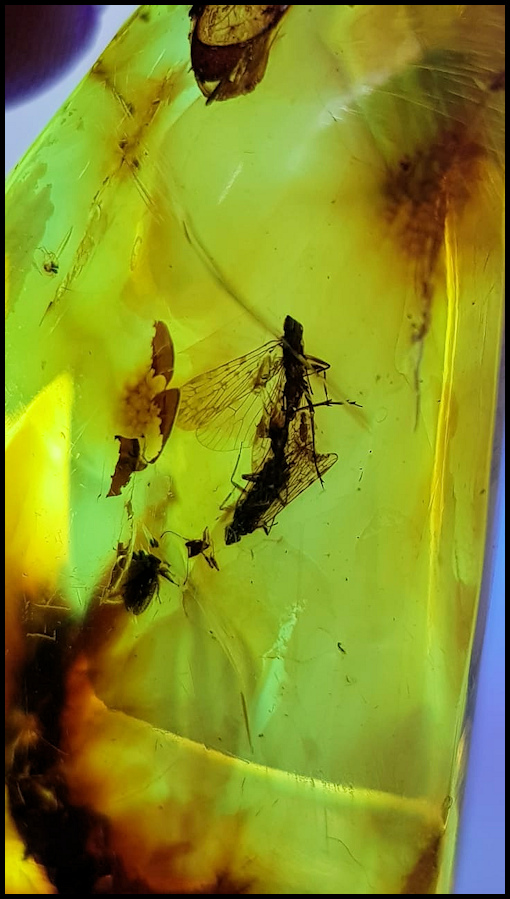
This termite bug, Termitaradus protera sp. n. (Termitaphididae: Hemiptera) from Mexican amber, represents the second known fossil of this family. From its presumed host, a worker of the basal termite, Toastmaster electrodominicus. The hypothesis that the family Termitaphididae is ancient and inhabited Pangaea is disputed in favor of a much more recent, Tertiary origin. It is suggested, in fact, that termitaphidids are highly modified Aradidae, possibly derived from Mezirinae.
All the described species of Termitaphididae have been found only in nests of termites. Fossil Termitaphididae in Dominican amber are very rare and in Dominican amber, only three preserved have been found.
This is shaped more like a tusk, about 1.75 inches long and a bit more than 1/4 inch wide. It is very clear and very impressive. On the ventral side, posterior are what look like legs and then there is something else (I don't have a clue what they are.)
Articles on Amber:

NEW Specimens For Sale:


From Nature, July 16, 2026:
World's Oldest Amber Comes From a World 150 Million Years Before Dinosaurs
Jorge Caridad
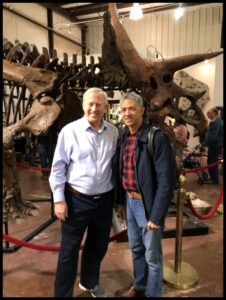
Left: Picture of Doug Lundberg and Jorge Caridad in a fossil shop, Tucson, Arizona. Mr. Caridad is the owner of the Amber World Museum in Santo Domingo, Dominican Republic.

Picture on right: Wolfgang Weitschat, Kazimieras Mizgiris and Doug Lundberg
United States Air Force Academy somewhere near the middle.