Wasp or Bee Nest - RARE
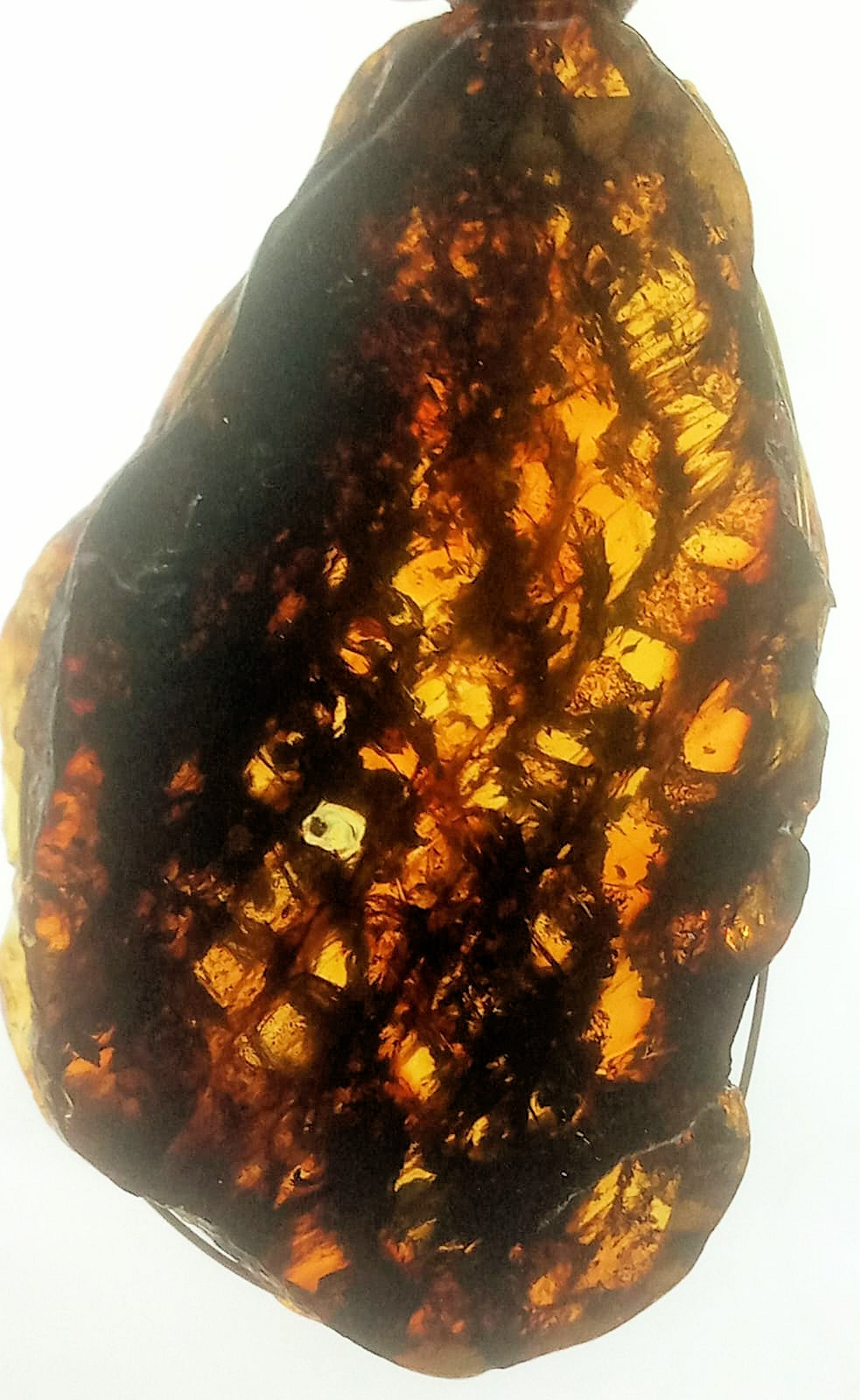
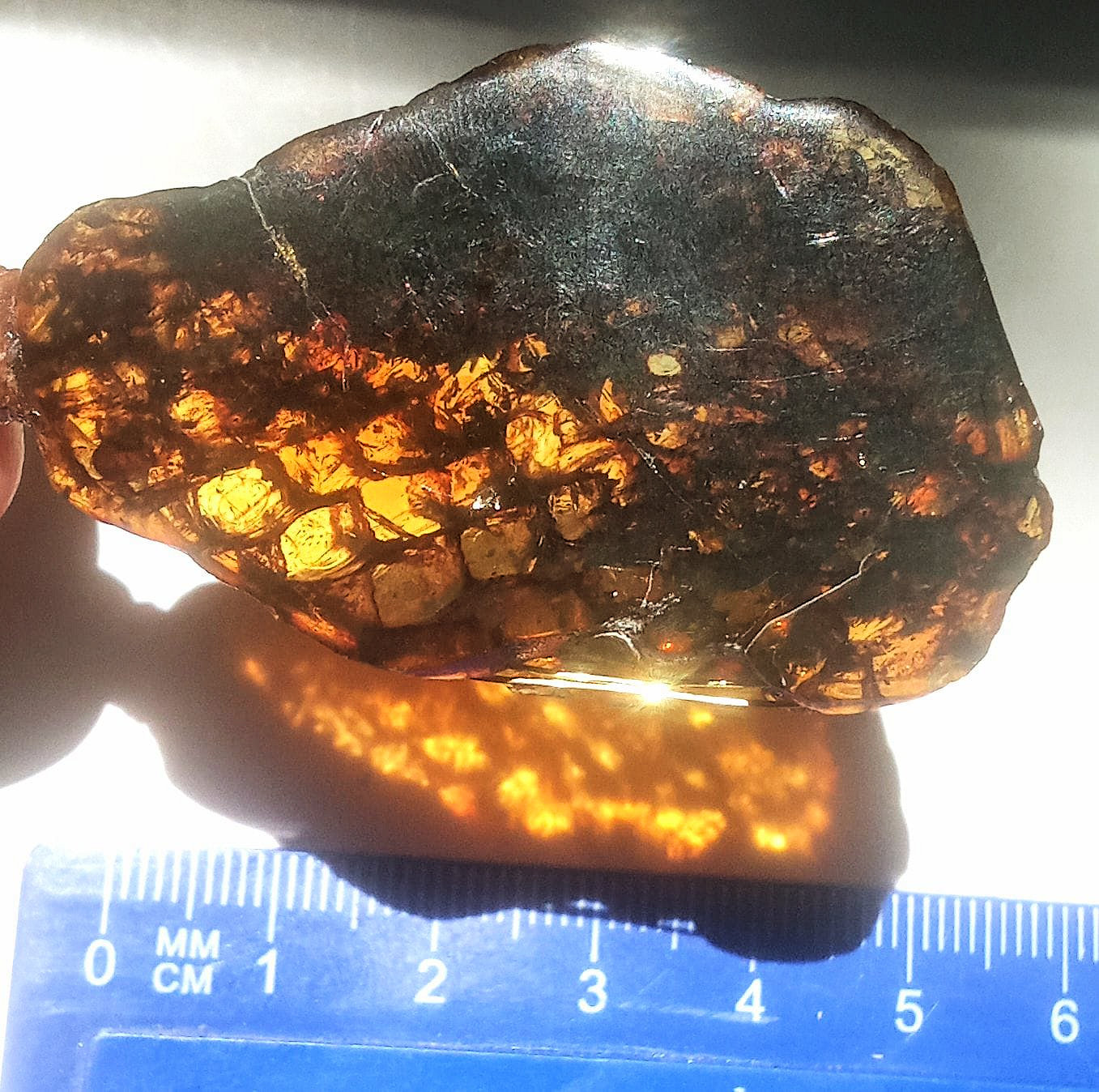
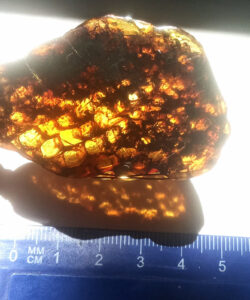
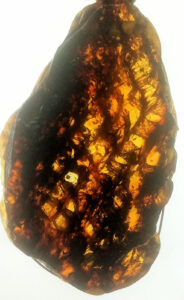
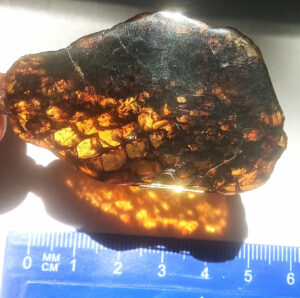
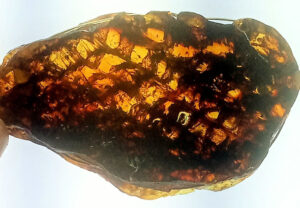
This is etched around for a necklace and also has a small hole for a necklace.This is not just a piece of amber—it is a once-in-a-lifetime fossilized behavior. Measuring approximately 2 inches x 1 inch x 0.25 inches, this remarkable Chiapas amber specimen preserves what appears to be an intact comb structure, most likely from a wasp or bee. While I won’t claim a precise identification within Hymenoptera, the geometry is unmistakable: a clear, organized cellular pattern frozen in time, glowing beautifully when backlit. In over 35 years of working with amber, I have never encountered a specimen this complete. I have only ever seen a single comparable example—photographed in Dominican amber—and that’s it.
The comb structure is exceptionally well-defined, with individual cells visible throughout the piece, offering a rare glimpse into ancient insect architecture. As far as can be observed, the cells themselves appear empty, which only adds to the intrigue—this is a pristine snapshot of construction rather than occupation. Sourced from the Montecristo mines in Simojovel, Chiapas, this specimen combines rarity, scientific importance, and visual impact in a way few pieces ever do.
If you are a serious collector, this is the kind of piece that elevates an entire collection. It’s not just rare—it’s the kind of specimen that people remember, talk about, and build displays around. Opportunities to acquire something this unusual are extraordinarily limited.
This is etched around for a necklace and also has a small hole for a necklace.
I am open for comments from anyone, you can email me at lundberg@ambericawest.com.