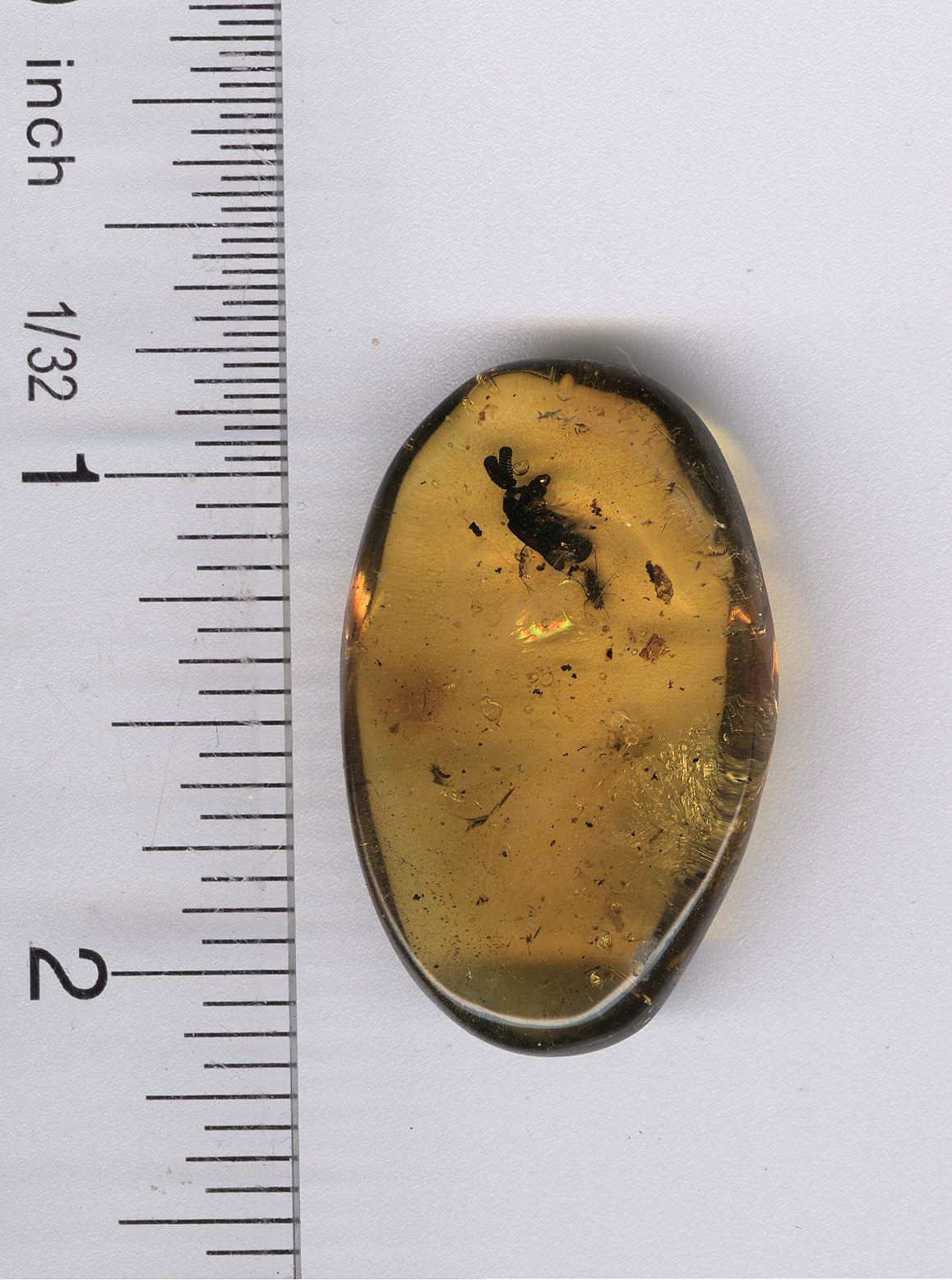
This is amber from Mexico, Chiapas amber, Simojovel mines.
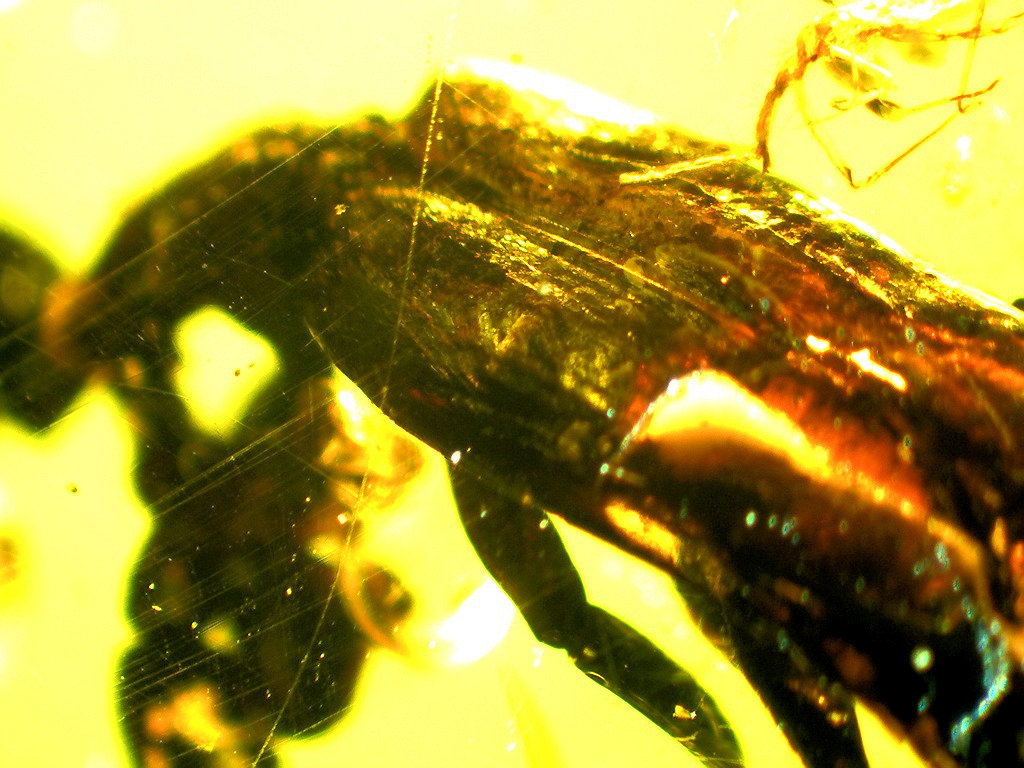
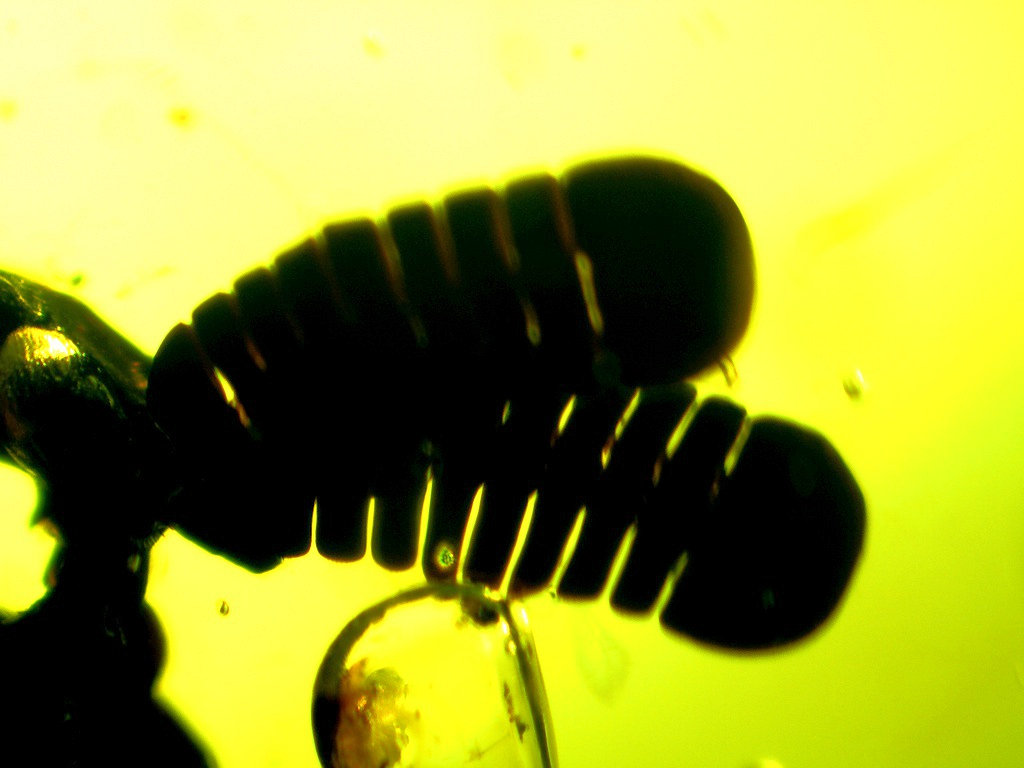
Encased in glowing golden Chiapas amber from Mexico, this exceptional piece features a rare and fascinating ant-nest beetle (subfamily Paussinae, order Coleoptera)—a truly unique fossil from a tropical forest over 15 million years ago. The specimen shows the hallmark highly specialized, clubbed antennae, a defining feature of Paussine beetles, clearly visible and striking against the warm amber backdrop.
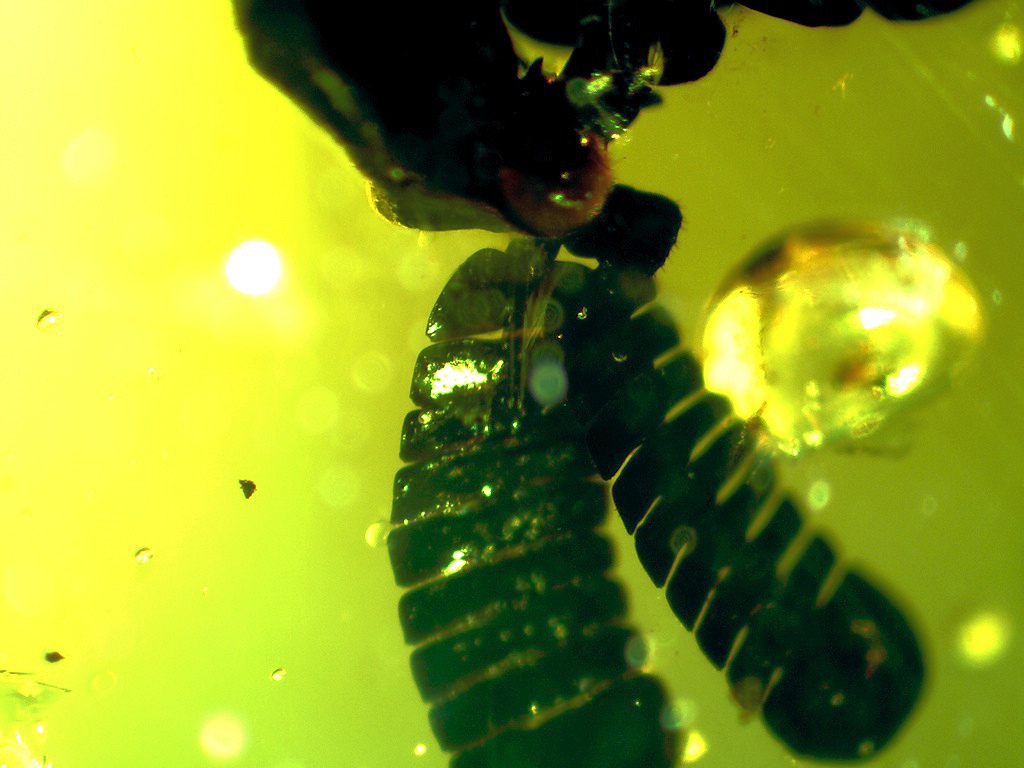 and identifiable inclusion for collectors.
Paussine beetles are among the most unusual of all beetles, known for their intimate association with ants and their highly adapted morphology. Finding one preserved in amber is especially compelling, offering a direct window into ancient symbiotic relationships that existed in Miocene ecosystems.
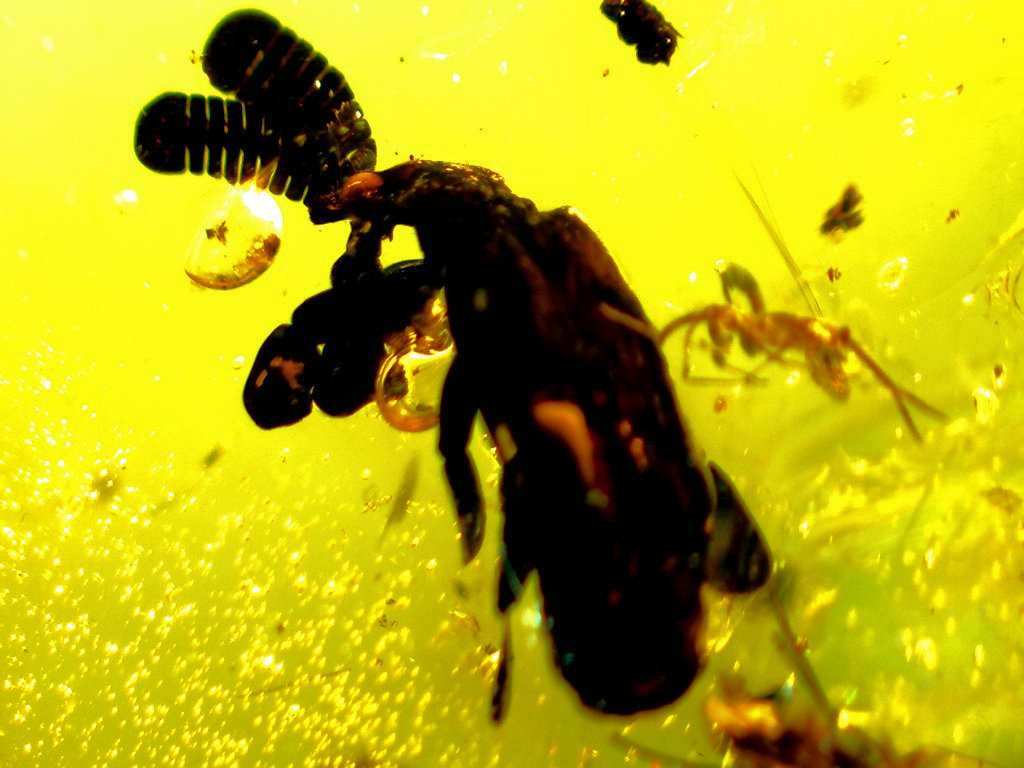
The amber itself is beautifully translucent, with excellent contrast that makes the beetle stand out for display and study. Pieces featuring identifiable, specialized insects like this are far more desirable than common inclusions and are increasingly sought after by serious collectors.
This is not just an insect in amber—it’s a conversation piece, a scientific curiosity, and a rare opportunity to own a snapshot of prehistoric life rarely seen in the fossil record.
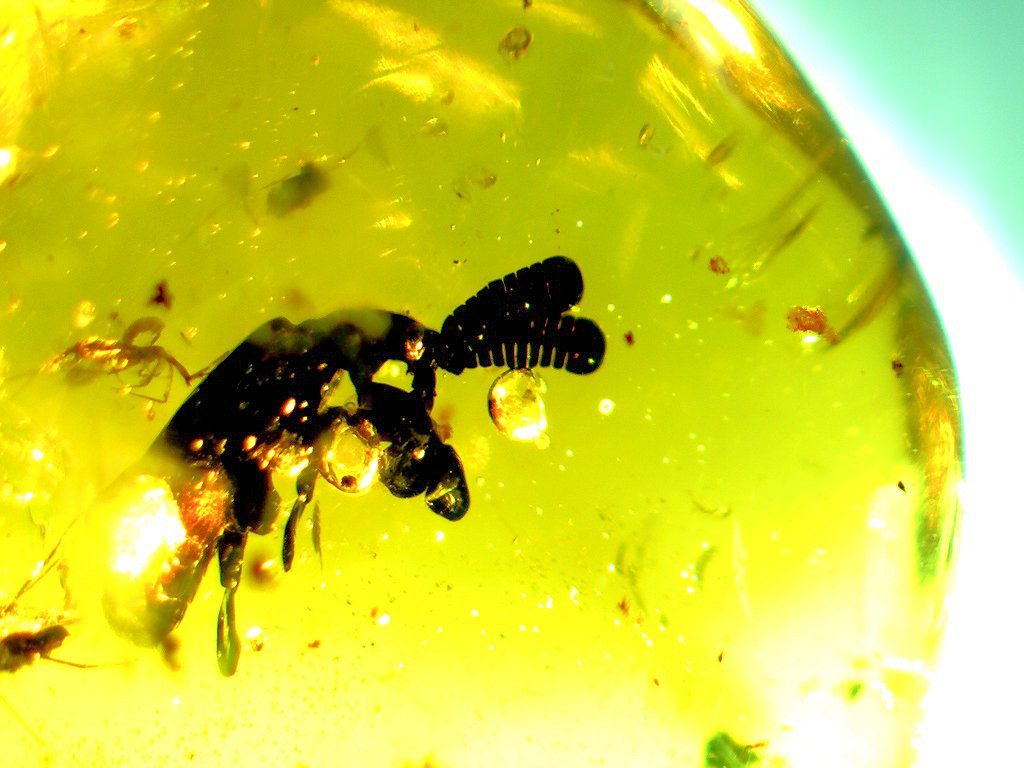
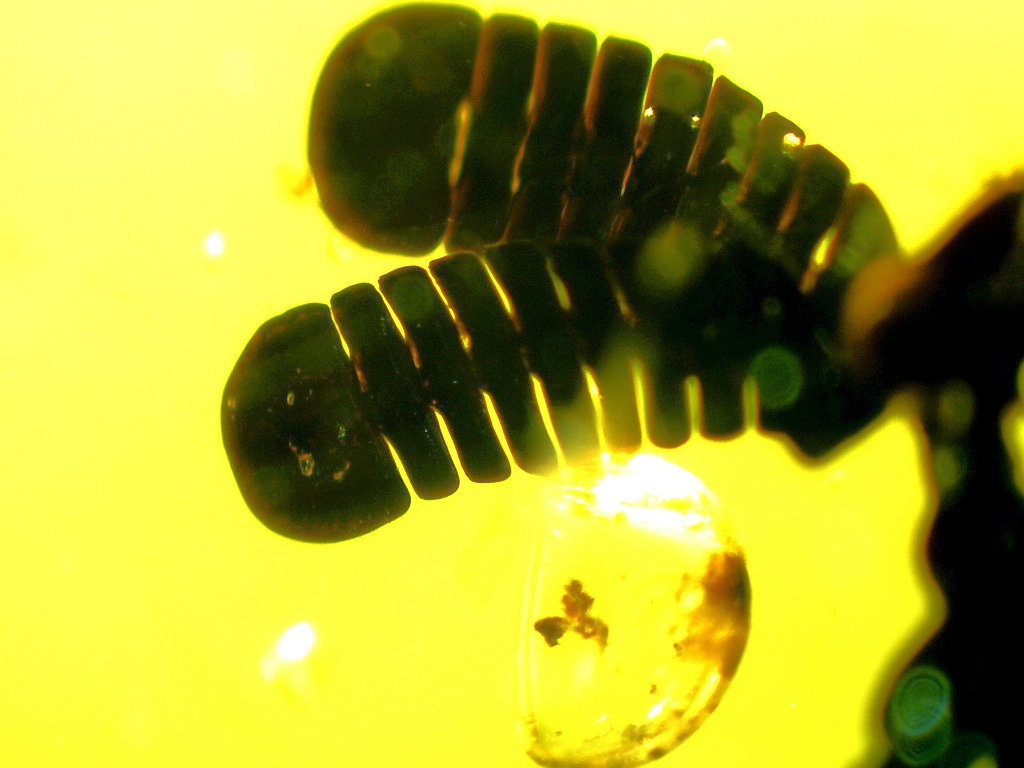
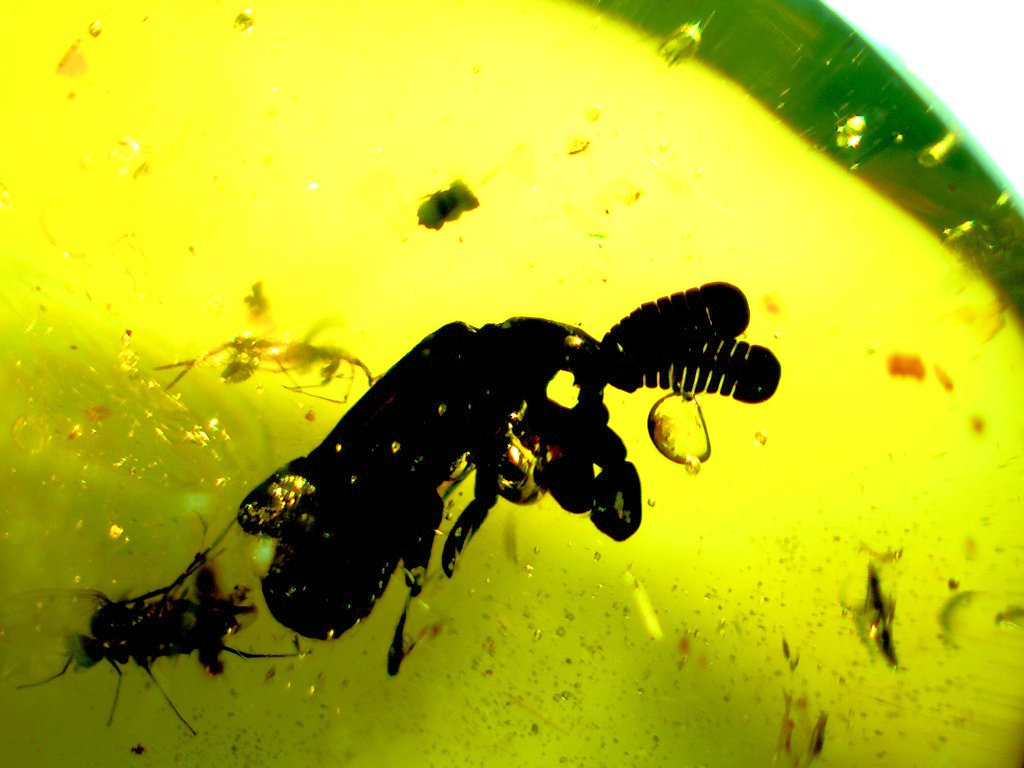
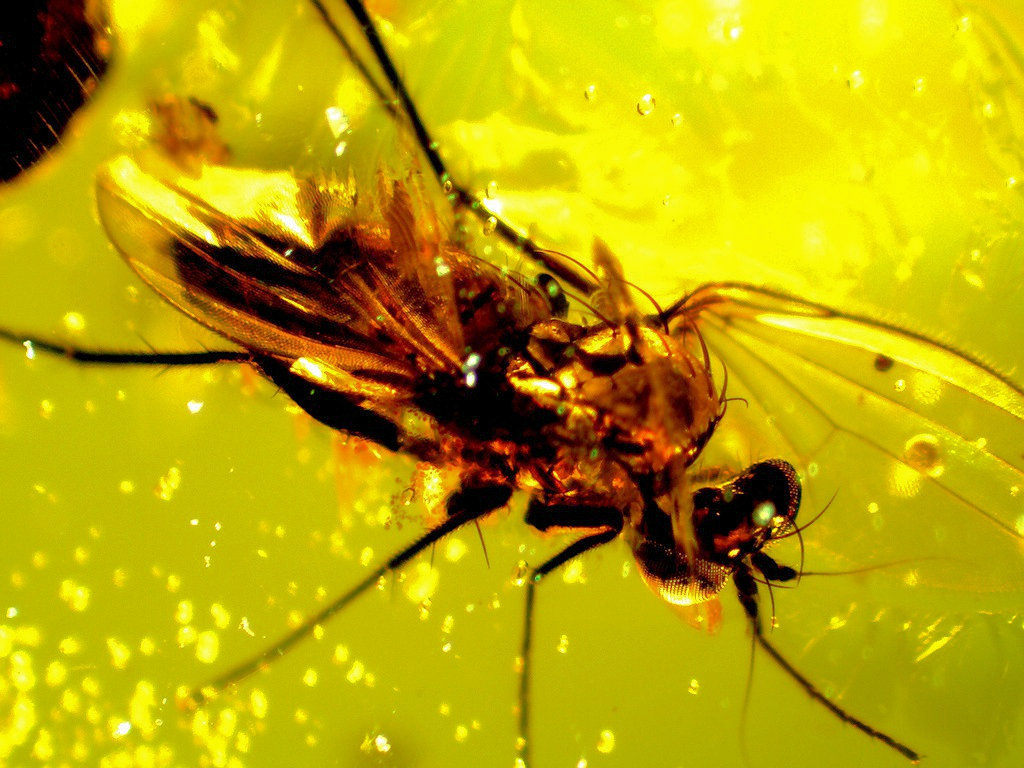
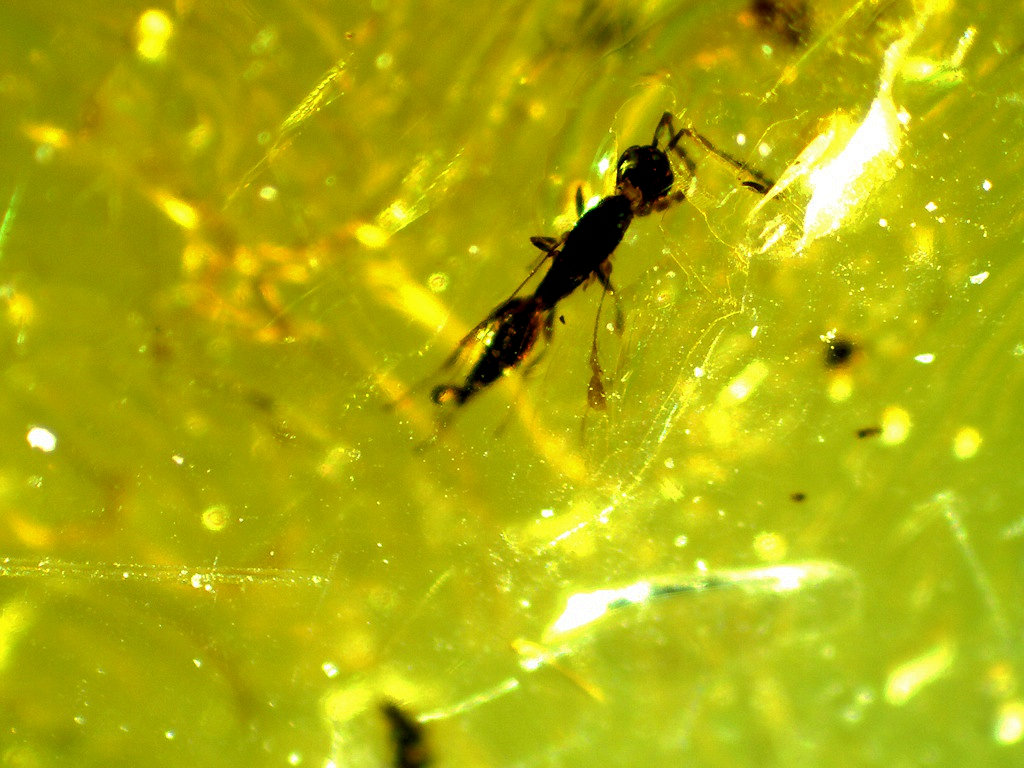
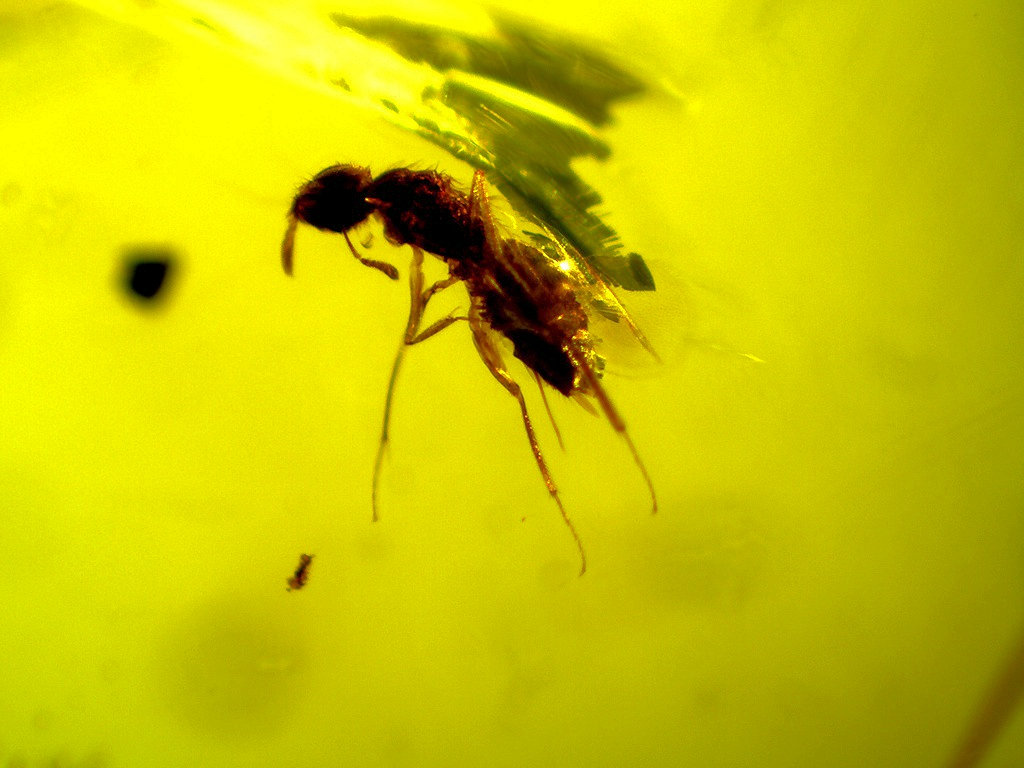
There are a few other insects, wasp and fly: